
Industries We Serve
Roof inspection, repair planning and building-file documentation for Beaverton property managers overseeing multiple commercial sites.
Commercial Roofing for Property Management Companies in Beaverton, OR
First, take the intake call with the property address, affected tenant area and what sits below the water. Then confirm access, arrange a make-safe visit when needed and record the roof before permanent work begins. Each finding receives a location, photo and repair boundary, so the next step can be reviewed without relying on the person who took the original call.
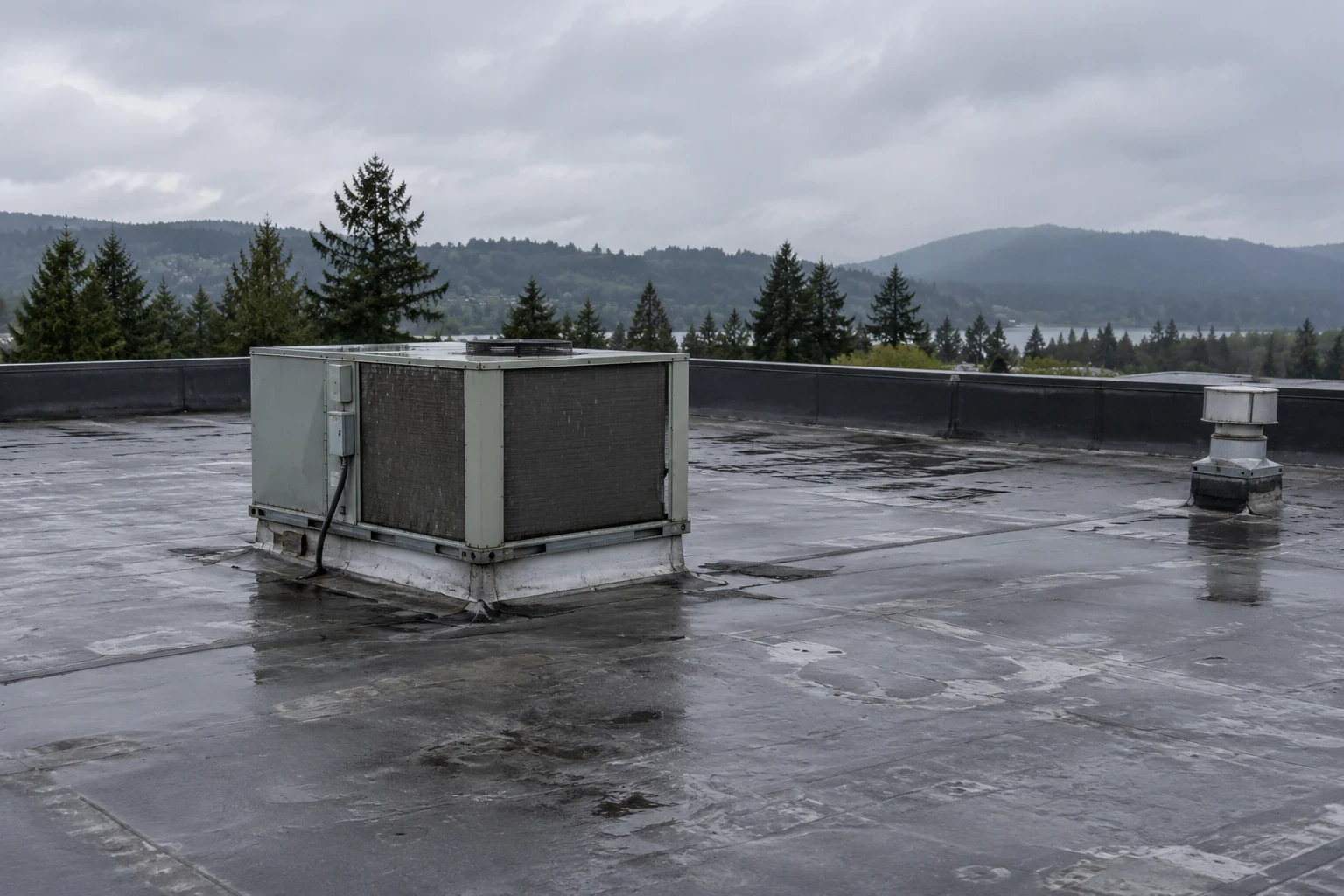
For a portfolio, consistency matters across buildings with different systems and service histories. A commercial roof inspection provides a marked plan, condition notes and open questions that can be placed in the building file.
Keep Each Beaverton Building in Its Own File
Downtown Beaverton is a regional center; The Round mixed-use project sits near Beaverton Central MAX station. That mixed-use district is one part of a market that also includes separate commercial buildings along other corridors. For a property manager, the useful distinction is not a shared city label but the actual roof plan, tenant roster, access contact and system history for each address.
Seven MAX stations serve Beaverton, and WES ends at Beaverton Transit Center. For a roof visit we confirm the loading entrance, ladder or hatch, security procedure and any occupied areas below the proposed work. The manager receives those notes alongside the roof findings instead of having to reconstruct them during a later repair.
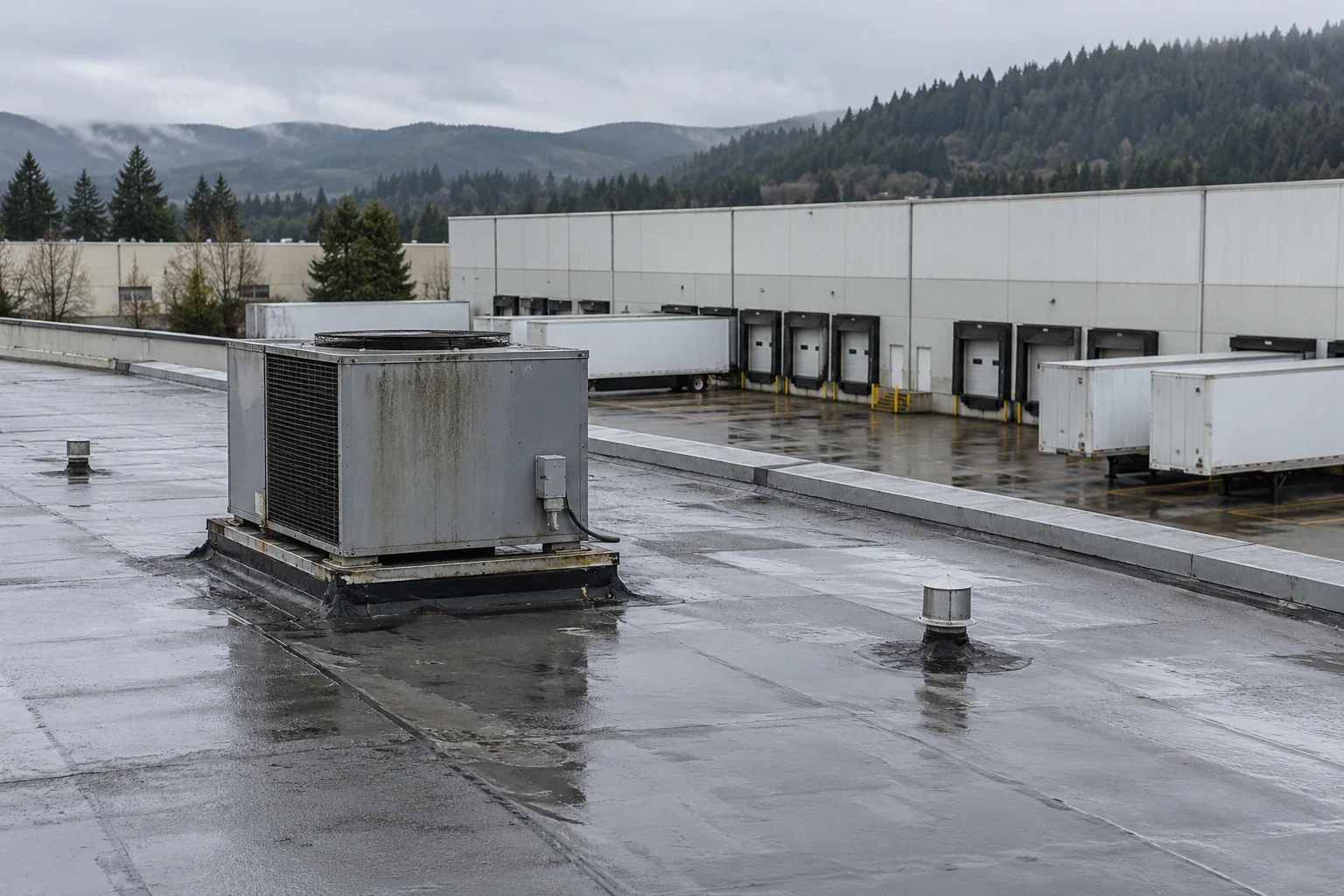
Use a separate photo set and roof-zone key for each building, even when a portfolio uses one accounting code. If a manager oversees distribution properties as well as offices or retail, a logistics operator's loading operations get their own plan without replacing the address-level building file. If several properties share a service contact, the report still names the address, section, drain or curb involved. That keeps work orders from crossing between sites and gives ownership one consistent basis for review.
Turn Reports Into Actionable Roof Records
A useful condition record separates observed damage from a recommendation. We note membrane type where it can be identified, visible seam or flashing condition, drainage, rooftop equipment and any access limit. Photos correspond to numbered findings on the plan. If a test opening is needed to understand wet insulation or deck condition, its location and restoration method remain an open item until approved.
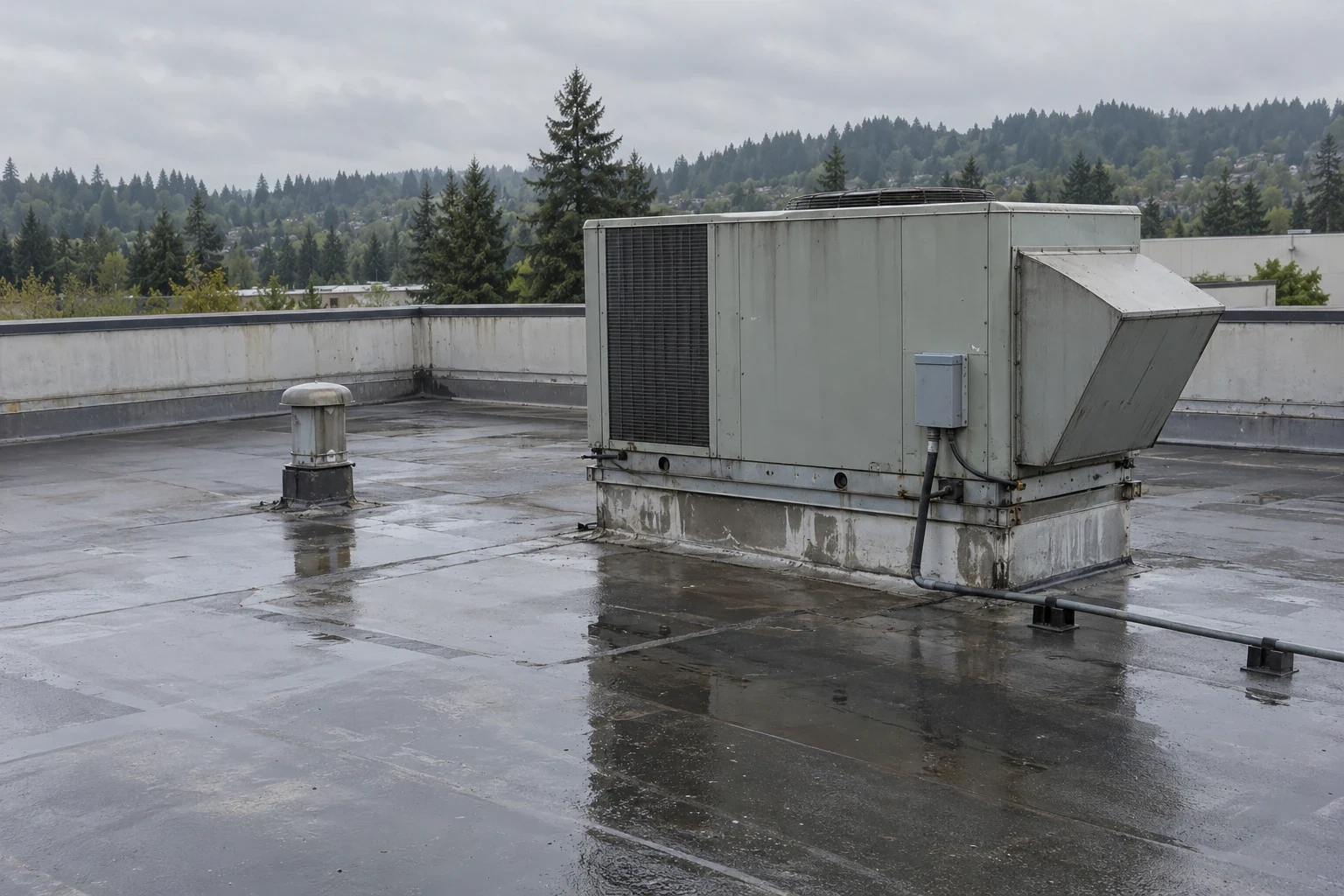
The report can distinguish immediate water-control work, a permanent repair and a longer capital decision. A roof condition report organizes findings into a format the manager can compare across sites, and owners and investors use the same records for portfolio review and funding decisions.
When two tenants report water in the same week, a site-by-site record helps identify whether the issue is one shared drain, separate roof sections or unrelated conditions. The manager can assign a response without treating similar symptoms as proof of a single cause. Any exclusions, concealed conditions or follow-up tests should remain visible in the file.
Separate Make-Safe Work From Permanent Repair
Active entry may call for a temporary measure before the roof is dry enough for a lasting repair. The intake notes the leak location, interior exposure, forecast constraints and who can authorize access. A make-safe visit aims to limit additional water entry; the later scope identifies the failed detail, preparation and materials required for a permanent correction.
Beaverton's wettest period runs through November, December and January, so a manager may need to track temporary protection until the next workable roof condition. We note what was covered, sealed or cleared and whether a second visit remains necessary. The repair scope states the boundary and any condition that must be resolved before the work can close.
For an active leak, the manager should report whether water is spreading, whether electrical or tenant operations are affected and what access restrictions apply. The crew sets the visit from those details, which gives the property contact a clear handoff.
Compare Repair and Replacement on the Same Basis
Portfolio decisions are easier to compare when each option covers the same roof area. We identify the repair boundary, note repeated patches or unresolved moisture, and show a replacement alternative separately when conditions justify it. The scope sheet lists preparation, removal or recovery assumptions, insulation, membrane and flashing so the manager can explain why one price differs from another.
A roof recover may be appropriate only after the existing assembly and substrate are evaluated. If a test or code review remains open, keep it visible rather than treating it as a settled assumption. A roof recover depends on those checks, and TPO is one assembly to weigh, though selection depends on the building and project requirements.
For a manager overseeing different tenants, the proposal should note noise, access and protection by area, as well as what interior work is excluded. This lets ownership compare near-term repair with a capital line without mixing roofing, tenant improvements and mechanical work in one total.
Make the Next Work Order Easier
Closeout includes dated photos, the roof plan, repair materials, completed details, exclusions and open tests. The file also records who provided access and whether any area could not be fully inspected. When a new report arrives, the manager can compare the room and roof zone with the earlier boundary and decide whether the condition has changed.
For portfolios with sites in Downtown Beaverton and Cedar Hills, the property address and building-specific access instructions still lead. The manager supplies the address, affected tenant area, last known leak point and best site contact for an intake call.
The resulting scope sheet gives ownership a record that can travel with the asset through budget review, tenant turnover and future maintenance. It states what was observed, what was repaired and what remains undecided. Managers can sort follow-up by address, roof zone and decision owner, so a pending test does not disappear inside a closed work order. The same record helps a new property contact understand why a temporary measure preceded permanent repair. That distinction keeps a portfolio file useful after the people involved in the first call have moved on. Open tests stay on the list with an owner named beside each.
Related Roofing Work
Commercial Roof Inspection
Logistics and 3PL Operators

Commercial Roof Condition Reports
Real Estate Investors
Start With the Property Address
Place an intake call with the building address, affected tenant area and last known leak location. We will arrange a make-safe visit when needed and provide a written scope sheet for the property file.
Questions About Property Management Companies
What should a property manager include in a roof intake?
Provide the property address, affected tenant or room, last known leak location, site contact and any access restriction. Note whether water is spreading or equipment below is exposed. We use those details to arrange the next visit and start a record tied to that building.
Can one report cover multiple properties?
A portfolio summary can compare conditions, but each building needs its own roof plan, findings, photos and repair boundaries. Separate records help prevent a drain, warranty item or open test at one address from being assigned to another site.
How are temporary measures distinguished from permanent work?
The report states what was done to limit current water entry and what condition remains for a permanent repair. The later scope identifies preparation, materials, exclusions and any test or dry-in step still needed. That keeps a temporary measure from being mistaken for completed restoration.
Can you help compare repair with replacement?
We can show defined alternatives using the same roof area and identify assumptions for removal, recovery, insulation and flashing. If moisture or substrate condition is unknown, the scope lists the test needed before that choice is final.
What belongs in the building file after work?
Retain the dated photo set, marked roof plan, repair materials, completed details, exclusions, access limits and any open test. A later manager can then match a new report to the earlier roof zone and see what work was completed.