
Commercial Roofing Services
Leak tracing and repair for Beaverton, OR commercial roofs: interior mapping, controlled water tests, flashing checks and a follow-up visit after the next rain.
Commercial Roof Leak Repair in Beaverton, OR
The first question on a leak call is where the water is landing. The second is what sits beneath it. Those two answers set the order of everything else: protect the contents, stop the entry, and only then find the source. Commercial roof leak repair in Beaverton, OR runs on that order because water inside a building does damage by the hour, while a careful trace takes longer than a quick patch.
A leak is also a record. Where it showed, when it started, and what the weather was doing go into the leak log before any crew member touches a seam. That log is how a pattern gets spotted early.
Trace From the Inside Out
We start with the interior evidence: the ceiling tile that is stained, the wall that is damp, the light fixture that dripped. Then we map it onto the roof above. Water travels along decks, insulation joints and steel flutes before it drops, so the interior spot can sit many feet from the opening. A sheet metal deck can carry water sideways along a rib, and a tapered insulation board can move it toward a low corner.
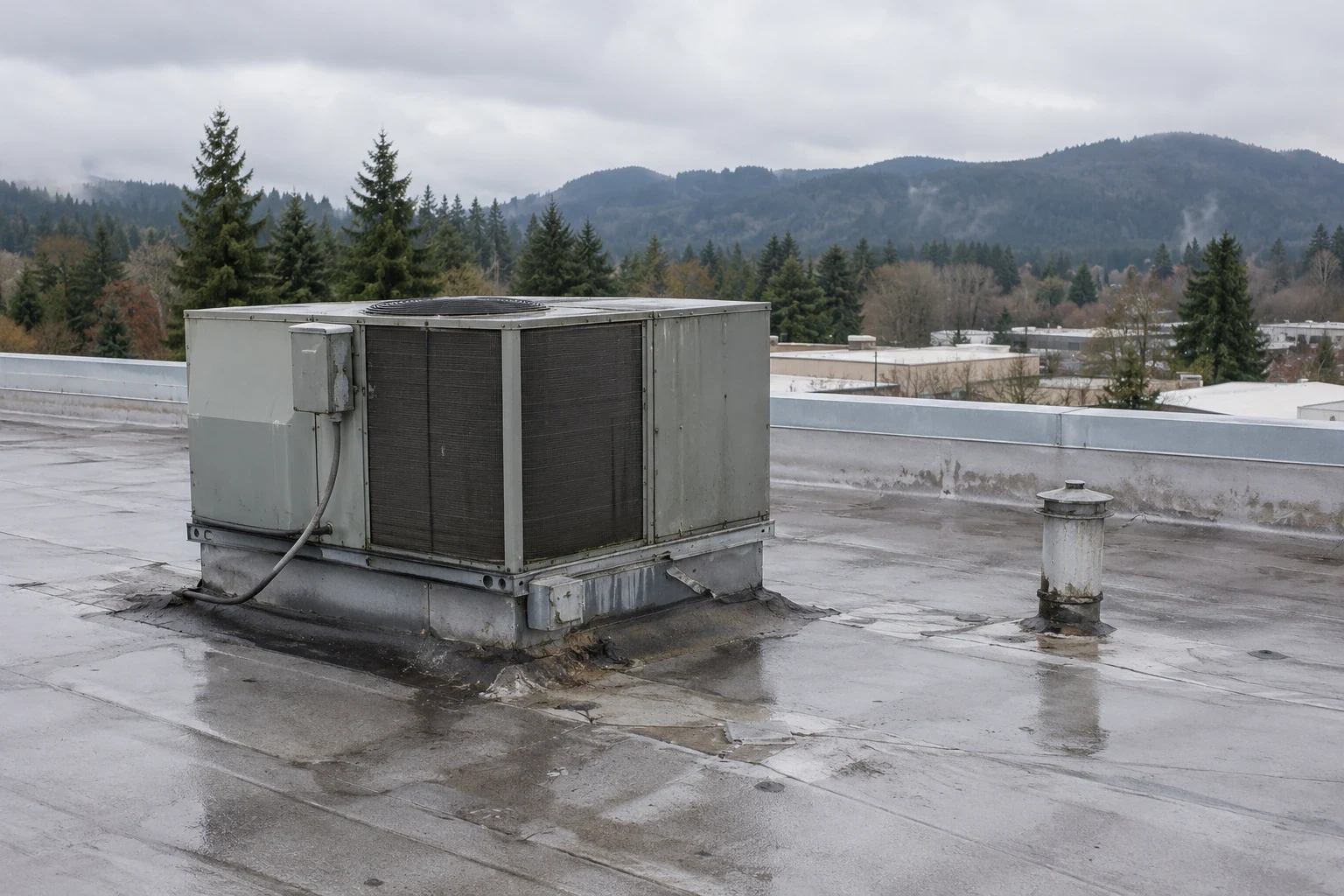
On the roof we check everything between the interior spot and the high side of the slope: seams, penetrations, flashings, drains, curb corners and any recent trade work. Rooftop unit service, cable runs and antenna mounts are frequent sources, since someone cut or loosened something during a routine visit.
Test Before You Cut
Guessing at a source wastes a visit. When the evidence leaves two or three suspects, a controlled water test settles it. A crew member runs a hose over one suspect area at a time, starting low and working up the slope, while another watches the interior. When the drip begins, the source is found.
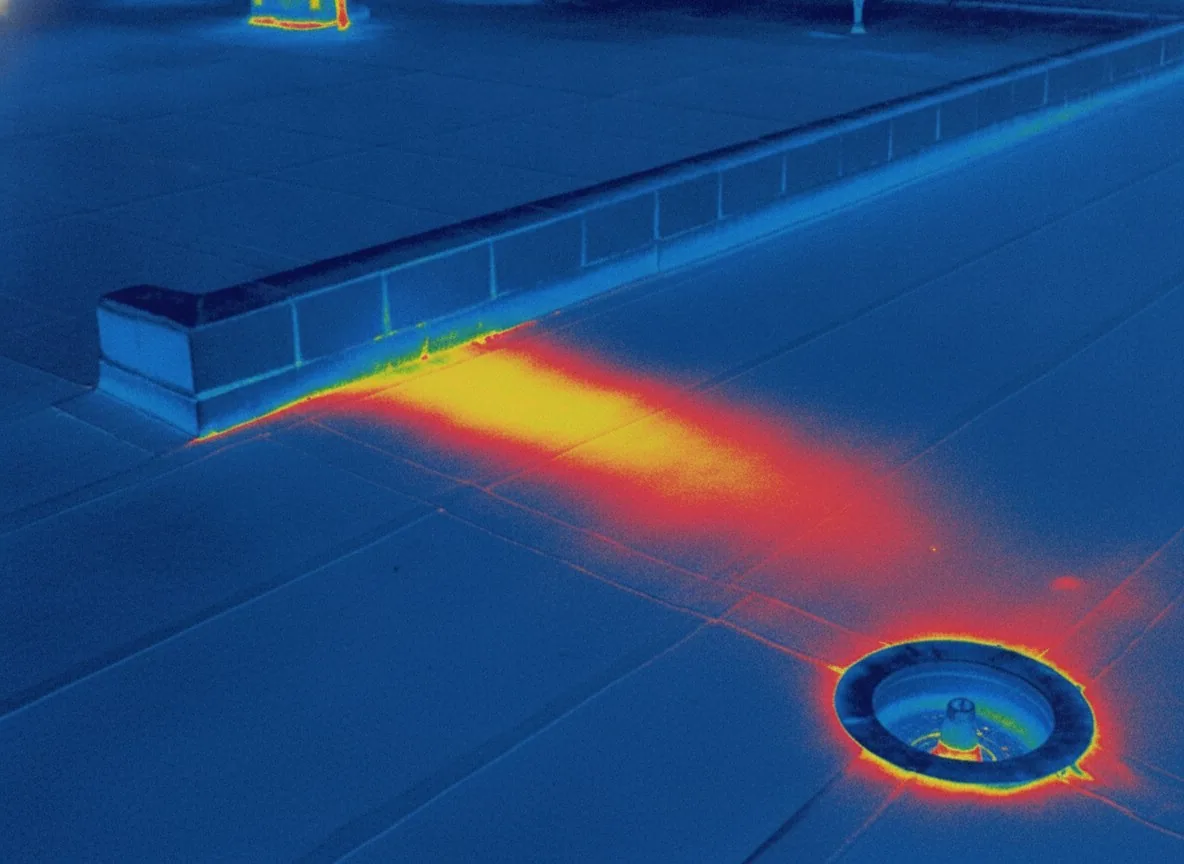
Smoke or dye can help in some assemblies, and a moisture survey maps wet insulation when the water has spread. The test costs an hour or two on the roof but protects the budget, because the repair lands on the real opening and the second visit becomes a confirmation, not a second attempt.
Rain Pattern Shapes the Search
Beaverton gets about 151 days of precipitation a year, with November, December and January the wettest months. Long, steady rain finds low spots and weak laps that a short shower never reaches. A roof that stays quiet in October can start dripping in December once the seam has had weeks of exposure.
Wind-driven rain is a separate case. It pushes water sideways under flashings and up through gaps in counterflashing, and the leak shows only when the wind comes from one direction. We ask when the leak appears and in what weather, because the answer narrows the search. A leak that only shows after a long soak points to ponding or a low seam, while one that tracks with a wind event points to a vertical detail.
Flashings Before Fields
Most leaks begin at transitions. Where a roof meets a wall, a curb, a pipe or a drain, two materials with different movement meet, and the joint between them carries the stress. Flashing failures and opened seams account for a large share of the water that reaches a ceiling, and a bare field of membrane rarely opens on its own.
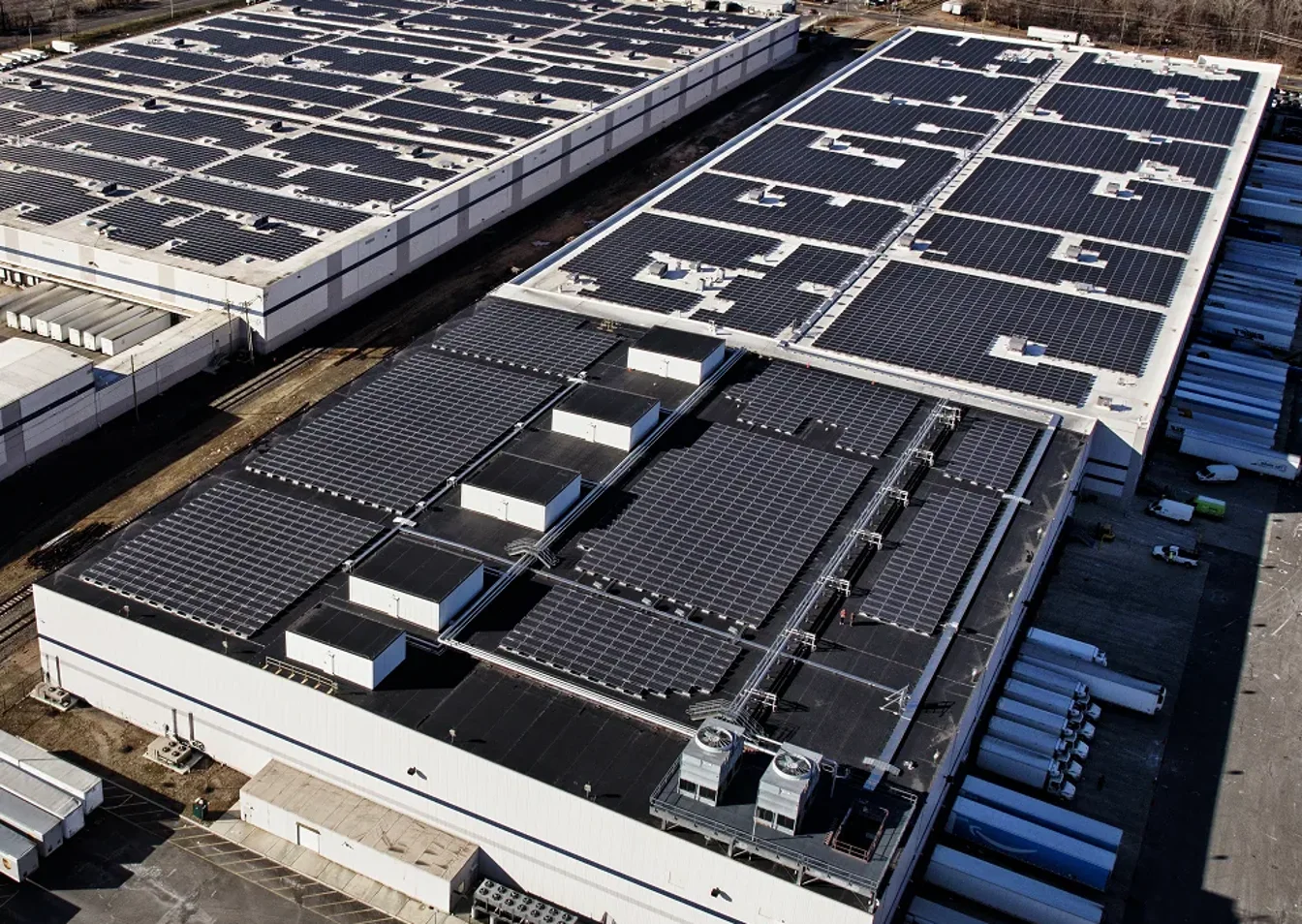
Around Washington Square and along OR 217 into Tigard, a retail or office roof with rooftop units adds a curb and a set of penetrations for every unit. We check each one against the leak map before deciding which gets a repair.
Why Sealant Alone Rarely Holds
A tube of sealant is the usual first reach, and it has a place as a short-term measure. On its own it tends to fail, because the joint it covers keeps moving with temperature and the sealant skins over and cracks. The leak returns, often in the same spot, and each attempt leaves a messier surface for the permanent repair to bond to.
Our approach is to remove the failed material, clean to a sound surface and rebuild the detail with a compatible membrane or flashing product. On a modified bitumen roof that may mean torching in a new flashing ply, and on a single-ply roof it means a welded or adhered patch with the correct overlap. The method follows the system already on the roof.
Drains deserve the same attention. A drain bowl with a cracked clamping ring or a clogged strainer can send water under the membrane edge, and the leak will show well away from the drain itself. We clear debris, check the clamping ring and test the outlet while we are on the roof, since a clean drain is one of the cheapest forms of leak prevention.
Document the Interior Too
Water damage inside is a separate account. We photograph affected ceilings, floors and contents with dates, note moisture readings where we have them, and give the property manager a summary suitable for an insurer or tenant. A clear record of when the leak began and how fast it was stopped supports a claim and limits arguments later.
If the water has soaked insulation or deck, we say so and price that work separately. Hidden wet material is the reason a leak that seems fixed returns a month later, so the scope includes a note on whether the roof needs the larger survey, and the property manager receives that note the same day as the photographs.
The Second Visit Closes It
A leak repair is not finished when the crew leaves. After the next significant rain we check the interior spot and, where possible, the repaired area. If the leak is gone, the log entry closes. If damp remains, we know the source was only partly addressed and we return before the problem reaches the tenant again.
That visit also feeds the larger decision. A building with a third leak entry in one zone belongs on the planned repair list or the replacement discussion, and the log shows exactly why.
Related Roofing Work
Infrared Moisture Survey
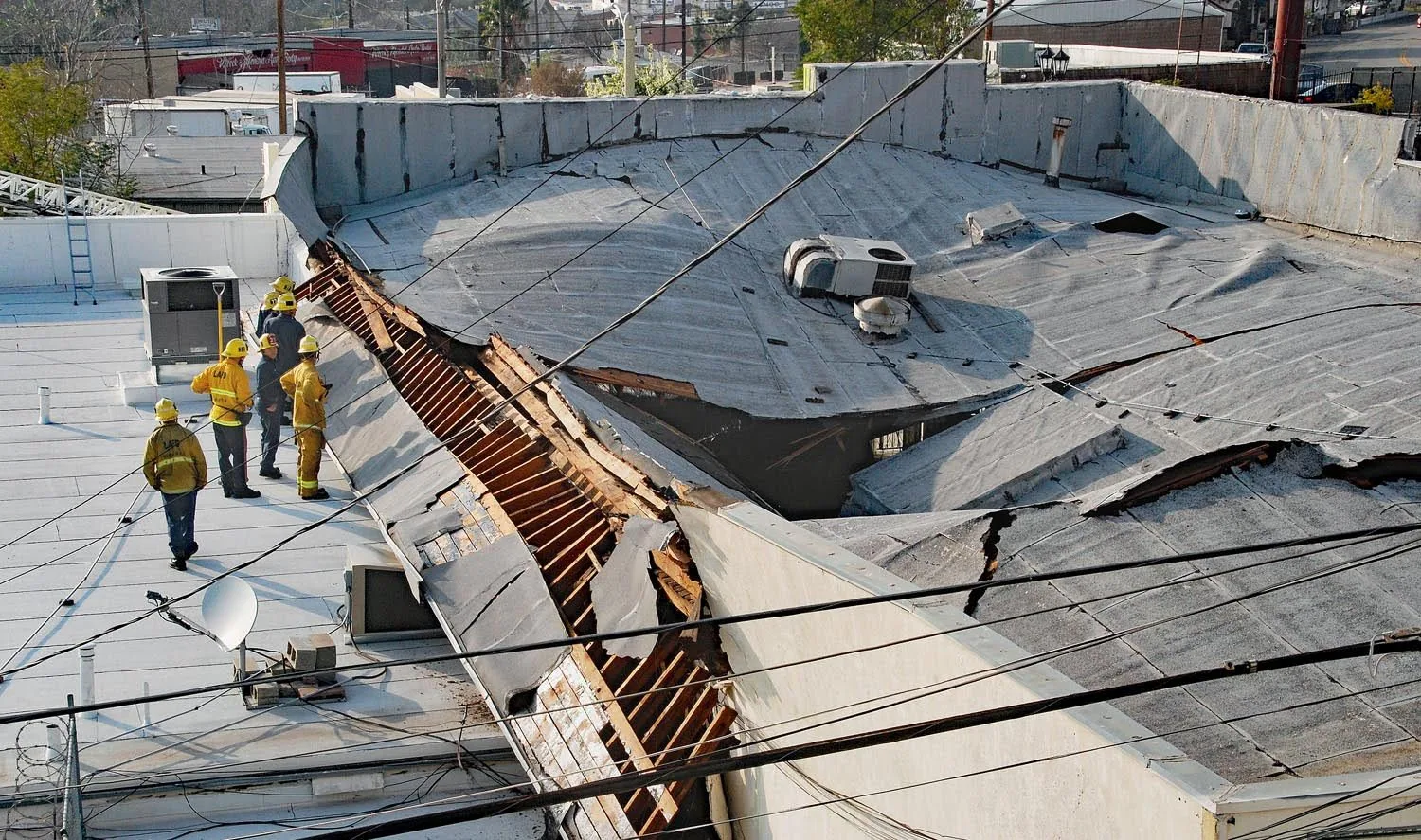
Flashing Failure Repair
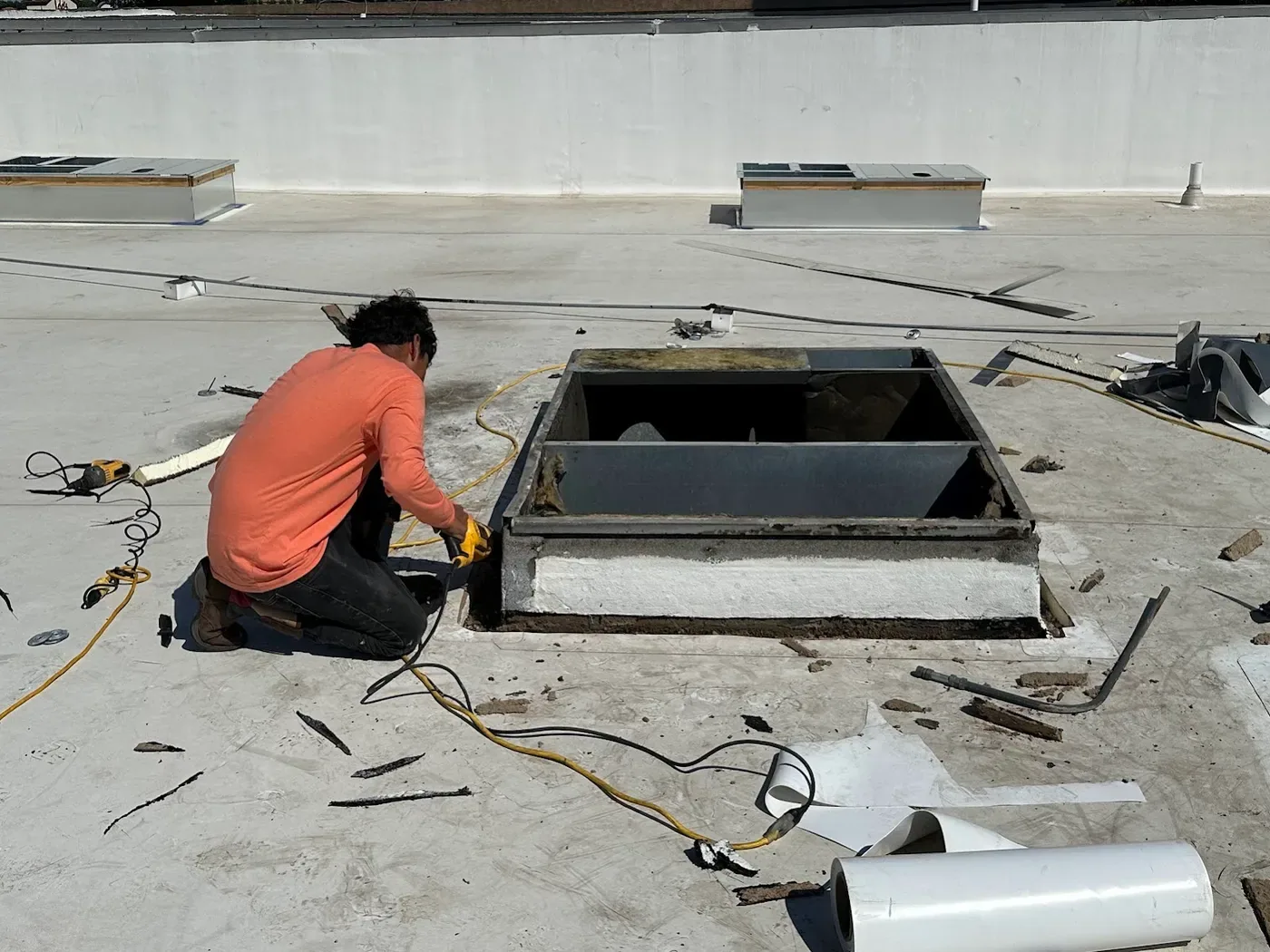
Commercial Roof Seam Failure Repair

Washington Square
Report the leak
Call with the building address, where water is landing and when it began. We start with a make-safe visit, then trace and test to find the real opening.
Questions About Commercial Roof Leak Repair
Why does the leak appear so far from where the water gets in?
Water follows the deck, insulation joints and metal flutes until it finds a path down. The ceiling spot marks where it falls, not where it enters. We trace uphill along the slope and test suspects one at a time.
Is a temporary seal enough to stop the leak for the season?
For a short period, yes, if it ties into sound material and the drain is clear. It is a holding action, not a repair. We label it as such and schedule the permanent fix with its own date.
My roof only leaks in heavy wind. What does that suggest?
A vertical detail, usually: counterflashing, a wall termination or a curb flashing that lets wind-driven rain behind it. The timing narrows the search, which is why we ask about wind direction as well as rainfall.
Do you need access to the interior to find the source?
It helps a great deal. The stain location, the ceiling type and any moisture readings give us the starting point. When interior access is limited, a roof moisture survey can fill the gap.
What records support an insurance claim for a leak?
Dated photos of the roof and the interior, the leak log with the first report time, moisture readings, and the repair scope. We assemble them in one packet so your adjuster sees the sequence without chasing separate documents.