Roof Systems
Review EPDM roofing in Beaverton, OR for seam condition, adhesive details, insulation, drainage and repair history before selecting the next roof scope.
EPDM Roofing in Beaverton, OR
Water below a dark membrane changes the first-hour sequence at a Beaverton, OR building. We confirm the room and leak location, send a crew to make the area safe if water is active, then photograph the EPDM field, seam edges, penetrations and drains before opening a detail. The photo set goes into the building file with the reported location. That record helps separate a seam issue from water entering at a curb, wall or drain several feet away.
Buildings along the Silicon Forest corridor toward Hillsboro carry varied equipment and service needs, so the actual roof layout is recorded, not assumed from the building's use. EPDM has different seam and flashing methods from a heat-welded TPO assembly, so the repair scope begins by identifying the existing sheet, adhesive and termination details.
Trace the Water Path
EPDM field seams commonly rely on adhesive or seam tape rather than a heat weld. We inspect lap edges for lifting, contamination, wrinkles and stress, then check how the sheet turns up at parapets and wraps pipe penetrations. A local opening may begin at a termination, cover strip or aged patch instead of the center of the roof. We mark the tested area and photograph the detail before selecting a repair material.
Seam edges are vulnerable where a lap meets a change in plane, a patch or a termination bar. We look for dirt trapped at the edge, adhesive transfer, lifted tape and movement that has pulled the lap out of contact. A repair needs enough sound membrane around the affected point to form a new bond. The scope notes whether the existing seam can be prepared in place or whether a larger section must be opened.
With rain on roughly 151 days a year, drainage and seam continuity are worth checking together. We inspect drain sumps, low points and runoff paths, then note whether water marks lead toward the reported interior stain. A roof inspection can place those findings in a photo-based condition report for the owner.
Check the Layers Below
A sound EPDM repair depends on what lies under the sheet. We look for soft insulation, loose attachment, deck movement, repeated patches or evidence that water has traveled beyond the visible opening. If the roof is recoverable, the scope states which layers remain and how the new assembly will meet existing curbs and walls. If the deck or insulation needs attention, that work is priced before a new membrane conceals it.
Portland Airport averages about 36.9 inches of precipitation on roughly 157 days a year, with around 32 freezing nights, and Vancouver, Washington adds occasional freezing-rain events. Wet edges, drain paths and movement at terminations are worth documenting through that cycle, and a cover board review can show how the insulation and membrane interface fits the repair or replacement scope.
Select a Compatible Repair
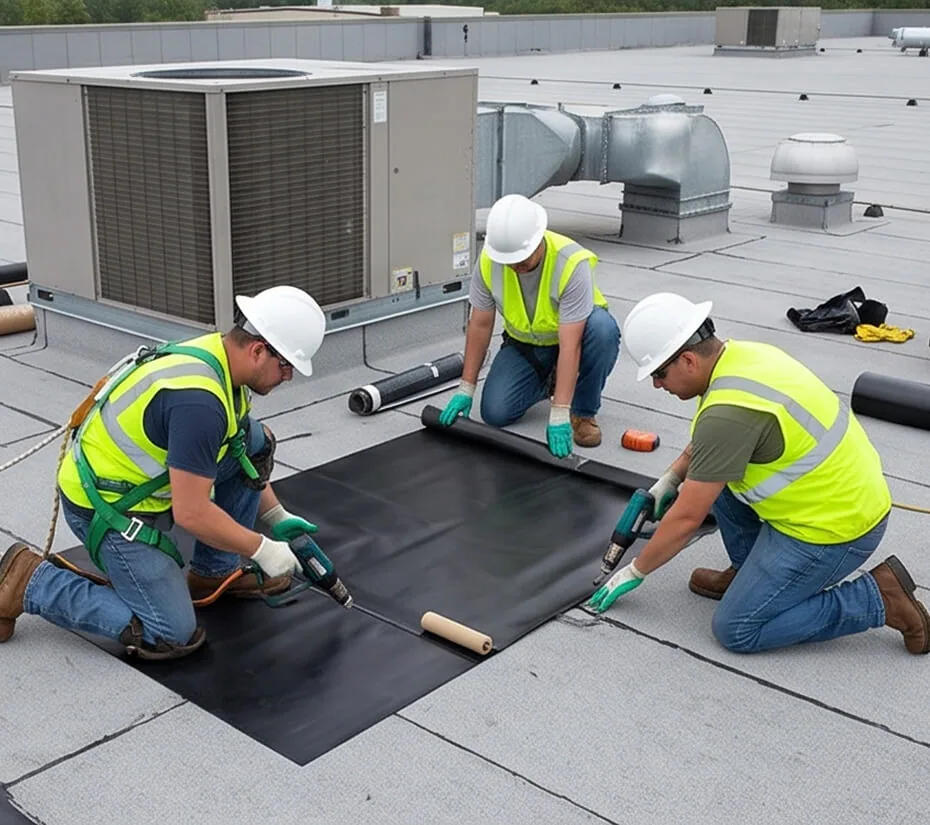
A small EPDM seam or penetration repair may work when the surrounding sheet remains sound and the substrate is dry. We clean and prepare the repair area, use compatible membrane and bonding materials, roll the seam as specified and inspect the edge after installation. A patch cannot correct wet insulation or a loose deck. Where multiple laps are lifting or the surface has repeated failures, we identify the broader area for testing and price a replacement alternative.
Repair history matters on an older field. We map previous patches and changes in membrane, because a repair that crosses incompatible materials can create another weak transition. The modified bitumen option or a PVC assembly may be considered for replacement when project criteria and roof conditions fit; material selection follows the deck, drainage and use of the building. We list each option and its preparation needs in the scope sheet. Cleaning is part of the repair: dirt on a lap edge keeps adhesive from taking, so the surface is scrubbed and left to dry before any bonding starts.
Protect Each Work Area
Replacement work begins with an area that can be opened and dried in before the shift ends. We remove unsound materials, inspect the exposed deck, install the specified insulation and membrane, then document seams, flashings and terminations before closing the zone. A wet substrate is held for correction, not covered to preserve a schedule. In Beaverton's rainy season, the work plan should identify dry-in limits and the next suitable window for bonding materials.
Before covering an existing roof, we identify the number of layers and whether the old sheet is firmly attached. A second membrane can add weight and alter edge details, while an unverified wet layer can continue to affect the deck below. The owner receives the proposed recover assembly and the limits of inspection in writing. Where an opening is needed, we show what the test is meant to settle before pricing the next phase.
Equipment curbs, pipe stands and drains interrupt the field sheet and need their own details. We coordinate any equipment move with its responsible trade and keep service routes clear. A curb and support review identifies those penetrations, while the drain scope checks that the sump remains open. The closeout photos show how the new sheet turns up at each transition and what maintenance staff should monitor.
Keep the Repair Record
The building file should show EPDM material, seam or flashing repairs, drain condition, photographs, work limits and any remaining wet-area test. We note whether the scope was a make-safe, a permanent repair or a section replacement. If a future leak appears, the owner can compare its location with those records and avoid reopening the same detail without knowing what was done.
Cost follows tear-off, insulation depth, deck repair, attachment, seam preparation, perimeter metal, access and equipment coordination. We separate those drivers so a localized repair and full replacement can be compared on the same roof area. A replacement scope should include the assembly layers and transitions, while the Beaverton service visit starts from the leak the manager reported.
Related Roofing Work
TPO Roofing
Commercial Roof Inspection

Commercial Roof Condition Reports
Modified Bitumen Roofing
Trace the EPDM Leak
Place an intake call with the building address and last known leak location. We will arrange a make-safe visit when needed and provide a written scope sheet for the seam, flashing and insulation decision.
Questions About EPDM Roofing
How is an EPDM seam repaired?
The seam must be cleaned, prepared and bonded with compatible materials over sound membrane. We inspect the edge and substrate first, then record the repair area and check the finished lap. If the sheet is wet, contaminated or repeatedly separating, a surface patch may not address the cause.
Can EPDM be installed over the existing roof?
A recover requires the current assembly to be dry, stable and eligible to remain. We check layers, attachment, deck condition, drainage and prior patches, then state whether an opening or moisture test is needed. The proposal lists what stays and what is removed.
What should I watch during a rainy winter?
Pay attention to interior leak locations, blocked drains and changes around seams or penetrations. Our inspection records the roof area and water path, then identifies whether the next step is clearing a drain, repairing a detail or testing insulation below the sheet.
Does an EPDM patch work on any membrane?
No. We identify the existing sheet and repair materials before choosing a patch. A PVC or TPO transition calls for a compatible detail, and an old patch may need to be removed before a new bond can be made. The work record names the materials used.
What belongs in the closeout file?
Keep the seam location, repair material, before-and-after photos, drain notes, work limits and any follow-up test together. We provide the roof observations and completed-scope record so the next inspection has a clear comparison point.