
Service Areas
Roof repair and replacement in Downtown Beaverton, OR, with access plans, leak records and scopes tied to the roof and occupied space below.
Commercial Roofing in Downtown Beaverton, Beaverton, OR
After a water report at a Downtown Beaverton, Beaverton, OR property, we start with the room, the last known leak location and the access route to the roof. The first visit protects the occupied area, checks the likely roof details and records what can be seen before a patch changes the evidence. The manager receives a dated photo set and the next action in the building file.
Metro designates Downtown Beaverton as a regional center serving eastern Washington County. The area's compact employment and housing setting makes delivery paths, tenant notices and roof access worth confirming at each address. The field walk sets the record for each building.
Map the Work Route
The access plan begins at the property, not at a district label. We confirm where a crew can stage, how roof access is reached and whether equipment, loading or tenant activity limits the route. Near The Round mixed-use development and Beaverton Central MAX, that distinction matters for scheduling around an active district. We use the place facts as context, then document the building's own contact, hours and restrictions.
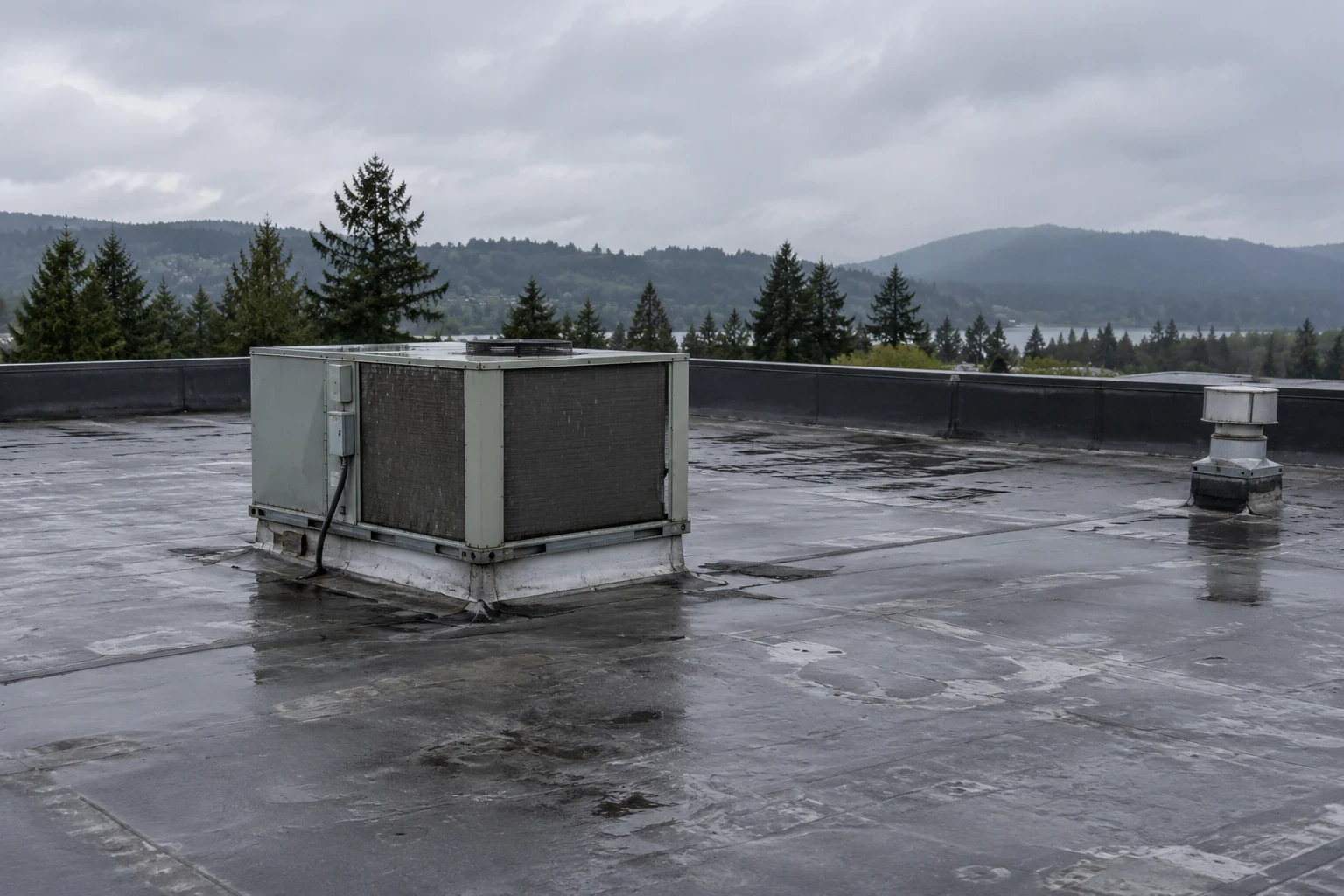
On the roof, we identify each elevation and the route from the access point to the reported leak. That route can pass multiple drains, curbs and wall transitions, any of which may matter to water movement. We mark observations on a plan and take wide and close photographs, so the later scope does not rely on a shorthand label such as “north roof.” A commercial roof inspection records seams, flashings, penetrations and drainage within the agreed boundary.
If the roof has several levels, we separate findings by level and note any area that could not be reached. A condition report can preserve those limits with the photographs and repair history. The owner receives a clear list of what was checked, what remains open and whether another access arrangement could change the recommendation.
Keep the First Visit Focused
For active water entry, the immediate task is to protect the space and identify a safe temporary measure. We confirm whether the water is continuing, whether contents or electrical equipment need protection, and which roof access is available. The make-safe work is recorded separately from permanent repair. That distinction gives the property manager a clear point to monitor while the next dry period is planned.
Rain on roughly 151 days a year is the climate backdrop, and the visit record connects it to observed drains, seams or flashing at the address. The report identifies the detail examined and any test needed to narrow the boundary.
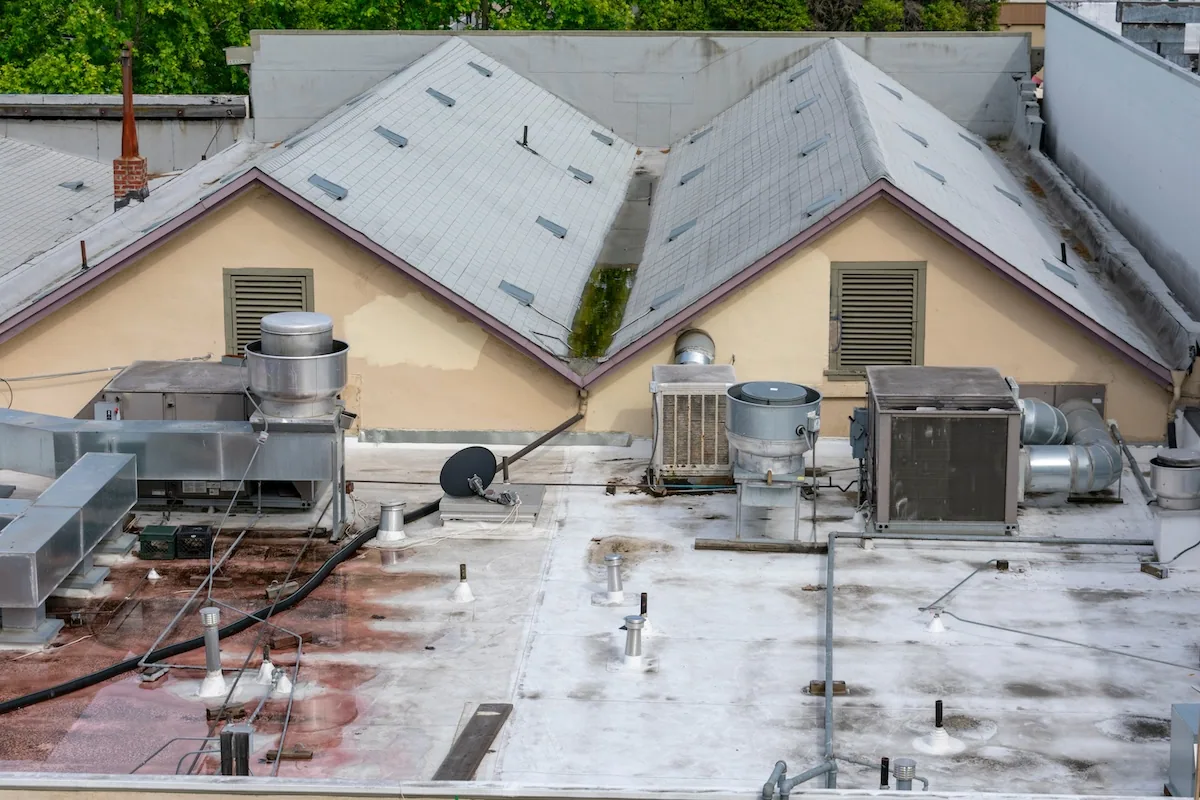
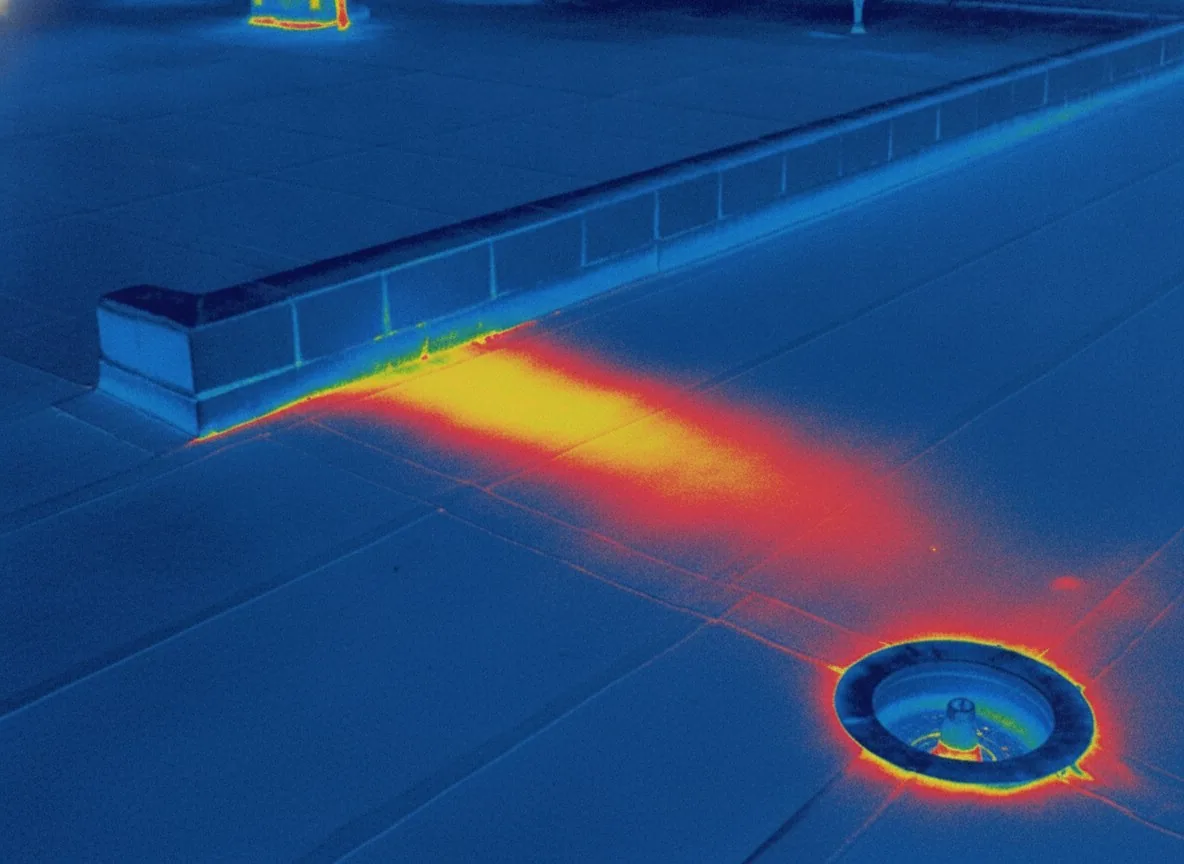
Where a failed penetration or seam has a visible edge, we can price preparation and tie-in as a defined repair. A leak repair should show how the new material meets the existing system and what nearby detail will be checked. If water may have moved under the membrane, infrared screening can identify areas for follow-up; a test opening is needed to confirm concealed layers.
Trace Water Before Pricing
Downtown roof layouts can have multiple curbs, wall lines and penetrations close together. We compare the interior report with roof slope, seams and drainage before calling one detail the source. A stain below a wall may track from a higher transition; water around a drain may have entered at the sump or followed a seam. The inspection note separates each possibility from what was confirmed.
For a test opening, we record the location, layers observed and edge of any wet material. If no opening was authorized, the report does not describe hidden insulation as confirmed wet. This keeps the repair quantity tied to evidence and gives the owner a choice: authorize more testing, proceed with a bounded repair, or carry a larger option for design review.
Repeated patching, deteriorated flashing or widespread wet material may move the decision toward recovery or replacement. We compare the existing assembly, drainage, deck condition and transition details before recommending another layer. A recover assessment identifies prerequisites and exclusions, while a replacement scope sets removal, staging and tie-in assumptions. A related roof visit in Cedar Hills or Raleigh Hills is its own building review, not a borrowed condition record.
Follow the Drainage Path
A drain can be open and still leave a ponding concern. We check the sump, strainer, clamping ring, surrounding membrane and the path water takes to the outlet. If water remains after rain, the note records its extent and whether the surface, insulation slope or deck could be involved. A correction to the outlet alone will not solve a low area that continues to collect water.
Long wet periods in Beaverton make a clean discharge path and sound flashing worth checking before the next storm. We photograph the drain and nearby transitions, then separate debris removal from membrane repair or slope work. A drain and scupper scope identifies the exact connection and its field tie-in. If the assembly is unknown, we identify the record or test needed before specifying a system repair.
When a roof has rooftop equipment, we include curb corners, service paths and condensate discharge in the walk. Equipment work can obscure a membrane seam or add traffic to an already worn route. The scope names any coordination needed with the mechanical contractor and keeps roof patching distinct from equipment work. A curb and support review can address that transition without changing the roof findings elsewhere.
Set a Workable Sequence
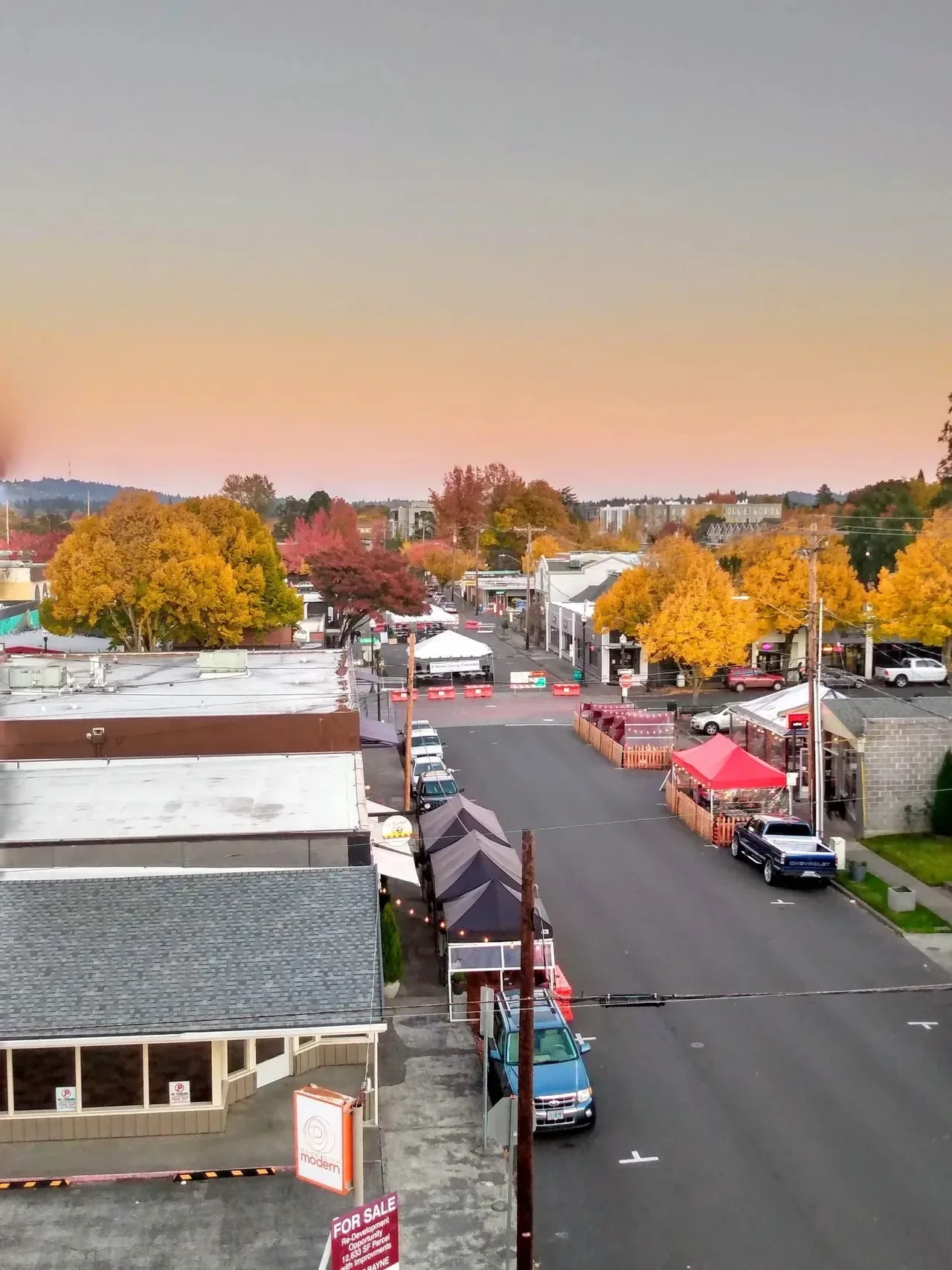
Downtown work can require tenant notices, delivery coordination and a defined route through shared areas. We confirm these items with the building contact before staging materials. If a repair crosses a busy entry or equipment path, we set the work boundary and protection method in advance. The schedule lists any closure or shutdown that needs owner approval rather than assuming every area is available.
Arrival and staging instructions come from the specific property.
Timing depends on roof condition, material lead time, access, the area that must be opened and a suitable dry period for permanent work. We identify what can be protected now and what needs a second visit. If a decision is waiting on testing or an approval, the scope sheet names the open item, its effect on work and the record needed to close it.
Related Roofing Work
Commercial Roof Inspection
Commercial Roof Leak Repair
Infrared Moisture Survey
Roof Recover and Overlay
Arrange a Downtown Beaverton roof review
Place an intake call with the property address and last known leak location. We will plan a make-safe visit, document the roof area and return a scope sheet with repair and follow-up decisions.
Questions About Downtown Beaverton
What should the building contact provide before a Downtown Beaverton roof visit?
Send the address, roof plan if available, last known leak location and access contact. Tell us about tenant hours, loading rules and equipment restrictions. Those details let us plan the route and put the right boundaries in the inspection record.
Can work be staged without closing the whole building?
The roof area and access route usually decide the limit. We identify the active work zone, where materials move and whether a tenant notice or equipment shutdown is needed. If a wider closure is required, the scope states why before the date is set.
How do you separate a confirmed leak source from a likely one?
The report labels what was observed, what was tested and what remains a possibility. Photographs and plan marks tie each finding to the roof. When concealed layers could change the repair, we price a test or second visit instead of extending a guess across the surface.
When does a localized repair stop making sense?
We compare the failure boundary with surrounding membrane, prior patches, wet material and deck condition. If the repair cannot leave sound tie-in edges or repeated failures point to a broader issue, a separate recover or replacement option shows the next decision.
What does the owner receive after a make-safe visit?
You receive the temporary work performed, dated photographs, access or test limits and the follow-up item. The written scope separates that protection from permanent repair and states which approval or dry interval is needed next.