
Commercial Roofing Services
Full tear-off and replacement for Beaverton, OR commercial roofs, planned around Oregon rain, wet insulation findings, tenant hours and a written closeout file.
Commercial Roof Replacement in Beaverton, OR
A replacement begins as a leak log with too many entries and one question: is the next repair still a sound use of the budget? At Commercial Roofers Beaverton we answer it in a set order. We walk the roof, photograph every failed detail, pull cores where the insulation may be wet, and put the findings into your building file. Only then do we price a tear-off. Commercial roof replacement in Beaverton, OR follows that order on a mixed-use block near The Round and on a food-processing plant alike: stop the water, record the condition, set the threshold, schedule the work.
The record matters because a replacement is a capital event. Your lender, your insurer and your next buyer all read the same file.
Repair Stops Making Sense at a Line
Every roof has a point where the cost of keeping it alive passes the cost of replacing it. That point is not a birthday. It shows in the leak log: how many entries, how far apart, and whether they sit in one corner or spread across the field. Three repairs in one drainage zone tell a different story than three repairs on three separate penetrations.
We draw the line with you in writing. A planned repair stays on the table when the membrane is sound and the failures are details. Replacement moves to the capital line when the field sheet is brittle, the seams are opening along their length, or the insulation has taken on water beneath a surface that still looks intact. Asset managers who carry many buildings get the same threshold applied to each, so the budget conversation compares like with like.
Wet Insulation Sets the Scope
The membrane is the part you see. The insulation is the part that decides the price. Wet board loses its thermal value, adds weight, and keeps feeding moisture back toward the deck. Replacing a membrane over it only hides the problem for a season or two.
So the scope comes from a moisture survey, not a guess. An infrared and core-cut survey marks the wet zones on a roof plan before we write a number. Some roofs need a full tear-off to the deck. Others need a new TPO or similar single-ply membrane with insulation removed only in the marked zones, and a new cover board over the rest. The difference can be large, and the survey is how you see it before you sign.
Deck condition gets the same treatment. Where we open the roof and find rusted or soft deck, the scope sheet carries a unit price for replacing it, so a discovery in week one does not become an argument in week two.
Rain Sets the Calendar
Beaverton averages about 39 inches of precipitation over roughly 151 days a year, and November, December and January carry the most of it. That pattern decides when a tear-off can run. An open roof in a wet week is a liability, so we plan the work in strips small enough to dry in the same day.
Each evening the day's opening is closed with new membrane or a temporary seal tied into sound material, and the drains are cleared before the crew leaves. A Washington County fall can hand you a hard overnight rain on a half-finished roof, and the strip method is what keeps that rain on the outside. Cold snaps matter too. Beaverton sees little snow, but a freezing night stiffens some membranes and slows adhesives, so the crew lead checks the forecast and the material specifications before the first sheet is rolled out.
A late-spring start can finish the roof before the rain returns. We build the schedule backward from the date you need the building dry, whether the roof sits in Beaverton or out along US 26 in Hillsboro, where the same rain pattern applies to the manufacturing buildings of the Silicon Forest.
Tear-Off Runs in Strips
The work itself moves in a fixed order. Crews set up access and protect the entrances, equipment and landscaping. Rooftop units are marked and, where needed, coordinated with your HVAC vendor so the curbs can be flashed properly. Then the old roof comes off in a defined strip, the deck is inspected, the new insulation and cover board go down, and the membrane follows the same day.
On an occupied building the order changes to protect the people inside. Loud work moves away from meeting hours, debris chutes keep falling material off walkways, and loading docks stay open when a distribution or retail tenant needs them. Our approach to occupied building reroofing is built on a tenant notice list and a daily start-and-stop time. A technology office and the retail at Cedar Hills Crossing each keep peak hours, and the start and stop times are set around them.
Edges, drains and penetrations receive the most attention, since those are the details that fail first. We treat drains and scuppers as part of the roof, not an afterthought.
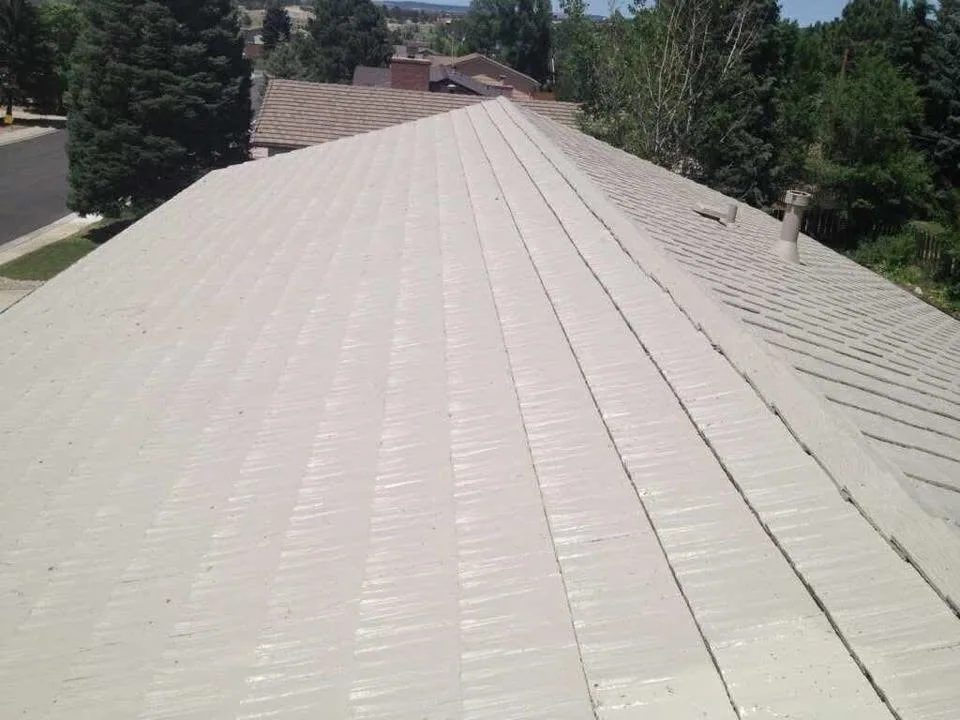
The File Closes the Job
A replacement ends with paperwork that stays useful. You receive the photo set from before, during and after, the final scope sheet with any deck changes, and the product data for every layer installed. Those records support a future inspection, a sale, or an insurance conversation.
Code is part of the file. Oregon now lists the 2025 Oregon Structural Specialty Code, based on the 2024 International Building Code, as mandatory since April 1, 2026, and the energy code, built on ASHRAE 90.1-2022, can bear on roof insulation levels. We confirm with the permitting authority what applies to your roof before we price insulation thickness, because a replacement can trigger energy upgrades that change the budget.
Owners with several buildings can fold the result into a capital plan that shows which roof is next and why.
Related Roofing Work
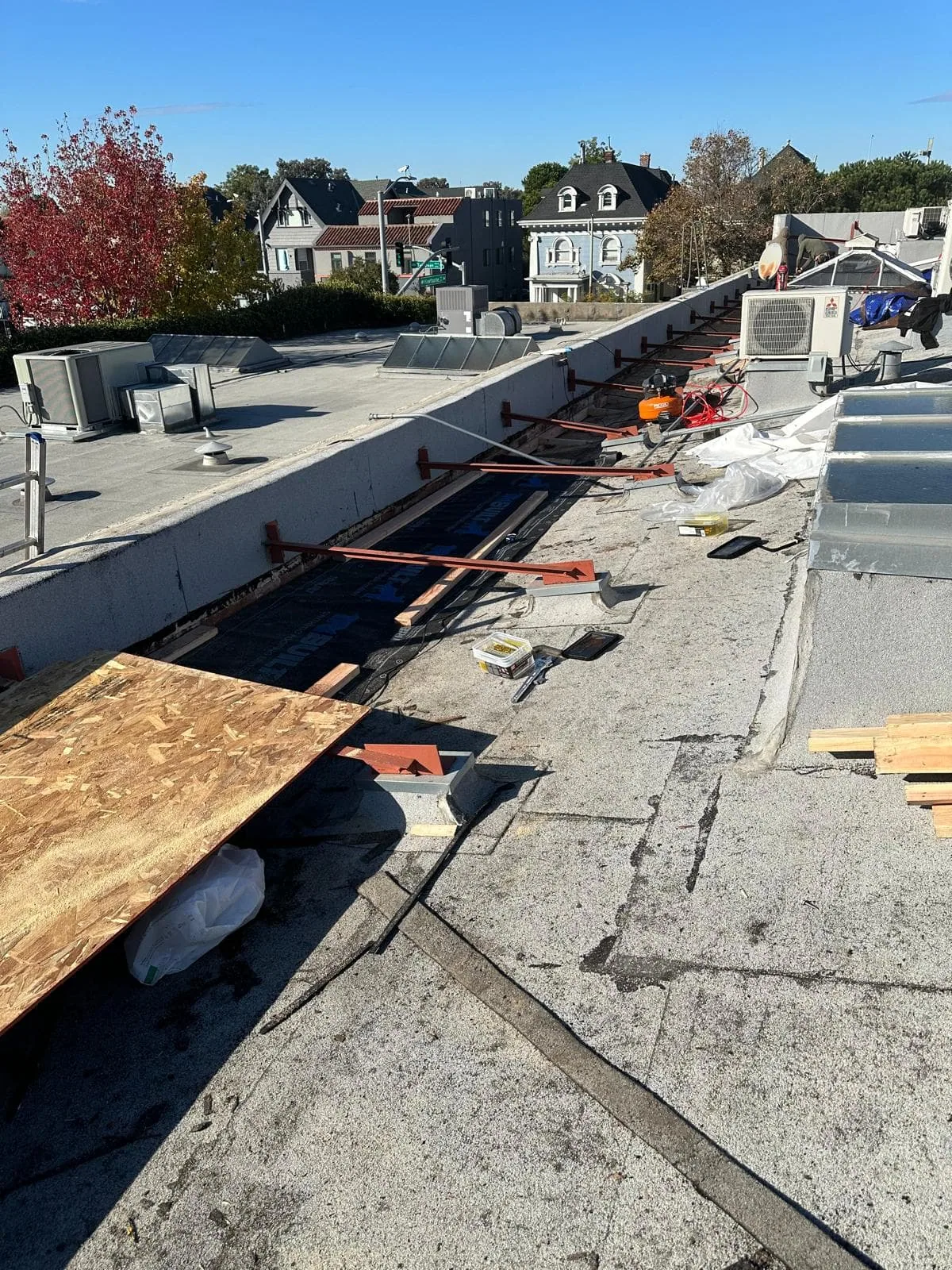
Commercial Roof Repair
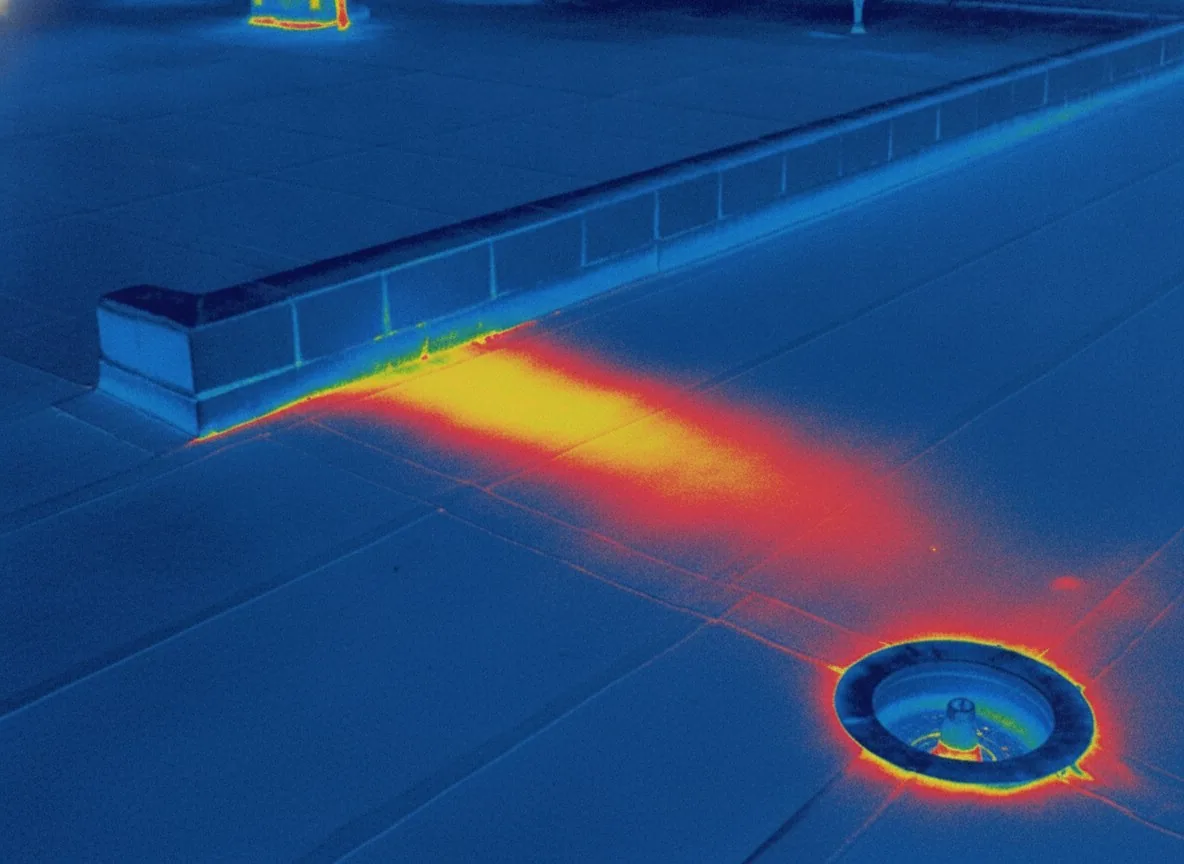
Infrared Moisture Survey
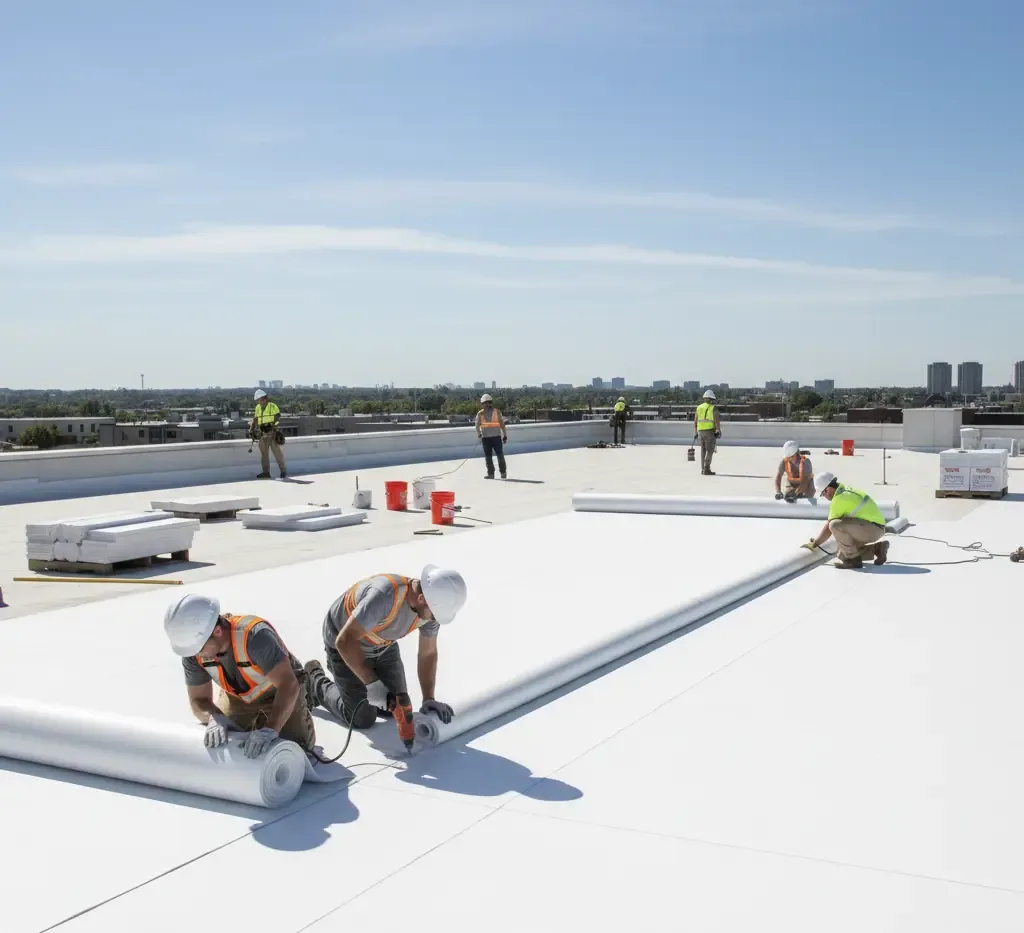
TPO Roofing
Hillsboro
Place the intake call
Call with the building address and the last known leak location. We schedule a roof walk, send a photo set and a scope sheet, and mark where repair ends and replacement begins.
Questions About Commercial Roof Replacement
How do I know whether my Beaverton roof needs replacement or one more repair?
The leak log and a moisture survey decide it together. Repeated failures across the field, or wet insulation beneath an intact surface, point to replacement. Failures confined to flashings and penetrations point to repair. We put both options on a scope sheet with the threshold marked so you can compare them.
Can a tenant keep operating while the old roof comes off?
Work moves in strips, and noisy tasks shift away from your busiest hours. You receive a tenant notice and a daily schedule, and entrances, docks and equipment stay protected throughout.
What happens if it rains in the middle of the tear-off?
Each day's opening is closed before the crew leaves, with finished membrane or a temporary seal tied into sound material. Drains are cleared first. A wet night then meets a closed roof, and the next morning begins with a quick check of every seal.
Does a replacement always mean removing all the old insulation?
No. The moisture survey marks wet zones. Dry insulation can often stay beneath a new cover board and membrane, subject to code and manufacturer requirements. Wet board comes out regardless of how good the surface looks.
Which documents should I expect when the roof is finished?
A dated photo set, the final scope sheet, product data for each layer, and notes on any deck repairs. Together they make up the building file entry, which later buyers, insurers and inspectors can read without asking us to explain.