Service Areas
Cedar Hills commercial roof service with documented leak checks, drainage review, access planning and repair or replacement scopes for occupied buildings.
Commercial Roofing in Cedar Hills, Beaverton, OR
Three checks open a water report from a Cedar Hills, Beaverton, OR property: where the water appeared, what roof area sits above it, and how the crew can reach that area without disrupting the building. We confirm the last known leak location, protect the interior if water is active, and photograph the roof before a temporary seal changes the detail. The building file records the visit and the next decision.
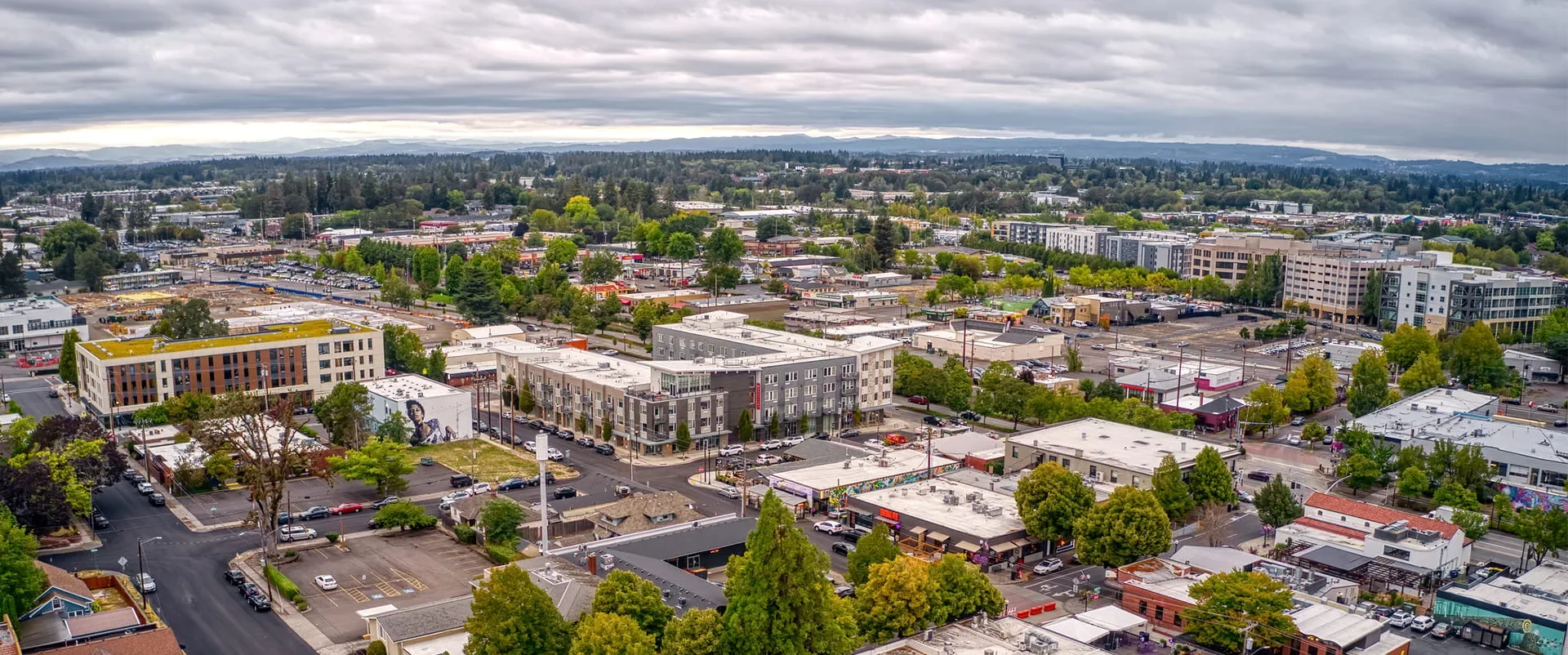
Cedar Hills is a broad neighborhood area south of US 26 and west of OR 217. Its commercial settings and freeway access make delivery routes and roof access worth confirming at each property. We inspect the actual assembly and condition rather than assuming all buildings in the area share a roof or drainage layout.
Mark the Roof Area
The roof walk begins at the access point and follows the reported water path. We check the nearest wall, curb, penetration, seam and drain, then mark each finding on the plan. A stain can sit below the point where water entered, so we note likely routes separately from confirmed openings. Close photographs show the detail; wider views show how it relates to the roof field.
Cedar Hills Shopping Center opened south of Sunset Highway, and redevelopment of most of its site was approved in 2022. Cedar Hills Crossing is another commercial setting just south of the neighborhood. At the building under review, we confirm the roof system, elevation, equipment and operating schedule before selecting a repair detail.
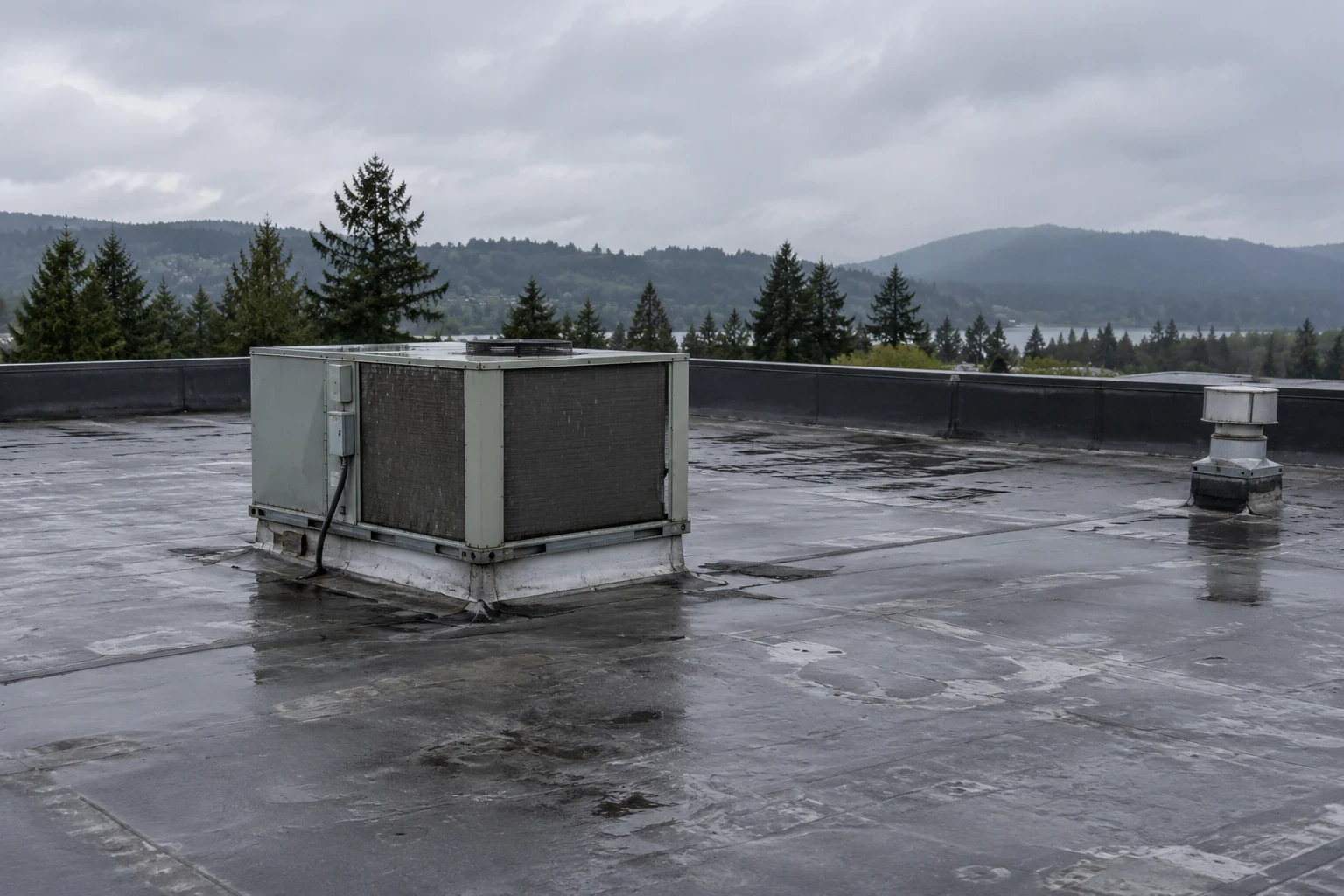
A commercial roof inspection records seams, penetrations, wall transitions and drainage. We list any area that could not be reached and the access needed for a second visit.
Separate Protection from Repair
If water is still entering, we first protect contents and identify a temporary measure that fits the roof condition. That may mean covering an opening or sealing a defined transition until permanent work can be completed. We record the location and limits of the dry-in, so the owner knows what it protects and what remains exposed. The temporary visit does not replace the repair scope.
Rain on about 151 days a year, heaviest from November through January, means follow-up is planned so the temporary boundary stays visible through the wet months, and the condition statement stays tied to the observed property.
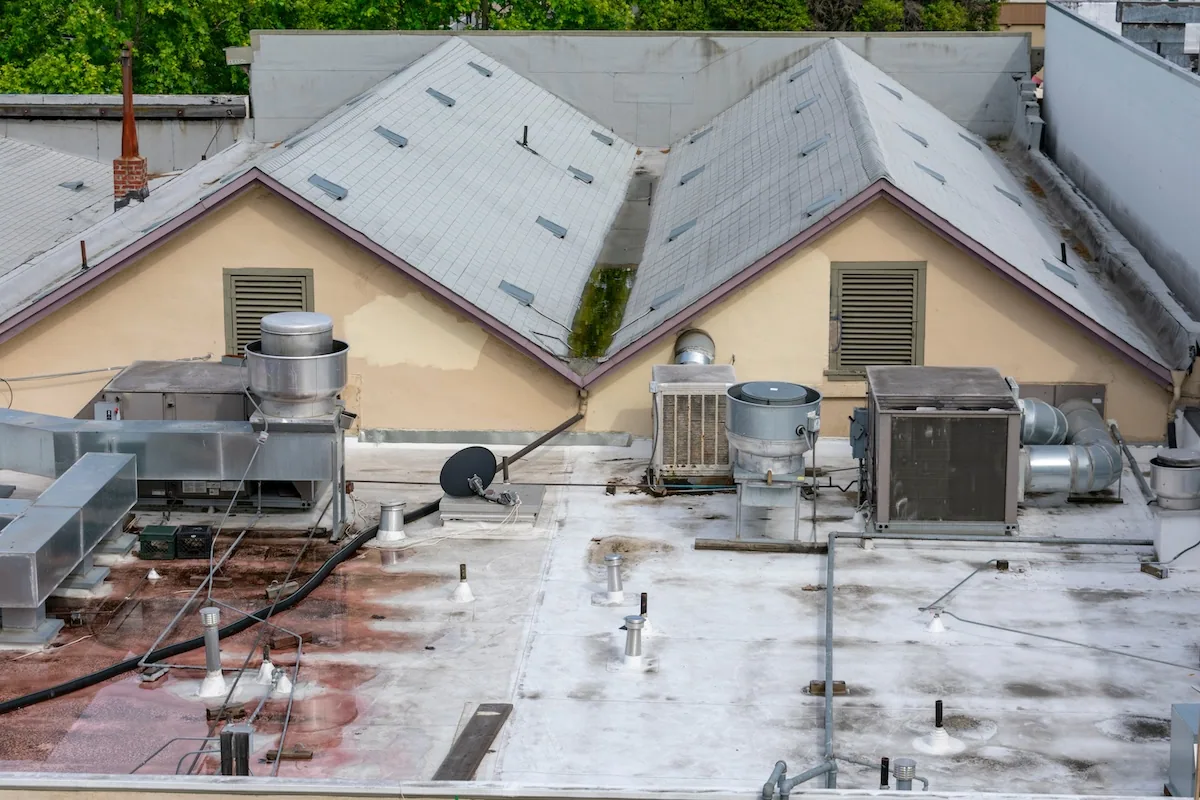
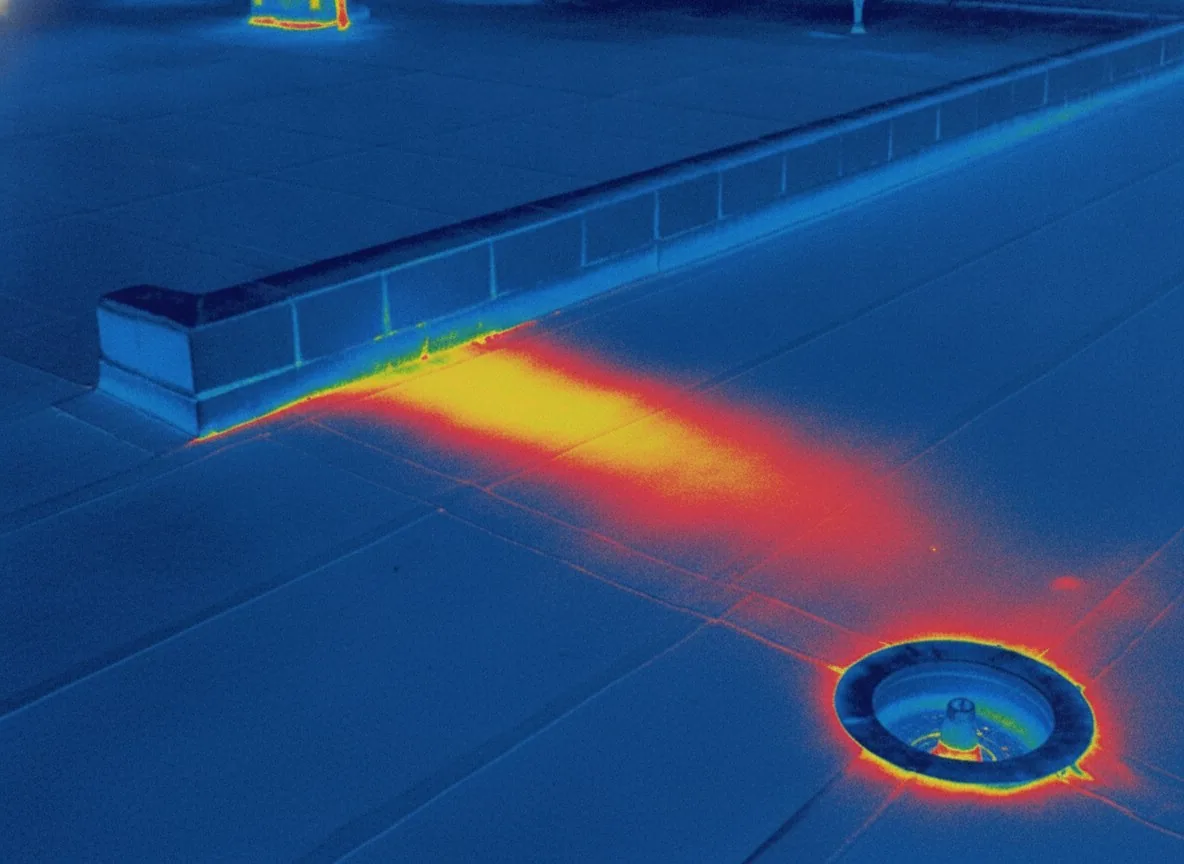
Where a seam or flashing has a clear failure boundary, a leak repair can specify preparation, material and tie-in. If water may have spread beneath the membrane, infrared moisture screening can help choose test locations. A test opening confirms only the layers at that point, which is why the map and report show its exact location.
Check the Outlet and Path
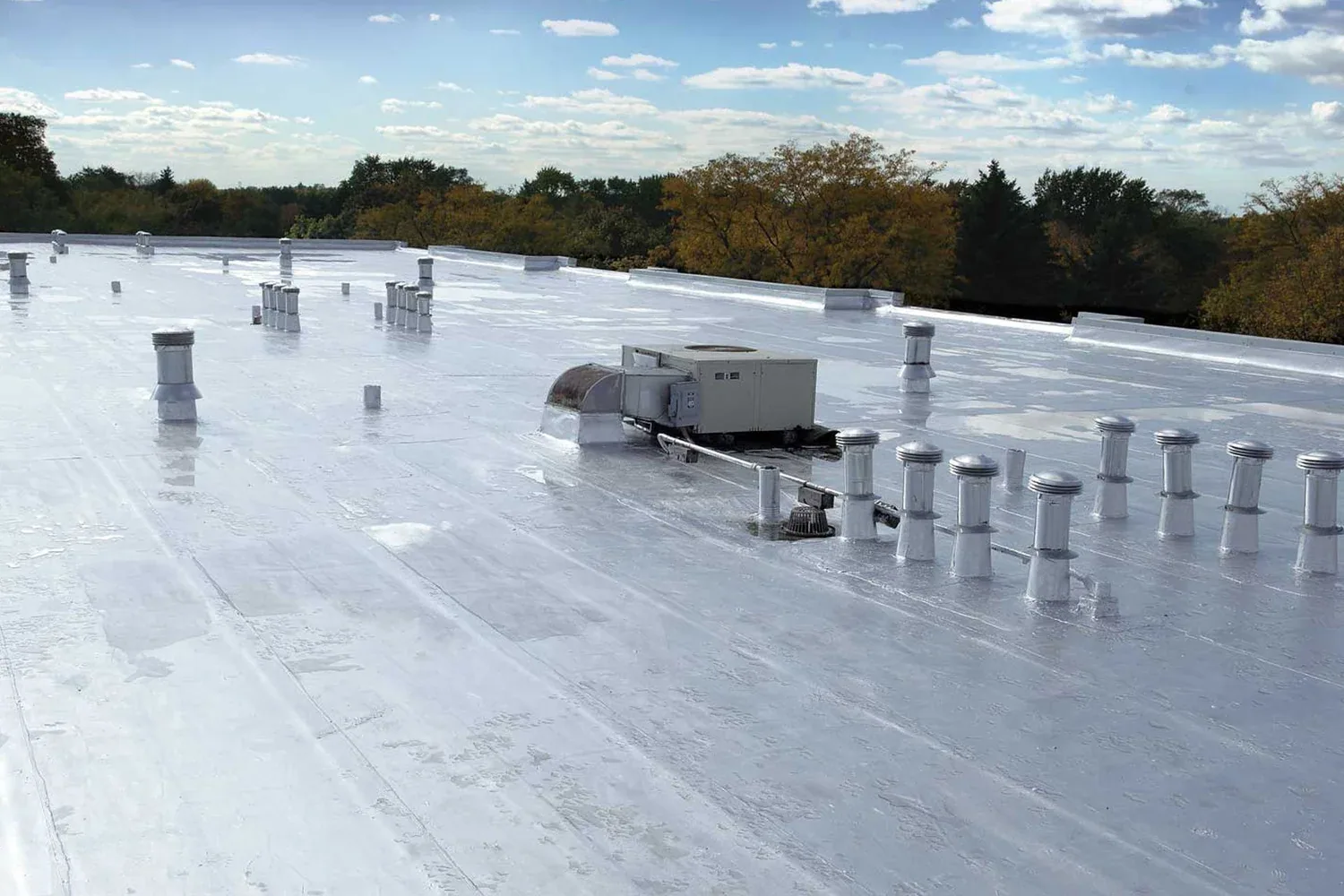
Water has to reach a drain, pass through the sump and discharge without finding a loose connection. We check the strainer, clamping ring, membrane around the outlet and the path leading toward it. Debris removal may restore flow, but it will not correct a low area that remains after rain. A ponding check notes the extent and whether slope, insulation or deck condition needs further review.
The Sunset Transit Center serves Westside MAX across US 26 from Cedar Hills. For a property near the freeway, material staging and access still come from the building contact, and we confirm the service entrance, loading rules and work area before scheduling.
A drain and scupper repair can define outlet work and the membrane tie-in. If the drain assembly remains sound, a smaller repair may fit. If the sump or surrounding field is deteriorated, we price the connected work together so a new drain detail is not left beside a failed roof section. The written scope identifies what is included and what needs another test.
Set the Repair or Replace Threshold
A localized repair makes sense when the failing detail has sound material around it for a lasting tie-in. We look for repeated patches, exposed reinforcement, loose flashings, wet insulation and deck concerns that could widen the boundary. Each confirmed finding receives a plan mark and photo. Suspected conditions remain labeled as questions until a test or second visit supports a broader scope.
For recovery, we review the existing system, attachment, drainage and compatibility before adding another layer. A recover assessment states the prerequisites and any exclusions. If broad deterioration or repeated water entry points elsewhere, a replacement scope separates removal, substrate work, edge transitions and staging assumptions from a repair price.
The cost and schedule follow the boundary, access, materials, preparation and amount of concealed condition to resolve. We identify which decisions can be made from the walk and which require testing or design input. That gives the owner an option set instead of one price that silently assumes every open condition has the same answer.
Coordinate Access Before Mobilizing
Before work starts, we confirm the roof hatch or ladder route, keys, escorts, equipment clearance and any tenant notice. The address contact confirms the gate, loading point and safe material route. We place those details in the scope sheet so the crew and manager work from the same plan.
Where an occupied building has deliveries or rooftop service calls, the work sequence can keep a route clear or divide the job by roof area. We identify any shutdown and the person who must approve it. A phased occupied-building scope can address access and protection without assuming the building must close. A visit in Downtown Beaverton or Cedar Mill receives its own plan, findings and approvals.
Timing depends on the roof surface, rain exposure, material lead time and the next suitable dry period. When a second visit is needed, we state what remains to be checked and what records or access will close the question. The owner receives the new date and decision in the building file. Cedar Hills Crossing is a Cedar Hills Boulevard shopping center with big-box retailers, and redevelopment of most of the old Cedar Hills Shopping Center site was approved in 2022, so roof schedules nearby can be affected by construction traffic. The scope names any such constraint the property contact reports.
Related Roofing Work
Commercial Roof Inspection
Commercial Roof Leak Repair
Infrared Moisture Survey
Commercial Roof Drains and Scuppers
Request a Cedar Hills roof visit
Place an intake call with the property address and last known leak location. We will arrange a make-safe visit, record the roof details and provide a scope sheet with the next repair decision.
Questions About Cedar Hills
What details help you locate a leak in Cedar Hills?
Send the property address, room where water appeared, last known leak location and any roof plan. A photograph from inside can help identify the area to trace, but we still check the roof details and drainage before naming the source.
Can you work around a busy loading area?
We confirm the delivery schedule, material route and any roof access limits with the building contact. If staging must move to a different time or section, we show that sequence in the scope before mobilization.
Does a ponding area always mean the roof needs replacement?
No single water observation sets the replacement decision. We document the area, drainage path, duration after rain and any related membrane or deck condition. The scope can call for outlet work, monitoring, testing or a broader correction depending on what the walk confirms.
When would a moisture test be useful?
Testing helps when concealed insulation could change repair quantity or the choice between recovery and replacement. We map the suspected area, propose sample locations and keep results limited to what was opened or measured.
What is included in a make-safe visit?
We record active water entry, protect the affected interior where practical and apply a temporary roof measure when conditions allow. The visit note states the protection boundary and the permanent work still to be priced.