
Property Types We Roof
Manage manufacturing plant roofing in Beaverton, OR with equipment coordination, dry-in boundaries, documented repairs and assembly-specific replacement scopes.
Manufacturing Plant Roofing in Beaverton, OR
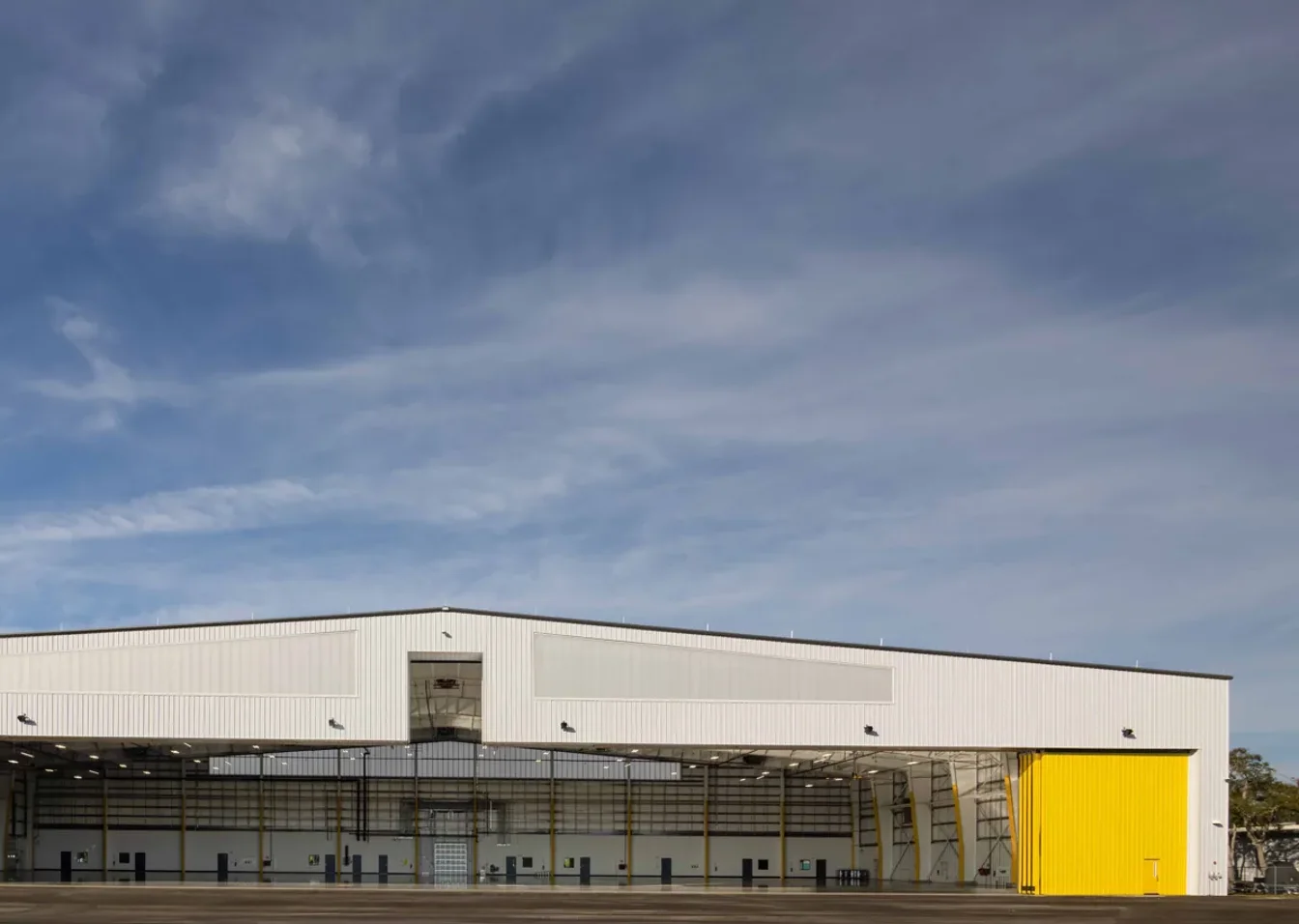
A production line can keep running while a roof repair moves across another zone, but the boundary has to be coordinated before material is removed. In Beaverton, OR, we begin with the address, interior process limits and last known leak location. We confirm what sits below the affected roof area, arrange a make-safe visit if water is active, then photograph the membrane, curbs and access path. The leak log and marked plan show what the crew can open and what the plant needs protected.
Technology, optics and food-processing plants cluster between Beaverton and Hillsboro, and equipment access and interior scheduling matter on all of them. We record the deck, insulation, membrane, drains and penetrations before proposing a repair, recover or replacement scope.
Coordinate the Roof and the Line
Plant roofing starts with the area below as well as the membrane above. We ask which rooms, equipment or production steps cannot take dust, vibration or water. A phase plan identifies the lift, work hours and end-of-shift dry-in, then sequences around operations.
Manufacturing employs about 24 percent of Hillsboro's workforce. On a plant roof our site walk records the curbs, exhausts, skylights and utility routes, then coordinates with the facility contact before any penetration changes.
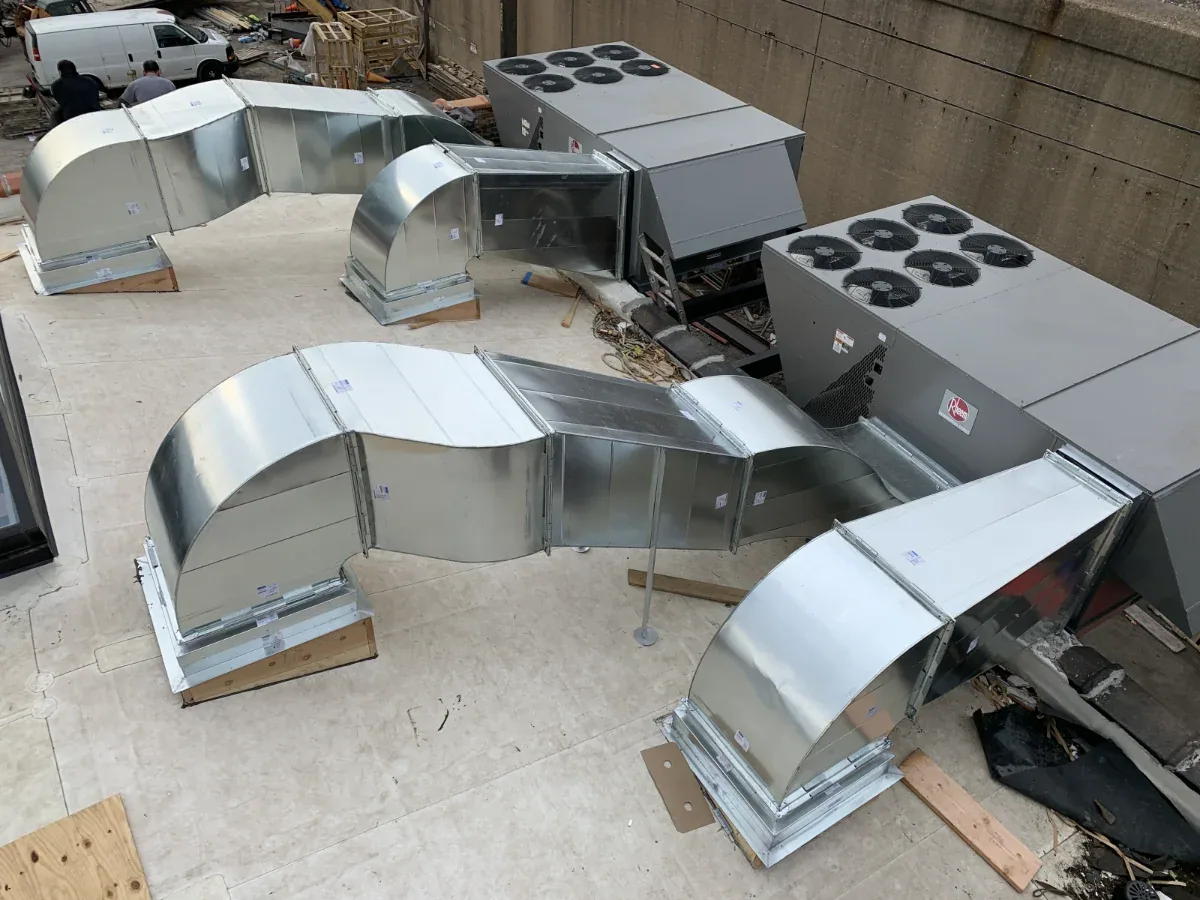
For equipment replacement, a curb and support scope coordinates roofing with mechanical or electrical trades. We identify who disconnects and resets equipment and where temporary protection is required. Production planning also needs a clear line between roof work and interior controls: we identify the room beneath each phase, confirm who can authorize access, and note when a system must stay online. That information can change lift placement and crew hours. We add the agreed restrictions to the daily work boundary, then update the building file if the operating plan changes.
Read the Assembly Before Pricing
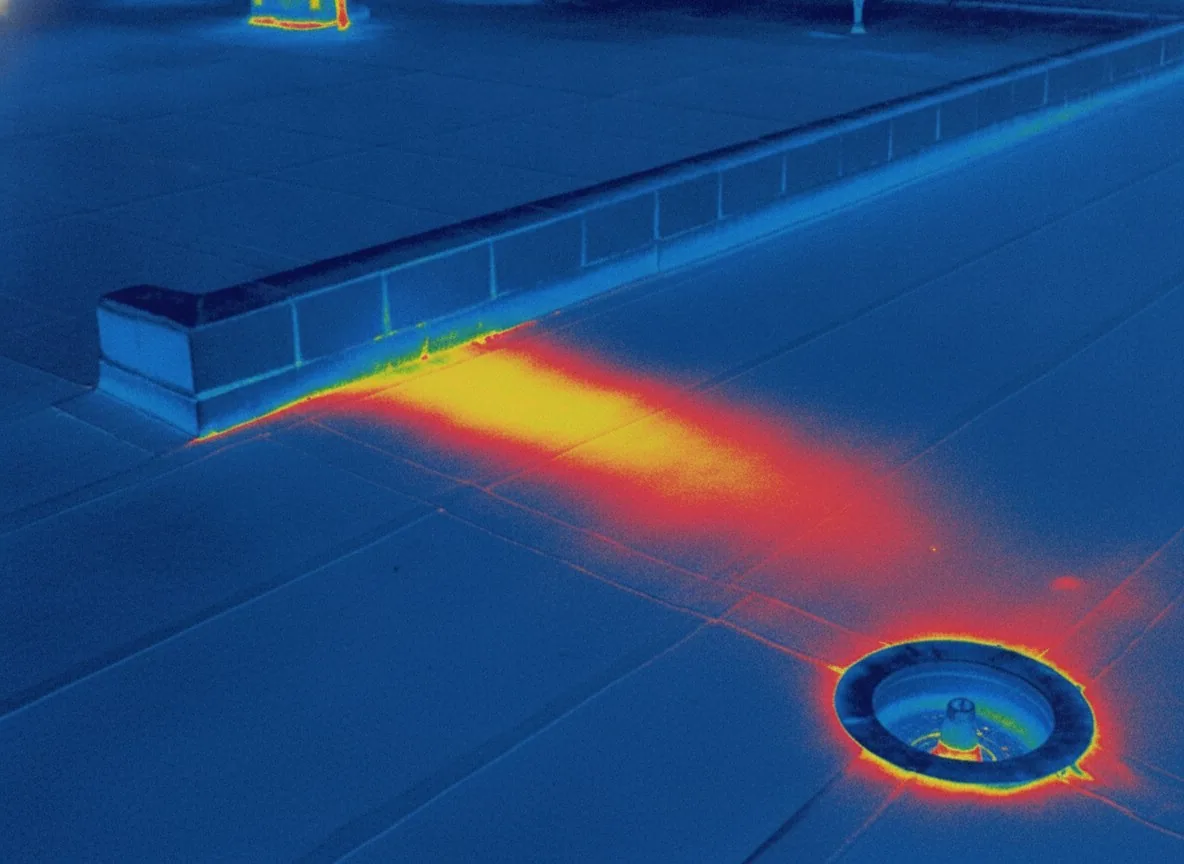
We identify the roof layers, attachment, insulation, deck and perimeter before recommending a system. A surface patch can miss moisture below; a recover may not fit if the assembly cannot accept another layer. Test cuts or infrared surveys can locate suspect areas, and the scope records what remains to confirm.
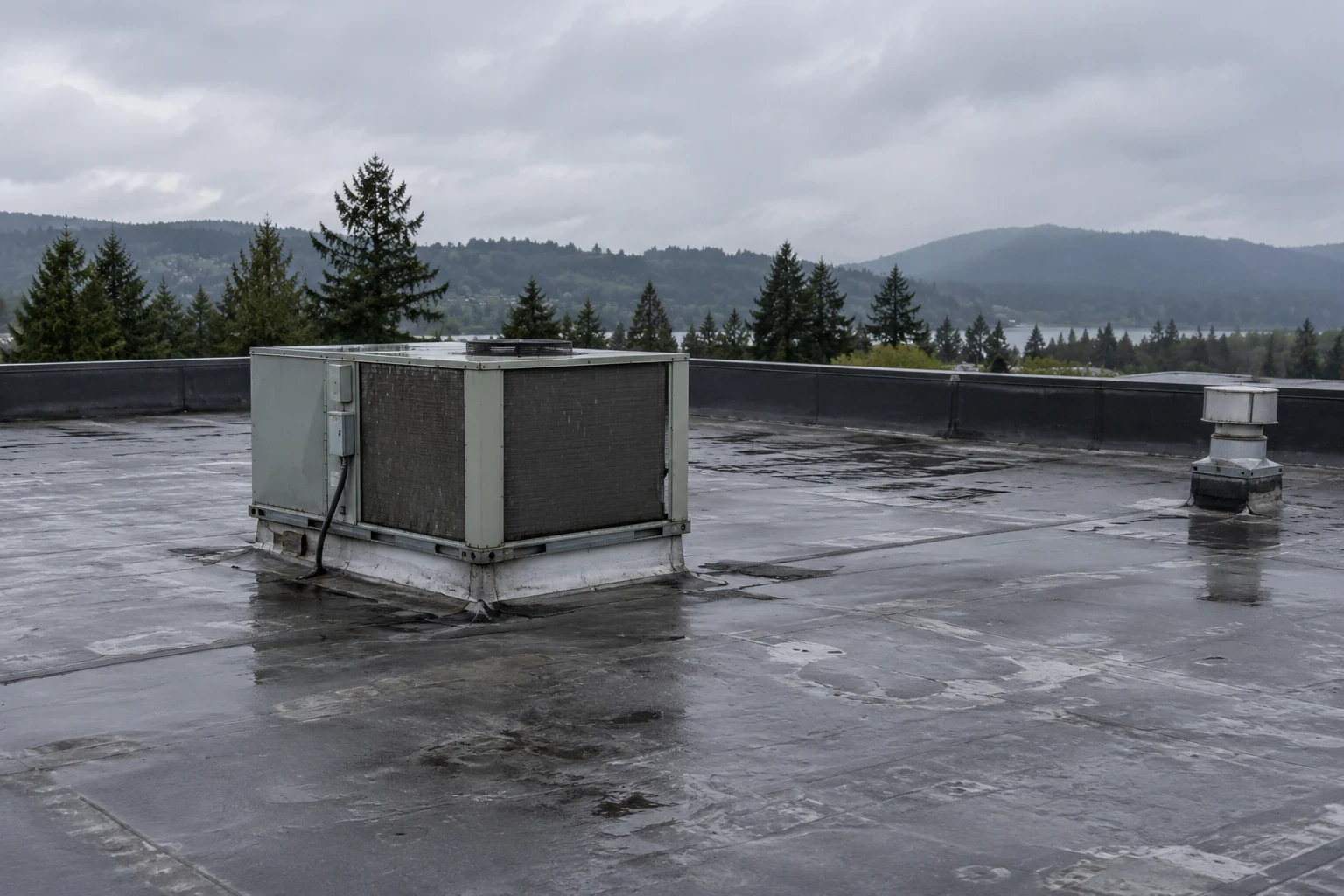
Beaverton averages about 39 inches of rain over 151 days, with November through January wettest. We inspect seams, curbs, penetrations and drains, then pair photos with the plan. A hands-on inspection establishes a baseline; an infrared survey can map suspect insulation.
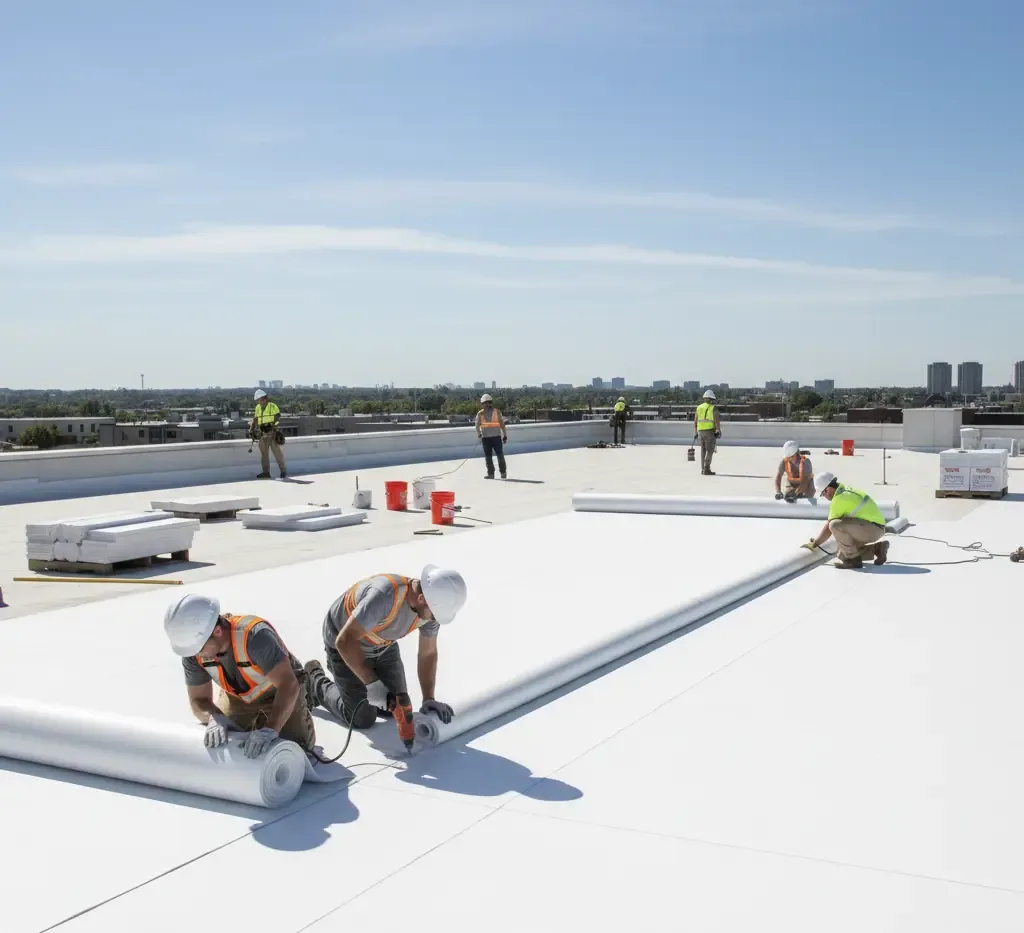
The membrane must match the assembly and operating conditions. TPO uses heat-welded seams. We document compatibility and attachment. When the substrate is sound, a recover may retain material; otherwise replacement can expose the deck and wet layers. Cores are cut where the infrared scan and the leak log agree, and each core hole is resealed and photographed the same day.
Track Water to the Detail
A leak near production may enter at a curb, boot, seam, wall or drain, then travel before appearing indoors. We start with that interior location and inspect the roof path. Each finding receives a number, photo and mark. If a service contractor used the roof, we note the route and inspect disturbed material without assigning cause.
Drain bowls, strainers, scuppers and leaders get a separate check. Debris slows flow; a low deck or uneven insulation can hold water after an outlet clears. We record ponding and whether a targeted repair or larger drainage correction fits.
Portland recorded 116 degrees on June 28, 2021. We inspect actual seams and flashing for observed heat-related conditions, then connect those findings to the scope.
Compare Repair and Replacement
A repair fits when failure is local and the surrounding membrane, insulation and deck remain sound. We remove weak material, dry the substrate and tie compatible material into the roof. Widespread wet insulation, repeated seam failures or a deteriorated deck can widen the scope. We mark the boundary and note concealed conditions that could change it.
For replacement, we separate tear-off, deck repair, insulation, membrane, curbs and edge metal. A warehouse roof plan may emphasize dock movement; a plant plan also identifies process-sensitive areas and trade handoffs. A distribution center scope can address another operating pattern without assuming identical assemblies.
North Hillsboro Industrial Area plants run large footprints, so access is planned early and the specification rests on the inspected roof and its records.
Protect Each Opened Section
The crew opens only what can be completed or secured before shift end. We inspect exposed deck and insulation, replace included materials and close the field. If concealed damage changes the scope, we photograph it and pause at a safe boundary for review.
Beaverton's wet season affects work that needs a dry substrate. We identify weather-dependent tasks and temporary dry-in before scheduling. An area awaiting permanent closure receives a secured termination entered in the daily record. The schedule states which phase can proceed if rain arrives and which seam work must wait, so operations can plan protection without treating a temporary seal as a finished repair.
The facility's gate and production calendar set arrival times. We confirm access, safety orientation and lift placement with the plant contact. A plant manager gets the open-section map before the shift starts and the closed-section photographs before it ends.
Return a Decision-Ready File
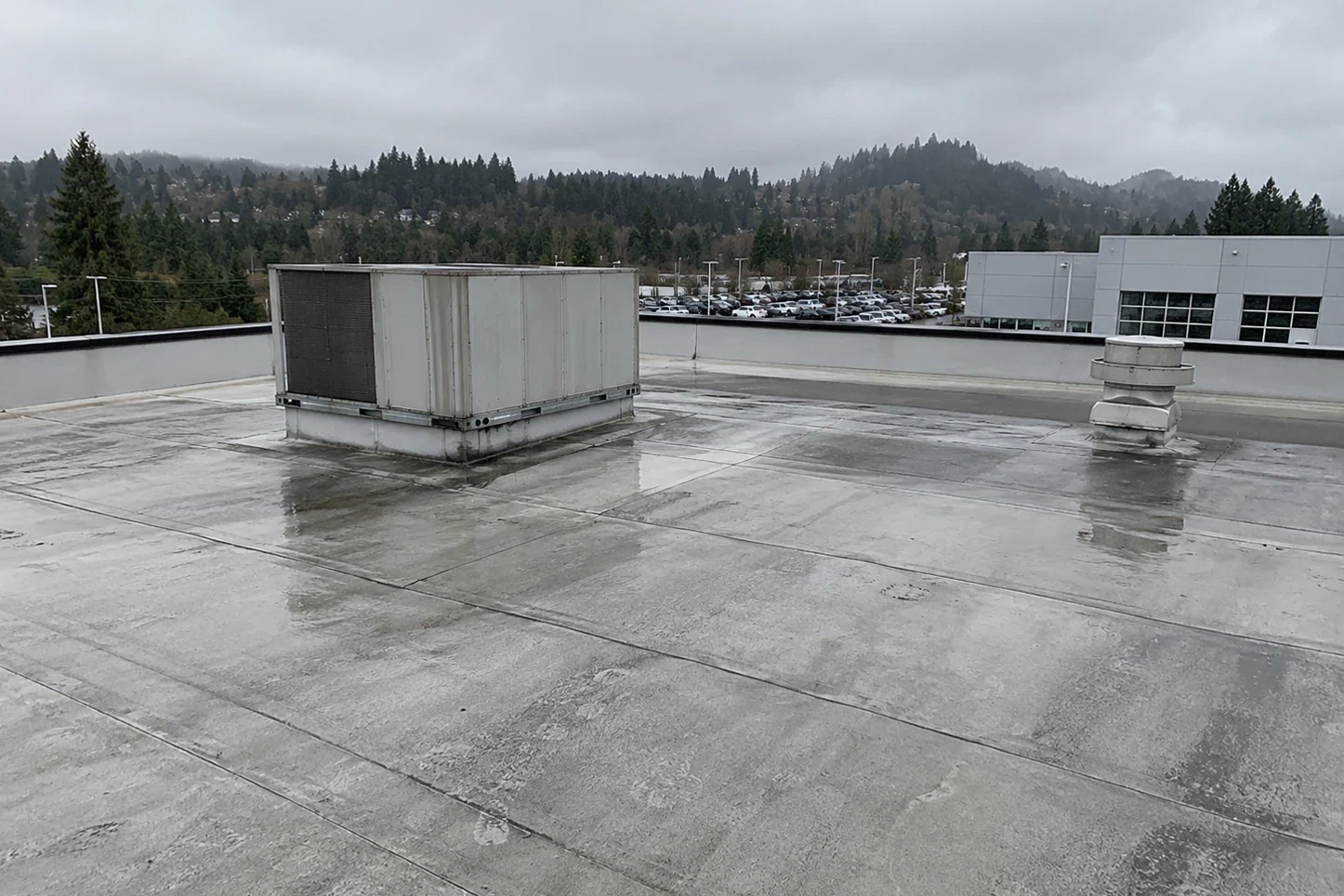
Closeout includes dated photos, a marked roof plan, materials installed, repaired details, drainage notes and remaining observations. A separate entry records concealed conditions that changed the scope. Maintenance staff receive a location to revisit, and finance gets a basis for planning phases.
Maintenance walks before the wet season can revisit drains and penetrations. A Hillsboro service visit starts with the address and roof concern; emergency calls are taken around the clock, holidays included.
For multiple roof areas, consistent records help compare conditions while preserving differences in system, use and access. The next scope sheet can sort repair now, scheduled work and monitoring. We can also record a repair-or-replace threshold by area, leaving an owner with a clear file for the next budget review rather than a collection of unranked observations.
Related Roofing Work
Rooftop Equipment Curbs and Supports
Commercial Roof Inspection
Infrared Moisture Survey
TPO Roofing
Coordinate a Plant Roof Scope
Place an intake call with the facility address, production constraints and last known leak location. We arrange a make-safe visit when needed, then provide a written scope sheet with the roof boundary and trade coordination steps.
Questions About Manufacturing Plant Roofing
How do you keep production areas protected during roof work?
We identify process limits and sensitive rooms with the facility contact, then set work hours, interior protection and a shift-sized roof boundary. The crew opens only what can be secured before leaving. Any work that requires equipment shutdown or a trade handoff is named in the phase plan.
Can roof equipment be replaced during a reroof?
It can be coordinated when the facility schedules the mechanical work and confirms disconnect and reset responsibilities. We document the curb, support and flashing sequence, then keep the roof protected between trades. The scope distinguishes roofing work from equipment work.
What makes a plant roof a replacement candidate?
Widespread wet insulation, repeated seam or flashing failures, an unsound deck or details that cannot tie into serviceable material can move the decision beyond repair. We inspect and record the assembly, then state what is confirmed and what further testing would settle.
Can a repair be scheduled between production runs?
Yes, when access and the repair method fit that window. We confirm the location, material, dry-in needs and crew access in advance. If the substrate is wet or the permanent detail needs dry conditions, a make-safe visit may come first and the final repair follows later.
Which documents should stay with the plant building file?
Keep the marked roof plan, dated photographs, material and detail notes, drain findings, scope changes and remaining work. Those records help maintenance staff locate the repair and help finance compare later phases with the condition observed.