
About Commercial Roofers Beaverton
The sequence is simple and it does not change: an intake call, a make-safe visit, a photo set, a written scope sheet and a second visit where the decision gets made. Commercial Roofers Beaverton is a commercial roofing contractor in Beaverton, OR that repairs, replaces, recovers, restores, coats, inspects and maintains low-slope and metal commercial roofs, and everything it does is organized to keep that sequence reliable for an asset manager who needs to stop the water, record it and then choose.
The kinds of work
The work falls into a few plain groups. Inspection by hand, by drone and by infrared moisture survey. Repair, from one failed curb detail to a section of seams. Restoration of a sound roof with a coating, a recover over dry insulation and replacement of a roof that has run out of life. Maintenance visits that clear drains, probe seams and check edges. And emergency response at any hour, every day, holidays included, which starts with a tarp, a temporary seal and a cleared drain.
The systems include TPO, PVC, EPDM and KEE single-ply, modified bitumen, built-up roofing, standing seam and retrofit metal, spray foam, and silicone and acrylic coatings. Which one fits a roof follows the evidence, and the services that go with each are chosen after the walk.
Cost follows the details: the number of curbs and penetrations, the length of the perimeter, the condition of the deck and how a crew and equipment reach the roof. Access, temporary protection and overtime for work around operating hours each appear in the proposal as their own lines, so the owner sees where the money goes and what can be phased.
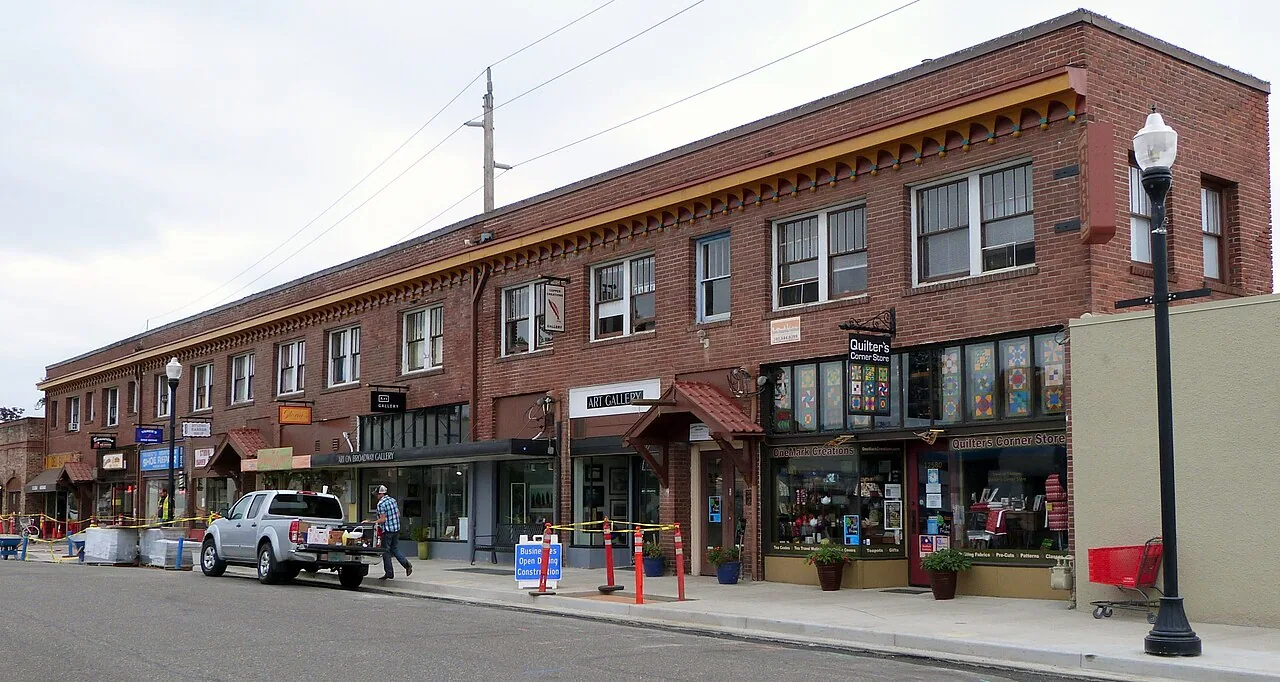
Beaverton, Oregon
The first hour
When water shows up inside a building, the intake call confirms where it is entering and what sits beneath it. A crew goes to make the area safe, then photographs the roof before anyone touches a seam. The photo set goes into the building file with the date and the leak location. A wet fall gives few clean days, so the dry-in comes first and the permanent repair waits for the next dry window.
Rain falls on Beaverton on roughly 151 days a year, about 39 inches in all, and November through January is the wettest stretch. Drainage and watertight detailing shape the roof work, so the drain sump is checked early and often.
Drains are the first stop on the roof. A sump packed with leaves is how an ordinary November rain becomes an interior leak, so each strainer is cleared, photographed and logged, and the overflow route is checked as well. A ponding check follows once the rain has stopped.
What the owner holds
The building file is the deliverable: the leak log, the photo set, the moisture findings, the scope sheet and the closeout photographs. It is written so a manager can hand it to a board, a lender, an insurer or a successor without a word of explanation. For owners with several properties the same format runs across all of them, and the scope sheets are ranked together so the capital line follows the consequence of a leak.
Heat, cold and code
The wet season is only one stress. Portland reached an all-time 116 degrees on June 28, 2021, while Beaverton's own records run from 115 down to minus 8, a swing wide enough to stress membranes and flashings. The leak log notes surface temperature beside the rain findings, building by building.
Code matters too. Two Oregon editions are in play, a structural edition effective April 1, 2026 and an ASHRAE-based energy edition effective July 1, 2025, and the proposal names the one tied to the permit date.
Occupied buildings
Most of the buildings stay open. A school wing, a clinic, a store and a dock each need a plan built from the operating schedule. Loud work moves to agreed hours, entrances and lanes stay clear, and the work area is closed in sections that are dried in before the crew leaves.
Military and institutional sites add their own rules. Portland Air National Guard Base shares the airfield at Portland International Airport, and Camp Withycombe lies southeast of Portland. Roof work at either follows gate, escort and mission-schedule rules, and roofing on federal property follows the Unified Facilities Criteria.
Tenant notice matters as much as the schedule. A day ahead of loud work, occupants hear what will happen, where the crew will be and who to call. Schools, clinics and stores each get a plan written from their own calendar.
Buildings and owners
The Silicon Forest corridor runs between Beaverton and Hillsboro and holds technology, optics, test-and-measurement and food-processing operations. Local commercial buildings range from the mixed-use Round at Beaverton Central to the Cedar Hills Crossing big-box center and the Progress Ridge Town Square lifestyle center. The city's largest employers in its 2024 report were Nike, Beaverton School District, Analog Devices, the City of Beaverton and Fred Meyer. Roofs over those uses range from warehouse roofs to school roofs and shopping center roofs.
The owners are as varied as the buildings: property management companies, investors, health systems, school districts, public agencies, logistics operators, retailers, hospitality groups, contractors and adjusters. The work reaches Hillsboro, Tigard, Wilsonville, Portland and Vancouver, WA, with Hillsboro and Tigard among the nearest.
The second visit
At the second visit the owner's decision takes shape. The crew marks what failed, prices the repair and shows the point at which replacement belongs on the capital line. Moisture evidence sits behind each figure: a scan after sunset, when wet insulation holds heat, and cores at the doubtful spots.
From the scope sheet, the owner chooses. A roof with local damage gets a repair in matching material. A dry membrane worn at the surface may take a coating restoration. A roof with wet insulation over a wide area needs replacement, and the proposal prices a recover beside it when the deck allows.
Each item on the scope sheet is marked as temporary or final. A temporary item stays on the list until a permanent repair replaces it, so nothing done in the wet season is forgotten when the weather clears.
Request a Roof Assessment
Send the building address and what you are seeing, or call 555-555-5555. A roofer walks the roof and writes up the next step.