
Industries We Serve
Commercial roof inspection, repair and production-area coordination for manufacturers in Beaverton and the west-side market, with clear access planning.
Commercial Roofing for Manufacturers in Beaverton, OR
Start with the production area below the reported leak, the equipment that must stay protected and the person who can authorize roof access. We inspect the matching roof zone, note the failed detail and arrange a make-safe visit when water is active. The record separates what was observed from what needs a test, so the plant manager can schedule roofing work without treating an unconfirmed ceiling mark as the source.
Beaverton lies in the Silicon Forest corridor toward Hillsboro, a regional mix that includes technical and production operations. Each manufacturer's roof and process requirements remain site-specific. A commercial roof inspection documents the installed assembly, access limits and open questions at the actual address.
Tie the Roof Plan to the Production Area
Hillsboro's industrial district accounts for a substantial share of local employment, and manufacturing is a notable part of that city's workforce. Orenco Station sits within the broader Hillsboro employment area, while Tanasbourne lies near US 26 on the city's eastern edge.
For a roof visit, the plant's gate, receiving entrance and escort rules determine the route. We confirm check-in, required protective equipment, roof access, vehicle staging and any areas where tools or materials cannot be placed. Those instructions go into the visit plan before a crew is dispatched.
A production floor, warehouse and office wing may share a roof while requiring different protection below. Label each area on the plan and identify shared drains, curbs and expansion joints. The facilities contact can then see whether one repair crosses a process boundary and coordinate the appropriate shutdown or alternate access, if any is needed.
Record Conditions Without Interrupting the Process
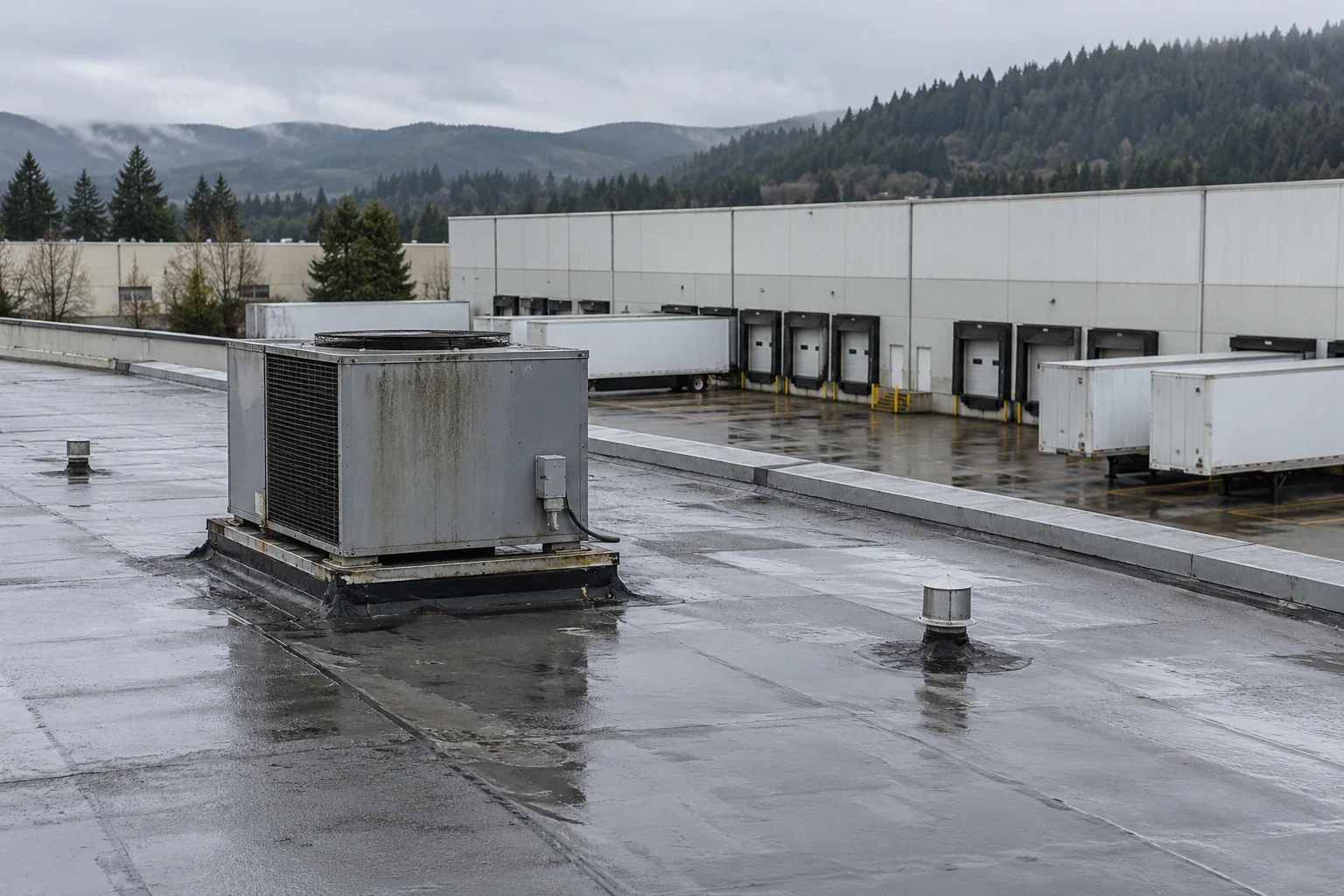
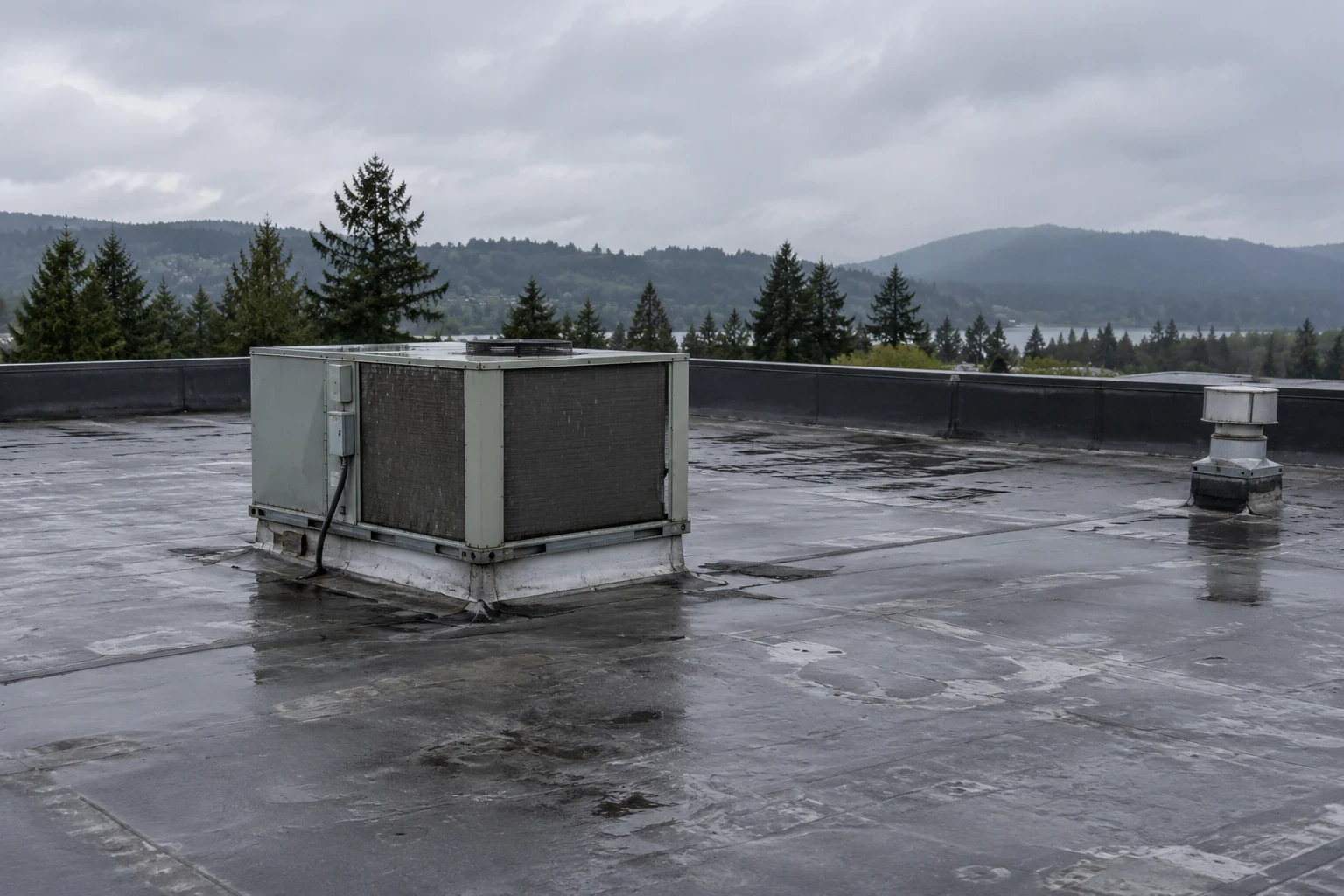
The inspection covers membrane, seams, flashing, curbs, penetrations, drains and visible prior repairs. Photos match numbered findings on the roof plan. We note nearby rooftop units and exhausts as roof interfaces, but mechanical service or process equipment repair stays outside the roofing scope unless separately authorized.
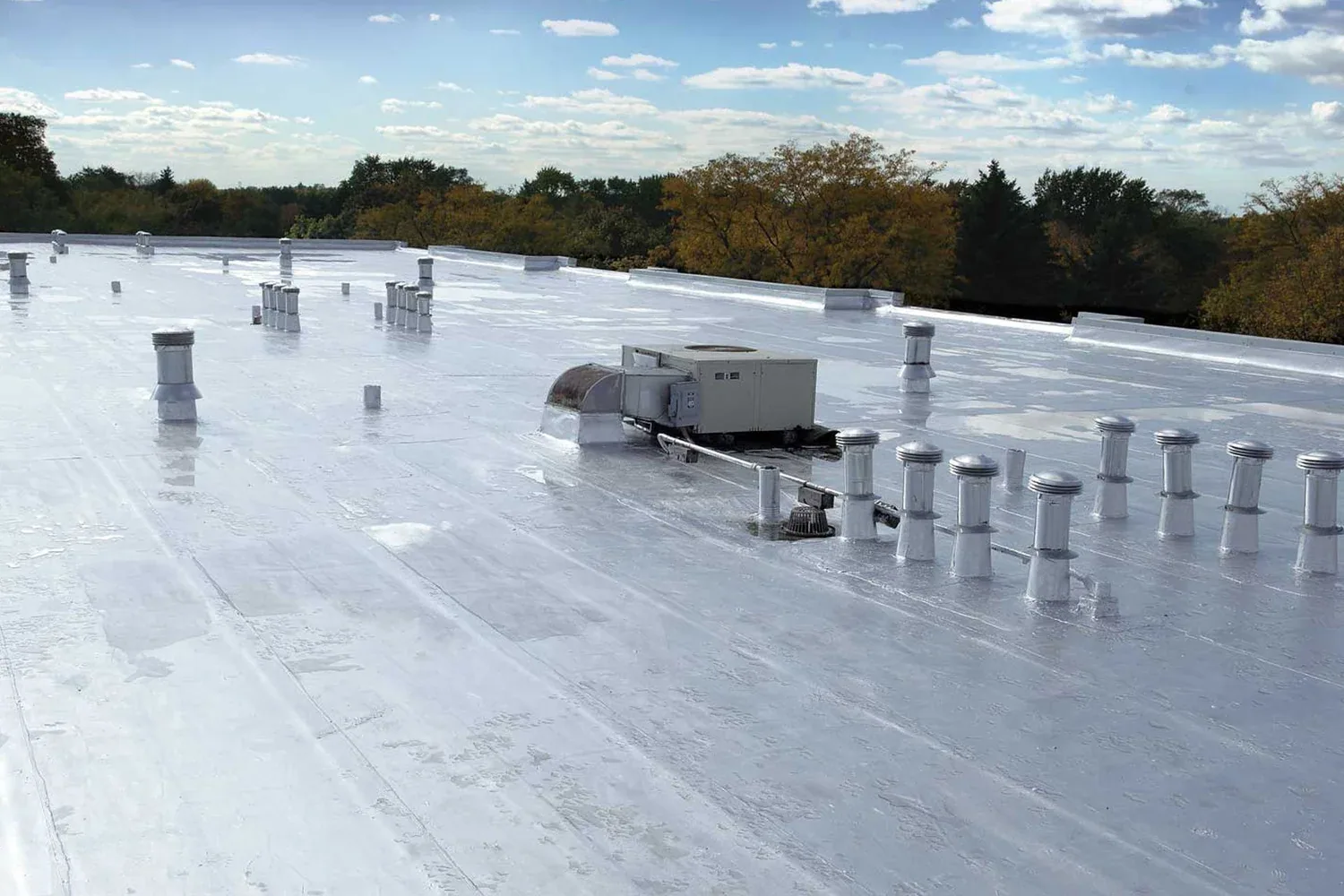
If a leak appears over a production line, record the line or room reference, the interior mark and whether equipment or materials need protection. Water may travel along a deck or framing before it becomes visible. We compare that report with the roof surface and drainage route, then identify the likely opening and any evidence gap. The drain and scupper review can be separated from a seam or curb correction.
Some substrate questions cannot be answered from a surface walk. If insulation may be wet or a deck condition is concealed, the report identifies a proposed test opening, its purpose and restoration method for approval. A roof condition report keeps that open item distinct from visible damage and completed repairs.
Scope the Repair Around the Work Zone
A repair scope identifies the preparation, compatible materials, boundaries and completed detail. At a unit curb, show where flashing meets the existing membrane; at a seam, define how far the repair extends into sound material. If a coating or earlier patch obscures the original system, state what is known and what needs confirmation rather than guessing.
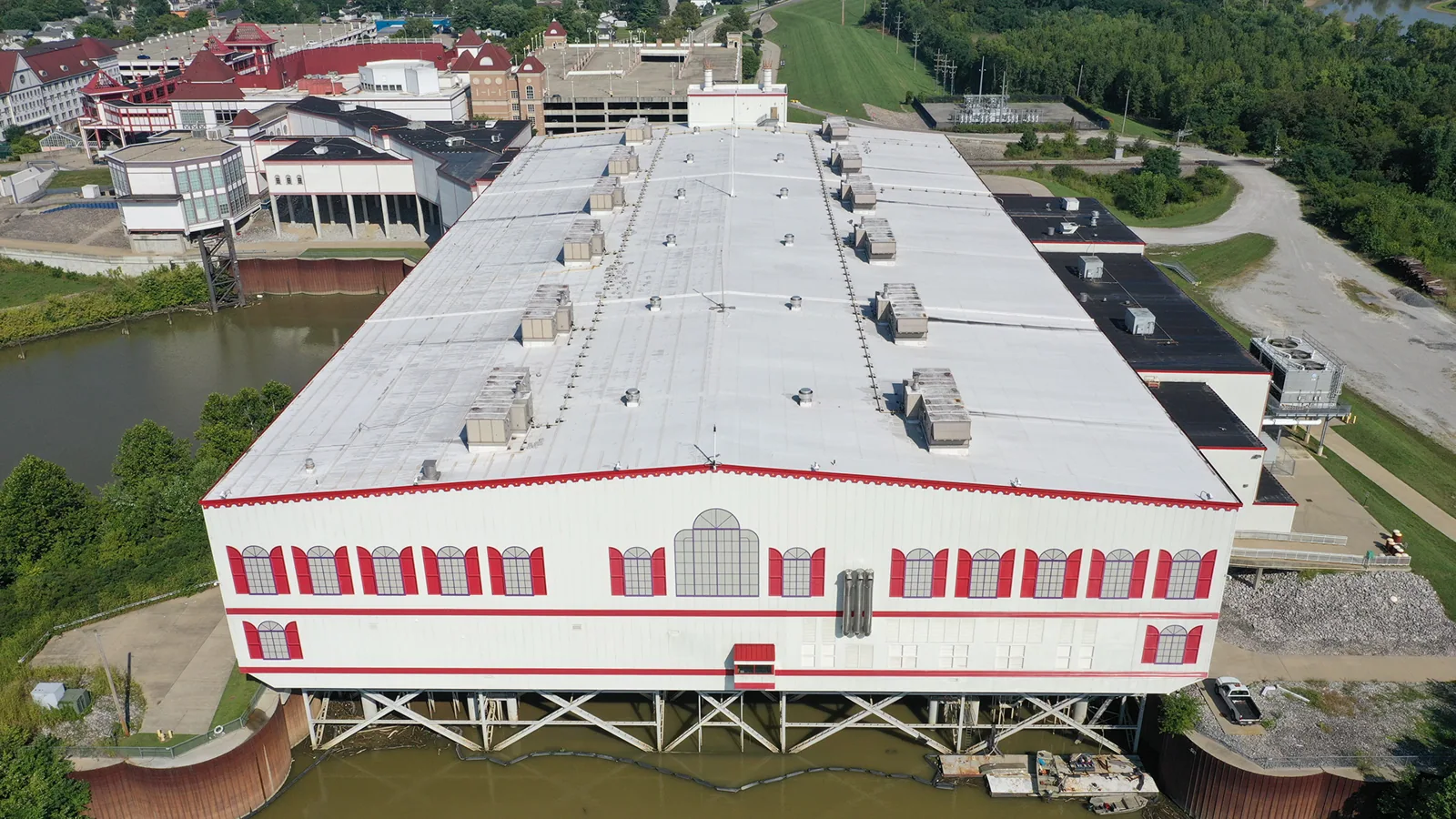
The operating schedule may affect access but does not change the repair standard. Confirm whether a roof section can be reached during production, whether a lift can be staged and what must remain clear below. The occupied-building sequence records those handoffs, and healthcare systems run on the same explicit access coordination.
Repeated leaks or widespread wear may support a comparison between localized repair and replacement of a defined field. The alternatives should use the same roof-zone map and state assumptions for removal, recovery, insulation and new flashing. EPDM is one material to weigh, but the existing assembly and project requirements guide selection. Where a coating or earlier overlay hides the original system, a small core confirms the layers before a material is chosen, and the core hole is resealed and photographed the same day. The plan records the core location.
Separate Roofing From Process and Equipment Work
Production facilities often have rooftop exhaust, make-up air, piping supports and other penetrations. The roof report identifies the flashing and membrane condition around each interface; process, mechanical and electrical work remain separate unless included in a written scope. If a shutdown or equipment lift is required, the plant contact identifies the responsible trade and approves timing.
For a larger capital decision, list immediate repair, further testing and replacement as distinct paths. The scope sheet should identify what each option includes and which concealed conditions could change the price. Do not mix equipment replacement or interior cleanup into a roofing total without separate authorization and a clear basis. If a planned repair could affect a production window, note whether noise, staging or a temporary barrier changes the sequence and who must approve it.
A manufacturer with more than one site can use common fields for condition, urgency and open tests while preserving each plant's map and access rules. A logistics operator manages loading and vehicle flow, while a production site's shutdown windows and process restrictions need their own site contact. That difference belongs in the work plan before a crew arrives.
Leave a Record for Facilities and Operations
Closeout includes dated photos, roof-zone references, material and detail notes, exclusions, completed repairs and tests still open. The report notes where access was limited and whether temporary protection remains. A plant manager can then compare a later leak log with the same roof location and decide whether another trade or inspection is needed.
For a Beaverton plant, share the plant address, affected line or room, last known water point, access requirements and the next production window when work can be reviewed. We arrange a make-safe visit when needed and issue a written scope sheet for facilities review.
Keep the roof file separate from process maintenance records, but cross-reference any shutdown or access event that affected the inspection. The final note states what the roofing crew did, what it could not verify and who owns the next decision. That handoff keeps a repair from being mistaken for equipment service or a complete building assessment.
Related Roofing Work
Commercial Roof Inspection
Commercial Roof Drains and Scuppers

Commercial Roof Condition Reports
Occupied Building Reroofing
Start With the Production Area
Call with the plant address, affected line or room, last known leak location and access contact. We will arrange a make-safe visit when needed and provide a written scope sheet for facilities review.
Questions About Manufacturers
Can roof work take place while production continues?
That depends on the plant's access, staging and protection rules. The site contact identifies the affected area, operating limits and any sequence that must be approved. We document which roof zone can be worked and what remains inaccessible before scheduling the repair.
How do you investigate a leak over a production line?
We record the interior location and compare it with the roof plan, seams, curbs and drainage path above. Water can move before it appears indoors, so the closest penetration is not automatically the source. Any concealed insulation or deck question is listed for testing.
Are rooftop units included in the roofing scope?
The roofing scope can address membrane and flashing at a curb or penetration. Mechanical work, process equipment, electrical service or shutdowns remain separate unless explicitly authorized. We note the coordination point for the plant contact.
What if a roof test opening is required?
The proposed location, purpose and restoration method are documented for approval before the roof is opened. The plant contact confirms access and timing. Results are added to the report as new evidence, separate from the initial surface observation.
What does the closeout give the plant manager?
It provides dated photos, roof-zone references, repair materials, completed details, exclusions and remaining tests. Access limits and any temporary protection are also recorded so operations can plan the next review without assuming more than the roofing work established.