
Commercial Roofing Services
Hands-on commercial roof inspections in Beaverton, OR with marked plans, numbered findings, drainage checks and a repair, schedule or monitor call.
Commercial Roof Inspection in Beaverton, OR
An inspection produces a record, and the record has to make sense to someone who was never on the roof. That reader might be a lender, a buyer, a CFO or the next property manager. Our commercial roof inspections in Beaverton, OR are built to give them what they need: a marked roof plan, a numbered list of findings, photographs tied to each one and a clear call on repair, monitor or replace.
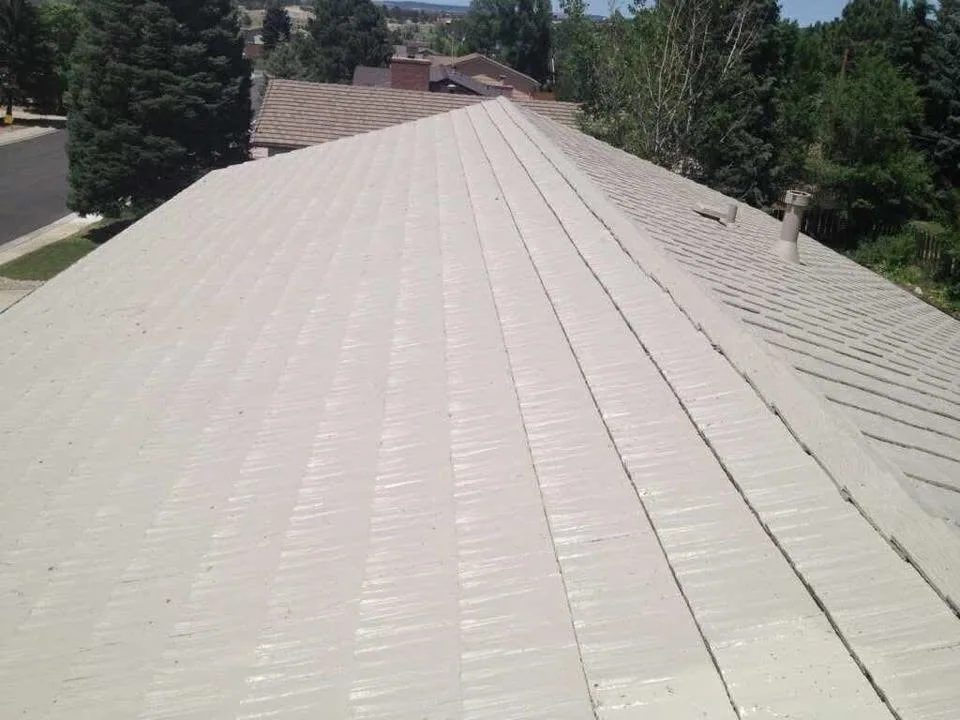
The walk is hands-on. Aerial images and sensors have their place, but a person on the roof feels soft decking, hears a hollow seam and sees a sealant bead that looks fine from ten feet and cracked from two.
The Walk Follows a Route
We start at the access point and work the perimeter first, since edges, terminations and parapet flashings take the most weather. Then the field, in lanes, so no area is missed. Then every penetration, curb and rooftop unit, and finally the drains and scuppers. A set route keeps the report consistent from one building to the next, which matters when an asset manager compares several roofs against each other and against last year's file.
Before the walk we ask for the roof plan, warranty documents and the repair history, plus the names of anyone who services rooftop equipment, since their visits are a common source of damage. Those tell us where to look hard. A past patch near a drain, a replaced section along an edge and a long-running leak all shape the route.
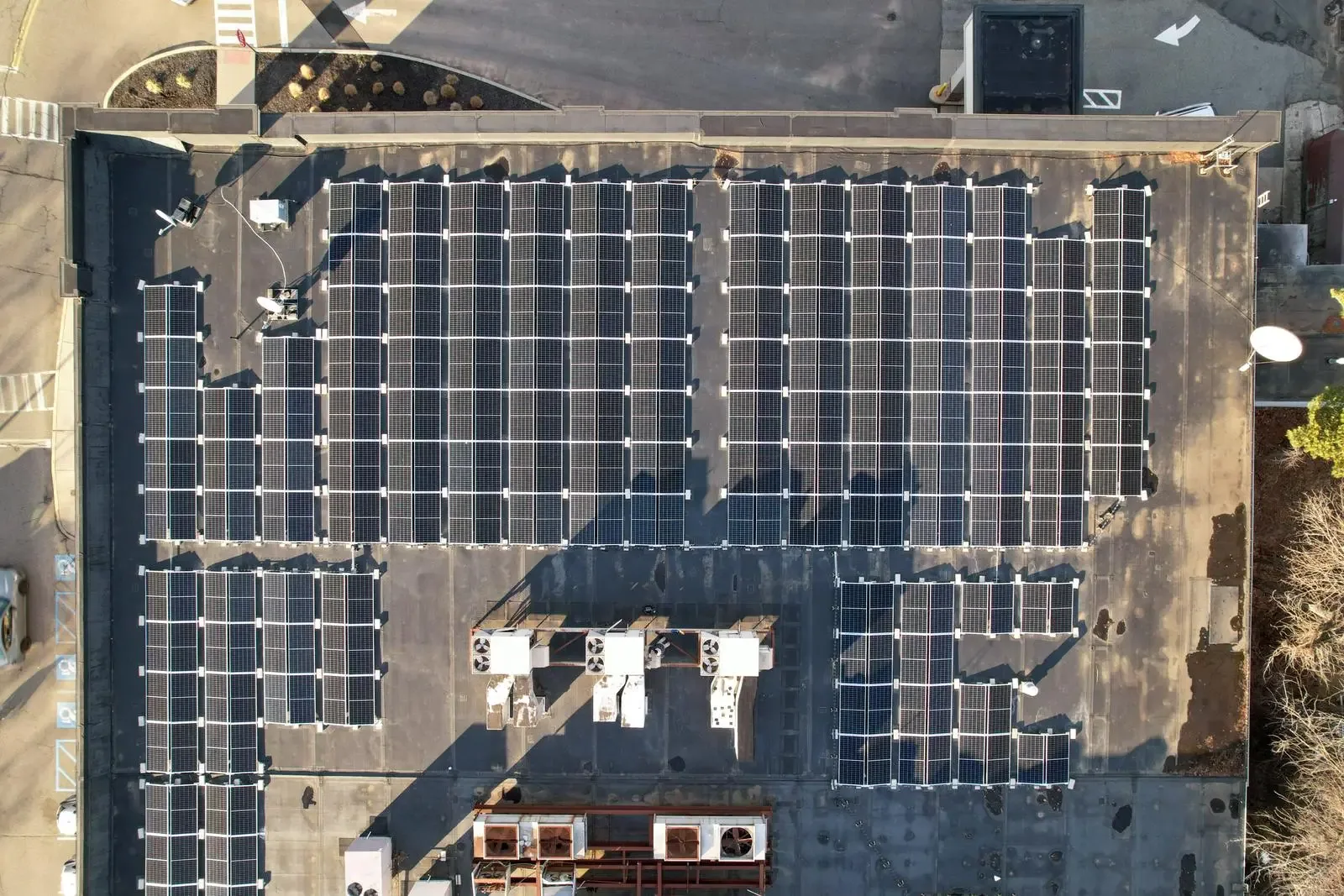
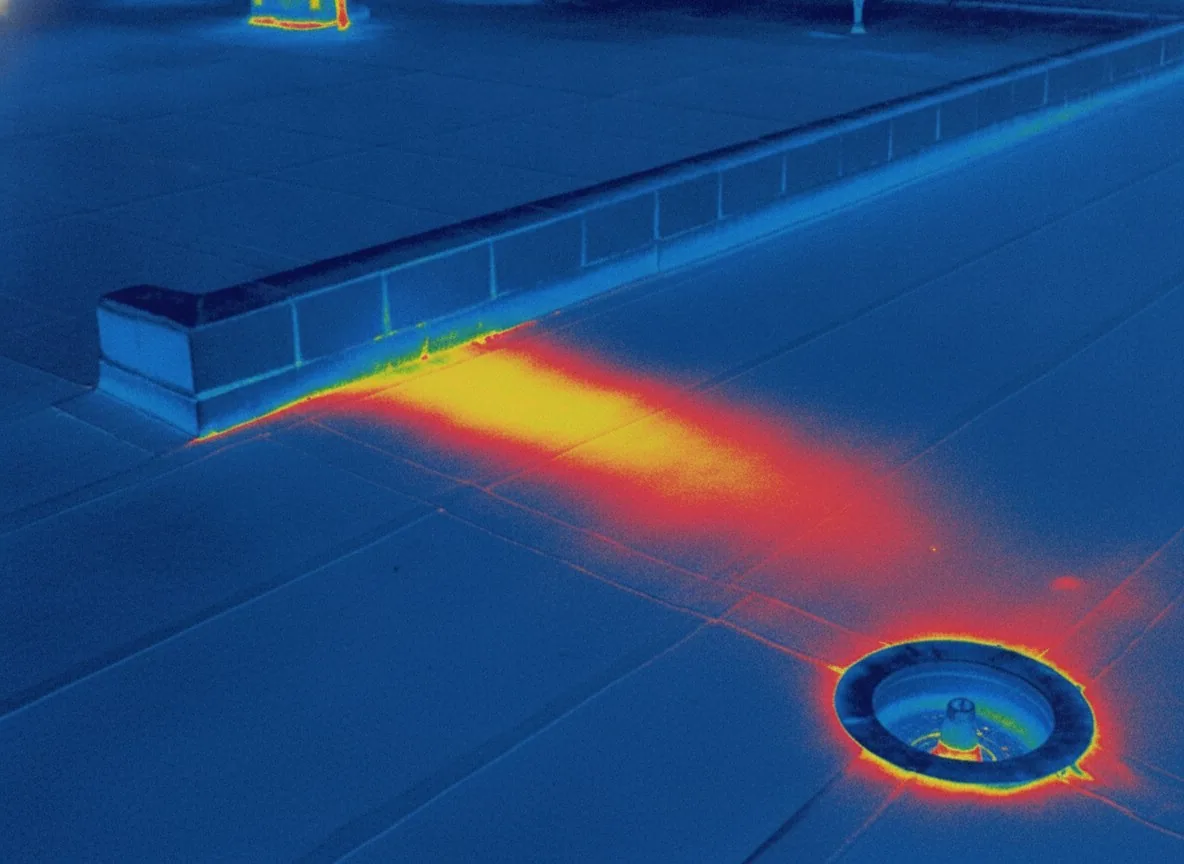
Large roofs get a second layer of evidence. A drone survey gives a fast overview of the whole surface, and an infrared moisture survey maps suspected wet insulation. Both feed the walk instead of replacing it. The crew carries the images to the roof and goes straight to the questionable areas, probing, pressing and photographing what the camera cannot confirm. The combination finds more with less time on the membrane.
What Gets Marked
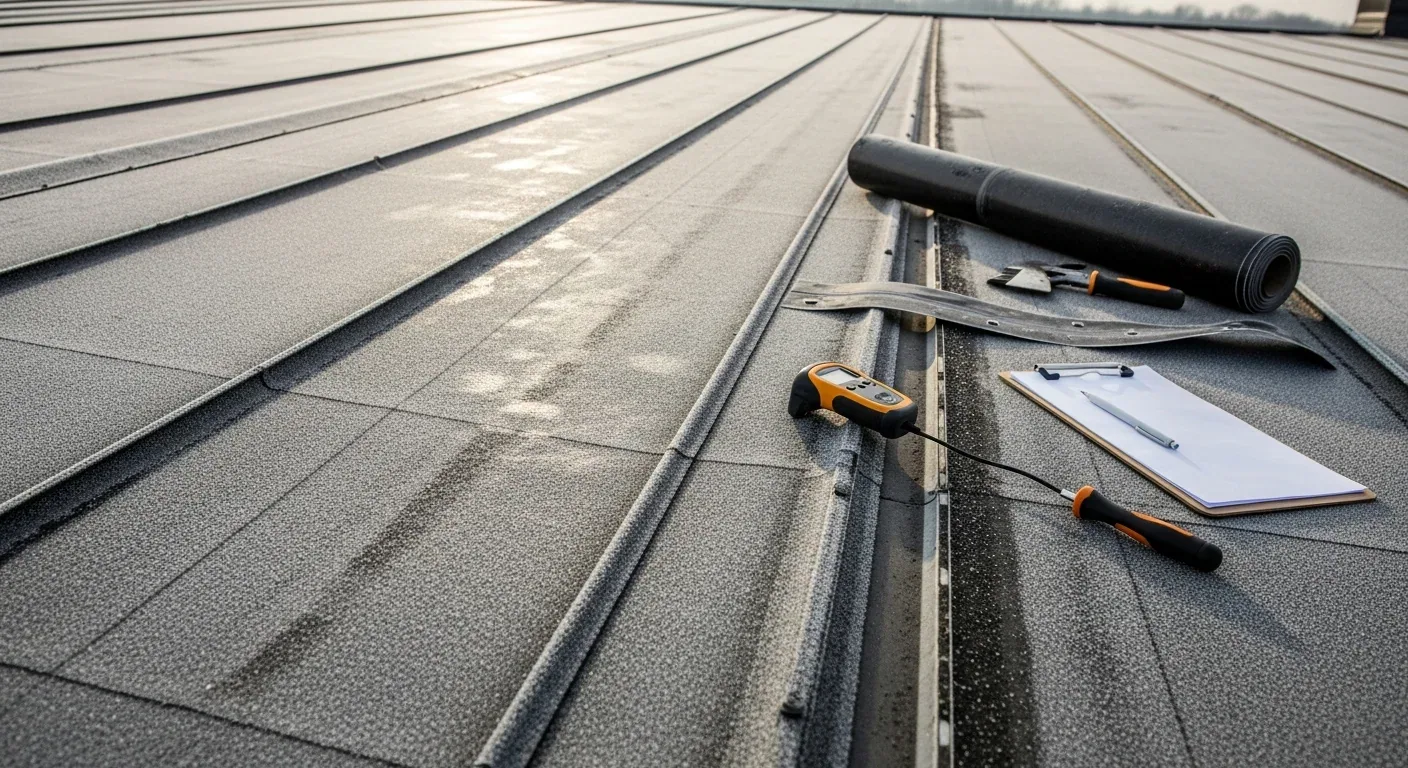
Every finding receives a number, a location on the roof plan and a photograph. Typical entries include open or lifted seams, blisters, splits at laps, cracked or missing sealant, deteriorated flashing, loose or corroded edge metal, damaged drain components and signs of ponding. We note fastener back-out on mechanically attached systems and surface wear on coatings and granulated sheets. On metal roofs we check panel laps, clips, fastener heads and the condition of the seam closures, because those details loosen with thermal cycling and show up as streaks or small weeps long before a panel fails.
We also mark what is fine. A clean flashing, a well-sealed curb and a dry drain bowl all go in the report, since a building file that records only problems gives a distorted view. When a manager reads the report a year later, the sound details help show what changed and what did not.
Drainage Gets Its Own Pass
Beaverton averages roughly 151 days of precipitation a year, which means drains work most of the winter. Strainers, leaders and scupper openings clog with leaves and grit, and a clogged drain turns a sloped roof into a shallow pond. We clear and test each drain during the inspection and record the water behavior around it.
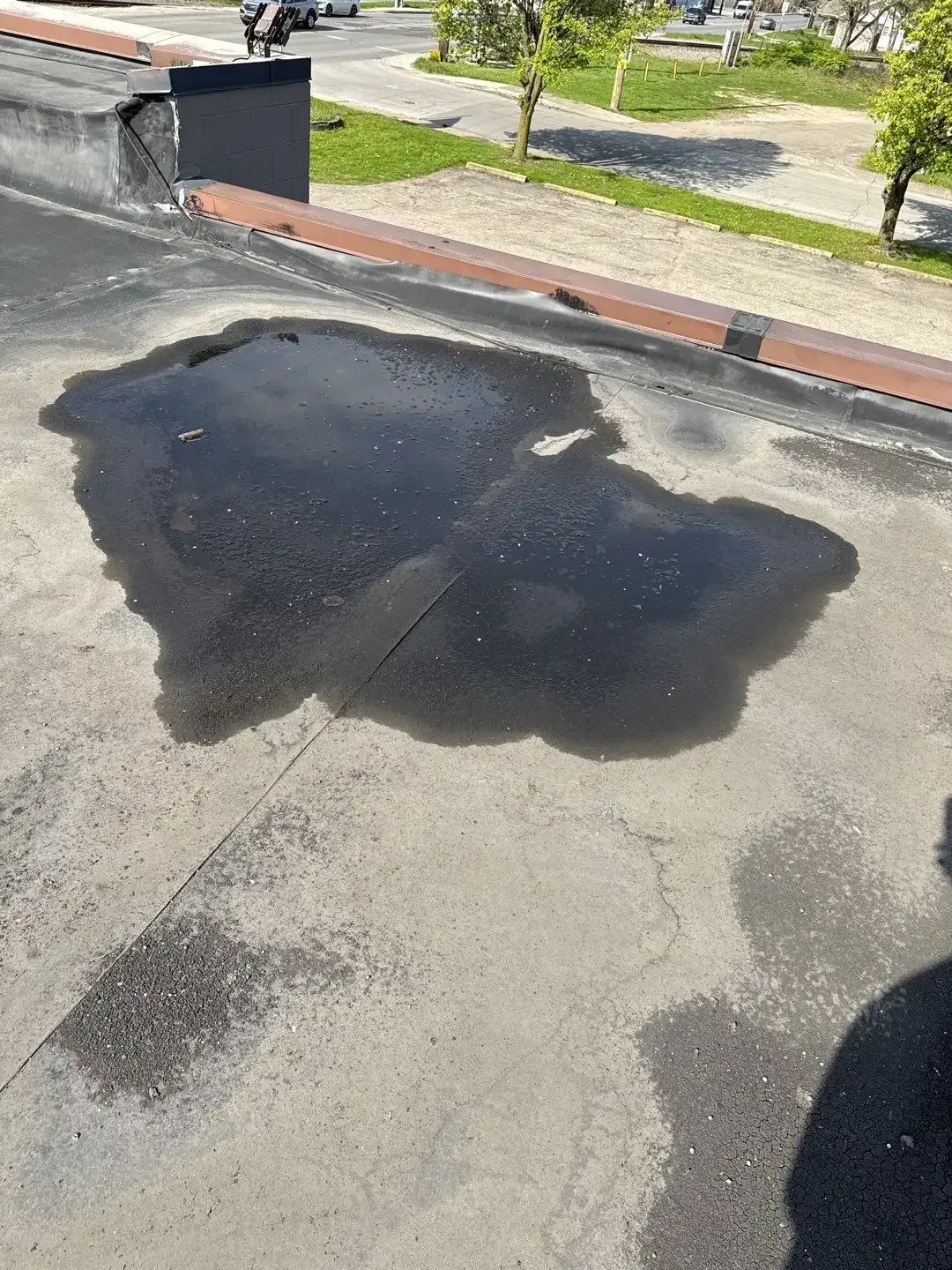
Ponding that lasts more than a day after rain gets flagged with its depth, area and likely cause: deck deflection, a low corner, a blocked outlet or insufficient slope. Left alone, that water ages seams and adds weight. It also gives freezing nights something to work on. Ponding water repair may involve tapered insulation or an added drain, and the report gives you the data to price it.
Findings Sort Into Three Piles
The report ends in a decision, not a list. Pile one is repair now: items that let water in or will soon. Pile two is schedule: items that are wearing and belong on a maintenance or capital plan. Pile three is monitor: items that are acceptable today but should be checked at the next visit.
Each pile carries a rough cost range described by driver rather than dollar amount: access, wet material, system type, size of the boundary. For owners with many roofs, the same three-pile structure applies across the portfolio, and a multi-site roof program can roll them into one budget view. Asset managers use that view to decide which building gets capital this year, which gets repairs, and which simply gets watched, with the photographs on hand to defend each choice.
Timing the Visit
The best time for a full inspection is after the wettest stretch, so the roof has been tested by weather. In Beaverton that means late winter, after November through January have shown which details leak. A second visit before the next rainy season catches wear that developed over the summer.
Heat matters too. Portland recorded 116 degrees on June 28, 2021, and a heat event of that kind softens membranes, stresses seams and loosens adhesives. A post-heat inspection can find damage the owner has not yet noticed. We recommend inspections after any severe weather, as well as on a regular schedule. A roof with a current manufacturer warranty often has inspection or maintenance conditions of its own, and a dated report is the proof that those conditions were met. Keep each report beside the warranty papers so the two travel together.
Records That Travel
The finished report goes into the building file in a form that others can read without us. It includes the roof plan, numbered findings, photo set, drainage notes and a summary page. If the building changes hands, or a lender asks for condition evidence, the report stands on its own. Our roof condition reports are written for that second reader.
For acquisitions, the same inspection supports due diligence roof surveys with a time-limited scope and a clear statement of remaining service life. Across the Wilsonville Employment Area and the factories on the south side of Tualatin, a prepared building file gives a buyer or lender the roof answer in one document.
Related Roofing Work
Drone Roof Inspection
Infrared Moisture Survey
Ponding Water Roof Repair
Multi-Site Commercial Roof Programs
Book a roof walk
Send the address, roof plan if you have one, and any repair history. We schedule a walk and return a marked report with findings sorted by what to fix now, plan for and watch.
Questions About Commercial Roof Inspection
What is the difference between an inspection and a condition report?
The inspection is the walk and the evidence. The condition report is the written product: a plan, numbered findings, photographs and recommendations. We deliver both, so the field work turns into a document someone else can act on.
How long does a roof inspection take on a larger building?
The walk scales with area, penetrations and access. The walk time follows the roof: a roof with many curbs and multiple levels takes longer than a plain field. Drone imaging can speed the survey of large flat areas, with a hands-on walk for the details.
Do you need the roof plan and warranty documents?
They help. A plan shows previous work and a warranty shows who may repair what. If you lack them, we build a plan during the walk and record the system type on the report.
Which issues should I fix first from the report?
Anything in the repair now pile: leaks, open seams, failed flashing and clogged drains. Those allow water in. Scheduled items follow, based on remaining life and budget. The report assigns each finding to a pile so the order is clear.
Can an inspection support an insurance or lender request?
Yes. Dated photographs, marked locations and written condition notes are what lenders and adjusters ask for. We assemble them in a single document and keep a copy in your file.