
Roof Systems
Evaluate TPO roofing in Beaverton, OR by seam condition, insulation, drainage, attachment and roof access before pricing replacement or repair work.
TPO Roofing in Beaverton, OR
Seam movement starts the first-hour check once a Beaverton, OR building has water inside. The crew confirms the room below, the last known leak location and the immediate make-safe need, then photographs the TPO field, nearby drains and penetrations before touching a weld. Both go into the building file, which shows whether the reported water tracks to a seam, flashing or another roof transition, and whether a localized repair fits the condition.
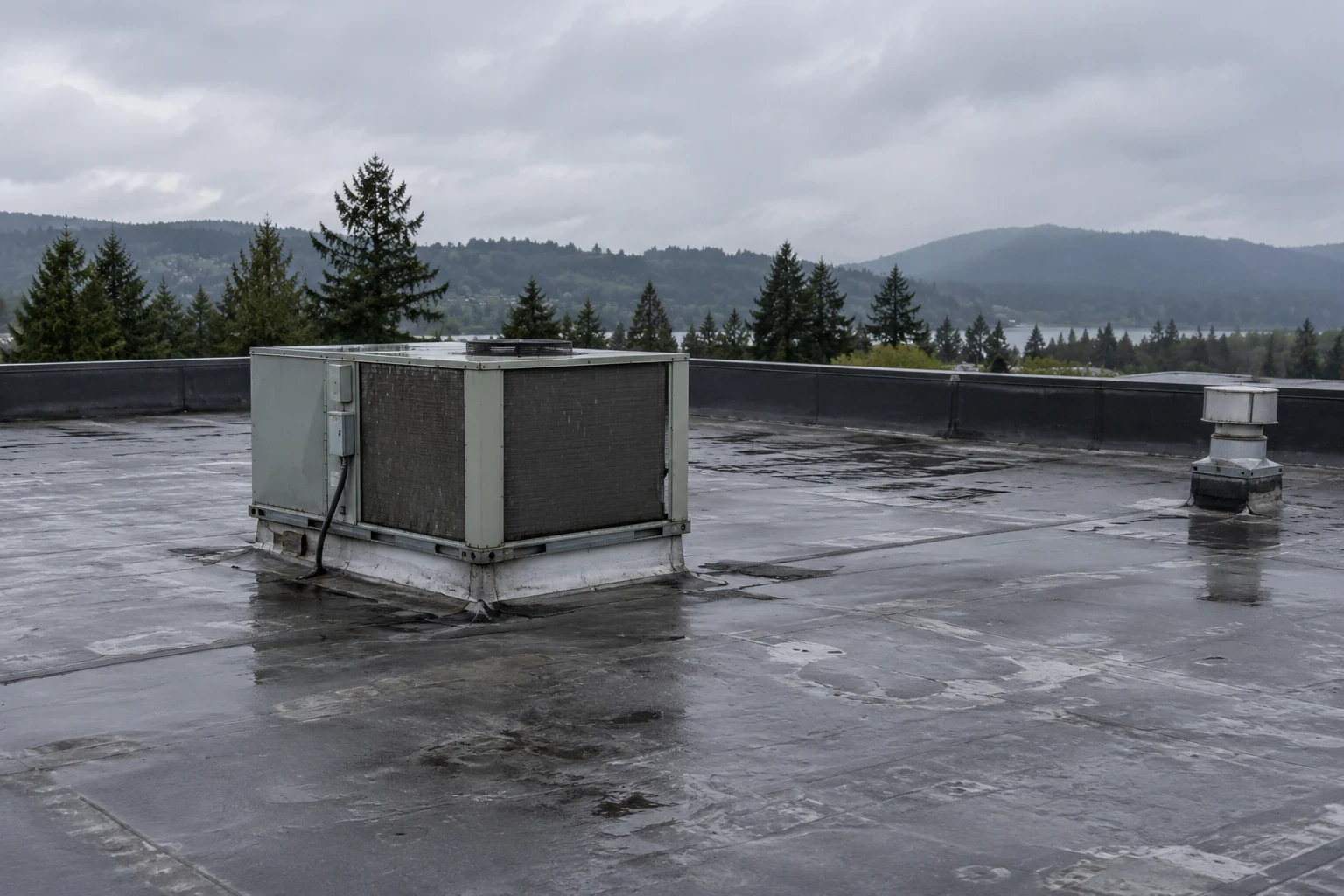
Occupied technology, optics, test-and-measurement and food-processing plants spread from Beaverton toward Hillsboro, and that makes rooftop access and equipment clearances part of the work plan. We document membrane attachment, seam condition and existing repairs before comparing a new PVC assembly, a recover or a repair scope.
Read the Welds
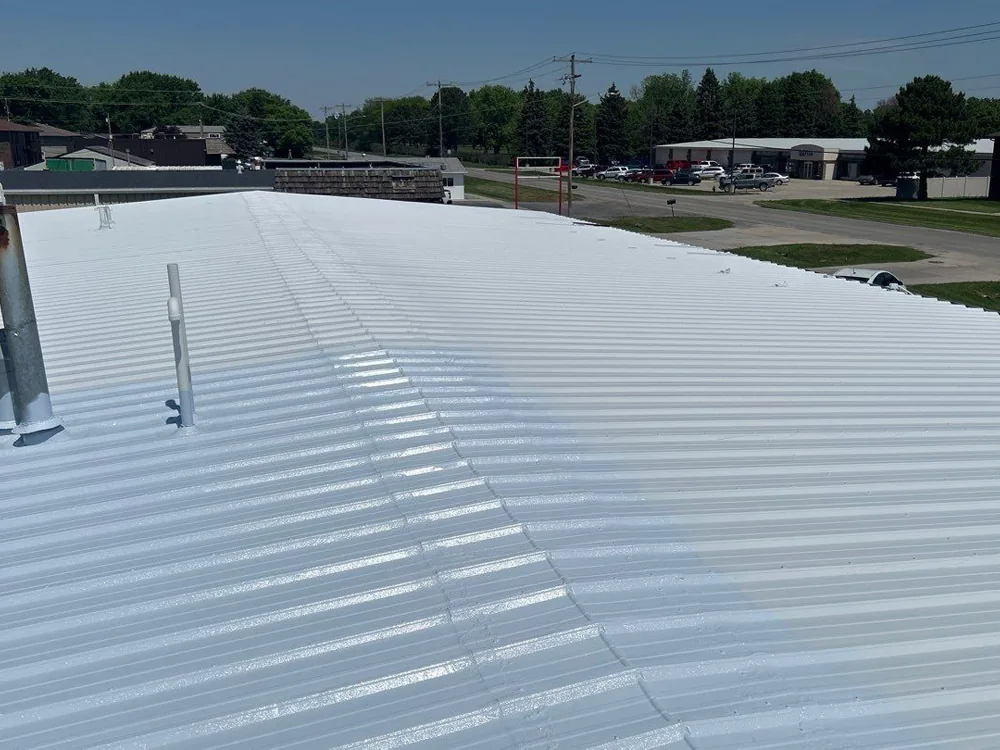
A TPO roof depends on continuous welded seams and sound transitions. We inspect lap edges for incomplete welds, fishmouths, contamination, edge lifting and stress near corners, then check how the membrane terminates at parapets and penetrations. A probe can help assess a seam, but it does not replace the broader roof walk. We mark each finding by area and photograph it before a repair changes the surface.
Beaverton averages about 39 inches of rain across roughly 151 days a year, with November through January the wettest months. That long wet stretch makes small openings at seams and terminations worth recording early, while the roof is still accessible. Our inspection scope checks the seam and the path water can take below it, then places the result in a condition report the owner can compare at the next visit.
Match the Membrane to the Roof
Replacing TPO means checking more than the top sheet. We identify the deck, insulation, cover board, attachment method, perimeter details and existing penetrations. A mechanically attached assembly, adhered assembly and fully adhered flashing detail are not interchangeable choices. The scope sheet records the proposed build-up and the locations where the field connects to walls, drains, curbs and skylights, with concealed conditions separated for review.
TPO is a thermoplastic sheet whose laps are joined with heat, so weld quality depends on the membrane surface, temperature, speed and pressure used for the seam. We inspect representative welds and edge details after installation rather than assuming a clean-looking lap is sound. Corners, wall transitions and changes in plane need shaped flashing pieces and a termination that resists water entry. The repair record should note which detail was tested and what remained inaccessible.
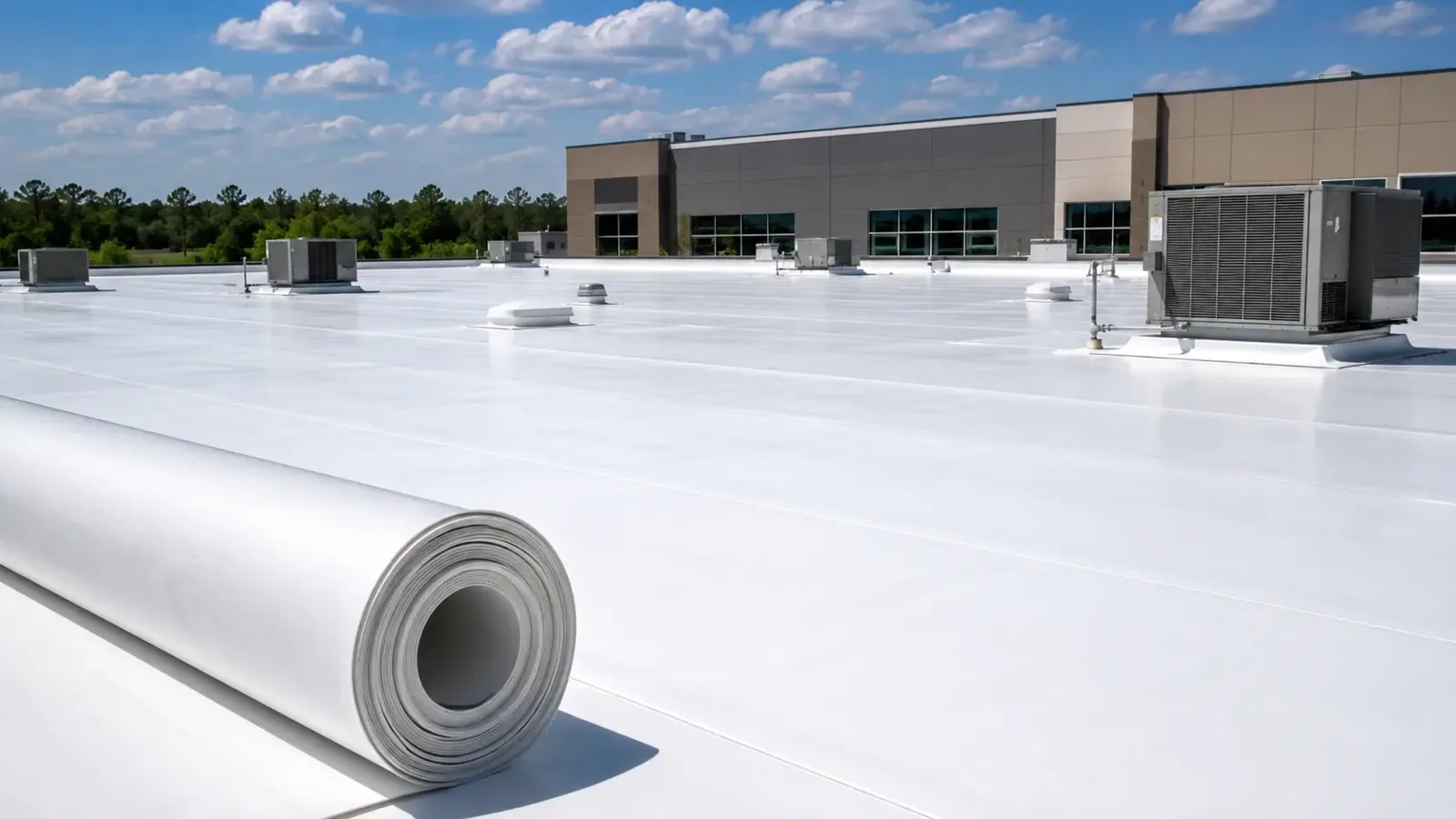
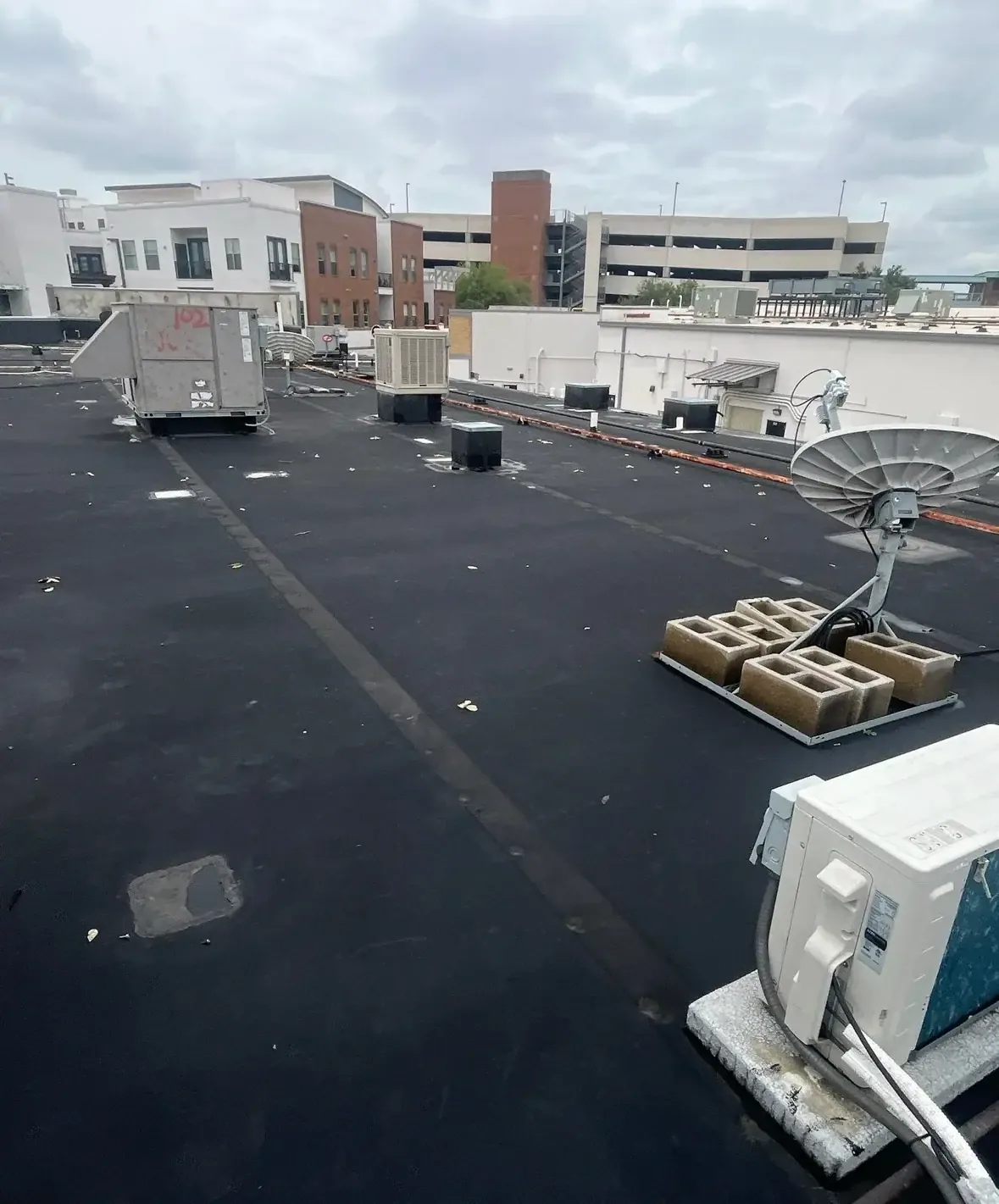
A rubber membrane roof or modified bitumen assembly may fit a different repair history or project requirement. We compare those systems against the actual deck, drainage, expected service access and the owner's capital timing rather than picking by color alone. If wet insulation or a weak deck is present, it must be addressed before a new membrane can protect the building.
Repair the Detail First
A TPO leak does not always mean the field membrane has failed. A separated curb flashing, open pipe boot, puncture from service work or blocked drain can create the same interior report. We trace the water path, check nearby welds and confirm whether insulation is wet before choosing a patch, flashing replacement or wider section. The repair-or-replace threshold belongs in the written scope, along with the exact area that remains outside the repair.
Portland reached a recorded high of 116 degrees on June 28, 2021, and heat like that pushes membrane surface temperatures up and loads rooftop equipment, so weld edges and equipment clearances get a closer look. We note the actual surface condition, then recommend a targeted repair or replacement only where the inspection supports it. The drain and scupper check also records whether water is moving through the designed paths.
Control the Work Window
Installation starts with a dry-in boundary and a clear plan for equipment, roof access and the building below. We remove only the area that can be protected during the shift, check exposed insulation and deck, and close the assembly before leaving. If rain interrupts a phase, the crew secures the temporary edge and records what remains open for the next dry window. This matters during Beaverton's wet months, when the surface condition can change between preparation and seam welding.
Field repairs need compatible membrane and a clean, dry surface. We prepare the area, remove material that has lost bond, weld the patch with enough overlap for the system detail and check the perimeter after cooling. If moisture is beneath the membrane, a surface patch alone can trap the condition; the scope must show whether a test cut or larger opening is needed. That distinction controls both the work area and the return visit.
New TPO details must tie into curbs, walls, drains and other membranes without blocking service routes. An equipment-heavy roof may need the curb and support details coordinated with the mechanical contractor before welding begins. We keep the owner informed of the phase boundary, material transition and any concealed repair that changes the scope sheet. A Beaverton roof visit starts at the leak location the manager reports, and the make-safe step comes before any seam work.
Keep the Building File Current
Closeout records should show the membrane type, repaired seams, flashing transitions, drain work, photos and remaining maintenance items. We note where new TPO ties into the existing roof and what was excluded from the work area. If a later leak appears, that record helps compare the report with the actual seam layout instead of repeating the first inspection without context.
Price follows tear-off, insulation replacement, deck repair, attachment method, perimeter metal, access and the amount of flashing work. We separate those items so the owner can compare repair, recover and replacement options on the same roof areas. A replacement scope is easier to evaluate when the report identifies both the membrane condition and the building's operating limits.
Related Roofing Work
PVC Roofing
Commercial Roof Inspection

Commercial Roof Condition Reports
EPDM Roofing
Record the TPO Condition
Place an intake call with the building address and last known leak location. We will arrange a make-safe visit when needed and provide a written scope sheet for the seam, flashing and membrane decision.
Questions About TPO Roofing
What usually causes a leak at a TPO seam?
A seam may be under-welded, contaminated, stressed by movement or damaged after installation. We check the weld and surrounding transitions, then trace the water path before deciding whether the repair stays at the lap or includes nearby insulation and flashing.
Can a TPO roof be repaired instead of replaced?
A repair can make sense when the sheet is still attached and the failure sits at one seam, curb or penetration. We record the repair area and nearby condition. Widespread wet insulation, repeated seam failure or a deteriorated deck can move the recommendation toward replacement.
How do you compare new TPO with a recover?
Start with the existing assembly. We check attachment, moisture, deck condition, drainage and the number of roof layers, then state whether the current materials can remain. The scope separates tear-off, new insulation and membrane work so the owner can compare the full assemblies.
What happens if rain arrives during installation?
The daily work area is limited to what can be dried in and secured before the crew leaves. We protect the exposed edge, document the stopped point and return when conditions allow permanent seams to be completed. Any wet substrate or new deck issue is recorded before covering it.
Which records should follow a TPO repair?
Keep photos of the seam or detail, the membrane materials used, the work limits and any follow-up item in the building file. We provide those notes with the repair scope, giving the next roof walk a location and condition to compare.