Industries We Serve
Roof inspections, leak response and capital scopes for Beaverton school districts, with building-level access plans and closeout records.
Commercial Roofing for School Districts in Beaverton, OR
First, identify the school address, room or building wing and what sits below the water. We confirm who can provide roof access and what area must remain clear, and we arrange a make-safe visit if one is needed. The roof walk links the interior report to a mapped seam, drain or flashing detail; the scope sheet then states what was observed and what still needs testing.
Beaverton School District is among the city's largest employers, but each school building has its own roof plan, access rules and maintenance record. A commercial roof inspection provides a baseline tied to the specific district address.
Keep Each School Address in Its Own Record
A district file should identify the actual school, support building or administrative address, whether it sits in Downtown Beaverton or in Cedar Hills south of US 26, and which roof zone is under review.
School access follows district procedures. We confirm check-in, escort contact, approved ladder or hatch, student circulation and any scheduled activity that affects staging. The district receives those limits with the photos and findings.
For a portfolio, use one roof plan per building and keep shared drains or transitions visible where additions meet. A leak in a classroom wing should not be combined with an unrelated gym or office condition just because both appear on one work order. The district can group budget items later while retaining the building-level evidence. Keep any claimed installation date tied to a plan, invoice or other record rather than assigning an age from appearance alone.
Trace the Reported Leak to a Roof Detail
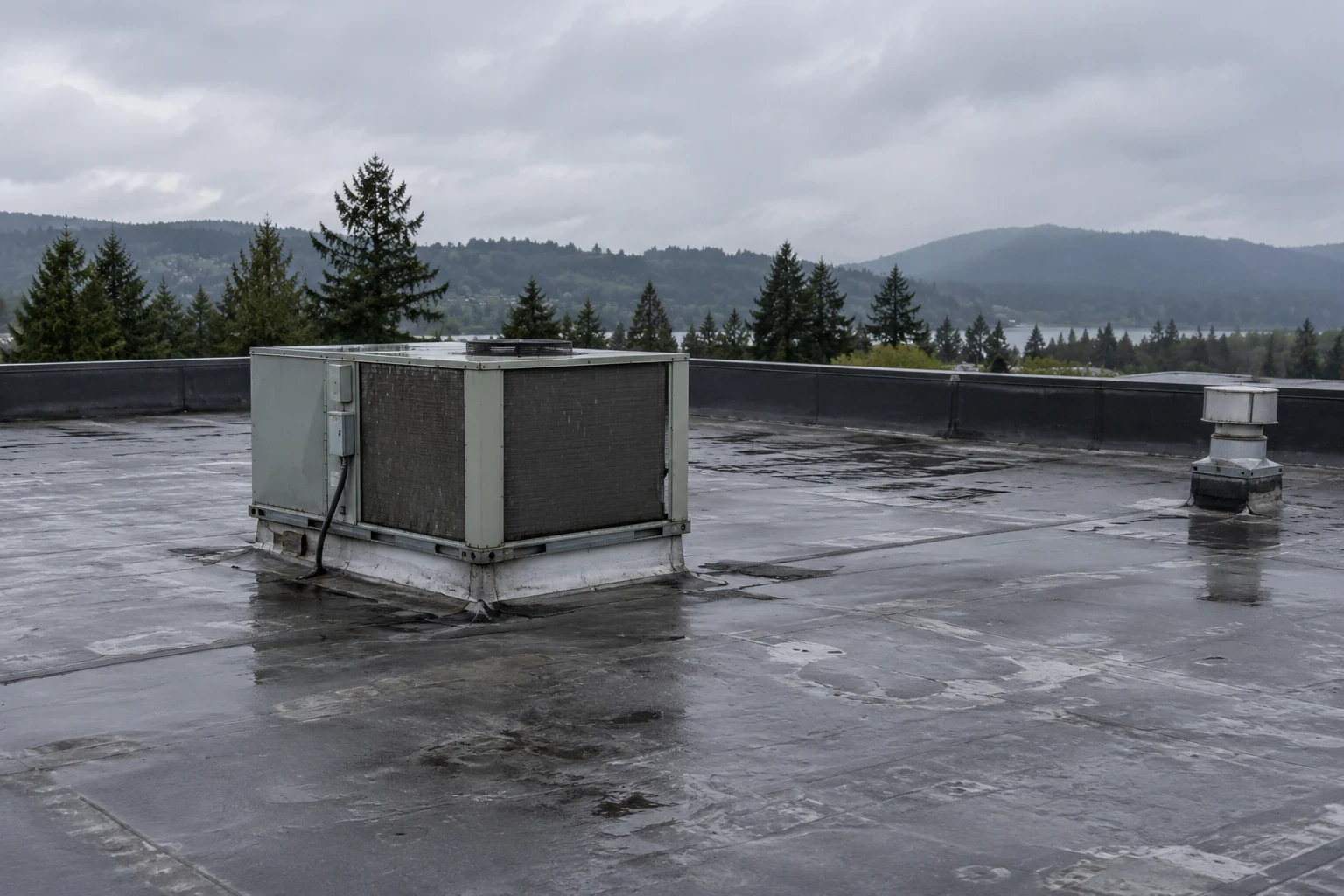
Beaverton's wettest months are November through January, so drains and seams deserve a deliberate check during the rainy season. We record the affected room, ceiling mark, nearby roof slope, penetrations and water route. The source may sit away from the visible stain, especially where an addition, parapet or deck channel carries water beyond the opening.
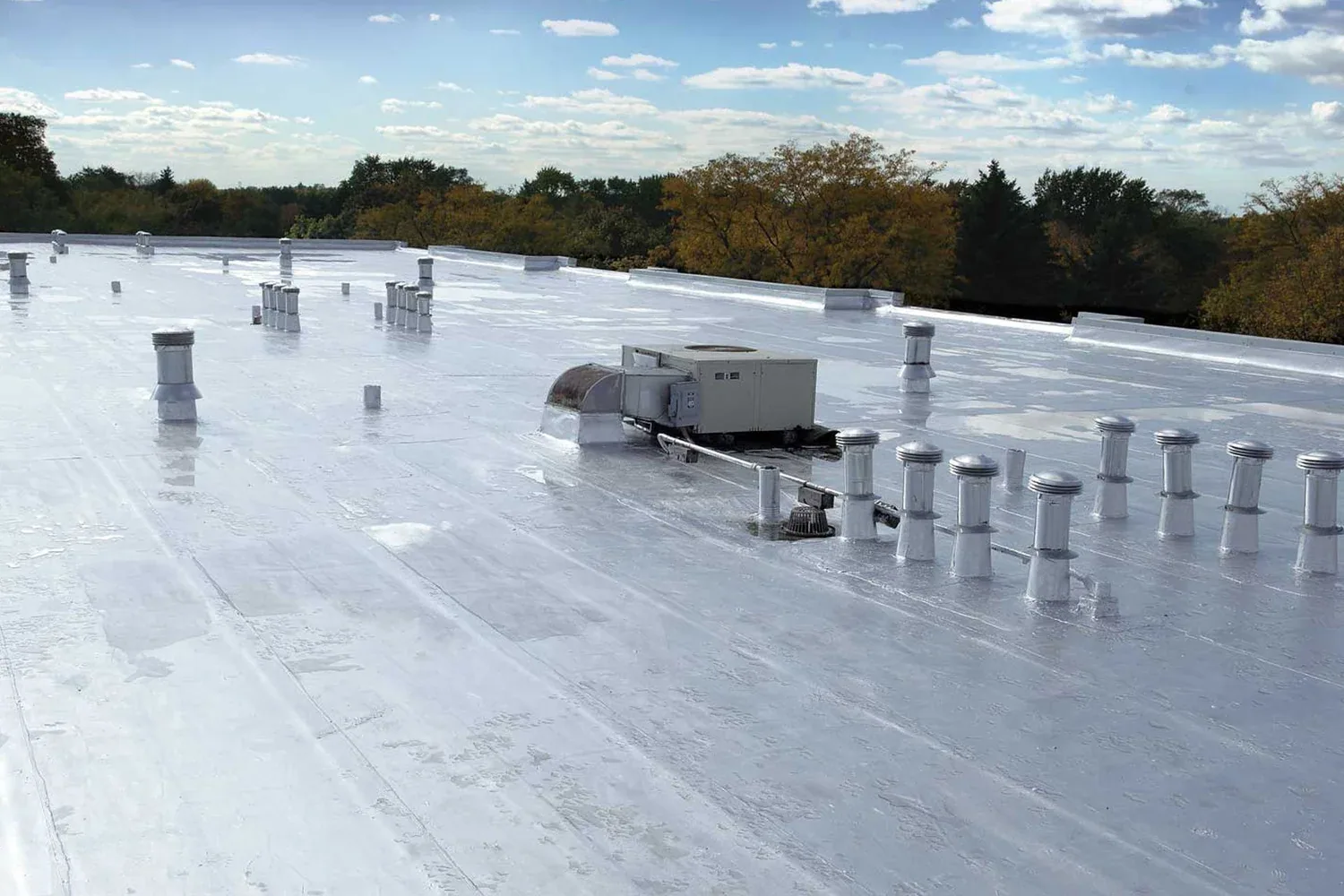
Each drain, scupper and overflow is marked on the plan with visible debris, ponding or flashing condition. If wet insulation or deck damage cannot be determined from the surface, we identify a test opening and restoration method for district approval. The drain and scupper review can be priced apart from a seam or curb correction.
Where a temporary measure is needed, record what was covered or sealed, its limits and whether a return visit remains open. A temporary dry-in can protect an area while permanent work waits for access or suitable conditions; it should not be recorded as a completed repair unless the permanent scope was actually performed. After a repair, the room is rechecked following the next rain and the photographs from the roof and the classroom are filed together, so a custodian or facilities lead can tell at a glance whether a ceiling stain is old or new.
Schedule Around School Operations
The district contact sets the times, entrances and safety boundaries for the work. Confirm whether classes, events, deliveries or custodial activities affect roof access or the area below the repair. The sequence names the ladder or hatch, lift placement, material staging, protected rooms and person who will receive the crew. If access cannot be provided, the scope records the limitation rather than assuming the area was inspected.
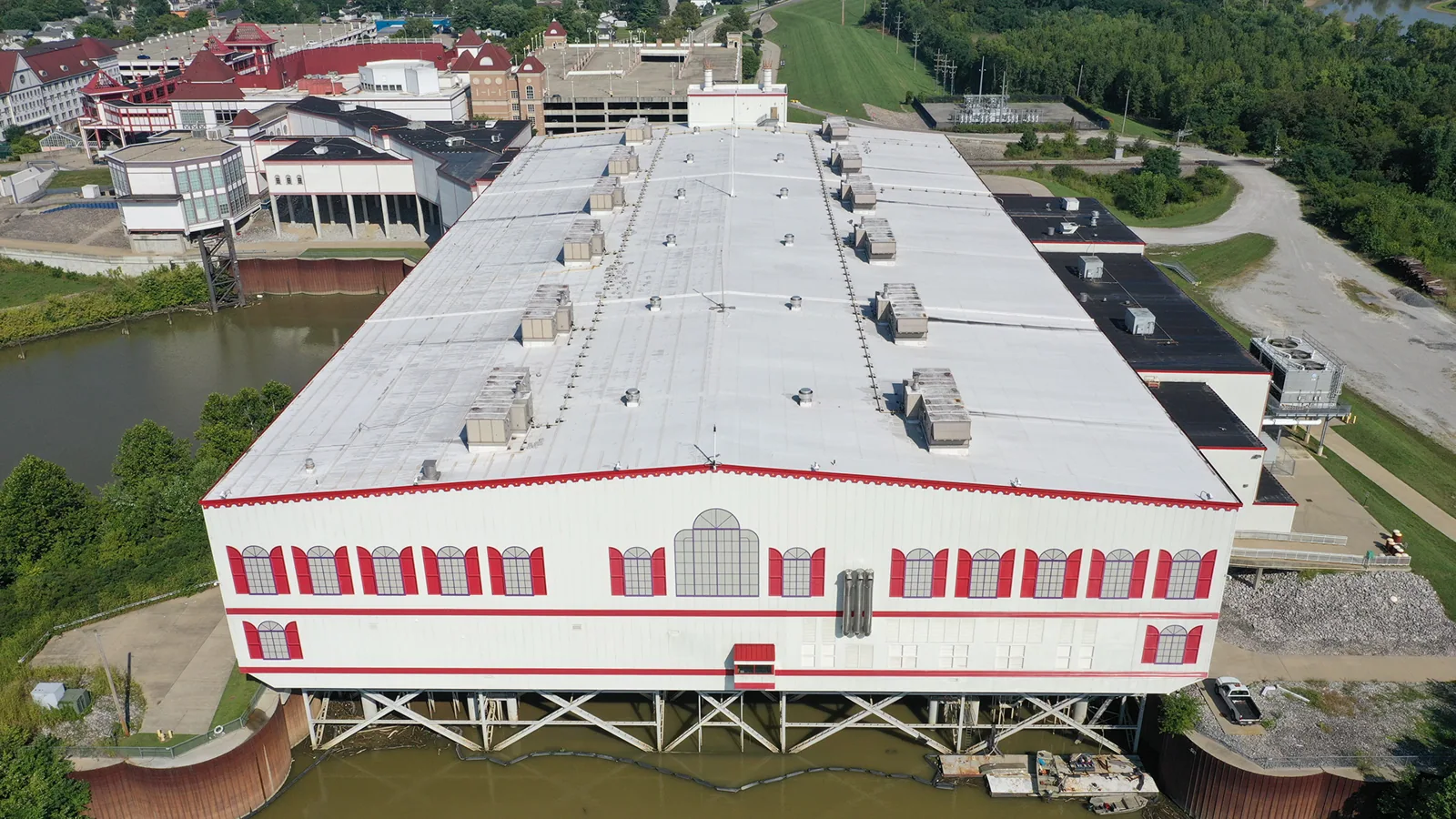
Roofing may be phased by building, wing or school calendar. We mark which spaces remain occupied, how barriers will be handled and when the site contact must approve a change. An occupied-building work sequence gives facilities staff a written handoff for roof areas where nearby activity continues.
For active water entry, call at any hour. The district can report whether water is spreading, what room or equipment is affected and which access window is possible. Until the crew arrives, keep people clear of the affected area and follow the district's own interior response steps.
Separate Maintenance, Repair and Capital Work
Routine observation, targeted repair and replacement are different decisions. The inspection records visible condition and open questions; the repair scope names preparation, materials and boundaries; a replacement alternate states removal or recovery assumptions, insulation and flashing. A test that has not been completed remains an open item and should not be folded into a final cost as though the result were known.
For a school district with different building types, use consistent fields but preserve each roof's assembly and access notes. Roof capital planning organizes priorities, and a healthcare system is another kind of occupied facility with the same need for building-specific plans. The site-specific plan remains the basis for a school scope. School boards may need to compare a repair against deferred work across several buildings, much as other public agencies do, with a separate property file for each address.
If a roof recover is under consideration, review existing layers and substrate before selecting the alternate. A roof recover depends on those checks. Do not assume a membrane or warranty based on the building's use or a prior invoice that does not match the roof section inspected.

Leave a File for the Next Facilities Review
Closeout includes dated photos, building and roof-zone references, completed details, materials, exclusions and any test still open. Note access restrictions and whether temporary protection remains in place. That record helps a facilities director compare a later report with the same roof section and decide whether to schedule another visit.
For a district operating across Beaverton, an intake call should include the school address, room or wing, last known leak point, site contact and calendar restrictions. When water is active, a make-safe visit goes first and a written scope sheet follows for the district to review.
A clear file distinguishes completed roofing from interior repairs, mechanical work or district maintenance tasks that were outside the scope. It can also show the date a facility representative accepted the work area back, which helps resolve questions about access or a later room report. It also identifies who owns the next decision, whether that is test approval, budget review or site access. That simple handoff keeps a roof finding useful as staff and school schedules change. Open items carry a date.
Related Roofing Work
Commercial Roof Inspection
Commercial Roof Drains and Scuppers
Occupied Building Reroofing
Commercial Roof Capital Planning
Start With the School Address
Call with the school address, affected room or wing and last known leak location. We will arrange a make-safe visit when needed and provide a written scope sheet for district review.
Questions About School Districts
What should a school leak report include?
Provide the school address, room or wing, visible water location, last known leak point and site contact. Note any room that must remain clear or any activity affecting roof access. We use those details to plan the visit and map the report to the appropriate roof zone.
Can roof work be scheduled during the school year?
The district sets access windows and safety boundaries. We document staging, occupied areas, barriers and who receives the crew before work begins. The sequence can be adjusted around a calendar restriction once the site contact confirms the available period.
How do you distinguish a temporary dry-in from a permanent repair?
The report states the temporary measure, location and remaining limitation. A permanent repair scope identifies preparation, materials and completed details. If a test or further work is still required, it remains open in the closeout record.
Can one inspection cover multiple schools?
A portfolio review can summarize a district, but every school needs its own plan, photos, access notes and finding list. Separate evidence helps facilities staff assign work without confusing one building's drain or repair history with another's.
What should be retained after the repair?
Keep dated photos, the roof-zone reference, materials, completed details, exclusions, access limits and open tests. The record should identify the school address and next decision so another facilities contact can continue the review.