Commercial Roofing Services
Infrared and core-cut moisture surveys for Beaverton, OR commercial roofs: dusk scans, confirmed cores and a marked wet-zone map for repair or replacement.
Infrared Moisture Survey in Beaverton, OR
Wet insulation does not announce itself. The surface can look sound while the board beneath it holds water, loses insulating value and adds weight to the deck. An infrared moisture survey in Beaverton, OR finds that water by reading heat, then confirms it with cores, and the result is a map you can price from.
The map changes decisions. It tells you whether a roof qualifies for a recover, how much insulation a replacement needs to remove, and where a repair should stop. Without it, those calls rest on guesses.
The Scan Runs After Sunset
Infrared surveys depend on heat movement. During a sunny day, the roof absorbs heat, and wet insulation holds more of it than dry board does. After sunset, the dry areas cool quickly while the wet areas stay warm. A thermal camera held over the roof shows those warm patches as clear shapes against cooler surroundings.
That is why the scan happens at dusk or early evening, after a dry, sunny day with light wind. Rain, heavy cloud and strong wind blur the pattern. We coordinate with the property manager for after-hours roof access, walk the grid methodically and mark every anomaly with paint or tape so the cores can find it later. The grid, the camera settings and the weather conditions are recorded, which lets a future survey repeat the method and compare results fairly.
Cores Confirm the Pattern
A warm patch is a clue, not a finding. Thermal contrast can come from wet insulation, but also from thick insulation, a patch, a change in surface color or a duct below. So we cut small test cores at representative spots, inside and outside the marked areas, and look at the layers. Moisture meters and a visual check settle the question.
Each core is resealed the same day with matching material, then photographed and logged. The cores give you the roof makeup as well: membrane type, insulation thickness, deck type and the number of layers. That information feeds a recover decision, because a recover over the existing roof depends on exactly those details.
What the Map Is Used For
The finished plan shows dry zones, wet zones, suspect zones and core locations, with estimated areas for each. Property managers use it three ways. First, to scope a repair: cut out the wet, replace it and leave the dry. Second, to decide between a recover and a tear-off. Third, to document the roof for a sale, refinance or due diligence review.
The map also guards against two expensive mistakes, and it helps a roofing committee or a lender see why the work is needed. One is replacing a whole roof when only part of the insulation is wet. The other is covering a wet roof and finding out a year later. A plan with areas on it lets you compare options with real quantities and see the cost drivers before committing.
Not Every Roof Scans Well
Some roofs are poor candidates. Ballasted roofs hide the membrane under stone, which blocks the thermal signal. Heavily reflective surfaces and some metal roofs behave differently. Fully adhered systems with thick cover boards can mask moisture. On those roofs we lean on core cuts and nuclear or capacitance meters, or we pull ballast in a grid to expose the membrane.
We tell you up front when infrared will not give a clear picture. Offering a scan that cannot answer the question wastes your money. A tighter core plan or a different tool will usually do the job better, and the report states the method used and its limits.
Why Beaverton Roofs Get Surveyed
Beaverton averages about 39 inches of precipitation across roughly 151 days a year, and the wettest months are November through January. A roof that has taken on water through a winter of small leaks may hold a surprising amount in its insulation by spring. Late winter and early spring are good times to survey, and a survey ahead of a spring budget meeting gives the committee real numbers to work from, since the roof has been tested and the weather turns drier.
Wet insulation matters more in cold nights too. Water in the board can freeze and expand, stressing the membrane above it. Beaverton sees little snow, but the thermometer has dropped as low as minus 8 there, and a hard freeze after a wet week tests every weak spot. A survey in the spring finds what the winter did.
Buildings That Benefit Most
Any low-slope roof with insulation is a candidate, but certain uses raise the stakes. Buildings that handle food, such as the producers in Milwaukie and the food and drink employers in Wilsonville such as Coca-Cola Bottling and Sysco, need stable interior conditions, and wet insulation works against that. Offices and technology buildings along the Sunset corridor in Beaverton and out in Hillsboro care about interior conditions and the tenants beneath. Retail along OR 217 and in Tigard adds another group of roofs where a wet core can sit under a sound-looking surface.
Schools, medical offices and retail centers all gain from knowing what is under the membrane before they spend on repairs. Because the survey records the roof as it is, repeat surveys every few years also show whether repairs held and where new moisture has entered.
From Map to Decision
Once the survey is done, the report lays out options. A targeted repair is on the table if the wet area is small and the membrane is sound. A recover is possible if moisture is limited and removable. A replacement is the answer when moisture is widespread or the membrane has reached the end of its life.
Each option carries a scope sheet with quantities from the map, so you see how the price changes with the amount of wet insulation. If you choose repair, the cut lines follow the marked boundary and the new insulation matches the thickness found in the cores. If you choose replacement, the quantities tell the crew how much board to order and how much deck to inspect. The photos and core logs stay in your building file for the next decision.
Related Roofing Work
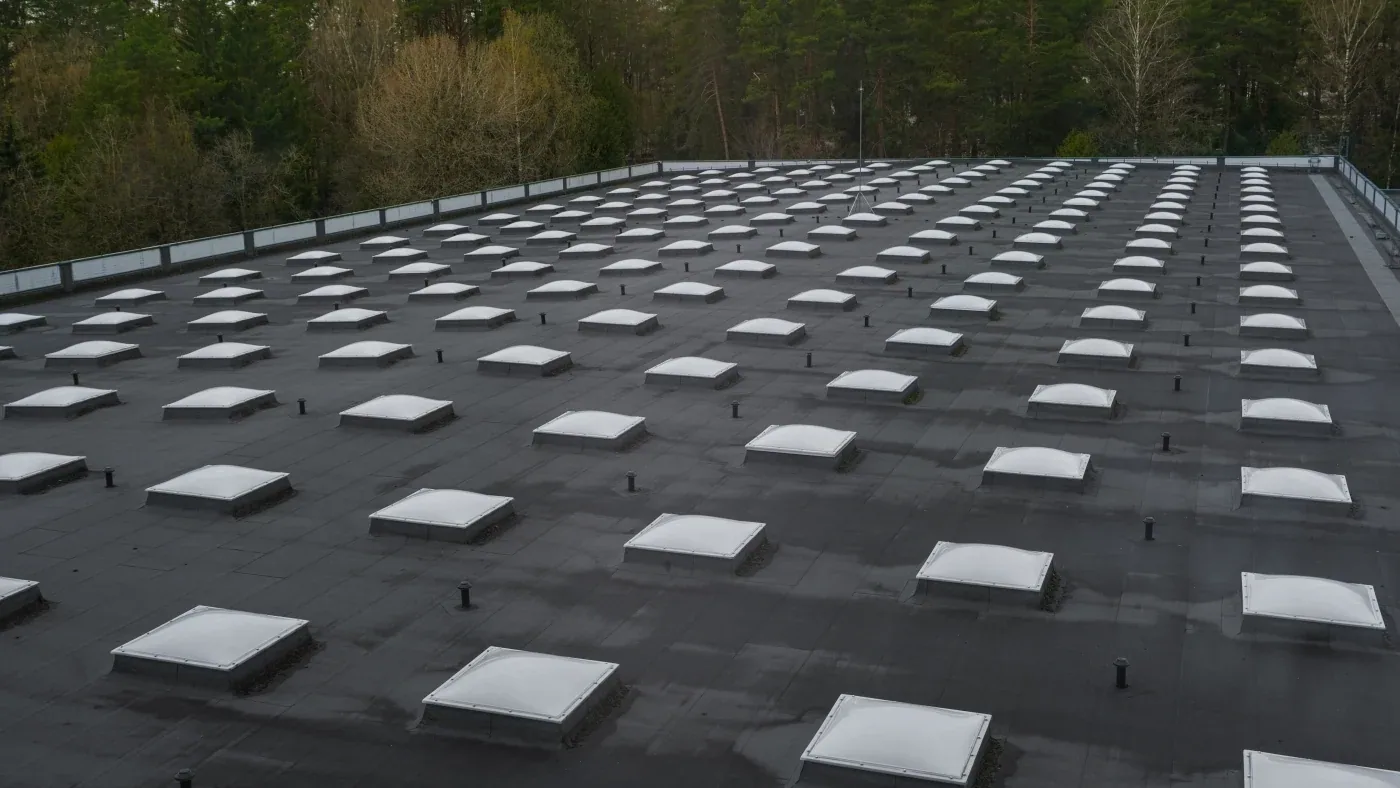
Roof Recover and Overlay
Commercial Roof Due Diligence
Milwaukie
Wilsonville
Order a survey
Send the address and roof type. We plan an evening scan after a dry day, cut and reseal the cores, and return a marked map with quantities.
Questions About Infrared Moisture Survey
Can an infrared scan find every leak?
No. It finds heat patterns that suggest wet insulation, not leak entry points. A scan plus cores shows where water has gathered, and a separate trace finds the opening. We use the two together.
Why does the survey happen at night?
Wet insulation holds heat longer than dry insulation after the sun goes down. At dusk the contrast is strongest, so the camera shows the wet shapes clearly. Daytime scans give a muddy picture.
Do the core cuts damage my roof?
Each core is small and resealed the same day with matching materials. The cut itself is a minor detail compared with the information it provides. We photograph each one so the file shows where it sits.
Is a scan worth the cost on a roof that is not leaking?
Often, yes, when you are weighing a recover or planning capital. Wet insulation can sit under an intact surface. The map keeps you from covering water or from replacing material that is still dry.
How often should I repeat a moisture survey?
After major repairs, after a long wet season with leaks, or when planning a recover or sale. Some owners repeat it every few years on aging roofs to track change, using the earlier map as a baseline.