Property Types We Roof
Commercial school roofing in Beaverton starts with leak control, safe access and a repair record that helps administrators plan around occupied buildings.
Commercial School Roofing in Beaverton, OR
Beaverton school leaks start with the room, not the roof. During the first hour, we confirm where the ceiling is wet, what classrooms or equipment sit below it, and whether the area needs to be cleared while a crew makes the opening safe. Then we mark the likely roof location, photograph nearby seams and drains, and place the leak log in the building file so the next visit starts with a usable record.
Beaverton School District is one of the city’s largest employers, which makes occupied education buildings part of the local operating picture. A school roof visit has to account for entry, student movement, deliveries and the period when roof access is available. Our commercial inspection records the condition before we price a repair or replacement.
Rain Finds the Weak Detail
Beaverton’s wettest months run from November through January, and repeated rain tests drains, flashing transitions and open membrane laps. At a school, a small leak can reach a corridor, library or electrical room before it creates a large visible stain. We trace the water path, note what is above the affected space and separate an active opening from older staining before selecting a repair.
Downtown Beaverton and Cedar Hills each have their own access patterns, but the roof decision still begins with the assembly and the leak location. If water has traveled along a seam, the first damp ceiling tile may sit several feet away from the entry point. We map the roof and room below, then compare a localized repair scope with replacement when the surrounding field is also failing.
Match the Repair to the Assembly
A school roof may include a field membrane, insulation, cover board, vapor retarder, metal edge and several generations of patching. We identify what is exposed at each repair area and check whether the lap, penetration or drain detail can be corrected without hiding moisture. Where a seam has separated, the repair method needs to suit the membrane rather than simply cover the visible line.
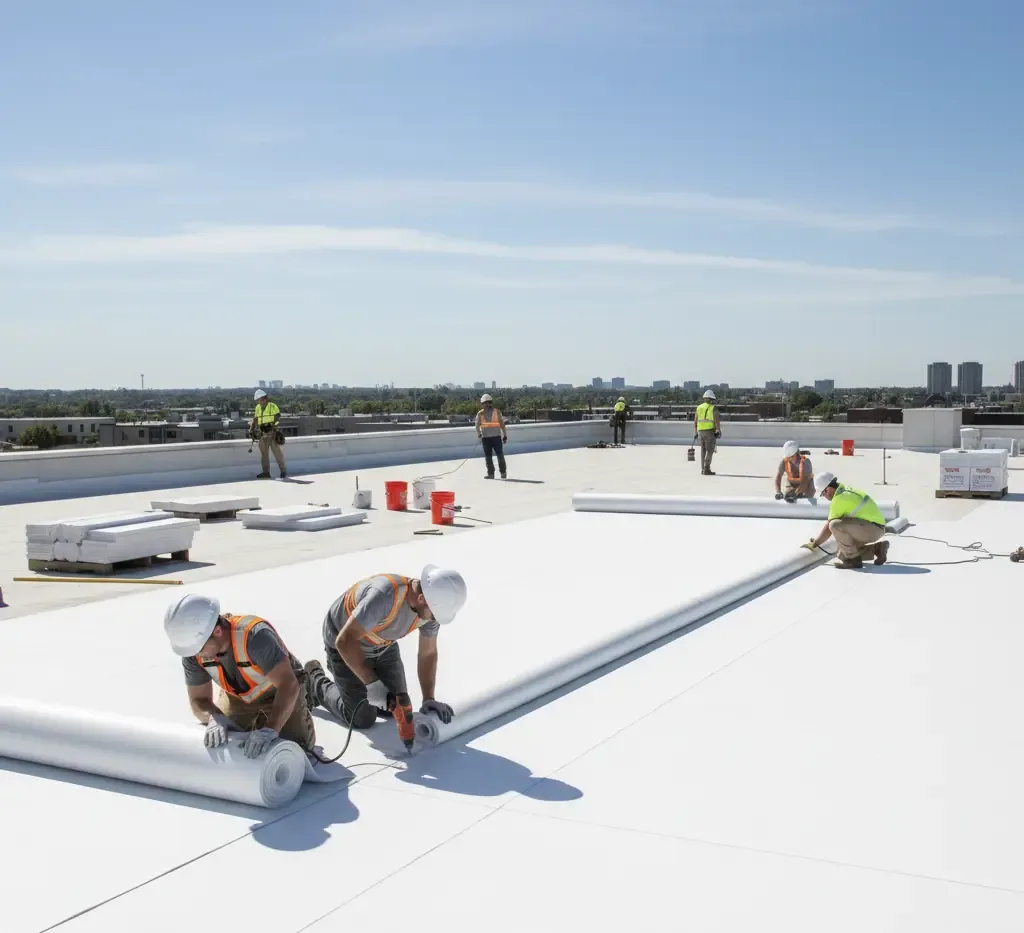
For a low-slope assembly, the TPO option is one system to evaluate, while an existing education portfolio may have different assemblies by building and construction phase. We record the observed layers and mark any test opening before a larger scope is priced. A wet insulation area is separated from the dry roof so administrators can see the repair boundary.
School additions can leave different roof zones with different details, even when the buildings share one facilities file. We label each area by building and roof section, note the membrane and visible edge conditions, and keep a repair at one location from becoming a blanket assumption for the next. If the record shows several assemblies, the proposal separates them so the district can phase work without mixing material and access requirements.
An active leak does not wait for a bell schedule. Calls come in on weekends and holidays as well; the intake call establishes the location, access contact and immediate make-safe need. Permanent work follows after the roof can be inspected and the repair boundary is clear. That division keeps an urgent water-control visit separate from the larger decision about roof life and capital timing.
Plan the Visit Around the Building
Roof access is planned with the school contact before materials arrive. We confirm the entrance, ladder or hatch, staging location, areas below the work and any time window when a lift or crew can move through the property. If classes are in session, a work sequence can keep roof activity away from a busy entrance or outdoor gathering area, subject to the site's actual constraints.
The site contact identifies where a truck can stage and how the crew reaches the roof without crossing student circulation. We include those constraints in the photo condition record. Summer break gives the widest roof window, but a leak in October still needs a plan that works with the bell schedule: the crew's route, the lift position and the delivery time are set with the principal's office before anyone goes up, and the area below the repair is cleared or covered before the first fastener comes out.
Separate Today’s Leak From Capital Work
A make-safe visit and a capital replacement scope answer different questions. The first stops water at an accessible opening and records the affected area. The second identifies the roof sections, edge metal, drains, insulation and flashings that belong in a planned project. If failures cluster around one penetration, a repair may fit. If seams, wet insulation and edge conditions recur across separate areas, the repair or replace threshold shifts.
We mark each finding on the roof plan and label it for immediate repair, monitoring or capital review. The inspection, not the neighborhood, tells us what a school roof contains. A replacement option is priced against the same marked areas as the repair so the board can compare scope, access and interruption.
Keep the Roof History Usable
At closeout, the school receives dated photographs, repair locations, material notes, access observations and open items. The file should show which roof zone was inspected, where water entered, what was removed or repaired and whether moisture testing remains. That record gives the next facilities manager a way to compare conditions instead of starting from a verbal handoff.
For several buildings, we keep each roof map and leak log separate, then summarize common issues for the facilities team. That is useful when one campus has a localized drain problem and another has widespread seam wear. A multi-building property record can help standardize review, while the Beaverton service area visit begins with the address and last known leak point. The scope sheet names what is included and what remains open.
Related Roofing Work
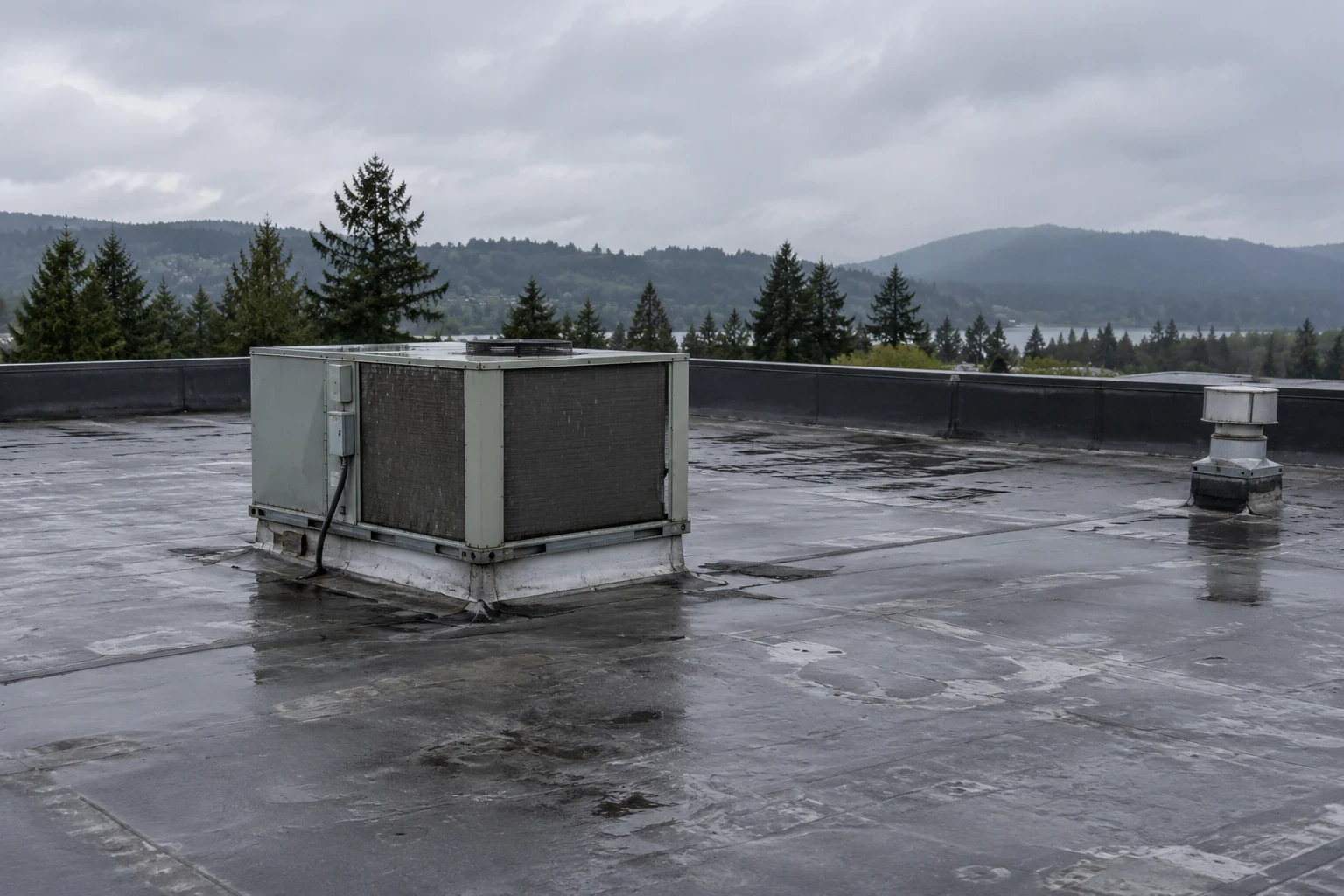
Commercial Roof Inspection
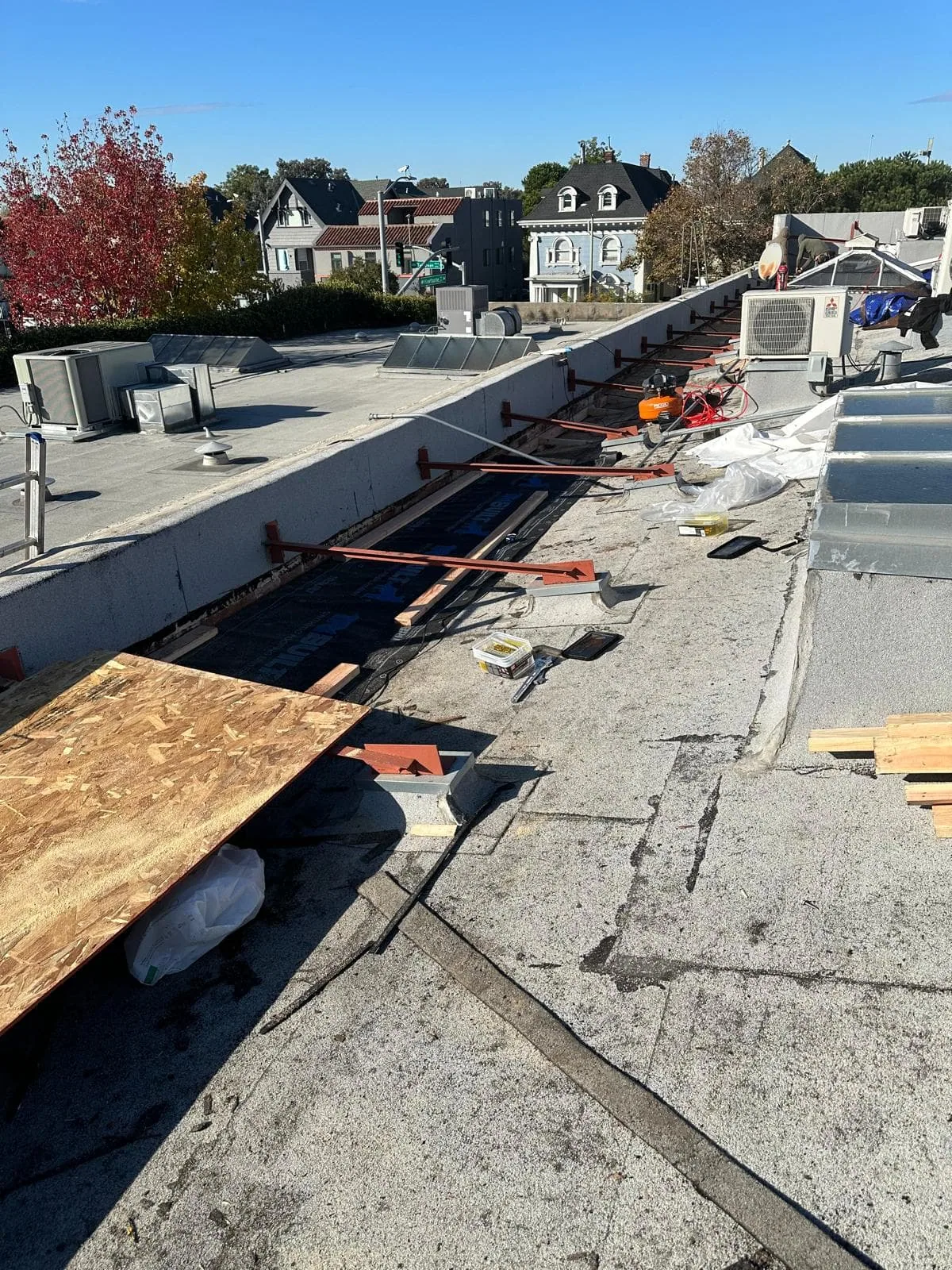
Commercial Roof Repair
TPO Roofing
College and University Roofing
Start With the Leak Location
Place an intake call with the school address and last known leak location. We will arrange a make-safe visit, photograph the roof condition and provide a written scope sheet for the next decision.
Questions About Commercial School Roofing
Can repairs be scheduled while students are in the building?
The access plan depends on the roof entrance, area below the work and the school calendar. We confirm those details with the site contact, then identify any staging, lift or temporary exclusion area before work begins. If a safer window is needed, the scope records the make-safe step and follow-up visit.
What if the ceiling leak is away from the roof opening?
Water can travel along a deck, seam or insulation before it appears indoors. We compare the room location with roof drains, penetrations and laps above it, then photograph the likely path and any test opening. The leak log keeps the interior symptom tied to the roof area inspected.
How do we decide between patching and a larger project?
The decision follows the number and spread of failures, wet insulation, edge conditions and the remaining sound area. We price a defined repair and show the adjacent work that may belong in a capital scope. The roof map and photos let administrators review the same boundaries.
Can a roof inspection support a school budget request?
Yes. We provide condition notes, photographs, marked roof areas, repair priorities and cost drivers without folding unrelated zones into one number. If testing is still needed, the record identifies that open item so a budget request can separate known repairs from concealed conditions.
What should be ready before the crew arrives?
A site contact, roof access instructions, the reported room or leak location and any known roof plan help us prepare. We confirm occupied areas, delivery rules and staging limits during intake. The crew can then make the area safe and document the roof before permanent repair work is set.