Commercial Roofing Services
Commercial roof drain and scupper work in Beaverton, OR traces water paths, checks bowls and crickets, and separates routine clearing from slope correction.
Commercial Roof Drains and Scuppers in Beaverton, OR
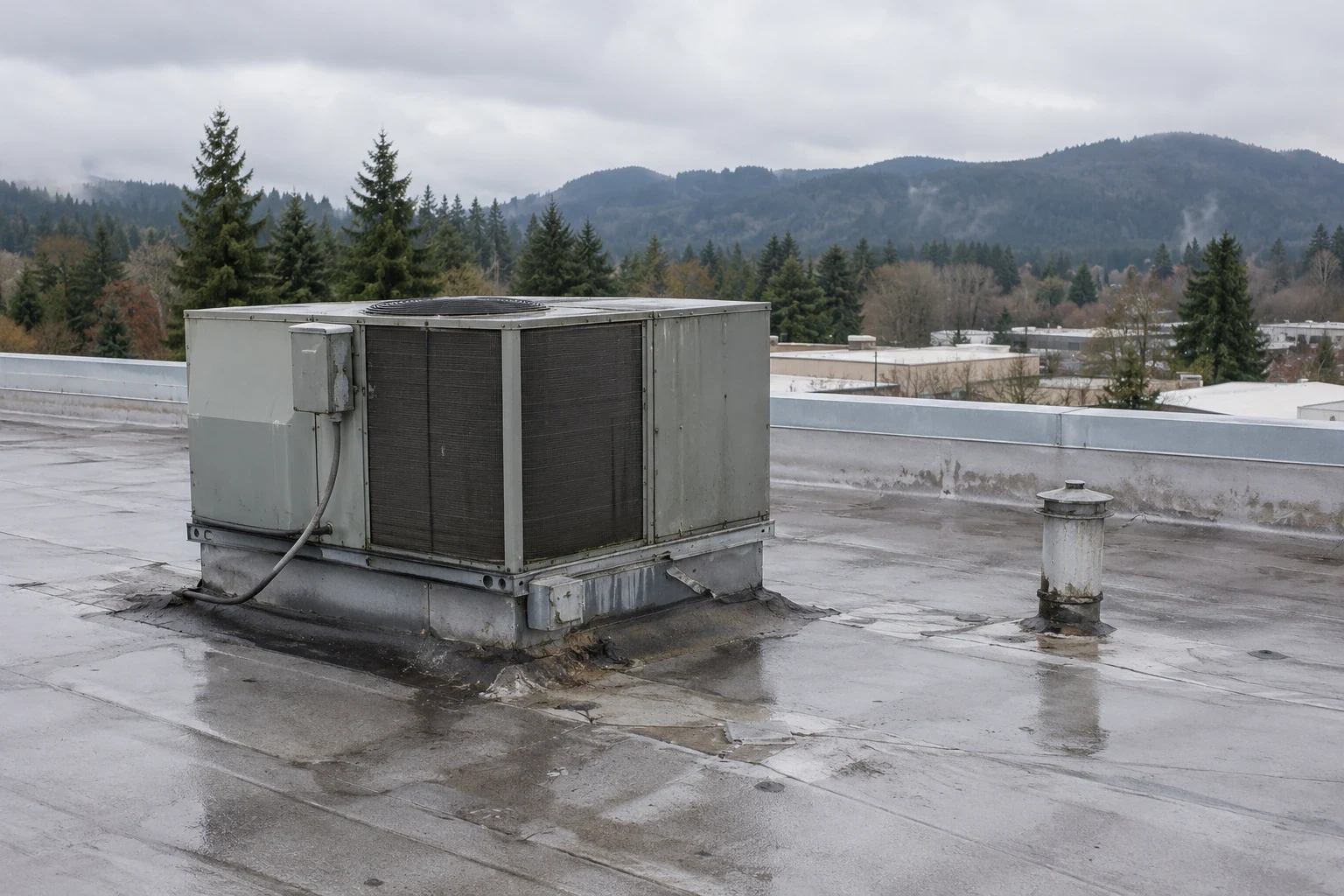
A drain complaint starts with the water line, the outlet and the roof area feeding it. We check the strainer and bowl, trace the path from the high point, then mark where water remains after the outlet is clear. That is the difference between a cleaning ticket and a drainage repair. In Beaverton, OR, precipitation arrives across roughly 151 days a year, with the wettest months in early winter, so the record needs to show whether the roof actually empties.
We inspect drains, scuppers, leaders, crickets and low areas as a connected system. The drainage scope identifies the obstruction, damaged component or geometry issue, then gives the owner a defined repair boundary.
Start at the Outlet
We lift the strainer and inspect the bowl, clamping ring and visible leader connection. Leaves, roof grit and loose packaging can collect beneath the screen, while a cracked bowl or loose ring can let water reach the insulation. We remove debris where the outlet is safe to service, then check whether the opening flows. A clear top does not prove the full path is clear, so the scope notes any leader or below-roof section that needs access.
Scuppers need a different look. We check the opening, metal sleeve, membrane tie-in and exterior discharge point for blockage, rust or an open seam. The discharge should not send water back toward a wall or service entrance. A flashing repair may be required at the scupper perimeter before the outlet can be considered sound.
In Cedar Mill, the commercial strip follows Cornell Road toward the Milltowner Shopping Center, where loading and customer routes can affect work below a scupper discharge. We confirm where water exits and where a temporary redirection can safely send it during the repair. The building file records that path so a later maintenance visit can repeat the check.
Read the Water Pattern
After the outlet is checked, we look at the water's footprint. A ring around the drain can point to a restricted bowl; a long shallow pond may follow deck deflection or inadequate slope; water pushed against a curb may need a cricket. We measure the area, note its depth and photograph the edge where water stops. Those marks turn a general complaint into a repair question the owner can review.
Crickets and tapered insulation redirect water toward drains without relying on a new opening through the deck. Where the assembly permits, a tapered design can correct a persistent low area. An additional drain may be needed where the roof area or existing outlet layout cannot carry the flow, subject to structural and plumbing review. We show each option as separate work rather than combining it with routine drain clearing.
Beaverton's winter wet period and Portland Airport averages roughly 32 freezing nights a year put a second question on the scope: what happens when water remains after the rain stops? Freezing and thawing can stress seams, drain bowls and flashing edges. We note visible movement or cracking and check the nearby membrane before recommending a repair. A ponding-water repair addresses the low area as well as any damaged membrane around it.
Separate Cleaning From Construction
Routine service removes debris and checks that the outlet is open. Construction work may rebuild the drain sump, replace a damaged bowl, reset a clamping ring, add tapered board or alter the scupper detail. The scope sheet lists which task is proposed, which materials are involved and what access is needed. Owners can then approve a cleaning visit without assuming that it corrects a slope problem.
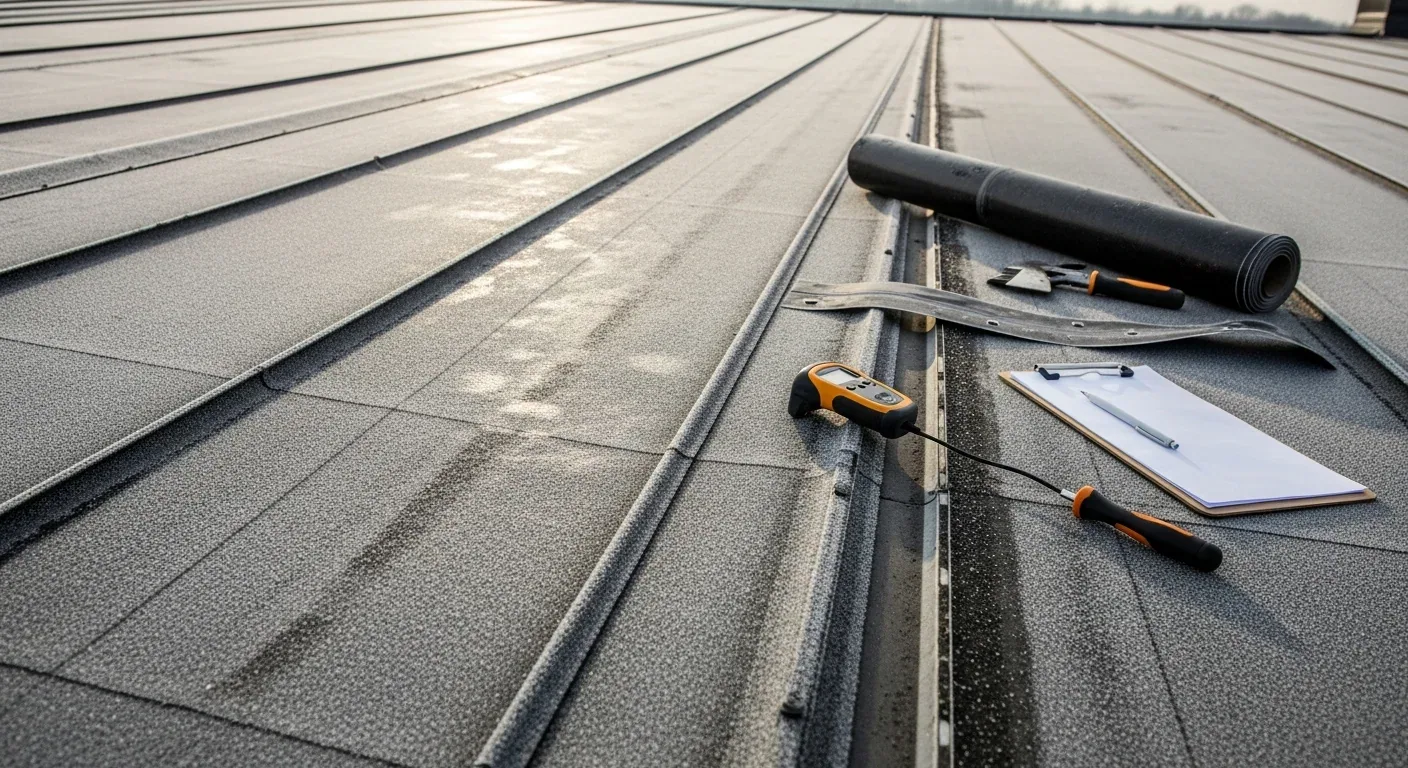
If water has entered the assembly, we check insulation and deck around the outlet. A test cut can show whether wet material extends beyond the drain sump. We remove only to sound, dry edges, replace insulation and restore the membrane tie-in with compatible materials. An infrared moisture survey can help map suspected wet zones before openings are made, but field confirmation sets the actual removal line.
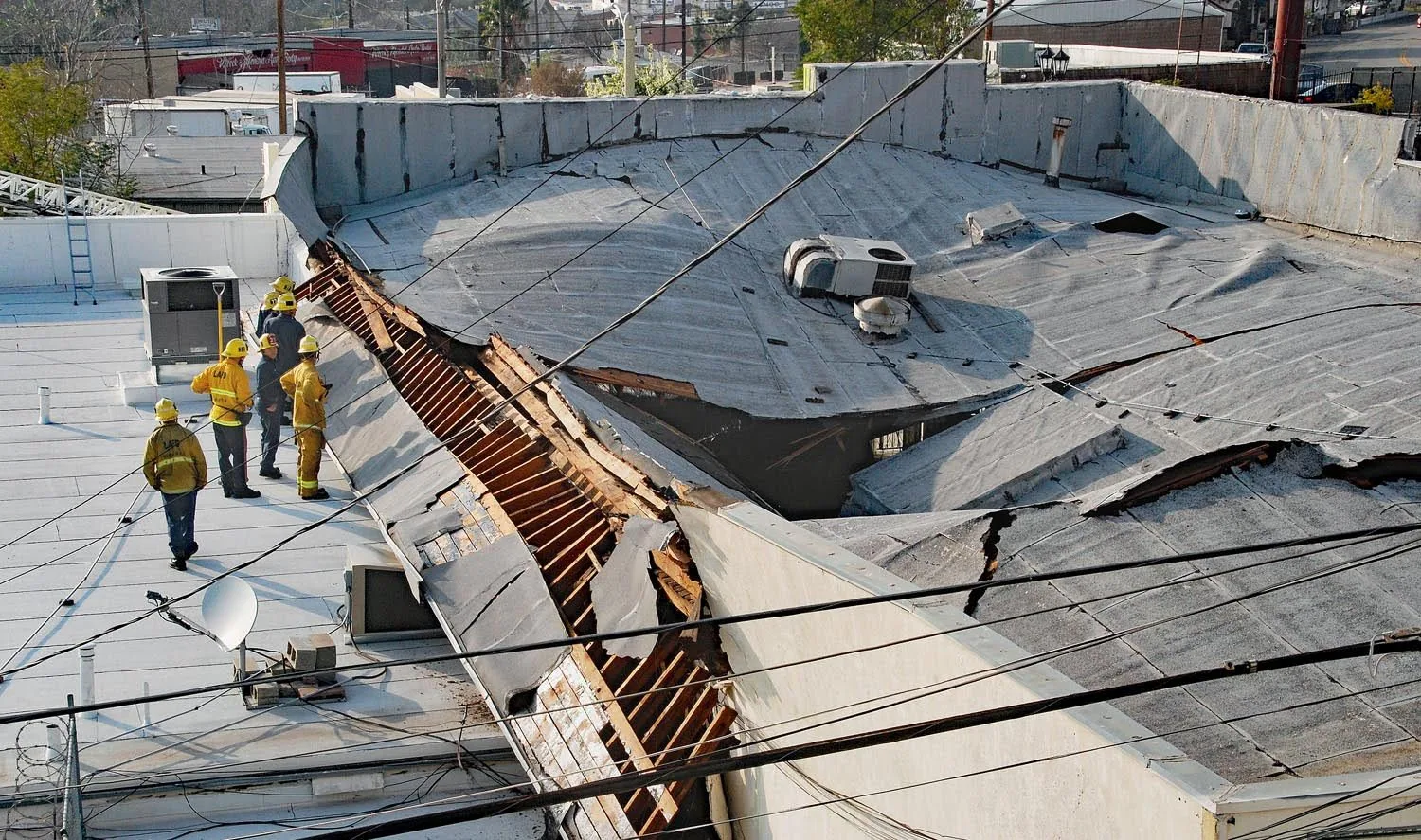
On a low-slope roof, seams and drain transitions carry movement between the field membrane and a rigid outlet. We inspect the connection, then select a compatible flashing and attachment method. If the existing roof has broader failures, planned repair work may need to include adjacent seams instead of isolating the drain alone.
Plan the Roof Visit
Drain work requires interior coordination when the leader or drain sump is concealed. We identify ceiling access, tenant notice and the person who can authorize a test. On the roof, the crew protects the surface, keeps debris out of the outlet and stages removed material so it cannot wash into another drain. A controlled water check confirms flow only when the assembly and conditions allow it.
Commercial properties near the Round at Beaverton Central and Cedar Hills Crossing can have different traffic and service constraints. We record the roof entry point, equipment shutdowns and staging location with the work order, then confirm the outlet receiving the discharge. The property contact gets a schedule that distinguishes any temporary restriction from the permanent correction.
Cost follows the number of outlets, roof access, condition of each bowl and the amount of membrane or insulation repair. Adding tapered insulation changes both material and coordination. A maintenance visit can keep strainers clear after the construction scope closes, while a roof inspection can record the whole drainage layout.
Leave a Drainage Record
At closeout, we photograph the repaired outlet, the membrane tie-in and the water path. The note identifies what was cleared, replaced or regraded and what remains outside the scope. If a leader could not be viewed below the roof, the record states that limit and the next access needed. The owner has a clear basis for comparing the next visit with this one.
A compact Downtown Beaverton building and a large retail or employment site differ in roof area, outlet count and drainage geometry, so findings stay tied to the inspected address and any open concern is marked on the roof plan. A condition report can carry the drain history into a larger building file.
For an intake call, send the address, location of standing water, last known leak point and any prior drain work. We inspect the route from high area to outlet and return a scope sheet showing whether the next step is clearing, repair or slope correction.
Related Roofing Work
Flashing Failure Repair

Cedar Mill
Ponding Water Roof Repair
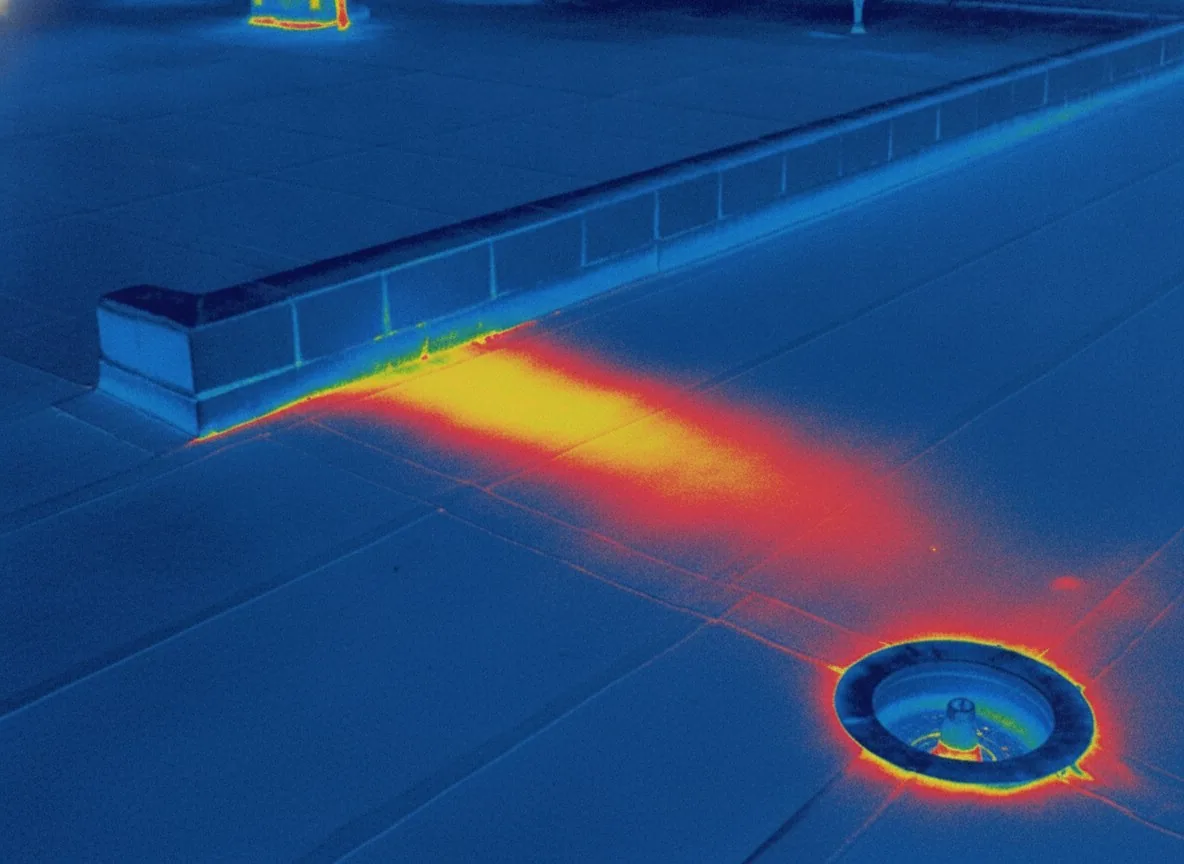
Infrared Moisture Survey
Trace the water path
Place an intake call with the building address, where water is standing and the last known leak location. We check the outlet, trace the slope and send a scope sheet separating clearing from construction work.
Questions About Commercial Roof Drains and Scuppers
Why is water still standing after the drain was cleared?
An open bowl does not correct a low area or a deck that has moved. We check flow and map the remaining pond, then review slope, crickets and nearby outlets to price the right correction.
Can a scupper be repaired without replacing the whole roof?
Often the work is limited to the opening, sleeve and surrounding membrane if the field remains sound. We inspect the tie-in and the material around it first, then mark the boundary where sound roofing begins.
Do you need interior access for drain work?
Access helps when the leader or drain sump is concealed. We coordinate with the building contact before testing, and record any portion that could not be seen so the scope is clear.
How do you know whether insulation around a drain is wet?
The leak history, surface condition and moisture testing guide the check. Where needed, a test opening confirms the material and establishes the removal boundary before the drain is rebuilt.
What should the closeout show?
The record should identify the outlet, work performed, membrane tie-in and any remaining access question. We provide photographs and a note on whether the water path was checked after the repair.