
Roofing Capabilities
Build a Beaverton, OR roof capital plan from field findings, repair boundaries and replacement timing, with assumptions separated for each building.
Commercial Roof Capital Planning in Beaverton, OR
A capital line starts with a roof condition that can be explained, not a date copied from a spreadsheet. In Beaverton, OR, we put the inspection record beside the proposed repair, recovery or replacement scope and show which finding drives each option. The budget reviewer can see what is urgent, what can wait for a planned window and what remains untested.
We build the recommendation from the roof in front of us. A sound section may support continued service with targeted work; wet insulation, repeated entry points or failing details can change the timing. The scope sheet states the boundary and the assumptions before the amount reaches the capital discussion.
Name What Moves the Budget
Roof area is only one part of the estimate. Access height, lift placement, tear-off, insulation depth, deck repairs, penetrations, drains, perimeter metal and protection inside the building all affect the work. We list those items by section and keep concealed conditions separate when a test opening is needed to confirm them.
Beaverton averages about 39 inches of precipitation a year over roughly 151 days, with November, December and January the wettest months. A wet insulation finding or exposed detail can narrow the installation window, so we distinguish temporary water control from the permanent scope and record what must be dry before work resumes.
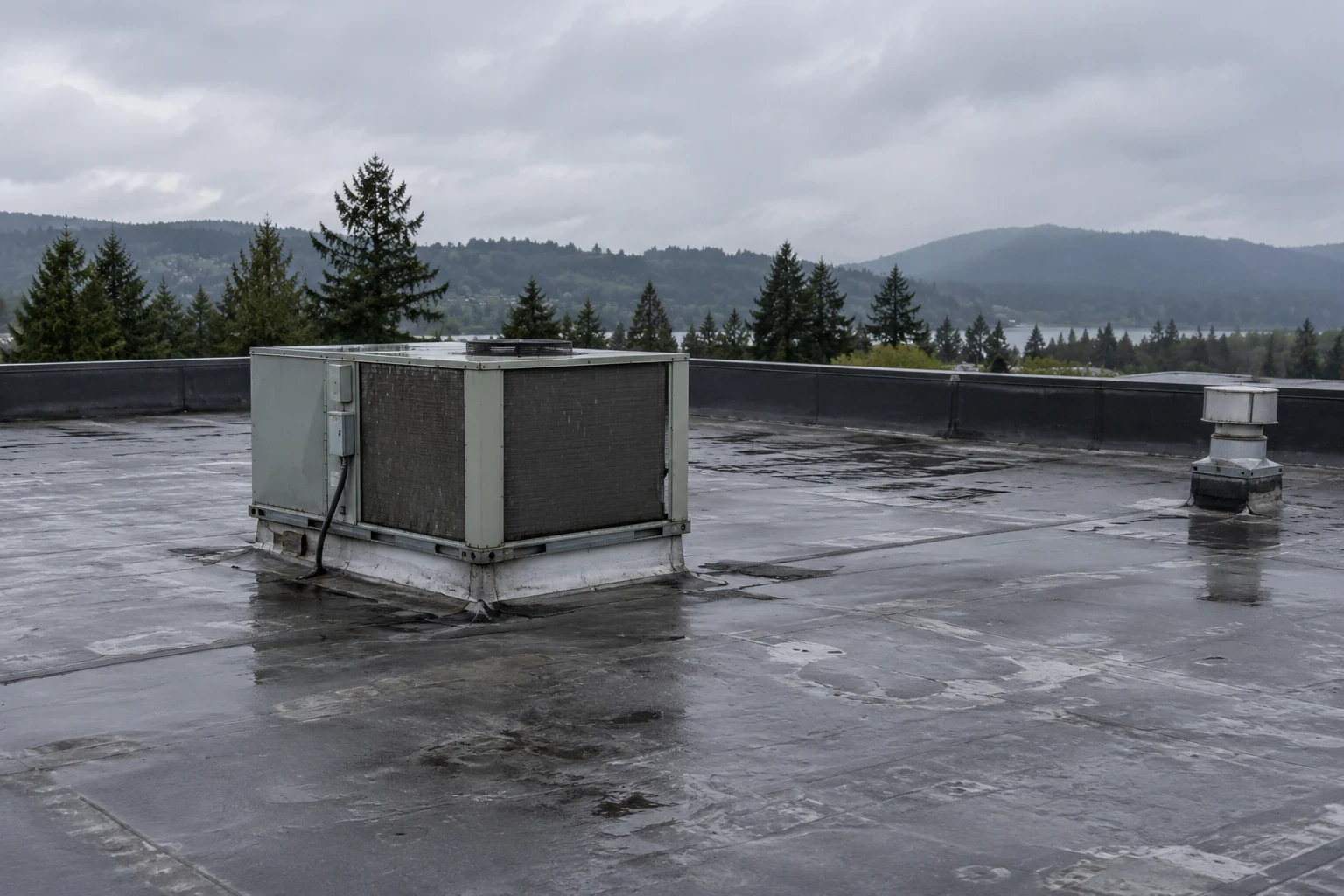
A condition report ties the estimate to marked findings, while a roof inspection identifies areas that need testing before the budget is set.
Compare the Same Boundaries
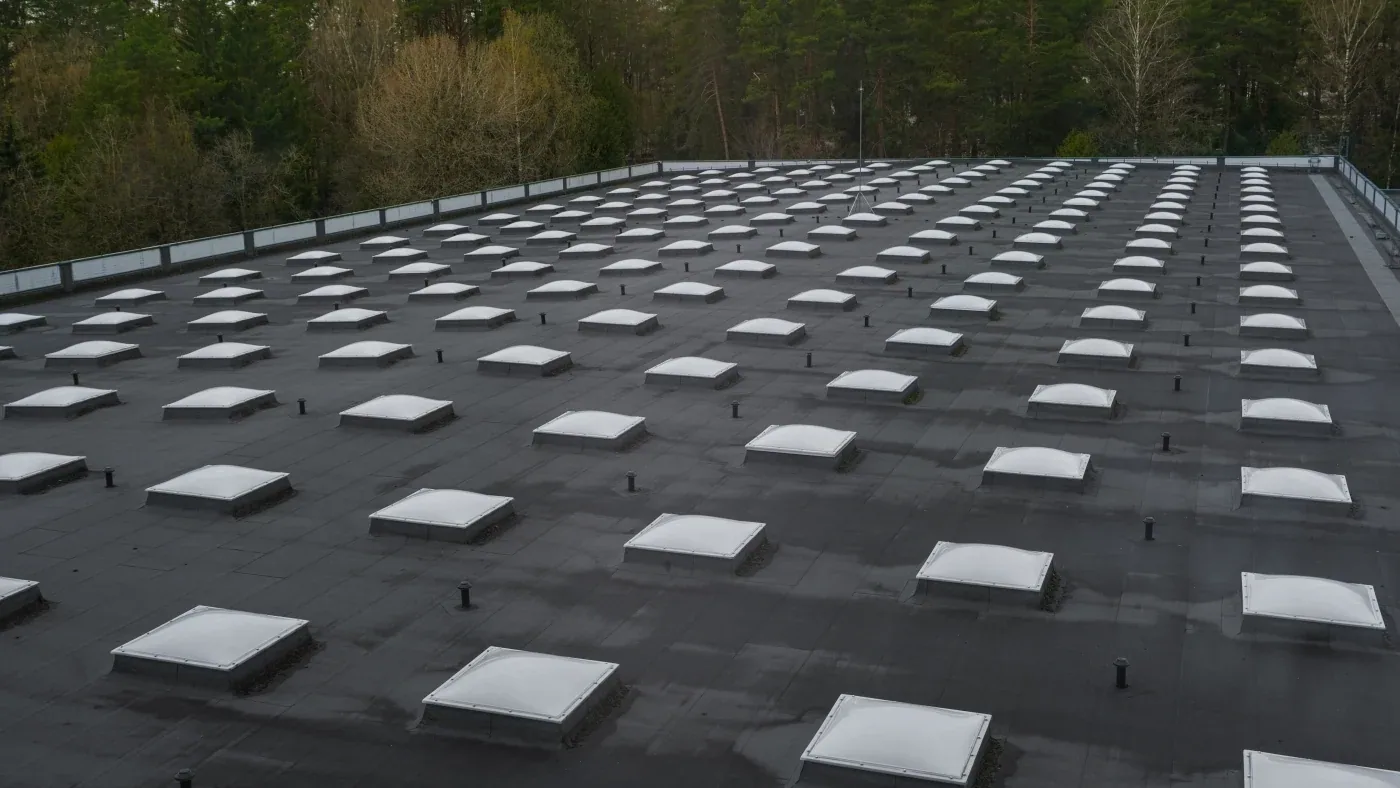
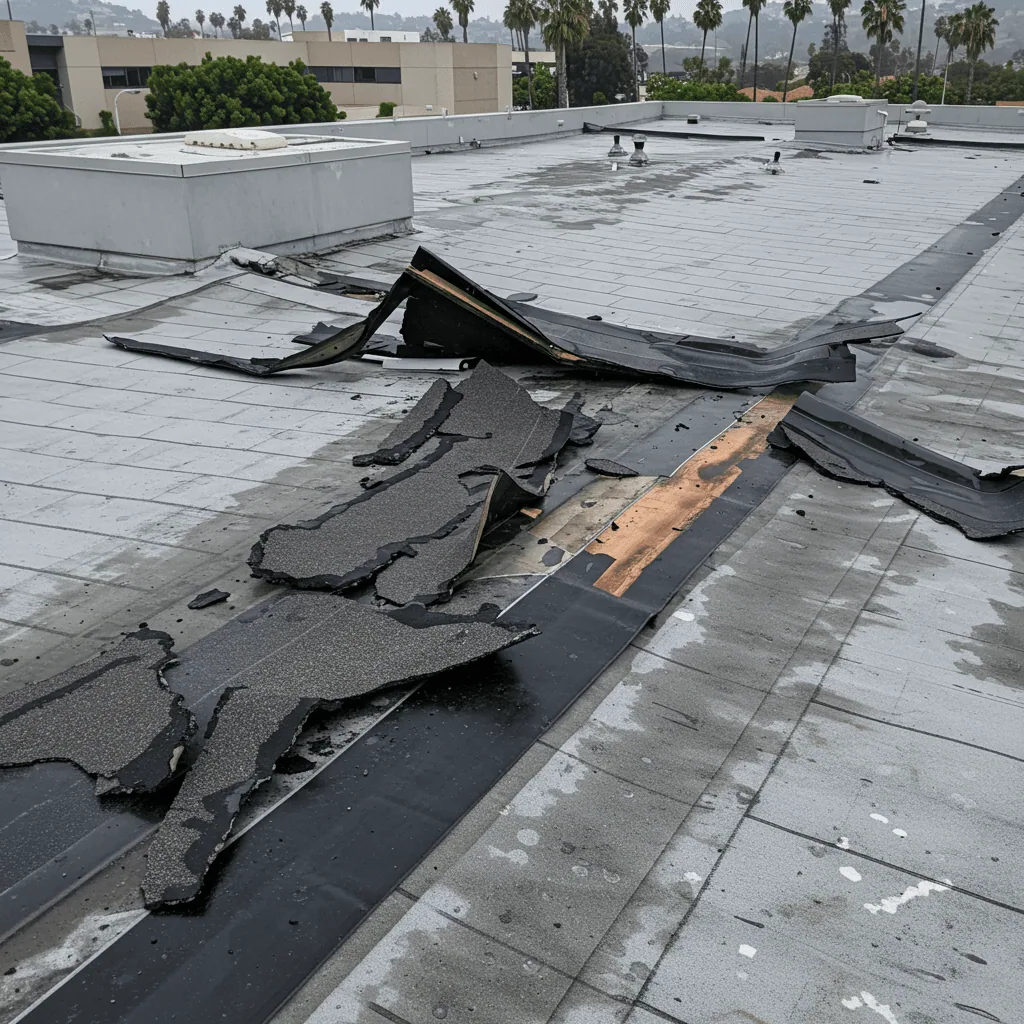
A fair option review uses the same roof map and quantities for repair, recover and replacement. The repair scope identifies the failed seam, flashing or drain and the material tie-in. A recover evaluation adds attachment, moisture, layer count, finished height and edge transitions. Replacement includes removal, disposal, deck exposure, new insulation and the details that connect the roof to walls and equipment.
We do not present a patch as a substitute for broad correction when the evidence points elsewhere. If several test areas show moisture, the capital plan notes the locations and their relation to the affected system. A recover evaluation and replacement scope can then be compared against a targeted repair using matching line items.
Each alternative gets its own schedule and open assumptions. If a drain or curb remains outside the tested area, the record says so rather than treating the entire roof as confirmed.
Set Work Against the Calendar
Budget timing has to fit field conditions, tenant notice, equipment shutdowns and material lead time. We identify the last safe date for temporary work, the likely installation period and the preparation needed before a contractor can open the roof. Where a building cannot lose access during business hours, we show the sequence and the decision that needs approval before staging begins.
The 2025 Oregon Structural Specialty Code, built on the 2024 International Building Code, became mandatory on April 1, 2026, and the 2025 Oregon Energy Efficiency Specialty Code on July 1, 2025. We flag code and energy-review questions that may affect a planned roof assembly, then coordinate the governing requirements with the design and permitting team before work is priced as final.
For sites around Downtown Beaverton and Washington Square, Metro's regional-center plan anticipates compact employment and housing near transit. That context makes building access and occupied-use coordination important to the schedule, while the actual property contact confirms hours and work zones.
Rank Work Across Buildings
We separate water-entry risk from planned renewal. A repair that protects a room below may deserve immediate approval even when replacement is several budget cycles away. Other buildings may have stable systems with isolated wear that can be monitored. The list states why each roof sits in its category and what new evidence would change its place.
For multiple properties, the sequence can follow urgency, occupancy or a shared mobilization window. A roof asset record keeps the current condition attached to the building, and a multi-site program can align reporting without merging unlike roofs into one assumption.
Funding can be staged by decision rather than by a single project label. A completed investigation may release a repair scope; a pending structural review may keep replacement as a planning allowance until the design team confirms requirements. We track those dependencies and identify who can close each one. When a roof is carried forward, the file states what remains serviceable, which interim work is approved and when it should be inspected again. That keeps deferred risk visible without counting the same roof as both ready for replacement and covered by a permanent repair. The schedule also names the owner review date and the next field check that could change the selection.
When dates move, we update the open item and its effect on the work plan. A deferred repair remains visible with its protection measure, expected review and owner approval, so it does not vanish from the next budget draft.
Keep the Decision Traceable
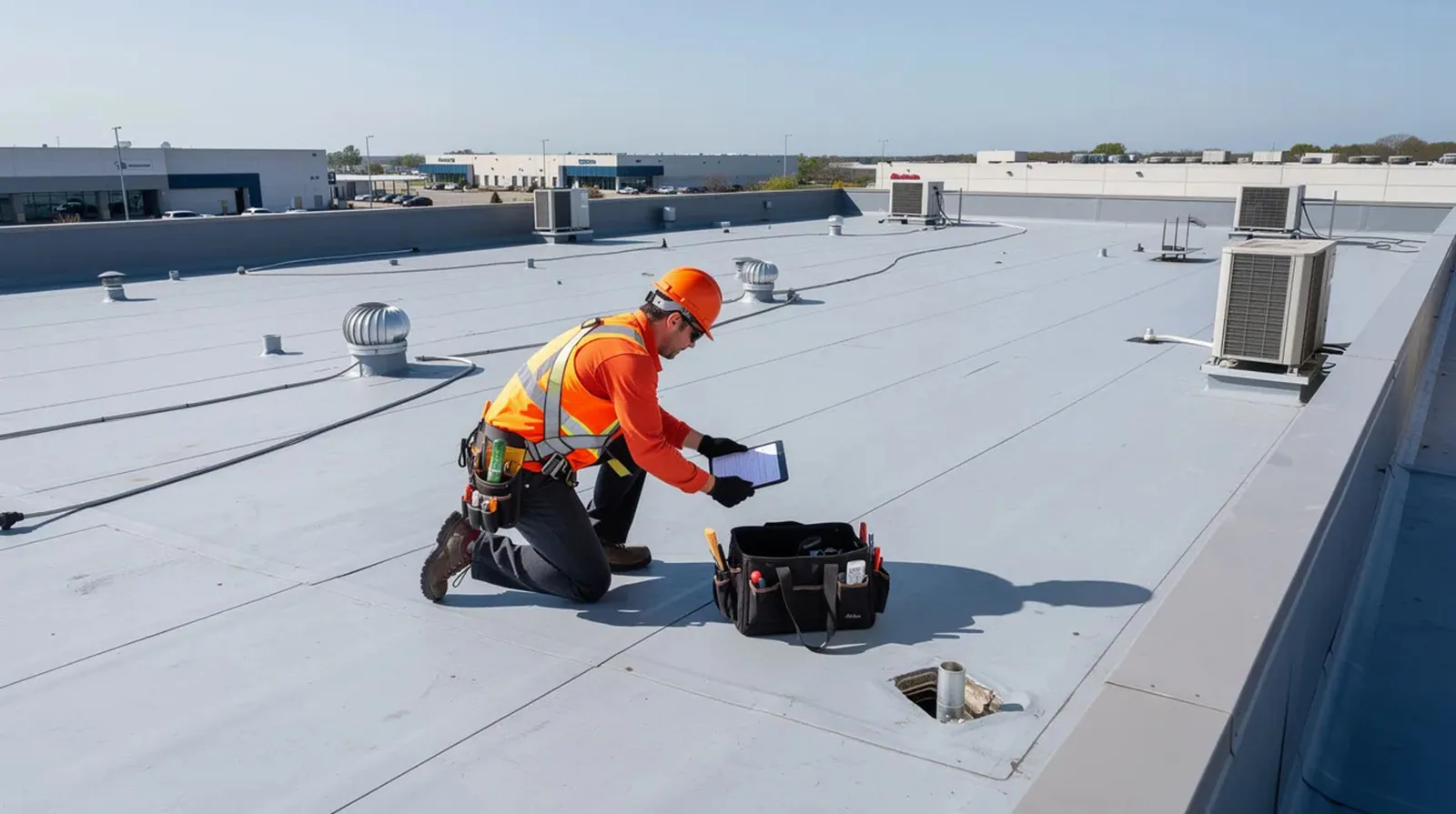
A useful capital file lets the next reviewer follow the choice from photo to scope. We include the plan location, inspection date, material condition, test results, quantities and exclusions. If a test cut found wet insulation, the report shows the sampled area and the repair boundary; if no opening was made, that limit stays clear.
We keep warranty information with the proposed work and flag any maintenance or manufacturer coordination that needs to happen before alteration. A warranty review can help identify documents and conditions to confirm before a coating, recovery or replacement scope is approved.
For a Beaverton building, send the address, current roof plan, last repair record and budget window. We can schedule the field review and return options that show the cost drivers and the next decision.
A Beaverton roof visit can begin with one property or a list of sites. We keep each assembly, access limit and finding tied to its own plan, so the capital line remains traceable after staff or project timing changes. Dates are kept in the file as written, not rounded.
Related Roofing Work

Commercial Roof Condition Reports
Commercial Roof Inspection
Roof Recover and Overlay
Commercial Roof Replacement
Bring the roof file to budget review
Send the property address, roof plan, recent repair notes and budget window. We will arrange an inspection and return repair, recover or replacement options with each assumption and work boundary stated.
Questions About Commercial Roof Capital Planning
What evidence belongs behind a roof replacement request?
Use dated photographs, a marked roof plan, system identification, moisture results where taken, repair history and the scope assumptions. We show which conditions support replacement and which details were not opened. That makes the requested work easier to review against a repair or recover option.
How do you decide whether a roof can wait another budget cycle?
The decision follows water entry, extent of deterioration, wet material, deck condition and the reliability of earlier repairs. We identify work that must protect the building now, then list what should be monitored and what evidence would move the roof onto an earlier capital line.
Do code updates change a roof budget?
They can affect assembly and energy questions, depending on the planned scope and the authority having jurisdiction. We identify those questions with the designer and permitting team before treating an option as final. The estimate lists any unresolved requirement as an assumption.
Can repair and replacement options be priced together?
Yes. We use one roof map and a common set of quantities, then separate labor and material by option. Repair, recovery and replacement each show their own boundary, protection needs and concealed-condition allowances.
What should be reviewed before a roof project is deferred?
Confirm any active leak, temporary seal, open drain or wet insulation area has an owner, a protection measure and a review date. We place those items in the building file and show how waiting affects access, exposure and later scope.