Roofing Manufacturers
Review Holcim Elevate roof assemblies in Beaverton, OR through membrane condition, flashing, drainage and repair records before approving work.
Holcim Elevate Commercial Roofing in Beaverton, OR
A roof record may carry an older Firestone name beside current paperwork. In Beaverton, OR, we start with the installed material, the reported leak and the product documents available for that building. The first hour confirms the room, makes the area safe and photographs nearby details. That photo set stays with the building file while the scope establishes whether the system needs a seam repair, flashing work or a larger review.
Portland Airport sees repeated wetting and freezing nights, conditions that make drainage and edge details worth checking together. A roof assembly is never read from an older brand name; we compare the record with what the field shows, then identify what a Holcim Elevate repair or replacement would need to connect to.
Match the Name to the Roof
Product identity begins with records: submittals, closeout documents, invoices, warranty paperwork and repair tickets. On the roof, we compare those records with visible membrane markings, seam type, flashing and edge conditions. A later recover or spot repair can change the assembly, so we mark each layer we can verify and leave unknown layers identified as unknown.
The former Firestone Building Products name may remain on an older file beside current product papers. That history is useful for finding product information, but it does not prove the exact membrane, attachment method or current warranty status. We check the product line stated in the file, then confirm whether a Carlisle SynTec or Versico assembly appears elsewhere in a portfolio before combining the records.
A marked roof plan helps the property team see where each observation came from. We show drains, curbs, parapets and openings near the leak, with photos keyed to their position. If the roof documents conflict, the scope identifies the item that needs verification before materials are ordered. That keeps the proposed repair tied to the installed roof rather than to a name copied from a prior invoice.
Trace the Membrane Failure
Seams and transitions see different movement than the field. We inspect lap edges, corners, patches, pipe boots, wall bases and rooftop penetrations for separation, stress, contamination or moisture below. A probe or selective test can answer a specific question, but the report states exactly which portion was checked. No visual pass should be described as proof about hidden layers.
Portland Airport's 36.9 inches of precipitation over roughly 157 days and some 32 freezing nights make the path from a lifted edge to wet insulation a useful item to trace, especially before another wet stretch begins. Our roof inspection maps the route and a seam-failure scope identifies the boundary where sound material begins.
Active water gets a response at any hour, holidays included. We first protect the interior and secure a temporary dry-in where conditions allow, then return to document the permanent repair. That return visit is not an afterthought: it determines whether a local opening stays local or whether damp material beneath the membrane changes the recommendation.
Give Drains a Separate Check
Blocked strainers, debris in a sump and a low area can all hold water against seams and flashings. We clear accessible obstructions, check the bowl and overflow route, and note whether ponding returns after the surface is open. The report distinguishes maintenance from a slope correction or additional drain work, so the owner can approve the correct scope.
Vancouver, Washington, in the same metro, has fall-through-spring rain, occasional freezing-rain events and cold east winds through the Columbia River Gorge, which is why a building file should connect a local condition to the actual assembly. A Beaverton roof review records its own drainage pattern, with a drain and scupper check listed separately from membrane work.
Where a drain is below the surrounding surface, a patch at the nearest seam may not correct the cause. We mark the limits of ponding, inspect the insulation and deck where accessible and compare possible corrections. If a test opening is needed to confirm moisture, the estimate shows that step before a broad replacement recommendation depends on it.
Choose a Work Boundary
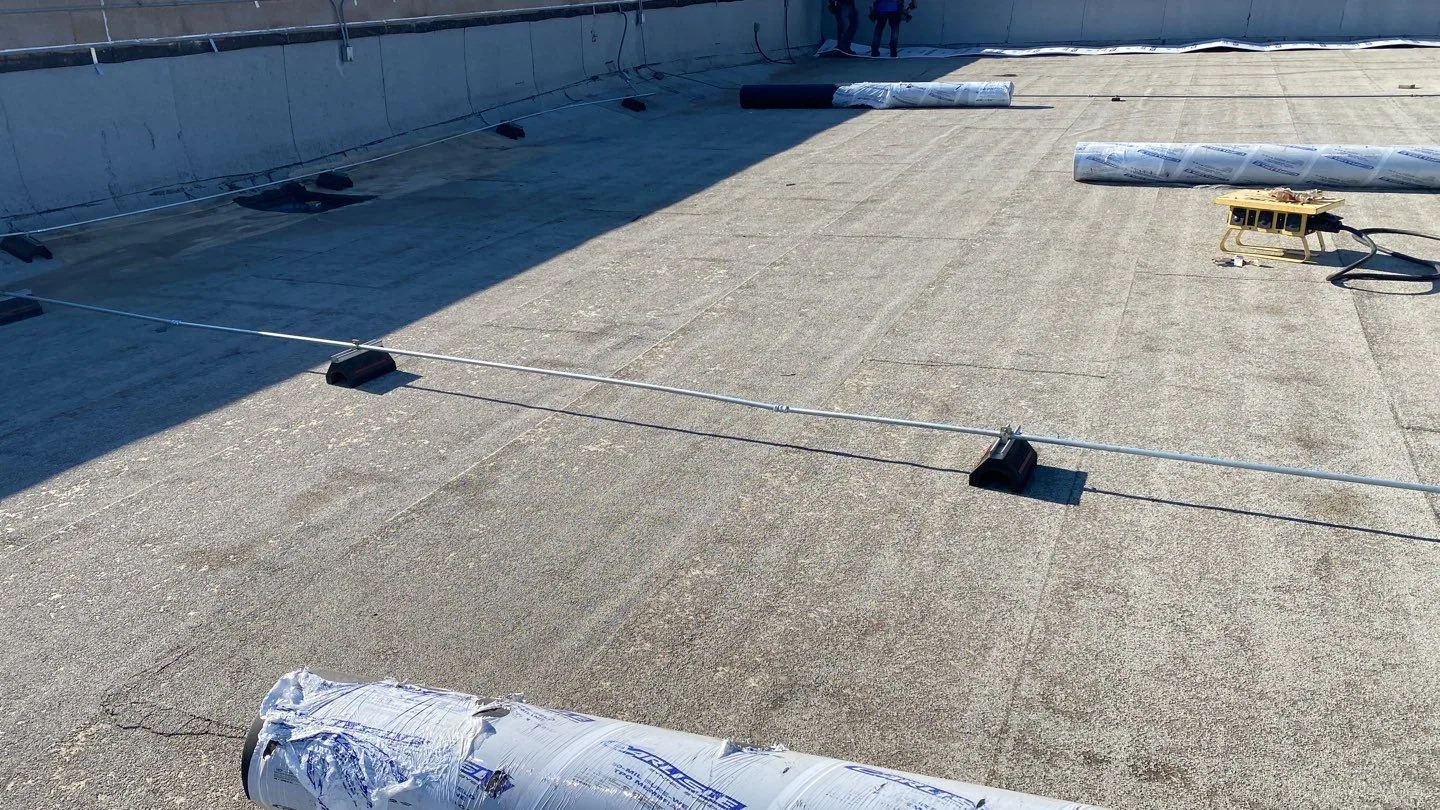
A product-specific repair must use a method compatible with the installed assembly. We review available instructions and records, prepare sound and dry material and state the patch limits. If damage extends through the insulation or into a deck, we show where the repair grows and what additional materials or access are involved before the opening is closed.
For larger work, we compare localized repair, recover and tear-off against the actual layers and project requirements. Costs move with removal, insulation replacement, cover board, edge metal, penetrations, deck work, hoisting and interior protection. A written replacement scope separates confirmed work from concealed-condition assumptions. A different PVC assembly may be compared only after the deck, drainage and use are understood.
When the roof serves active offices or production space, we agree on roof access, unit shutdowns, deliveries and a secure daily stop point. The scope states which area is open each shift and how it will be dried in if rain approaches. This matters along the US 26 route between Beaverton and Hillsboro, where one property may require a quiet service window while another has a loading schedule to protect.
Keep Warranty Records Together
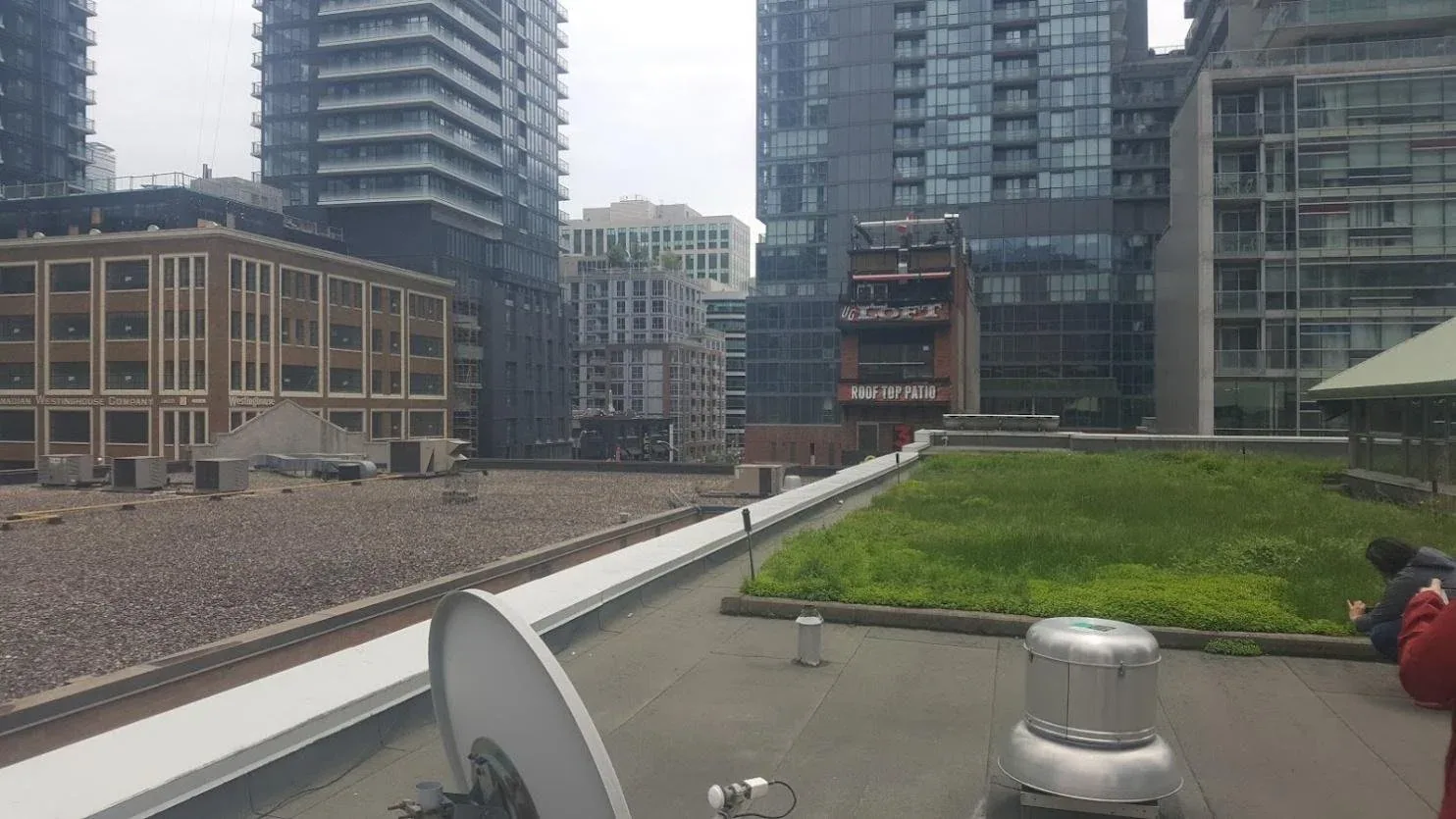
Warranty paperwork should travel with repair history, product records, photographs and the roof plan. Before altering a covered roof, we review the available written terms and applicable repair instructions. A manufacturer name or old certificate is not a promise of coverage. If the record leaves a question open, the scope identifies it before work proceeds, so the owner can decide which confirmation is needed.
Closeout notes record the material used, repair location, date and follow-up. We distinguish a temporary seal from completed work and name any area that was not opened or tested. If an inspection, repair or replacement changes the building file, the next manager can see which condition was addressed and what remains to monitor. A warranty record review or condition report can keep that information organized without implying a warranty outcome.
Plan for the Next Dry Window
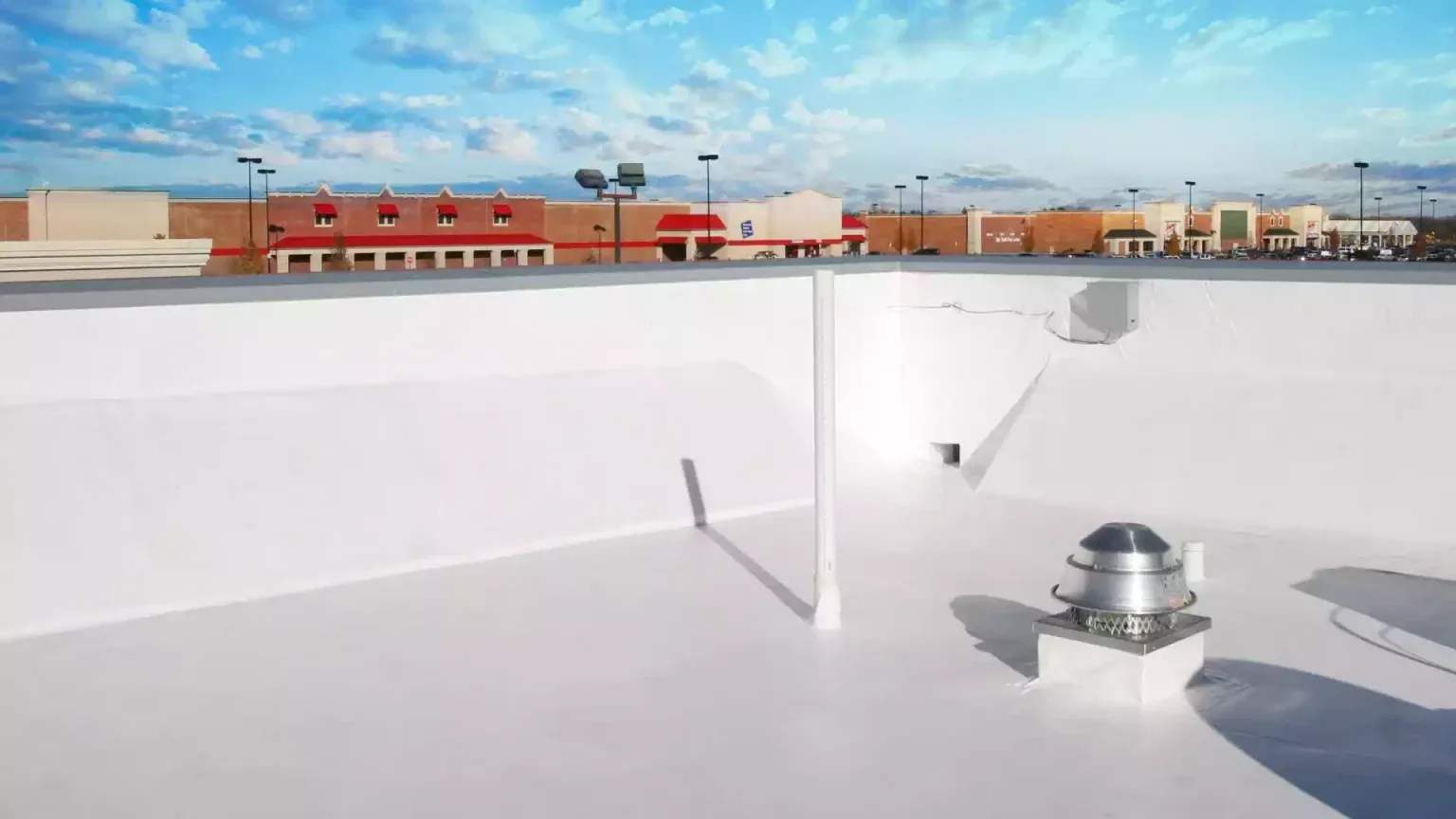
With rain on roughly 151 days a year, a permanent membrane repair needs a dry substrate and suitable material conditions, so the daily plan limits how much roof is exposed. We secure the boundary before stopping, photograph the edge and leave a clear return task in the file.
A make-safe visit may happen before the permanent repair can. The scope notes what the temporary measure protects, where it ends and what must be checked on the second visit. We ask for the building contact, hatch key, equipment restrictions and affected room before dispatch. That sequence gives the property team a location, a near-term action and the written repair-or-replace threshold after the roof is dry enough to assess.
Related Roofing Work
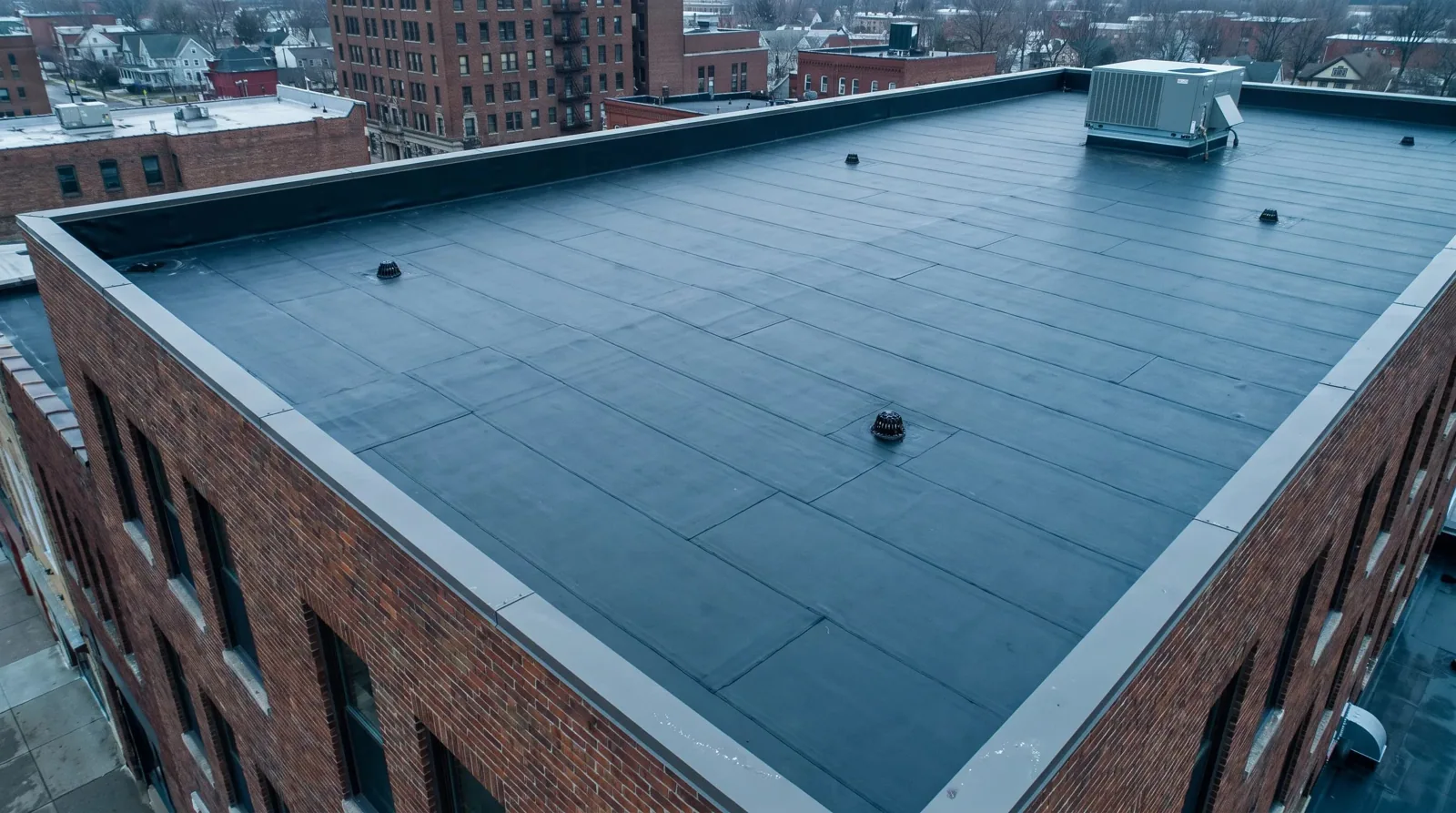
Carlisle SynTec Roofing
Versico Roofing Systems
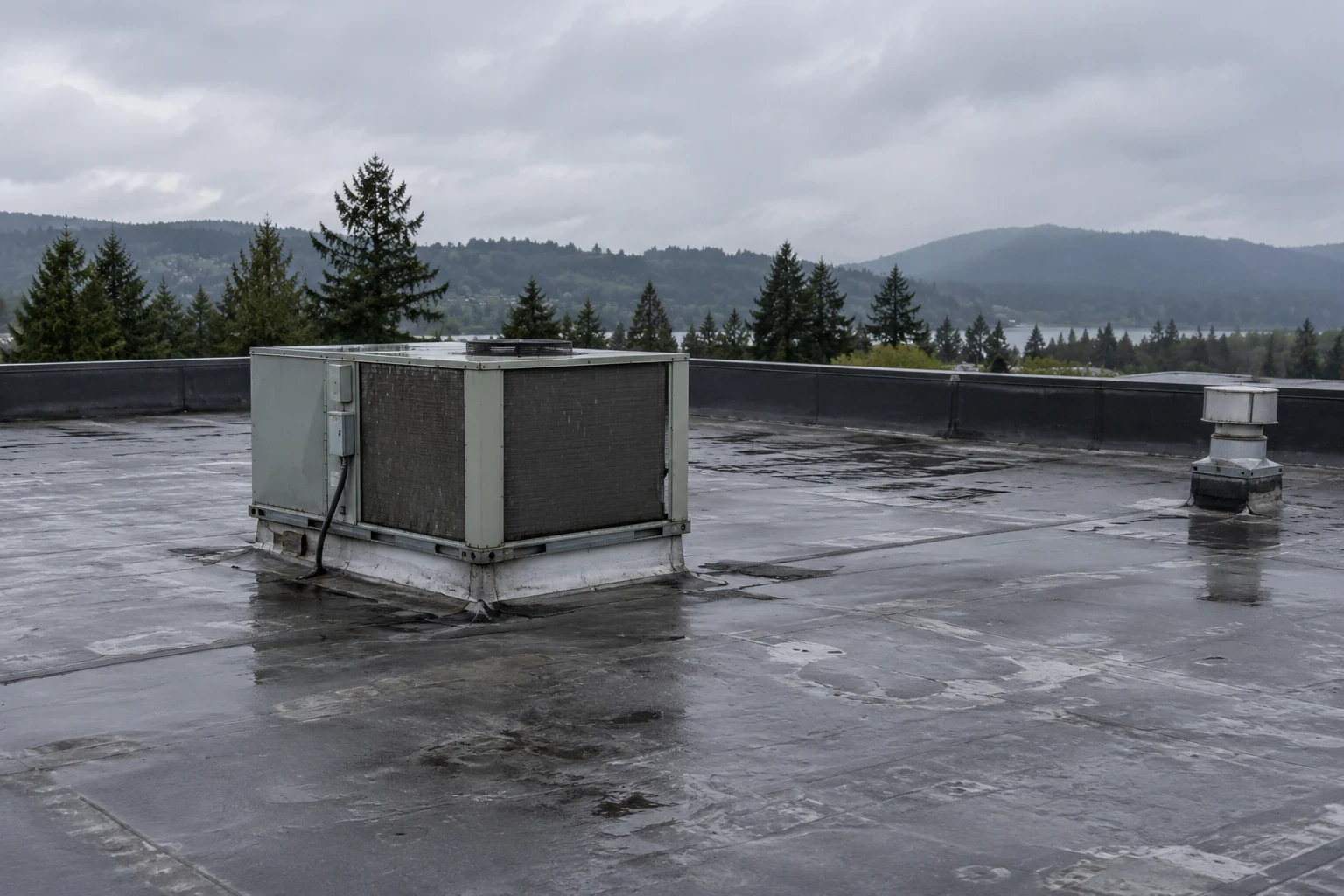
Commercial Roof Inspection
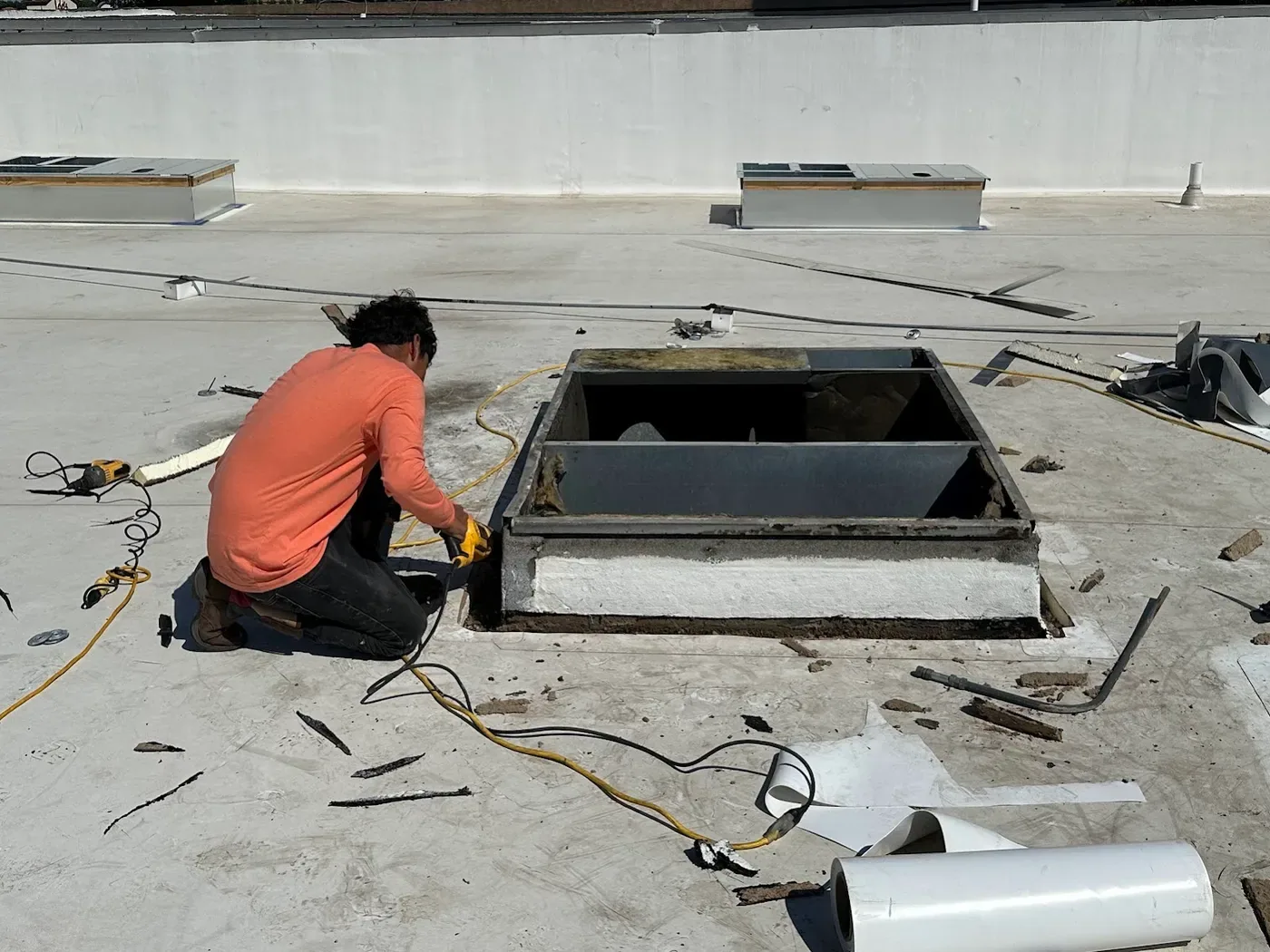
Commercial Roof Seam Failure Repair
Check the system record
Call with the building address, any Firestone product paperwork and the last leak location. We will arrange a make-safe visit for active water, then send a written scope with the condition and next action.
Questions About Holcim Elevate Commercial Roofing
Can older Firestone paperwork guide a current system review?
An older Firestone document may help locate product information, while a current file may use updated naming. We match each record to the installed system and confirm what applies before preparing a scope.
Can you identify the exact membrane from a roof walk?
Sometimes visible markings and seam construction narrow it down, but they may not identify every layer. We state what was confirmed and flag any opening or document check needed to finish the assembly record.
How are active leaks handled before a permanent repair?
We locate the entry, protect affected space and make the roof safe where conditions permit. The photo log records the temporary dry-in, then a return inspection establishes the permanent boundary after the surface can be examined.
What changes the cost of this replacement?
Removal, wet insulation, deck repairs, edge details, drainage, penetrations, access and occupied-space protection can change the scope. We list those drivers by area and separate concealed assumptions from confirmed quantities.
Does the brand name confirm warranty coverage?
No. The written terms and applicable product requirements control. We review the material available, record the repair method and leave any unresolved coverage question for the owner to confirm before altering the roof.