
Roof Damage Repair
Repair open commercial roof seams in Beaverton, OR with a traced leak path, system-compatible tie-in, moisture checks and a marked work boundary.
Commercial Roof Seam Failure Repair in Beaverton, OR
A seam that parts at one edge may look small from the roof hatch, but the water path can extend beyond the visible opening. In Beaverton, OR, we start with the reported room, last known leak point and roof system; if water is active, a make-safe visit follows. Photos capture the seam and nearby details before repair. The leak log gives the owner a marked boundary instead of a guess based on the ceiling stain.
Rain on roughly 151 days a year, with Portland Airport logging regular freezing nights, means repeated wetting and temperature change work on every lap, so an open one is traced carefully; the repair recommendation still depends on the membrane, attachment and substrate found on site.
Measure the Opening
We mark the open length, direction and nearby penetrations, then check whether the seam is lifted, split, contaminated or separated from the substrate. The inspection follows the joint beyond the obvious tear and checks cross seams, patches and flashing intersections. If the seam sits at a drain or curb, that transition receives its own note. A roof plan links each photograph with the area and the leak report.
Beaverton's wet months put pressure on the same seam details over many rain events. Our hands-on roof inspection documents the membrane and any standing water nearby. A condition report records whether the failure is isolated or continues across a field. A flashing failure review handles a wall or curb transition where the lap turns.
Find What Holds Below
A seam cannot be rebuilt reliably into loose or wet material. We inspect attachment and surrounding sheet, check for movement at the deck or insulation, and identify any test opening needed to confirm concealed conditions. Moisture readings, visual findings and test-cut results remain distinct in the scope. If the membrane is broadly aged or the same lap has opened in several zones, we compare the local seam with the larger assembly.
Portland Airport's roughly 32 freezing nights and 36.9 inches of precipitation a year are the kind of cycle that tests wet seams. We inspect the tie-in, remove loose material and check the substrate before selecting a compatible repair. A nearby membrane puncture assessment can address a separate opening without combining the two repair boundaries. The core and probe locations are marked on the plan with the results.
Select a Compatible Tie-In
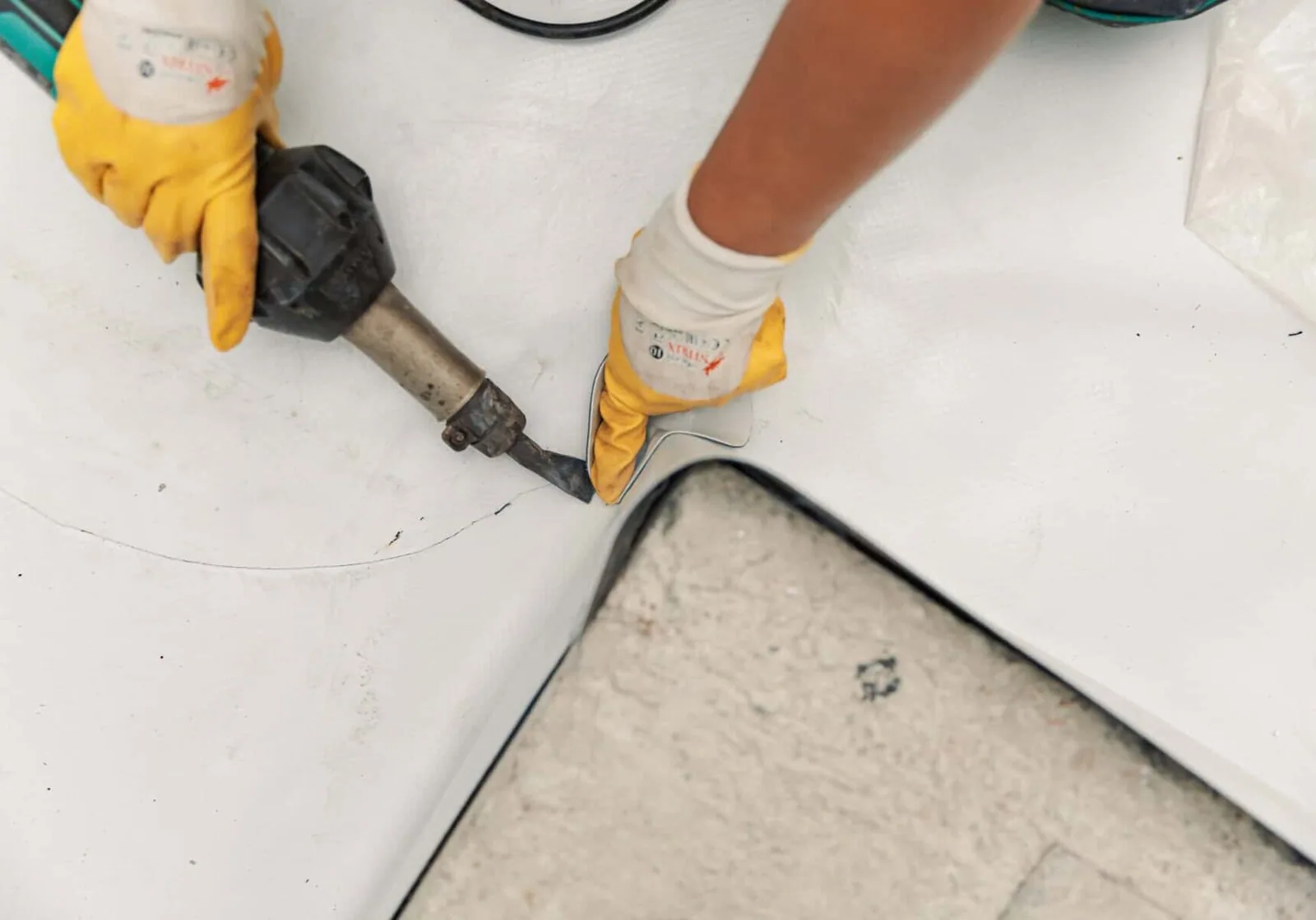
Repair method follows the existing system. A heat-welded thermoplastic seam needs a clean, dry surface and a tested weld; an EPDM lap uses compatible primer and seam materials; modified bitumen details follow their own layer and torch-safety requirements. We identify the roof before specifying the connection. The repair boundary stops at sound material, and the closeout photos show the rebuilt lap.
Where the field has several failures or wet insulation below, a patch may not address the condition. We compare TPO seam work with the appropriate system scope, and we document whether a recover or removal is supportable. The repair estimate separates seam labor, membrane material, substrate work, access and testing. If the assembly cannot accept a durable tie-in, replacement remains a separate option for review.
Limit the Exposed Field
Rain can reach an open seam while a crew is preparing its repair, so the work boundary and closeout time are set before material is lifted. We remove only the section that can be dried, prepared and secured in the available window. If weather turns, a temporary seal protects the opening and the log states what remains. We keep the building contact informed about any room below that needs protection.
Roof access, loading conditions and a safe dry-in point decide the on-site sequence. A make-safe visit can protect an active opening before the permanent seam repair is ready. Each phase note records the edge secured, work completed and next return requirement. In the wet season, a repair at a store near Cedar Hills Crossing or a factory in Tualatin gets a dry-in window of a shift at best, which is why the open section is sized to the weather window and the building's loading schedule rather than to the length of the split.
Document Repeat Movement
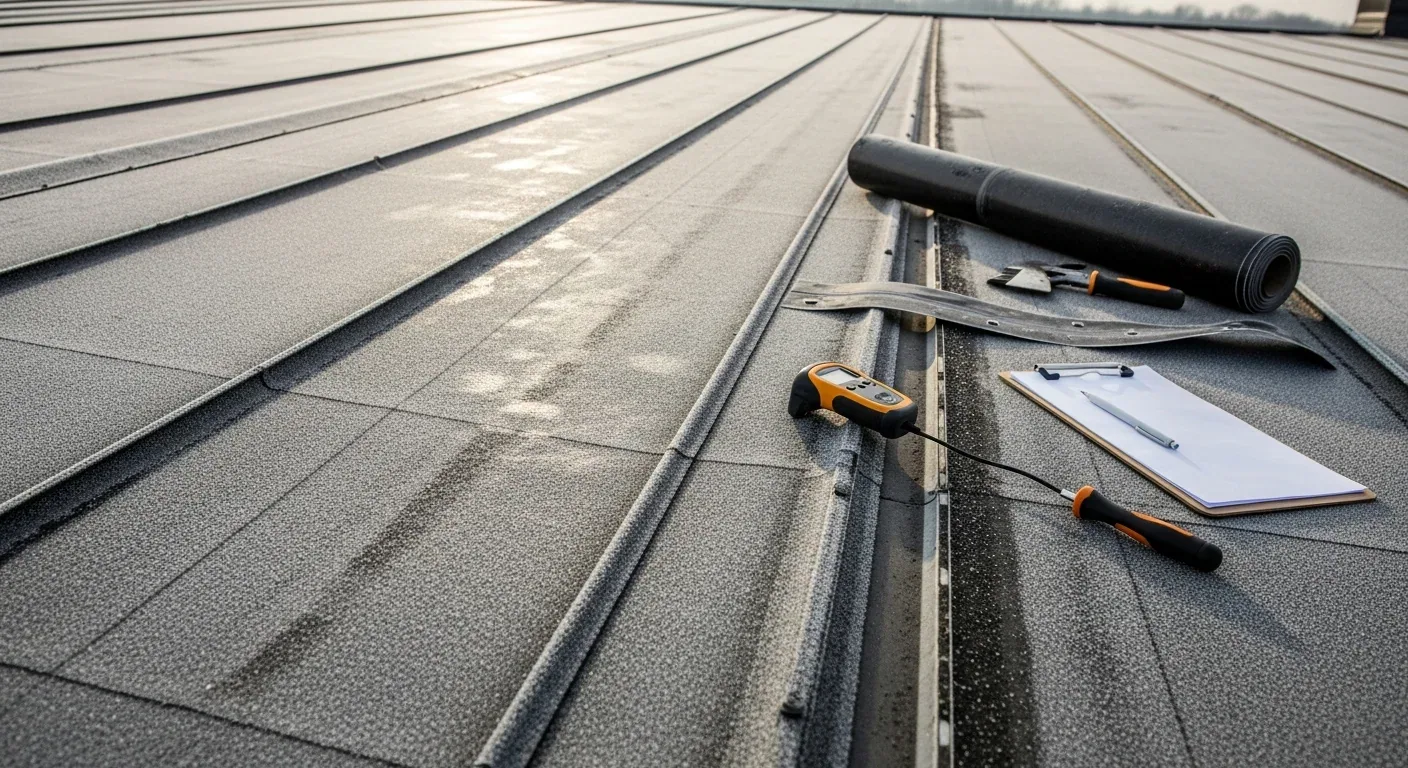
A lap that opens again may point to movement, substrate condition, poor drainage or an attachment problem beyond the repair itself. We compare photos and prior scope notes, inspect adjoining seams and mark the extent of any repeated pattern. The owner can see whether the next scope remains local or whether several connected areas need testing. We keep confirmed failures separate from concerns that need another opening. A recurring opening at a cross seam may call for a closer look at sheet movement and fastening; separation only at a curb can indicate a different repair path. We document the location, direction of the split, adjacent lap condition and any change in roof height. That detail helps the facilities team decide whether work should happen in one visit or be staged with a larger assembly review.
Wilsonville's wet period runs from November through March, a little longer than Beaverton's late-fall and winter peak, so seams on a roof there spend more of the year wet. The site inspection identifies the surface, attachment and underlying material that support the recommendation. If several buildings share maintenance staff, the same marked fields and photo labels make it easier to schedule follow-up without mixing records.
Carry the Marked Repair Forward
Closeout provides a marked roof plan, dated photographs, system and material notes, repaired seam limits, moisture findings and any item left for monitoring. A maintenance visit can check the repaired lap and nearby drains before the next wet stretch. The record identifies what changed, so a later inspection can compare the same joint rather than restart the investigation from an interior stain.
An intake call needs the building address, last known leak point and roof system if known. Active water gets a make-safe visit first, and the written scope sheet then sets out the seam boundary, testing and next step. A Beaverton visit begins with those details, and at any hour, holidays included, the temporary seal and the permanent repair stay on separate lines.
Related Roofing Work
Commercial Roof Inspection

Commercial Roof Condition Reports
Flashing Failure Repair
Commercial Membrane Puncture Repair
Trace the Open Seam
Place an intake call with the building address, affected room, last known leak point and roof system if known. We arrange a make-safe visit when needed, then provide a written scope sheet with the seam limit and compatible repair steps.
Questions About Commercial Roof Seam Failure Repair
Can a split seam be sealed from the top?
A top-side seal is not a complete repair unless the original system and substrate support that method. We inspect the lap, attachment and surrounding material, then specify a compatible tie-in to sound roofing.
How far should the inspection extend beyond the visible opening?
We follow the seam in both directions and check intersecting laps, patches, drains and penetrations. The marked plan shows the observed extent and any area that needs testing before the repair boundary is finalized.
What makes a seam repair unsuitable?
Loose attachment, wet insulation, repeated openings or a deteriorated field can leave no sound surface for a local tie-in. We document those conditions and compare repair with recovery or replacement using the same roof zones.
Can you repair a seam during rainy weather?
The surface and materials need conditions suitable for the selected repair. If the roof cannot be dried, we make the opening safe, record the temporary measure and return during a workable dry period.
What will the owner receive after seam work?
The owner receives dated photos, a marked plan, system and material notes, the repaired seam boundary and any follow-up item. The building file keeps the repaired lap distinct from a separate drain, curb or penetration concern.