Service Areas
Commercial roof leak response, inspection and replacement scopes for the Clackamas Regional Center area in Clackamas, OR, with photo sets and written scopes.
Commercial Roofing in Clackamas Regional Center, Clackamas, OR
The first hour at a Clackamas Regional Center building begins with a floor plan, not a ladder. Before a crew leaves Beaverton, OR, we want to know which suite the water landed in, which units share the roof above it, and who holds the roof key. Metro designates the Clackamas Regional Center as a regional center in Clackamas County. Where one roof covers more than one tenant, the record has to say whose space was wet and when.
We put a make-safe crew on the roof, photograph the condition before touching it, and open a building file. The scope sheet that follows lists the repair, the recover and the replacement choices with the reason for each.
One Roof, Several Tenants
A roof over several tenants may be one continuous membrane or a series of sections separated by firewalls and parapets. A leak in one suite can come from a section that no one in that suite has ever seen. We start by sketching the roof sections against the interior units, then walk each section from the highest point to the lowest, because water reads the slope better than we do.
Each tenant needs a short plain update: what was found, what was done tonight, and when the next visit is. We send those through the property manager so the record stays in one place. The log shows the date of the report, the room, the section of roof, and the temporary step taken. If a tenant later raises a question about damaged stock or a stained ceiling, the log already answers it.
Dry-In Before Anything Else
Dry-in means water stops entering, whatever it takes for one night. We cover open seams with reinforced membrane tape, cap failed pipe boots, clear drain strainers, and tarp any section where a cut or a missing flashing leaves the deck exposed. The photo set shows each of these before and after, with a note saying the work is temporary.
With rain on roughly 151 days a year in Beaverton and winter the wettest stretch, a temporary cover often has to survive weeks of rain before the permanent repair can be done properly. We re-inspect it on the second visit. If wind or a freeze has moved a tarp edge, we reset it and record that too. Permanent seam welding, adhesive work and flashing replacement all need a dry surface, which is why the second visit is scheduled for the next dry window and not for the next convenient date.
Walking a Shared Roof
On a commercial roof with several rooftop units, the walk covers more than the membrane. We check the curb flashings under each unit, the condensate lines that drain onto the roof, the pitch pans, the vent stacks and the sealed penetrations where tenant cabling enters. Each of these is a place where one tenant's work can affect another tenant's ceiling.
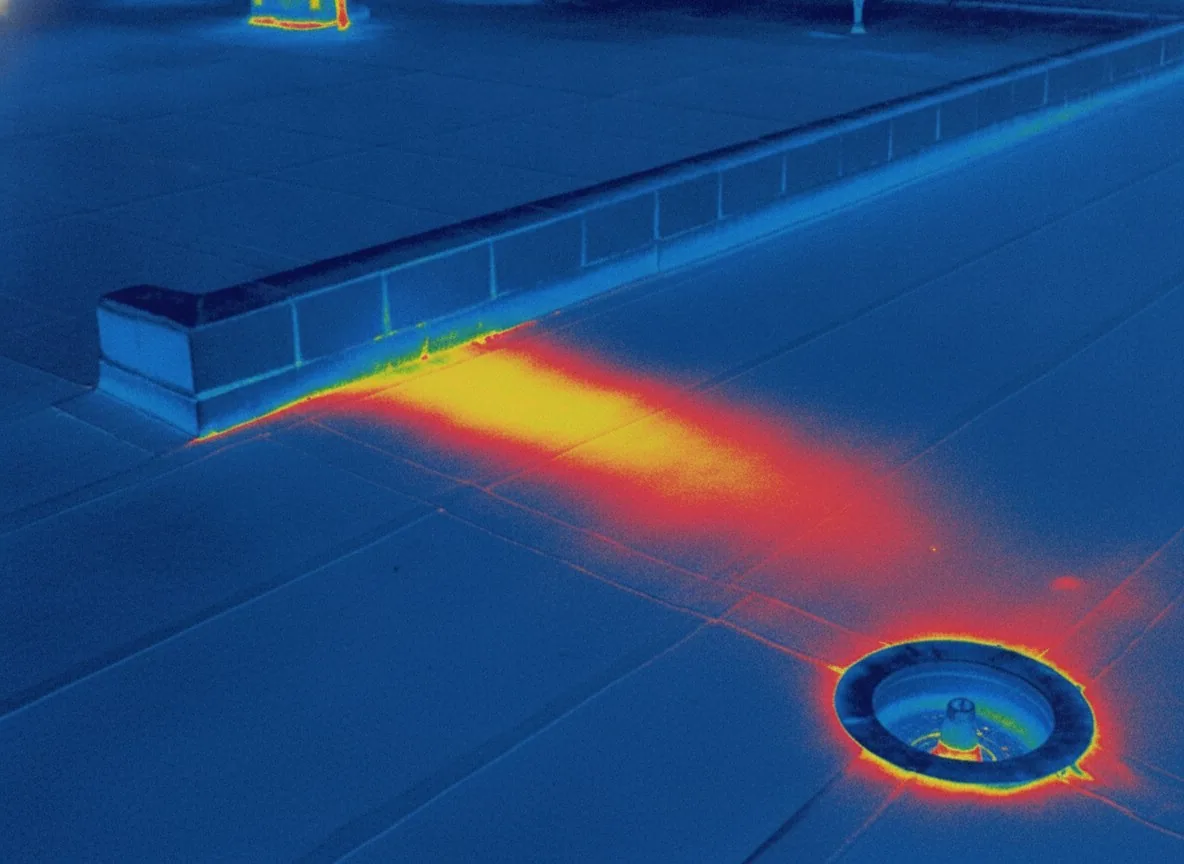
If the field walk leaves a question about wet insulation, we move to infrared moisture mapping, which can show wet areas that a visual walk cannot. A full roof inspection then puts the findings in a written report by roof section. Clackamas has a Kaiser Permanente hospital branch, and any medical space under a roof brings questions about interior protection during repairs. We plan containment and noise limits with the building contact before the first panel is lifted.
The Threshold in Writing
On a multi-tenant roof the cost of a failure is spread over more than one lease, so the threshold between repair and replacement belongs in writing early. We price the repair for the failed area, list the other areas showing similar wear, and show what the next two likely repairs would add. When the total starts to approach a replacement scope, we say so, and the figure goes onto the capital line.
Not every owner needs a full tear-off. Where the deck is sound and the insulation is dry, a recover or a coating restoration can extend the roof while the owner plans the larger project. The 2025 Oregon Structural Specialty Code took effect October 1, 2025 and became mandatory on April 1, 2026, while the ASHRAE 90.1-2022 energy code has been mandatory since July 1, 2025. Both affect what a recover or replacement must include, and we check them against the existing assembly before pricing it.
Where the Water Leaves
Buildings near a busy interchange collect dust, grit and litter on the roof, and all of it ends up in the drains. We pull strainers, check the drain sump for silt, and look at the first few feet of piping where a blockage tends to form. Standing water that remains a day after rain gets a ponding check: we mark its outline, measure its depth against a reference point, and photograph it.
A ponding area that cleared after the drain was cleaned is a maintenance item. One that persists with clear drains points to a low spot in the deck or a settled insulation board, and the remedy may be tapered insulation, a new drain location or a scupper and drain upgrade. Portland Airport averages about 36.9 inches of precipitation and roughly 32 nights at or below freezing, so water left on a roof can also freeze at seams and edges across the metro.
Access Near the Interchange
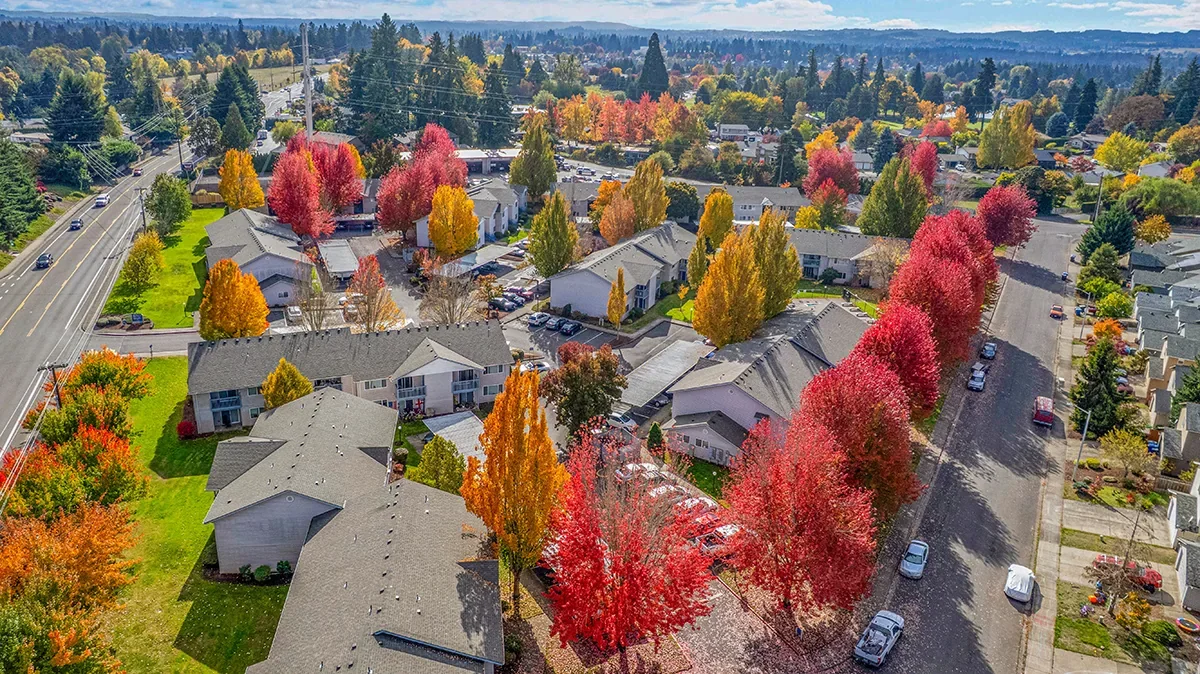
I-205 and Oregon Routes 212, 213 and 224 pass through Clackamas, and the MAX Green Line and TriMet buses serve the area. That helps customers get to the buildings, and it means delivery trucks, cranes and dumpsters have to fit around traffic, parking and fire lanes. We lay out the staging area, the lift path and the debris chute on the first walk, and we agree on the hours when noise and truck movement will be acceptable to tenants.
Camp Withycombe lies nearby, a 77-plus-acre Oregon Military Department site with an armory that has stood since 1956 and maintenance, logistics and warehousing functions. Our Beaverton crews bring the same inspection and documentation method to every building here, and the sequence matches the one used in Happy Valley.
Related Roofing Work
Infrared Moisture Survey
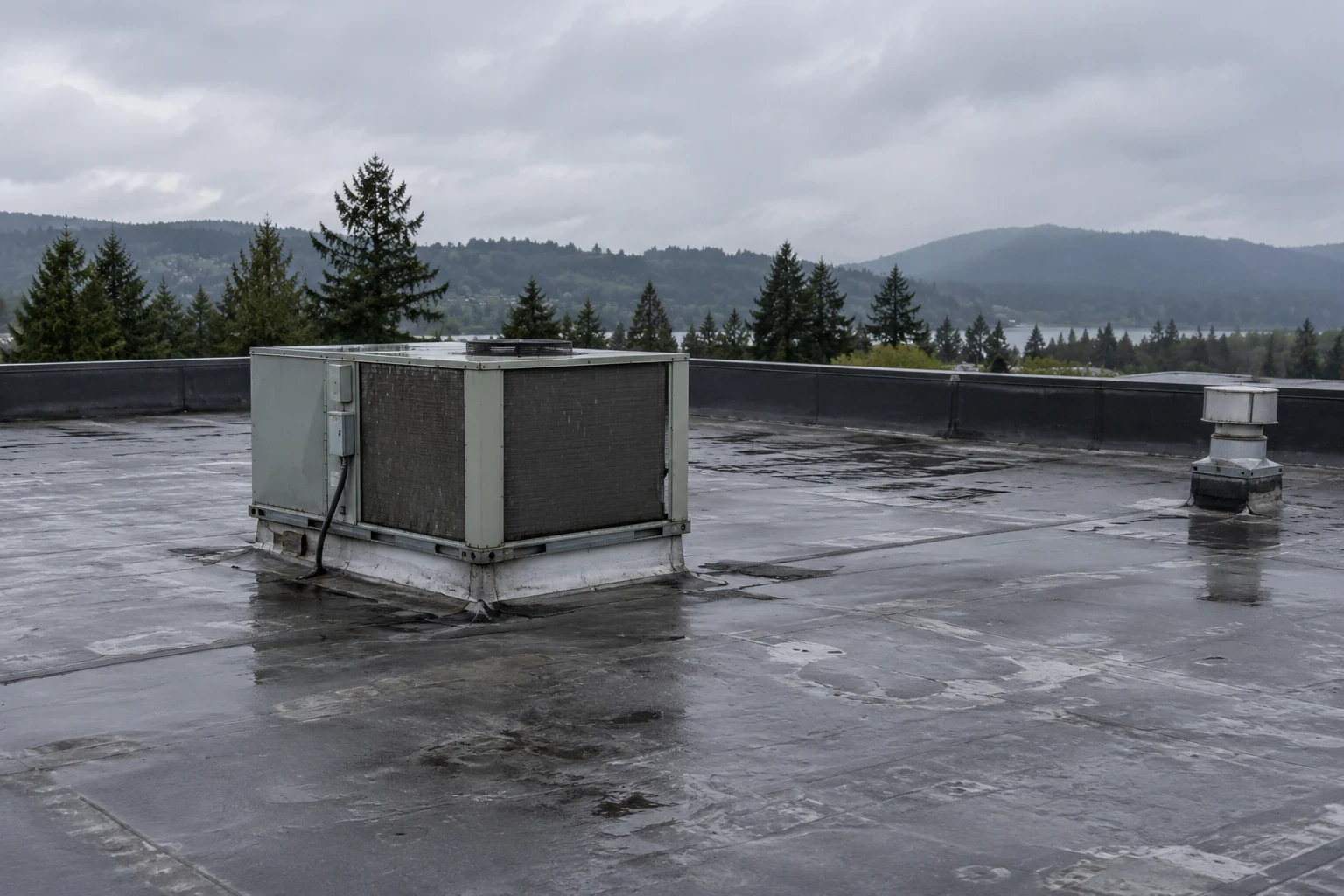
Commercial Roof Inspection
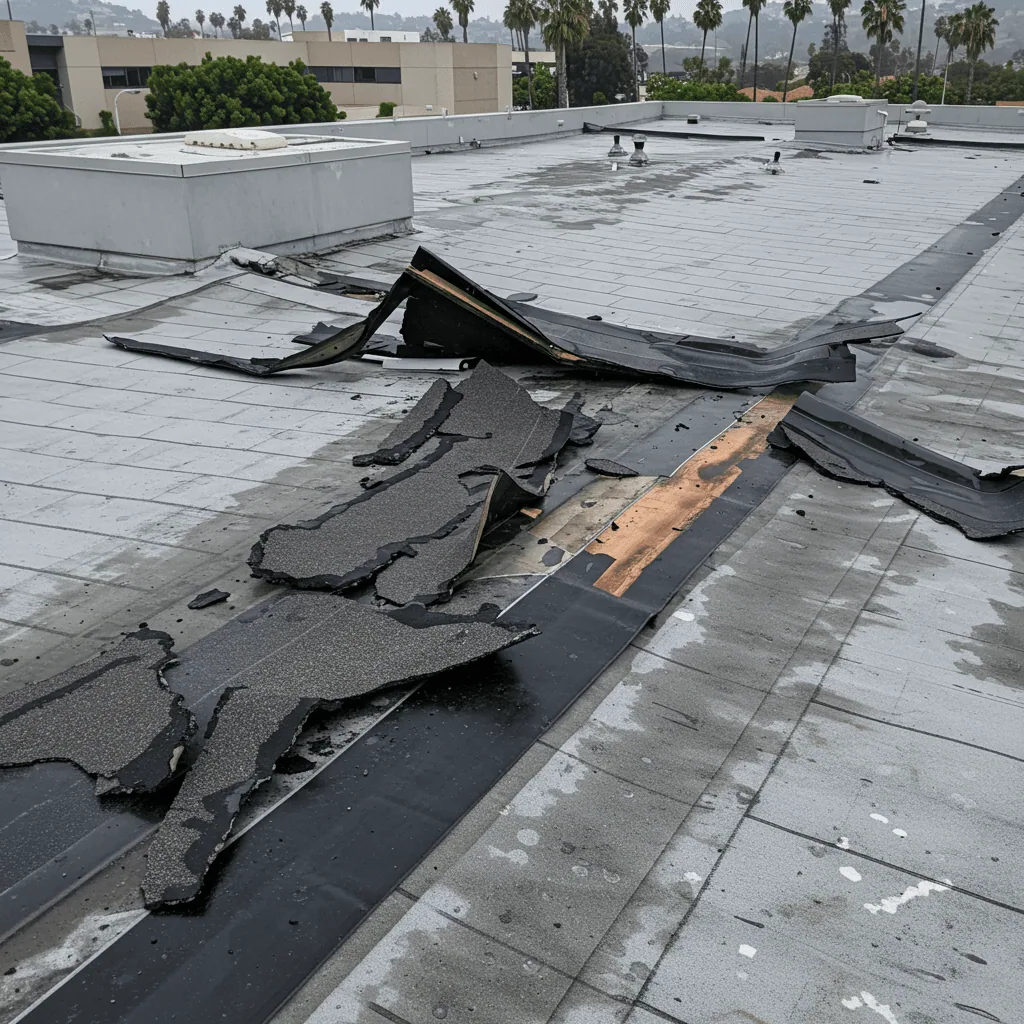
Commercial Roof Replacement
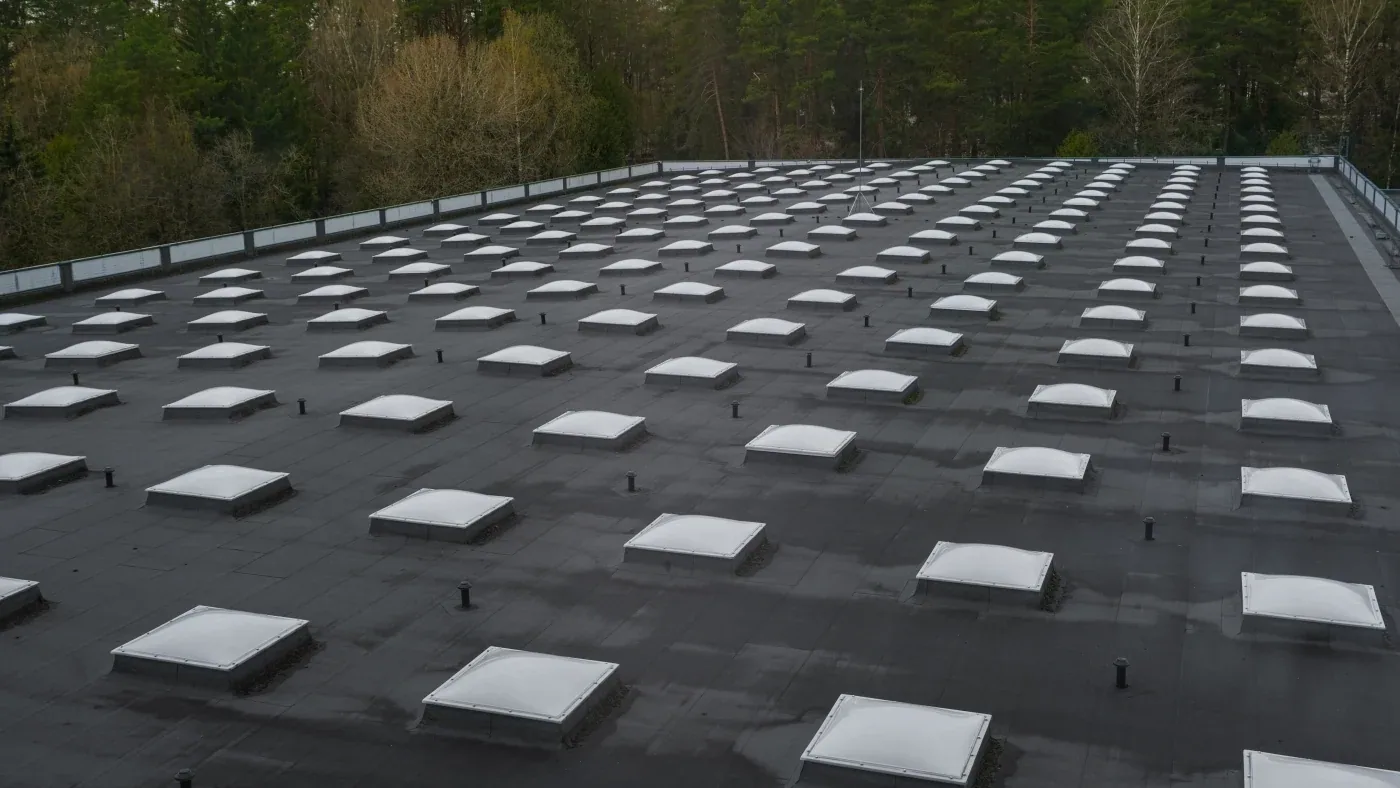
Roof Recover and Overlay
Place an intake call for your Clackamas roof
Send the building address, the suite that took water and the last known leak location. We will schedule the make-safe visit and follow it with a written scope sheet.
Questions About Clackamas Regional Center
Who gets the update when one roof covers several tenants?
The property manager does, and the property manager passes it along. We write each update by roof section so the tenant under that section sees what applies to them. Keeping a single channel avoids two tenants hearing two different timelines.
How do you handle a clinic or medical suite below the work area?
Interior protection and noise limits are set with the building contact before tear-off or fastening starts. We plan the sequence so the roof above a procedure room is worked at times that room is not in use, and we confirm those times in writing.
What triggers an infrared survey on a retail roof?
A leak that appears in more than one place, or one that returns after a repair. Both suggest that water is traveling through wet insulation, and a survey outlines the wet area. That outline sets the size of the repair and keeps us from cutting where the insulation is sound.
Can part of a large roof be replaced while the rest stays in service?
Yes, when the roof is divided into sections with their own flashings and drains. We replace one section at a time, tie each into the old roof with a watertight edge and keep the schedule in line with tenant hours. A single undivided membrane is harder to split and may need a different plan.
What does a written scope sheet include for a Clackamas Regional Center building?
It lists each failed item by roof section, the repair method, the cost drivers, and the point at which replacement belongs on your capital line. Photos are attached. If you manage the building for an owner, the sheet is built to pass along without rewriting.