Service Areas
Commercial roof leak response, inspection, repair and replacement scopes for Happy Valley, OR properties, with a photo set and scope sheet after each visit.
Commercial Roofing in Happy Valley, OR
Happy Valley, OR sits about 13 miles southeast of downtown Portland, and a report of water inside a building there starts the same way as any other: we take the intake call, learn which room is wet, and send a crew from Beaverton, OR to stop the water and photograph the roof. The city has grown fast since the late 1990s, with many new developments, and a city that adds buildings in stages can have roofs of different ages next to one another. The file we open for each building records what is actually on that roof.
After the make-safe visit, the scope sheet separates a defect in the installation, a failure from wear, and damage from an outside event, since each leads to a different next step.
Report, Visit, Photo Set
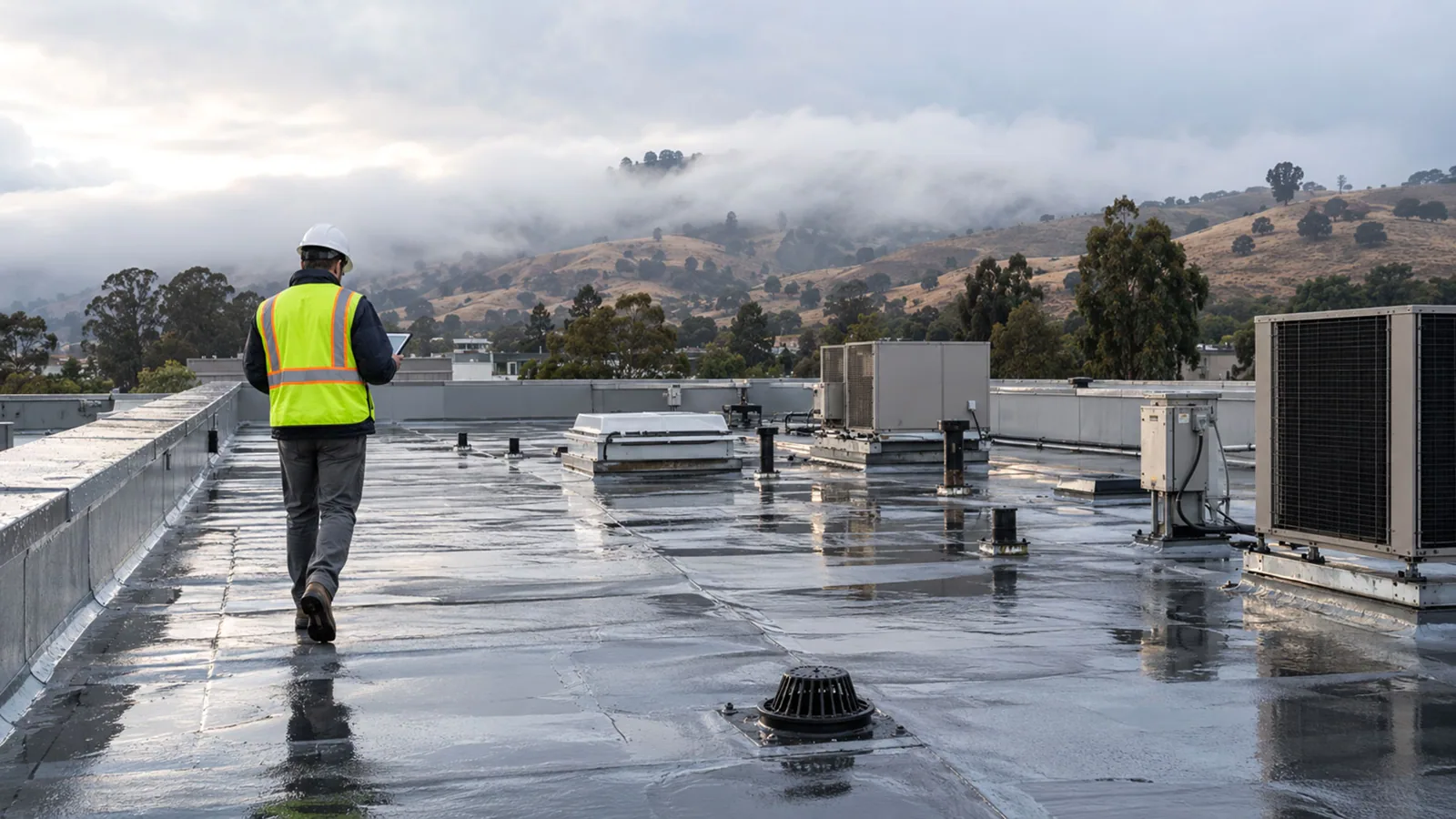
The sequence is short and fixed. The intake call captures the address, the room, the time the water was noticed and any rooftop work done recently. The make-safe visit puts a crew on the roof with tarps, tape and a drain tool. The photo set records the roof before anything is touched, then again after the temporary cover is in place.
A building under a young roof still gets the full walk. Defects at the edges, around penetrations and at transitions between roof areas can appear early, and they are often easier to repair when found early. We note the seam condition, the flashing terminations, the sealant at penetrations and the drain bowls, and we mark each item as sound, monitor or repair. The record starts a clean history for the building.
Stopping Water at the Opening
Happy Valley records about 48 inches of rainfall a year, which keeps roofs wet for much of the fall, winter and spring. A temporary cover has to last through that rain until the permanent repair can be done. We use reinforced tape over open seams, sealed caps on failed boots and tarps weighted at the perimeter for larger openings, and we clear every drain we can reach before leaving.
With Mount Scott rising to 1,050 feet in the city, we do not treat rainfall as a flat number for every address. We check how water leaves each roof area on the day, whatever the annual figure says, and write the result into the file. The second visit comes at the next dry window. We inspect the temporary work, reset anything that shifted, and carry out the permanent repair if conditions allow. Photographs of the temporary cover are taken from the same two positions on each visit.
Defect, Wear or Damage
When a roof leaks soon after it was installed, the question is whether the cause is workmanship, a design detail or an event. We document the condition in a way that supports whichever answer the evidence gives: close photographs of seams and terminations, location of fasteners and laps, and moisture readings where they apply. A commercial roof inspection written to that level of detail gives an owner something to bring to the installer or a manufacturer.
For roofs with unknown history, roof condition reports record age indicators, repairs and patch locations, and a warranty review shows what documentation is on file and what is missing. The review lists the documentation on file and what is missing, which is the starting point for any warranty conversation with an installer or manufacturer.
When Repair Is Enough
For a newer roof with a few failed details, repair is usually the right answer, and the threshold for replacement is far away. We price the repair, show the cost of monitoring the other items, and mark the repair or replace threshold on the scope sheet so you can see how far the roof is from it.
For older roofs, the comparison involves the recover option and full replacement. Both depend on whether the insulation is dry and the deck sound. Two code editions shape a recover or replacement here, Oregon's 2025 structural code (mandatory April 1, 2026) and the ASHRAE 90.1-2022 energy code (in effect since July 1, 2025), and we confirm each point against the existing roof before the price is written.
Checking Water's Exit
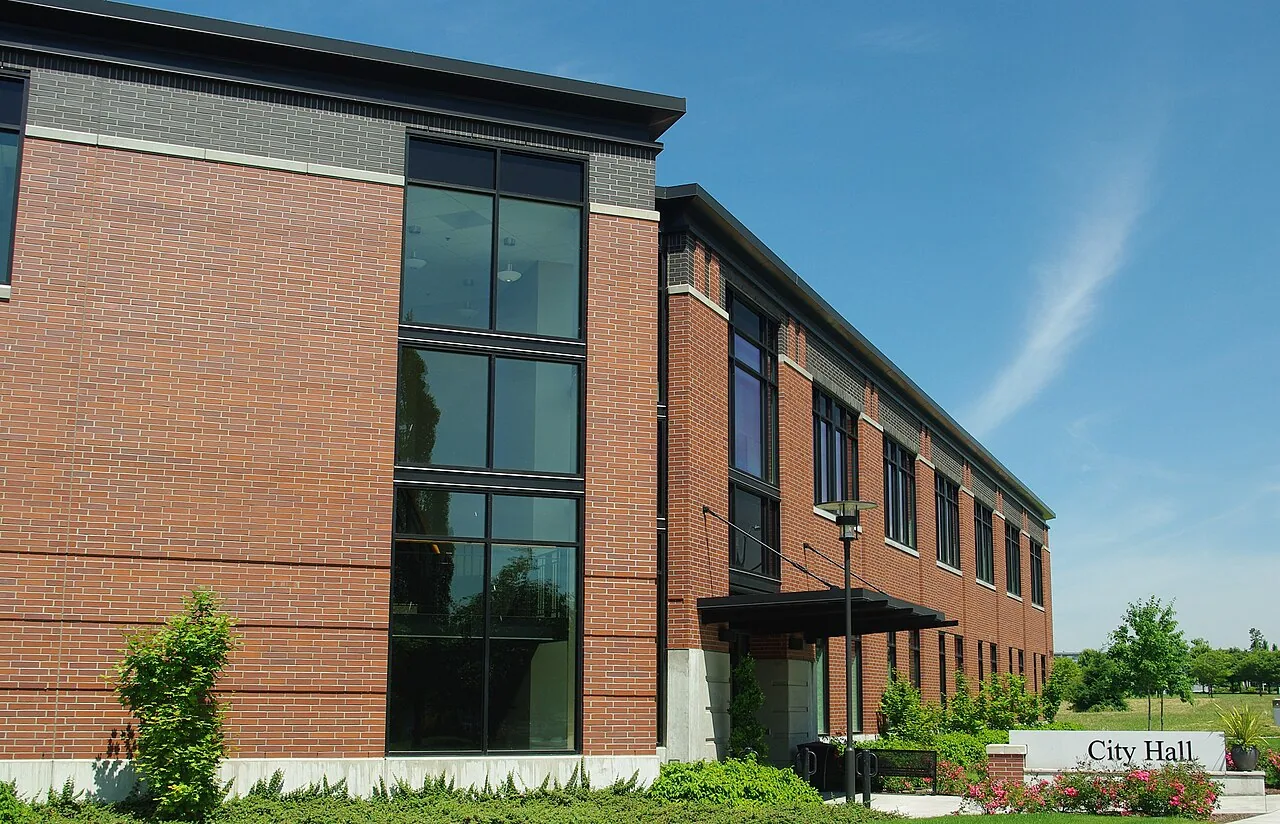
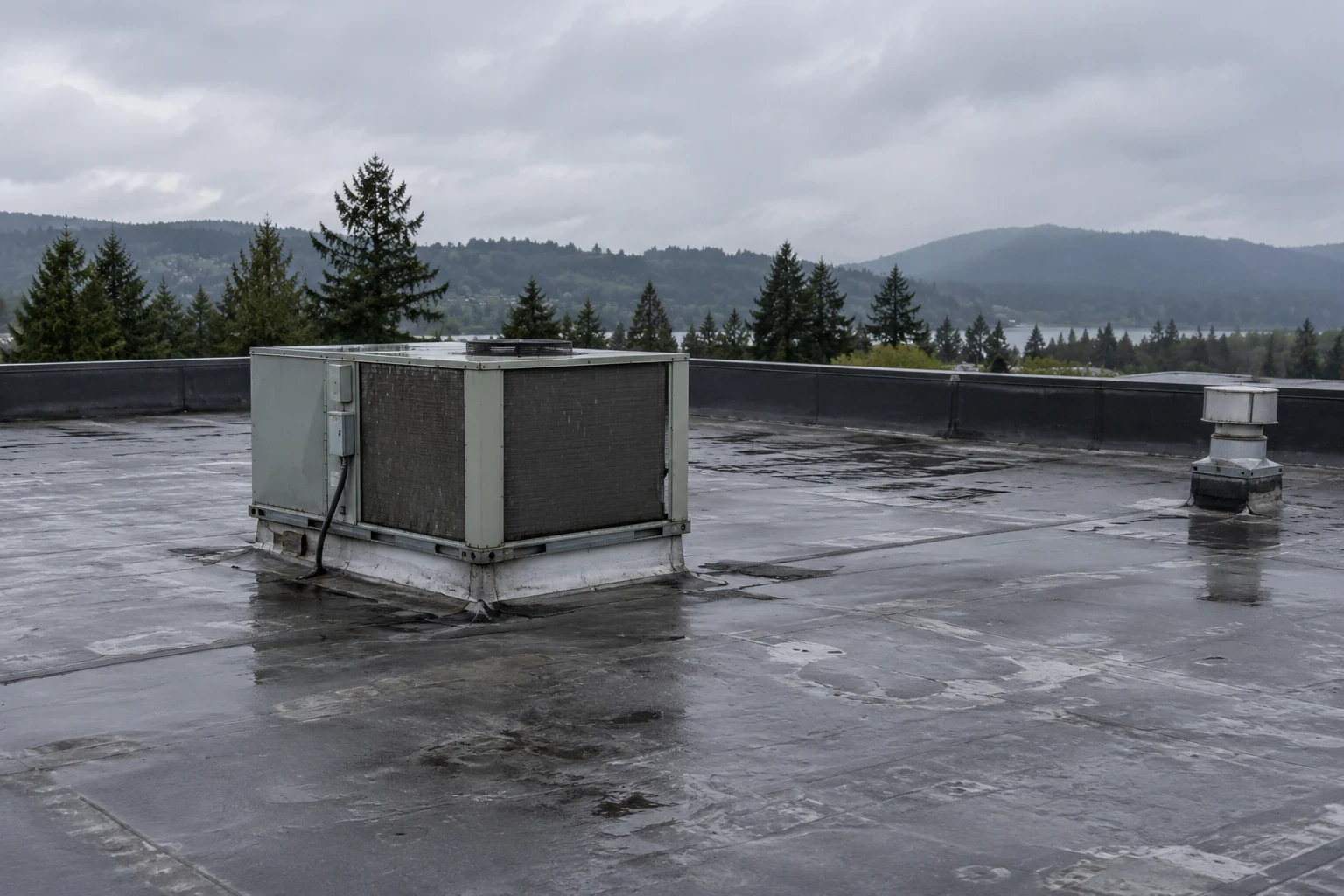
A low-slope roof sheds water through interior drains, edge scuppers or gutters, and any of these can clog in a wet fall. Leaves, grit and moss all find the drain. We pull strainers, check the drain sump and look at the first stretch of piping.
If water stands for days after rain, the ponding check marks its outline and depth. A shallow area that clears quickly may only need drain cleaning. A deeper area that persists may need tapered insulation or an added drain. Our drain and scupper work covers both. Portland Airport sees about 32 freezing nights a year, and standing water on a roof can freeze at seams and edges, so we treat it as a priority item when we find it.
Planning for Growth Areas
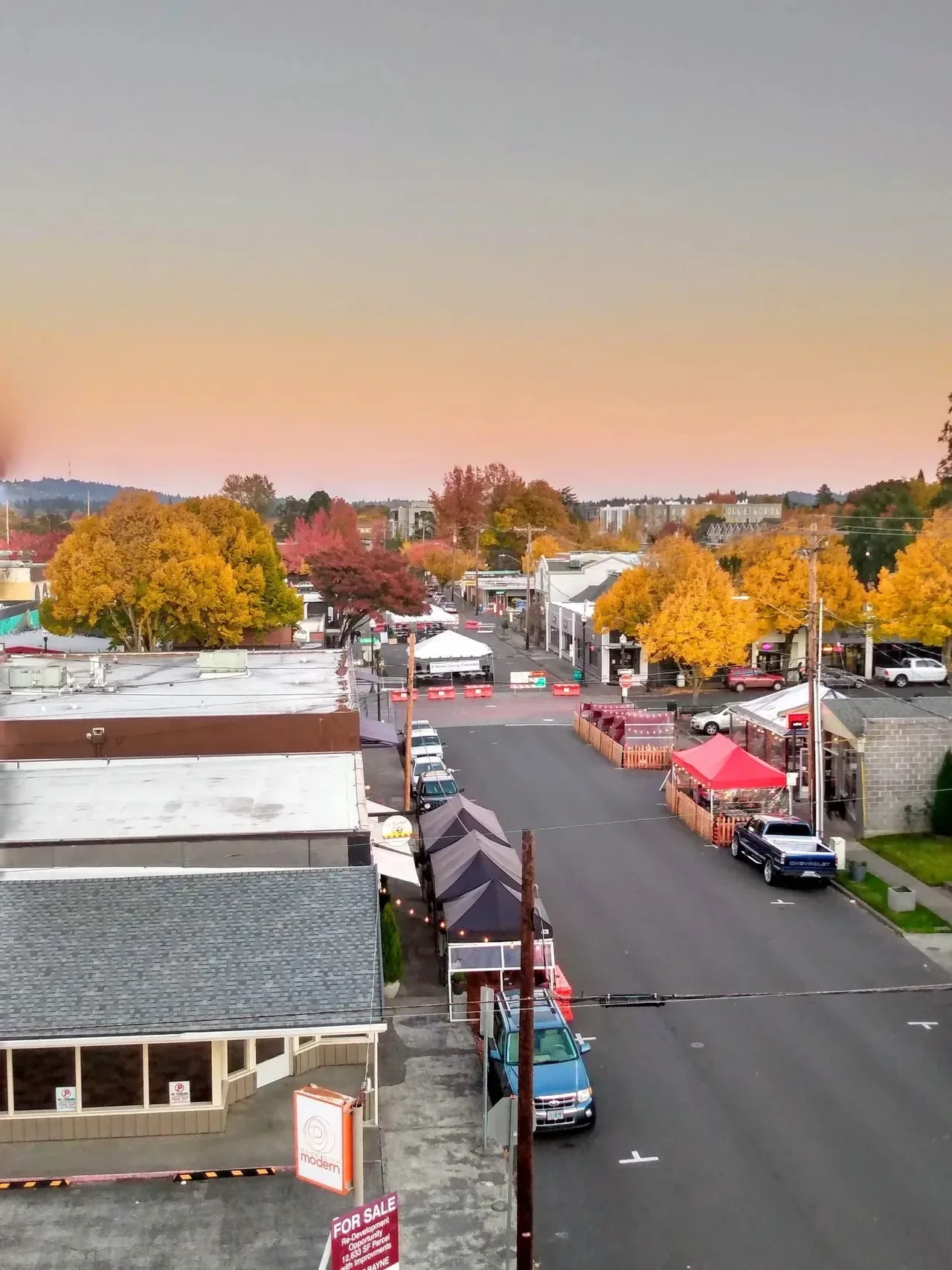
Owners of several buildings in a growing city often want a way to compare roofs across a portfolio. A multi-site roof program sets one inspection format, one rating scale and one schedule, so each building can be placed on the capital line by condition. The same file format serves buildings in Clackamas or Beaverton.
Capital planning for a newer building starts with a baseline. We record the roof's condition at the first visit, set the next inspection date, and note which items to watch, so later repairs are compared with a known starting point and not with memory. That baseline is also what a buyer or lender asks for first.
Access is part of the plan too. We confirm where the roof ladder or hatch is, which hours suit tenants, and where trucks can stage. On occupied buildings we work in sections, drying in each before moving on, and we tell tenants in advance which area is open.
Related Roofing Work
Commercial Roof Inspection

Commercial Roof Condition Reports
Commercial Roof Warranty Management
Roof Recover and Overlay
Place an intake call for your Happy Valley roof
Send the building address and the last known leak location. We will arrange a make-safe visit and follow it with a written scope sheet.
Questions About Happy Valley
What if a Happy Valley roof leaks soon after it was installed?
We document the leak and the conditions around it before any repair, with close photographs of seams, laps and terminations. That record shows whether the cause looks like an installation defect, a wear item or outside damage, and it gives you what you need to take to the installer.
Can you tell me how old my roof is?
Sometimes. Membrane condition, patch history, repair layers and fastening pattern are age indicators, and building records help. We report what the roof shows and mark anything we cannot confirm, rather than putting a date on the file that the evidence does not support.
Is repair or replacement cheaper over five years?
The answer comes from the scope sheet. We total the repair, the next likely repair and the monitoring cost, then compare that with a recover or replacement. If the repairs add up to most of a new roof, replacement belongs on the capital line.
What does the second visit cover?
We recheck the temporary cover, carry out the permanent repair if the roof is dry, and photograph the finished work. Any change from the first scope is written down with the reason, so the file matches what was done.
Do you work with property managers who handle many buildings?
Yes. We keep one file format for every building, which makes it simple to compare roofs and plan spending. The property manager receives each report in the same layout, with the same condition scale.