
Industries We Serve
Roof inspection and repair coordination for Beaverton retail and restaurant portfolios, with location-level access, tenant and closeout records.
Commercial Roofing for Retail and Restaurant Chains in Beaverton, OR
Start with the store address, the affected room or sales area and what sits below the leak. We confirm who can authorize roof access, whether a make-safe visit is needed and which entrances must remain open. The inspection ties the interior report to a roof zone, drain or flashing detail, then the scope sheet identifies the repair boundary and any open test.
Beaverton's commercial mix includes Cedar Hills Crossing and Progress Ridge Town Square, but each store has its own roof, lease conditions and access contact. A commercial roof inspection establishes the site record rather than assuming one location reflects another.
Keep the Store Address With Every Finding
Cedar Hills Crossing is south of US 26, while Progress Ridge Town Square is another broad commercial setting in Beaverton. Washington Square is a regional center farther east in Washington County. Each report remains tied to the actual store address and roof plan.
A store's delivery entrance, roof hatch and customer flow govern work access. We confirm the manager, security check-in, delivery window, lift position and any area that cannot be closed during business hours.
Use a separate photo set for every location, even when stores share a prototype or lease form. The same roof system can have different penetrations, drainage and prior repair boundaries. A location-level leak log helps a regional facilities contact see whether a problem is recurring at one address or merely described in similar terms elsewhere.
Trace Water Without Closing More Than Needed
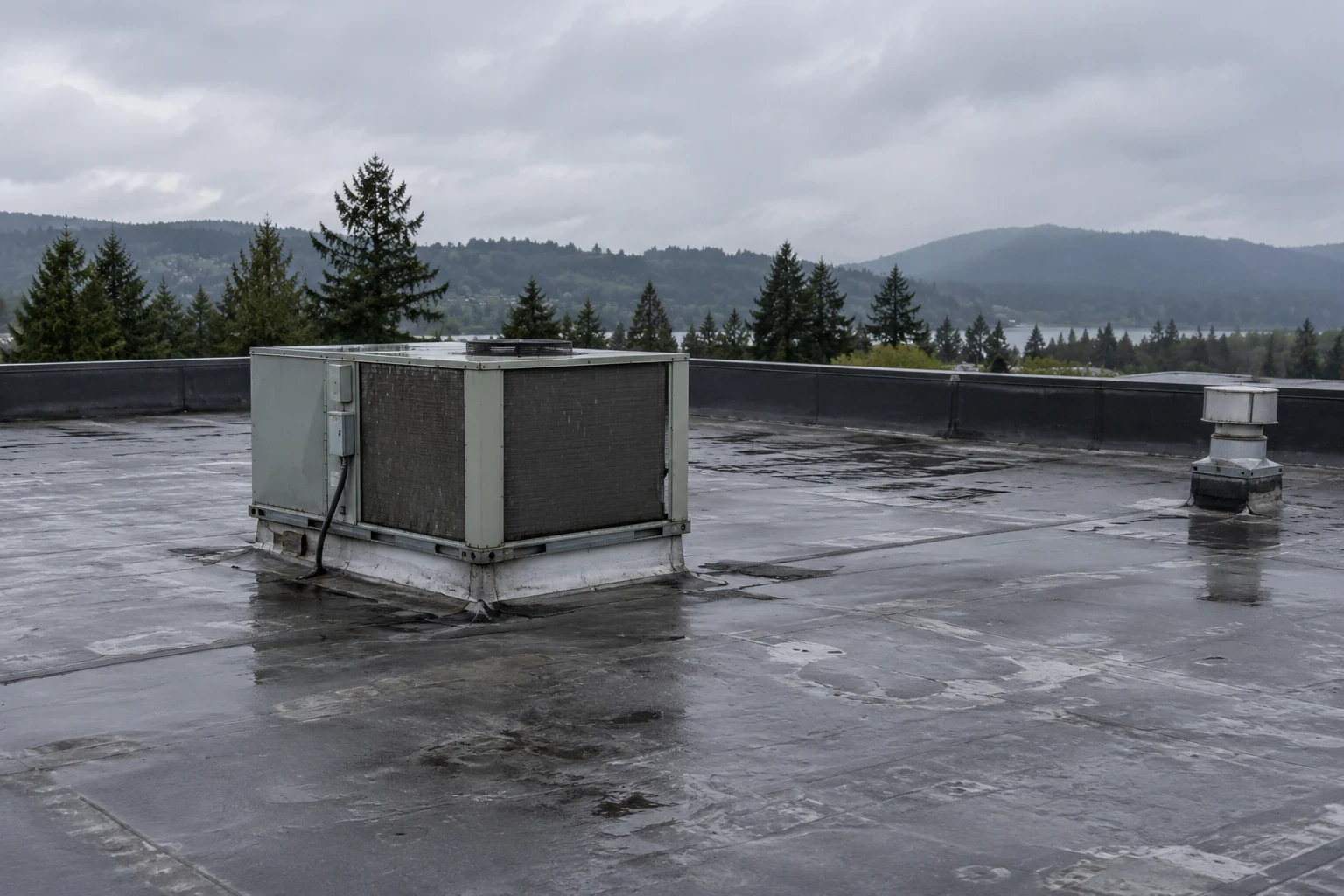
Beaverton's wettest months are November through January, when a drain or edge detail may receive repeated exposure. Record the department, ceiling mark, nearby stock or equipment and whether customers can be routed around the area. The roof check follows the slope, seams, curbs and primary and overflow drains; the closest visible opening is not automatically the source.
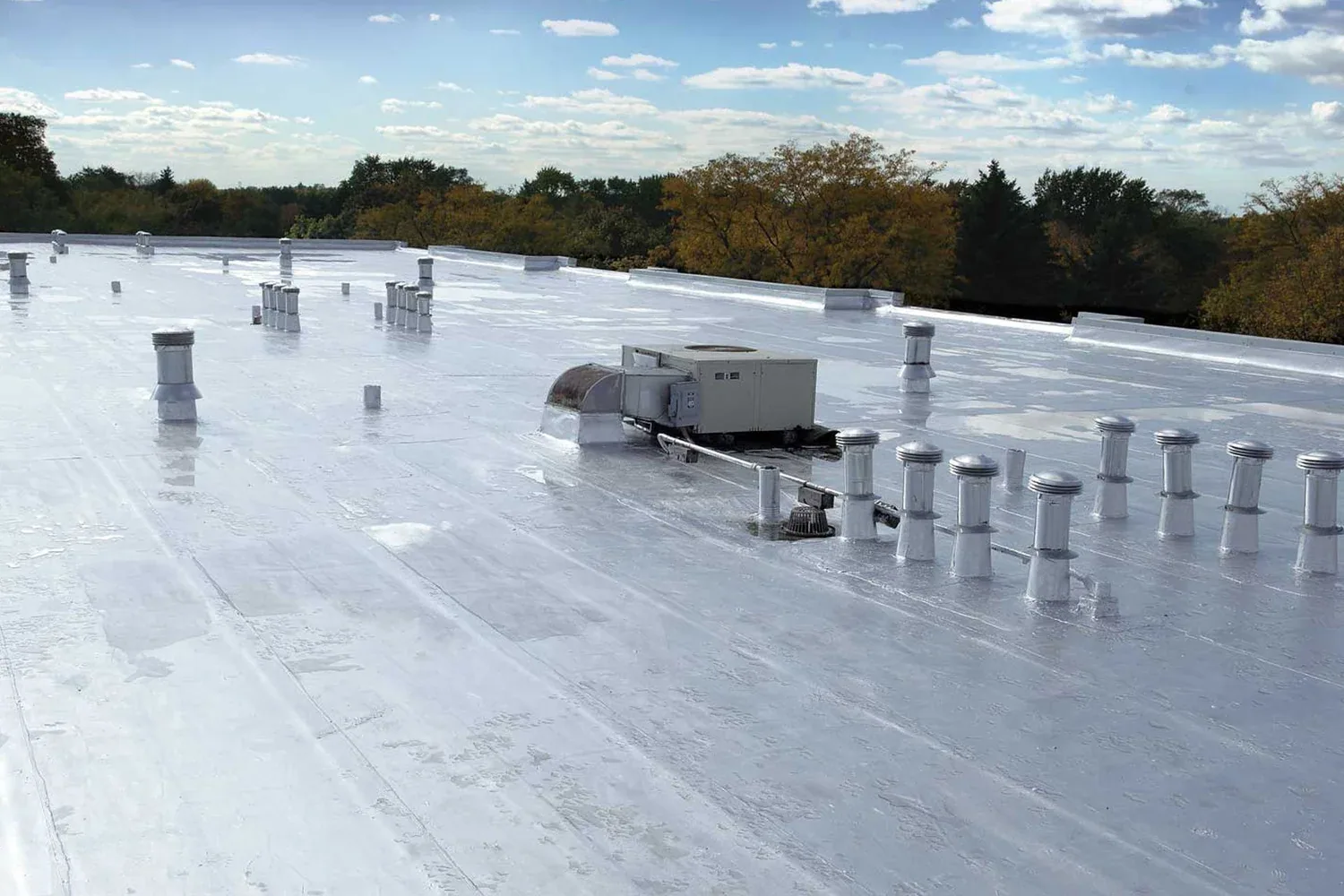
Mark each drain and scupper on the plan, noting debris, ponding or flashing separation. If insulation may be wet, the report names a proposed test and its restoration method for approval ahead of any cut. The drain and scupper review can be listed separately from a seam or curb repair so the chain can see the work boundary.
If a temporary measure is used, log its location, date and limitation. Staff should know whether it controls current entry or whether permanent work remains. That distinction helps a store manager protect nearby stock without representing a temporary seal as a completed roof correction. For a restaurant location the check also covers the kitchen exhaust curb, since grease and heat wear on the flashing around it differently from the open field, and the photographs show that curb before and after any work.
Plan Around Customers, Deliveries and Food Service
Before staging, confirm customer hours, delivery timing, trash pickup, kitchen activity and the entrances that must stay clear. The site manager identifies a safe route for personnel and materials, along with any stock, refrigeration or electrical area below the roof. A written sequence says which zone is affected and how the store will be notified before work begins.
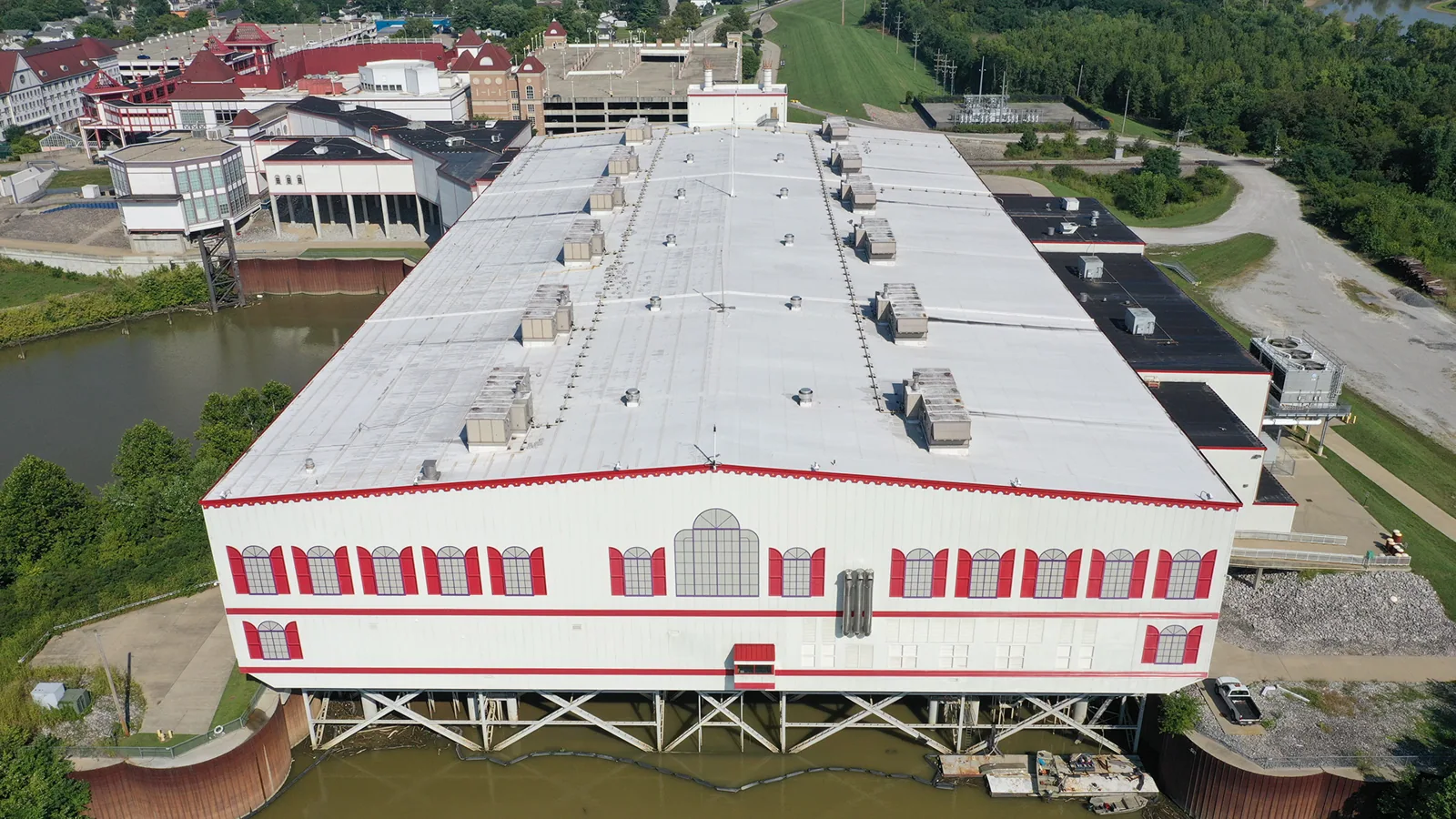
Roofing at an open store may require a temporary barrier, a quieter work period or a second visit after the area is cleared. We document the conditions the manager sets and identify a stop point if the actual site differs from the approved access plan. The occupied-building work sequence records staging and handoff steps while business continues elsewhere.
For active water entry, call at any hour. Share whether water is spreading, what merchandise or equipment is exposed and which work window is possible, and the manager can coordinate interim protection with store staff until the crew arrives.
Compare Location-Level Repair and Capital Work
A repair scope lists preparation, compatible materials, flashing and the limits of work. If several patches or broad wear exist, compare a bounded repair with a replacement alternative on the same roof area. The estimate states any removal or recovery assumptions, insulation and detail work, plus the test required if the substrate cannot be confirmed.
Chains can use a common reporting format across locations, but each estimate should retain local quantities and access conditions. The multi-site roof program organizes that portfolio view. A hospitality group is another multi-location operation, while a restaurant's kitchen exhaust and delivery schedule call for its own site notes.
A system choice follows the existing assembly and project requirements. PVC is one material to weigh, but the right option for a particular store comes from its own roof. The scope sheet separates roofing from sign, refrigeration, HVAC or interior work unless those items are separately authorized.
Make the Regional Rollup Traceable
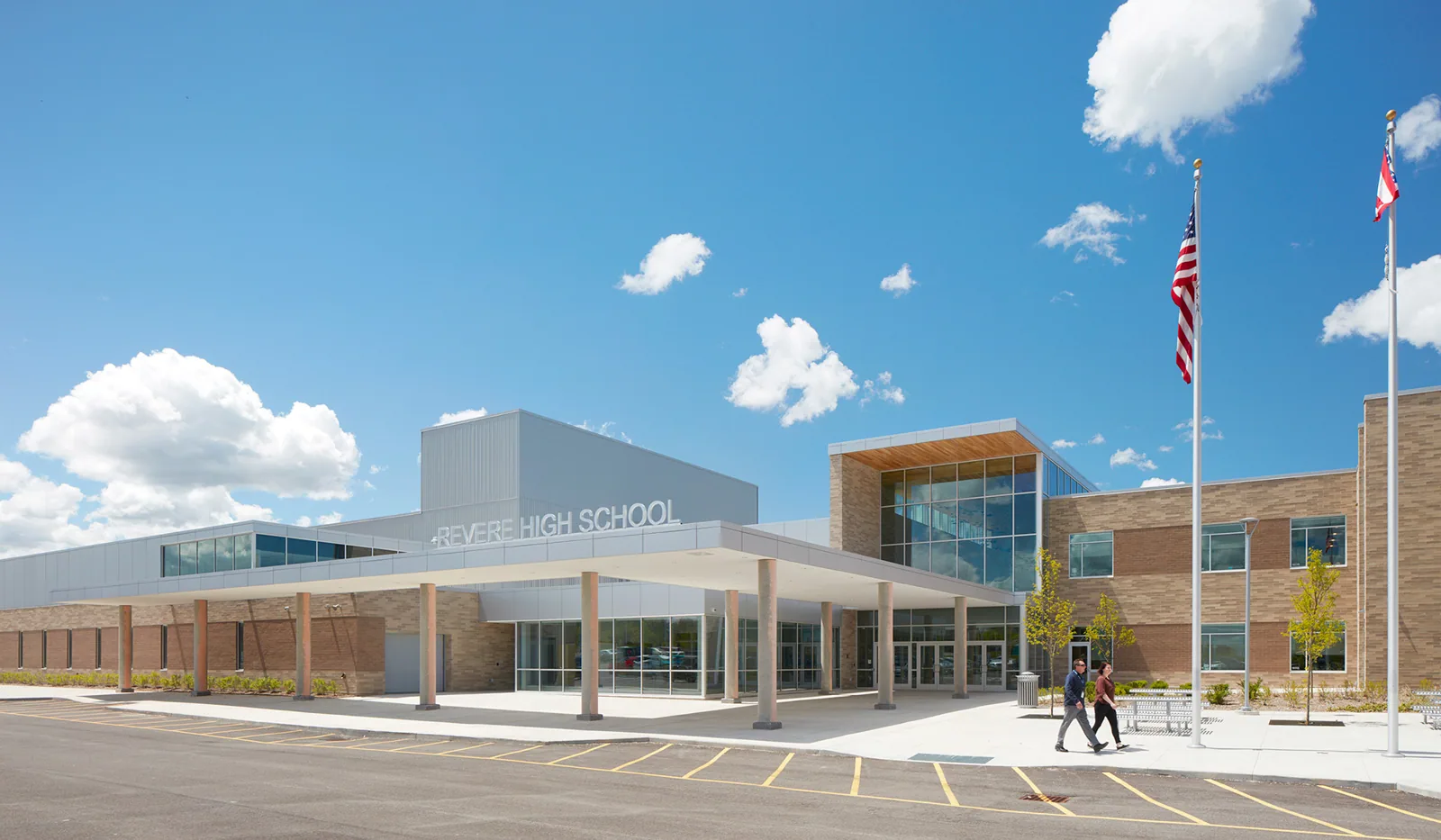
At closeout the chain receives dated photos, store and roof-zone references, materials, completed details, exclusions and open tests. It notes whether delivery timing, customer access or a restricted ceiling area limited the inspection. A regional manager can then compare work across locations without losing the building-level record.
Property managers keep similar address-level files. For each Beaverton store, the intake call should include the address, affected sales or service area, last known leak location, site contact and hours that affect access.
The final scope sheet states what was repaired, what remains open and whether another trade or test is needed. Keep each site entry under its own address, then use a portfolio summary to rank follow-up. That structure helps a facilities team respond to a new leak without confusing one store's history with another's. A regional review can sort stores by active entry, pending test and completed repair, while the local manager keeps responsibility for keys, access and customer notices. If a lease assigns roof duties to a landlord, record that contact before work is approved so the right party receives the scope and closeout. The rollup should link to the local photos and plans rather than substitute for them. It can also flag a contact change, a recurring location or an unresolved approval, keeping the next action visible to regional facilities staff. A contact change is noted in the file.
Related Roofing Work
Commercial Roof Inspection
Commercial Roof Drains and Scuppers
Occupied Building Reroofing
Multi-Site Commercial Roof Programs
Start With the Store Address
Call with the store address, affected area and last known leak location. We will arrange a make-safe visit when needed and provide a written scope sheet for the local manager and facilities team.
Questions About Retail and Restaurant Chains
Can roof work take place while a store remains open?
The store contact sets the access window, customer route, staging area and any temporary barrier. We identify the roof zone and area below the work, then record how staff will be notified. If conditions differ from the agreed plan, the sequence is reset with the manager.
What details should a chain report with a leak?
Provide the exact store address, department or room, ceiling location, last known water point and site contact. Note whether stock, kitchen equipment or customers are exposed. A separate entry for each location lets the facilities team compare records accurately.
How do you distinguish temporary protection from a repair?
The record states where a temporary measure was placed, its limits and what permanent work remains. A repair scope then identifies preparation, materials and the completed roof detail. The store file should not mark the roof repaired while testing or permanent work remains open.
Can several stores use the same repair standard?
A chain can use consistent reporting fields and review steps, but the roof condition, access and scope are specific to each property. Each location receives its own photos, plan references and repair boundaries before a regional rollup is prepared.
What should the closeout retain?
Keep the dated photo set, store address, roof-zone plan, completed details, materials, exclusions and open tests. Include any access or customer-flow limit that affected the work so another manager can interpret the record later.