Service Areas
Commercial roof leak response, inspections, repair and replacement scopes for Gladstone, OR buildings, with a photo set and scope sheet after each visit.
Commercial Roofing in Gladstone, OR
Water showing through a ceiling in Gladstone, OR sends us through a short list: the room, the spot on the ceiling, the building's hours, and the way onto the roof. A crew from Beaverton, OR then drives to the site with temporary materials, and the visit ends with the interior protected and the roof photographed. Gladstone sits where the Clackamas and Willamette rivers meet, about 12 miles south of Portland, with I-205 along its eastern edge and McLoughlin Boulevard (OR 99E) running through its western side. Portland Avenue is its main street.
Each building along those routes needs its own roof record. We build that record from the first visit and give you a scope sheet that separates what failed from what only looks worn.
Sequence for a Small Building
On a building with a single roof area and a handful of penetrations, the first walk is quick and the record short, but the cause is not always obvious. A stain beside a wall may come from the parapet cap, the wall flashing, a vent stack or a drain several feet away. We start with the highest point, follow the slope toward the drain, and mark every item water passes on its way down.
The photo set goes into your building file along with the plan sketch and the time of the report. If the building has a tenant with stock or equipment below the leak, we cover or move it first and note it in the log. The scope sheet that follows names the failed detail, the repair method, and the next dry window for doing the work properly.
Temporary Cover and Its Limits
A dry-in is a temporary measure: reinforced tape over a split seam, a sealed cap on a pipe, a tarp fixed at the edge, a cleared drain. It is meant to last until the permanent repair, and we label it temporary in every photo so no one files it as a finished repair.
Rain falls on Beaverton, OR on roughly 151 days a year, and the wet season leaves few clean days for permanent work. That is why we plan two visits. The first stops the water, the second returns when the surface is dry enough for welds, adhesives and sealants to cure. We check the dry-in on that second visit and record whether it held. If it moved, the record says where and by how much, and that detail shapes the permanent scope.
Between visits, we ask the building contact to watch the interior and send a photo of any new staining with the time it appeared. That small record tells us whether the temporary cover is holding or whether a second opening has appeared elsewhere on the roof.
Parapets, Drains and Scuppers
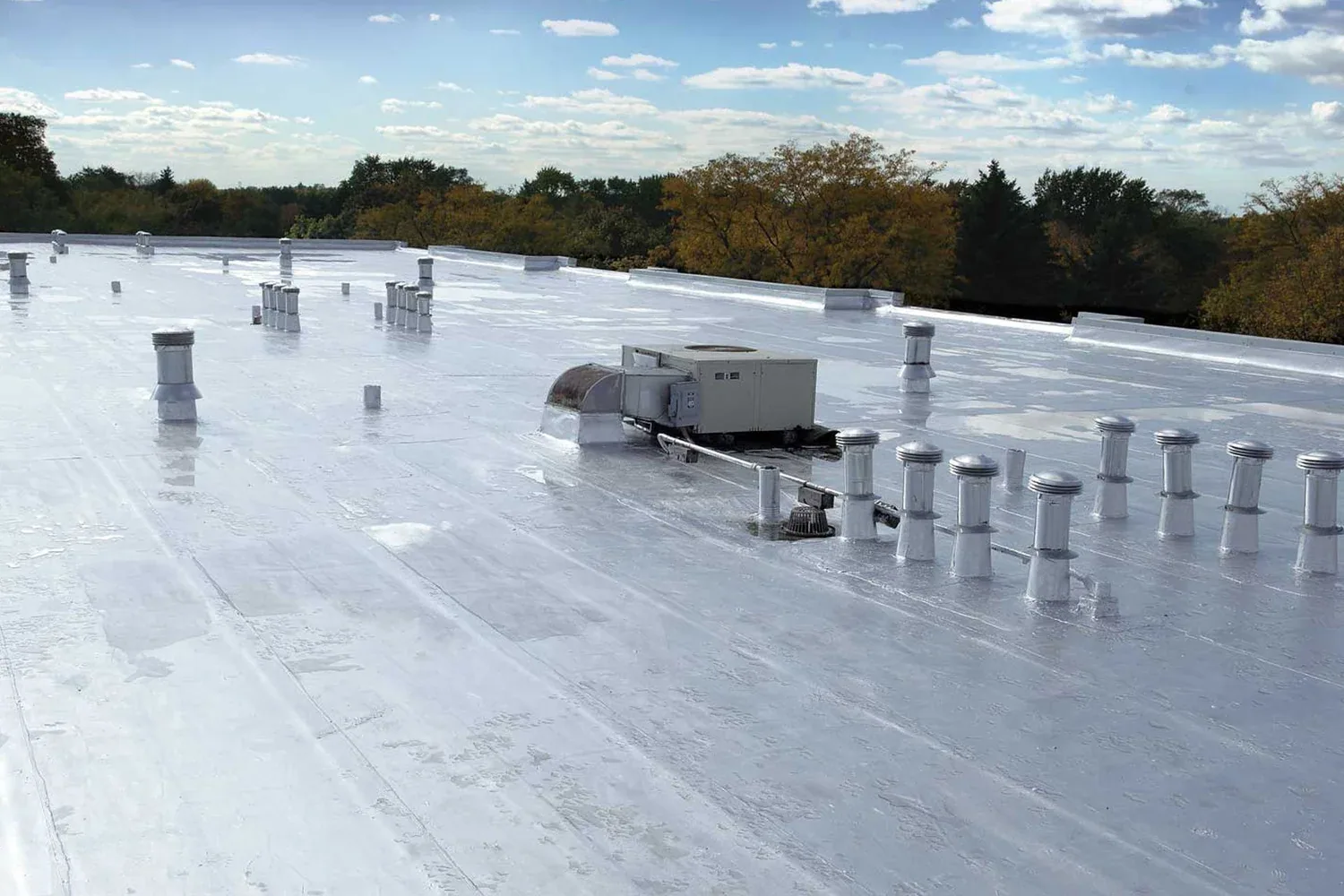
On a roof that sheds water through scuppers or a few interior drains, a single clog can fill the roof quickly. A scupper blocked by leaves holds water against the parapet wall, which loads the flashing and finds every weak spot. We clear the opening, check the through-wall flashing, and look for staining that shows how often water has risen to that level.
Our drain and scupper repair covers cleaning, resetting, adding overflow openings and replacing damaged drain bowls. We check outlets, slopes and flashings and record what we find. Where a low spot holds water for days, we mark its outline and photograph it so it can be compared after the next heavy rain.
What the Inspection File Holds
A commercial roof inspection produces a written condition report with photographs, organized by roof area. It lists the membrane type if visible, the state of the seams, the edge metal, the wall flashings, the penetrations and the drains. Each finding is marked as monitor, repair or replace, so you can sort items into the current budget and the next one.
When the field walk raises a question about wet insulation, we add a drone inspection for hard-to-reach areas or an infrared moisture survey for hidden water. The report states the method and what it showed. The dated photos let you explain the roof to a lender, an insurer or the next buyer.
Repair, Recover or Replace
The repair or replace threshold depends on how much of the roof is still doing its job. A roof with dry insulation, a sound deck and a few failed details is a repair candidate. A roof with open seams across several areas, repeated leaks and wet insulation is heading toward a replacement. In between sits the recover, which places a new membrane over the existing roof when the old one is dry and the code permits another layer.
Two Oregon code editions bear on a recover or a new roof here, the structural edition mandatory since April 1, 2026 and the energy edition since July 1, 2025, so we check them against the existing assembly before pricing, because insulation and fastening requirements drive both cost and timing. The scope sheet shows each option, its cost drivers and its likely service life, so the choice is yours with the numbers in hand.
Access Along the Corridor
With I-205 on the eastern edge and McLoughlin Boulevard on the western side, trucks have two routes in, and staging space still has to be set for each lot. We confirm where the dumpster and material pallets can sit, whether the crane or lift needs a street permit, and which hours suit the tenants. On occupied buildings, our occupied building reroofing sequence opens one section at a time and dries it in before moving on.
Nearby Oregon City and our base in Beaverton follow the same record format, so a property owner with buildings in more than one place gets files that read alike. Each file notes access, roof type, penetrations, drains and the last repair, and that continuity makes comparing buildings straightforward at budget time.
Related Roofing Work
Commercial Roof Drains and Scuppers
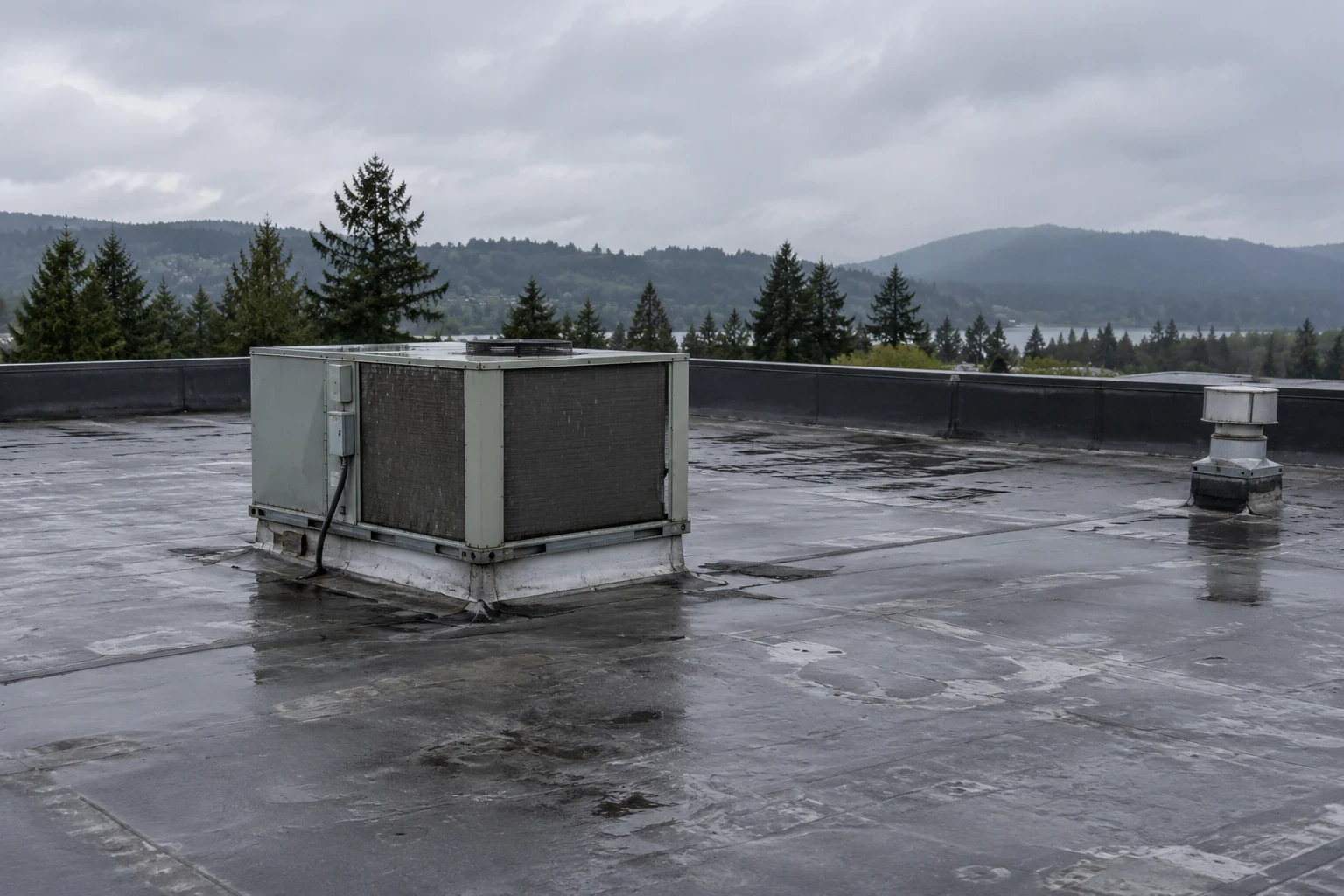
Commercial Roof Inspection
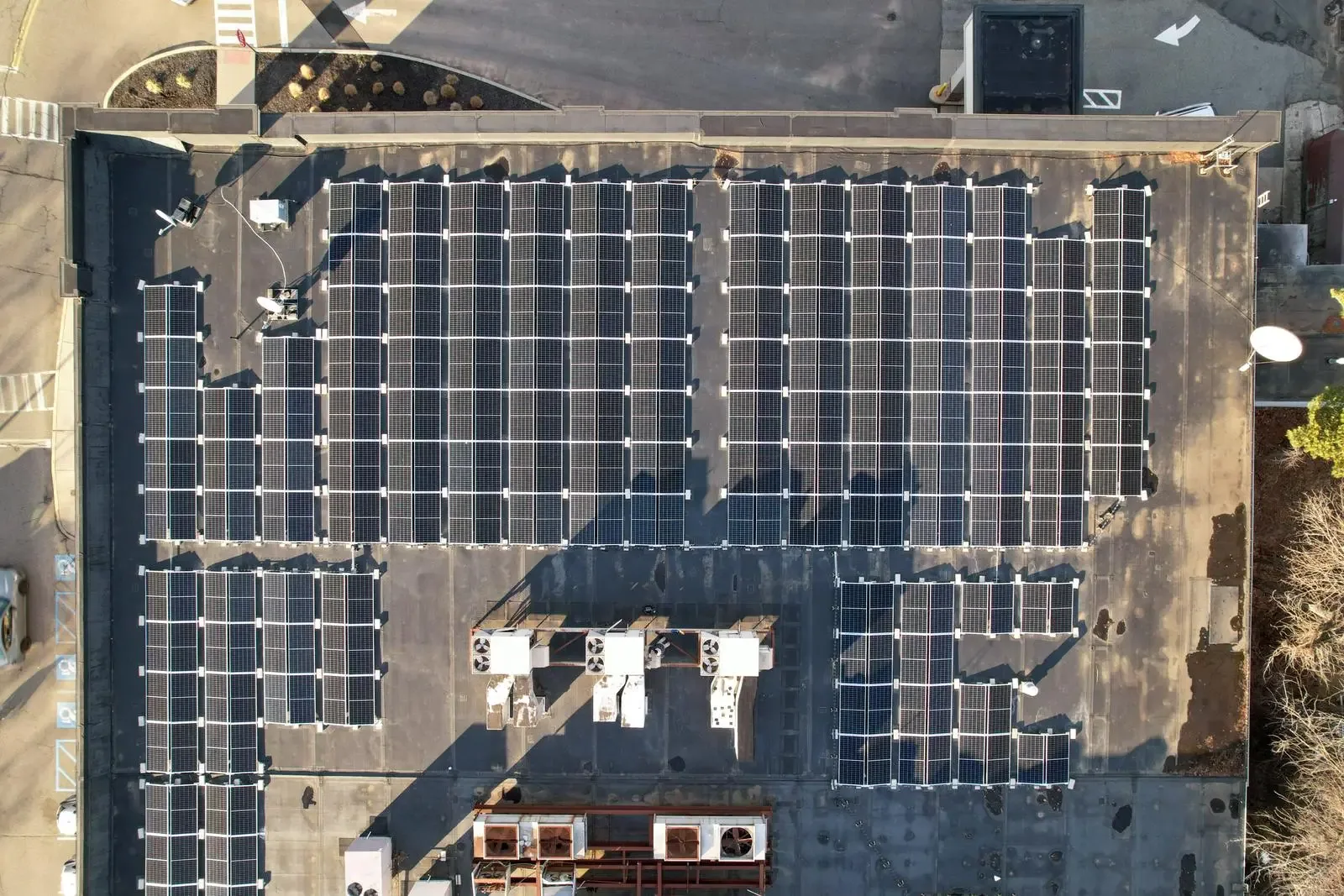
Drone Roof Inspection
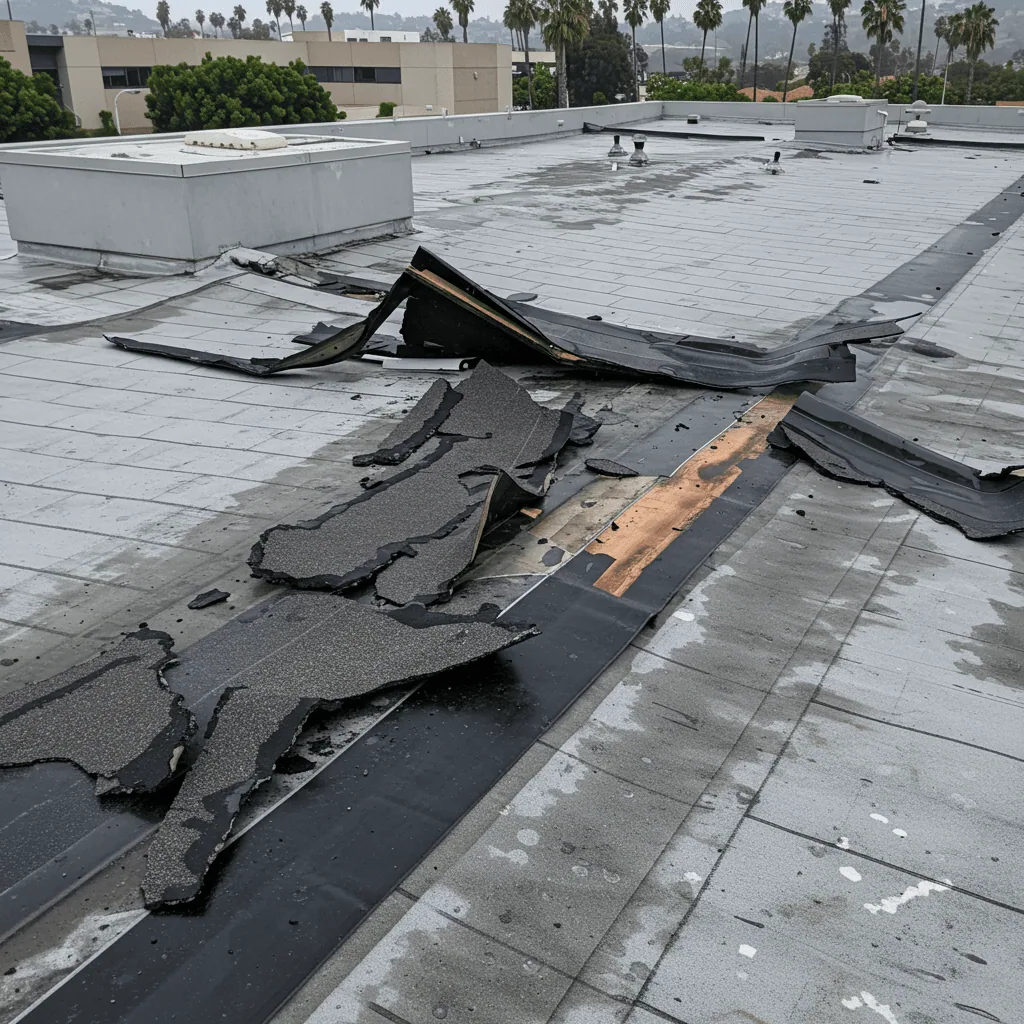
Commercial Roof Replacement
Place an intake call for your Gladstone roof
Tell us the building address and where water was last seen. We will schedule a make-safe visit and send a written scope sheet that lays out the repair choices.
Questions About Gladstone
What does a first visit to a small Gladstone building include?
A quick interior check of the wet area, a walk of the roof from high point to drain, photographs of every suspect detail, and a temporary measure if water is still entering. You leave the visit with a dated photo set and a time for the second visit.
How do you tell a failed flashing from a failed membrane?
Water tracks. We follow it from the interior stain back to the nearest opening, checking whether the membrane field is intact and whether the detail at a wall, curb or pipe has split. Membrane faults show in the seams and the field. Flashing faults show at the terminations.
Is a coating a reasonable alternative to replacement here?
On a roof with dry insulation and a sound membrane, a coating can add service life. Wet insulation or a damaged deck rules it out. We confirm moisture conditions first, then lay out the silicone coating and replacement costs next to each other.
What affects the cost of a repair on a smaller roof?
Access to the roof, the number of separate details that failed, the amount of wet material that must be cut out, and the weather during the work. A single repaired boot costs very little compared with a repair that follows water through several feet of insulation.
Can records from a Gladstone building be used for an insurance claim?
They can. Dated photographs, a leak log and a written condition description are the items a claim file needs, and our claim assistance arranges them by roof area so an adjuster can follow the damage.