Service Areas
Commercial roof repair, inspection and replacement for Oregon City, OR buildings, with a make-safe visit first and a written scope sheet after it.
Commercial Roofing in Oregon City, OR
Three questions come first when an Oregon City, OR building reports water: which room is wet, what sits under the wet spot, and who can put us on the roof. With those answers a crew leaves from Beaverton, OR with tarps, sealant and a drain tool, and the first hour is spent keeping the interior dry rather than finding the final cause. Oregon City is the Clackamas County seat on the Willamette River, with a downtown that Metro names a regional center and a working history built on forestry and paper mills. We treat each roof as its own record.
The photo set comes before any repair, with the leak location marked on a plan sketch and the date on every frame. The scope sheet that follows says whether the roof needs a repair, a recover or a replacement.
Report to Roof Access
Water inside a building rarely sits under the opening that let it in. It runs along a deck flute, a purlin or the top of a wall before it drops, so the ceiling stain only tells us where to begin looking. On an Oregon City property we ask for the stain location, the last time it was dry, whether equipment sits above it, and where the roof hatch or ladder is.
Access matters as much as the leak. If the roof is reached through a tenant suite, a locked mechanical room or a ladder bolted to an exterior wall, we arrange that before the truck rolls. Once on the roof, we walk the field of the membrane first, then the edges, then every penetration, and we photograph each item before we touch it. That log opens your building file, with the crew dispatched from Beaverton.
Make Safe, Then Dry In
The make-safe visit has one job: stop water from reaching the interior tonight. That can mean a patch of reinforced tape over a split seam, a temporary cap on a cracked pipe boot, a drain cleared of fir needles and moss, or a tarp weighted at the edge of an open section. None of those is a permanent repair, and we label them that way in the photo set so nobody mistakes a dry-in for a finished roof.
Beaverton, OR logs rain on roughly 151 days a year, with the heaviest stretch from November through January, and it does not stop for scheduling, so the permanent repair waits for the next dry window while the temporary measure holds. We recheck the temporary work on the second visit and record whether anything moved.
What the Walk Records
Roofs reached from OR 99E, OR 43, OR 213 or I-205 can be any age and any system, so the walk records what is there instead of assuming it. We note the membrane type if it is visible, the number of layers where a cut or an edge shows them, the condition of the seams, and the shape of the flashings at walls and curbs. We note where water has stood, where debris has gathered, and whether the drains are sized and placed to move it.
A commercial roof inspection adds moisture work when the field walk leaves a question open. An infrared moisture survey can show where insulation has taken on water, which tells us how far a repair has to reach. The written report states which method we used and what it showed, so the next person reading the file does not have to guess how a conclusion was reached.
Where Repair Stops Making Sense
The repair or replace threshold is a number we show you on paper: the repair priced for the failed area, the other areas that show the same wear listed, and the repair cost plus the next likely repair set against a recover or replacement. When a roof has several seams opening, wet insulation across a wide area, or flashings that no longer hold sealant, spending on small patches stops buying much. When the failure is a single cracked boot or a sagging gutter, a repair is the correct decision and we say so.
For roofs with a sound deck and dry insulation, a recover over the existing roof can be an option, subject to what the moisture work shows and what the building code allows. Where the insulation is wet or the deck is damaged, full replacement is the cleaner path. Mandatory structural rules for 2025 started April 1, 2026, and the ASHRAE 90.1-2022 energy rules started July 1, 2025, so those editions bear on insulation levels and fastening in any replacement scope.
Drains, Edges and Standing Water
Wet seasons test drainage more than anything else. A drain sump packed with leaves, a scupper blocked by a nest, or a low spot where the membrane has settled will hold water long after the rain stops. We run a ponding check by looking at the roof the morning after a storm, marking the outline of any standing water and photographing it against a fixed reference such as a curb or a drain bowl.
Water that stays for days loads the deck and speeds membrane wear. Our drain and scupper work covers clearing, re-setting drain bowls, adding strainers and, where the slope requires it, tapered insulation to help water reach an outlet. Beaverton's recorded extremes run from 115 degrees to minus 8, and swings that wide expand and contract edge metal and sealants. We check coping and gutter joints for movement at the same time.
Working Around Tenants and Trains
Oregon City has a Union Pacific mainline running through it and I-205 along its northern edge, and both shape how a delivery or a crane lift gets planned. Material trucks need a staging spot, and a lift over an occupied suite needs a protected path below. We confirm the loading route, the hours a tenant can tolerate noise, and whether a lane or lot will need closing. On occupied buildings we sequence the work in sections so one tenant is not left without cover.
That is the practice behind our occupied building reroofing. Debris protection goes in place before a section is opened, and each section is dried in before the crew leaves it. The Willamette Falls Legacy Project is a planned mixed-use redevelopment, and an owner near that redevelopment can put the roof's remaining service life on the capital line before deciding. Neighboring Gladstone jobs follow the same sequence.
Related Roofing Work
Beaverton
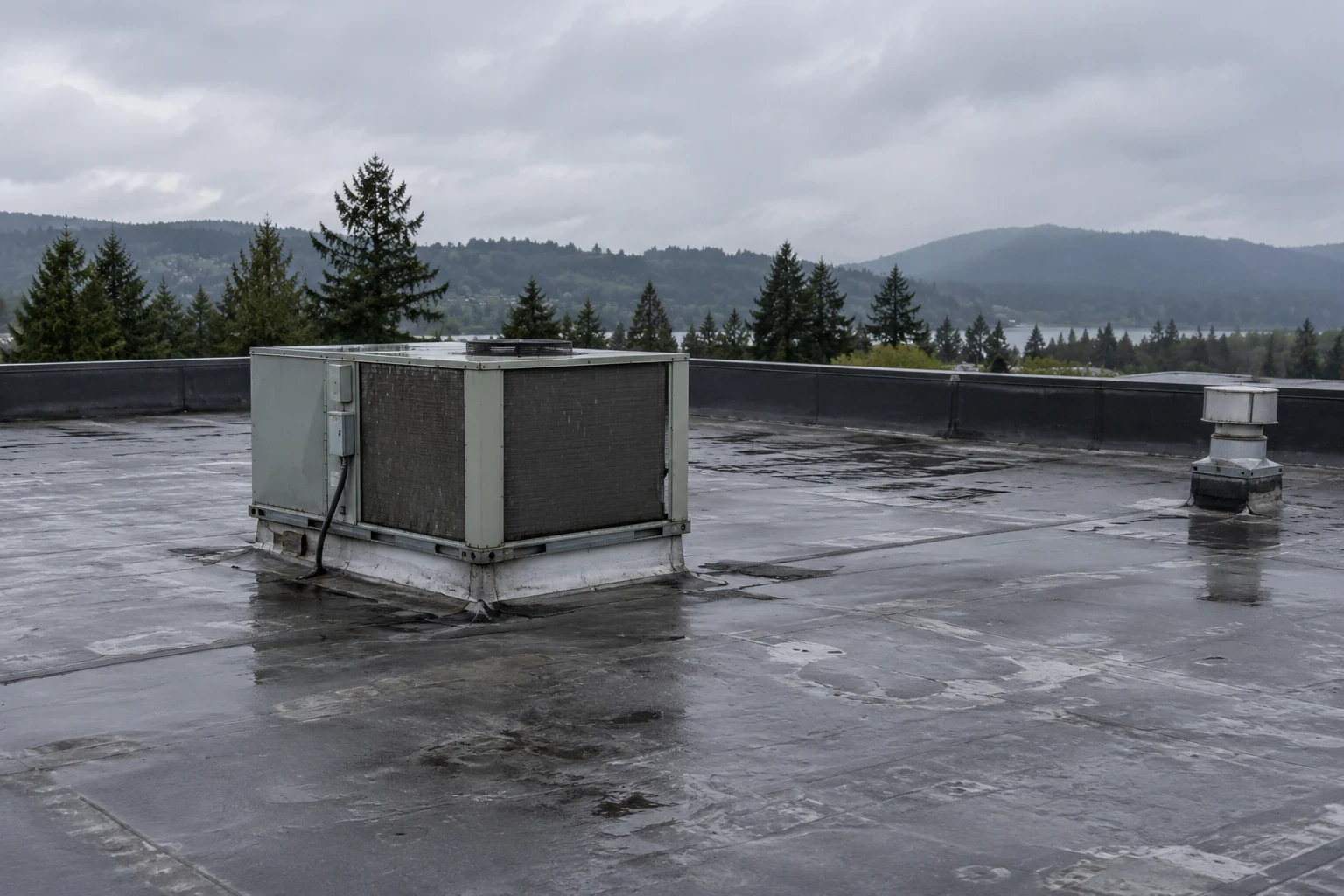
Commercial Roof Inspection
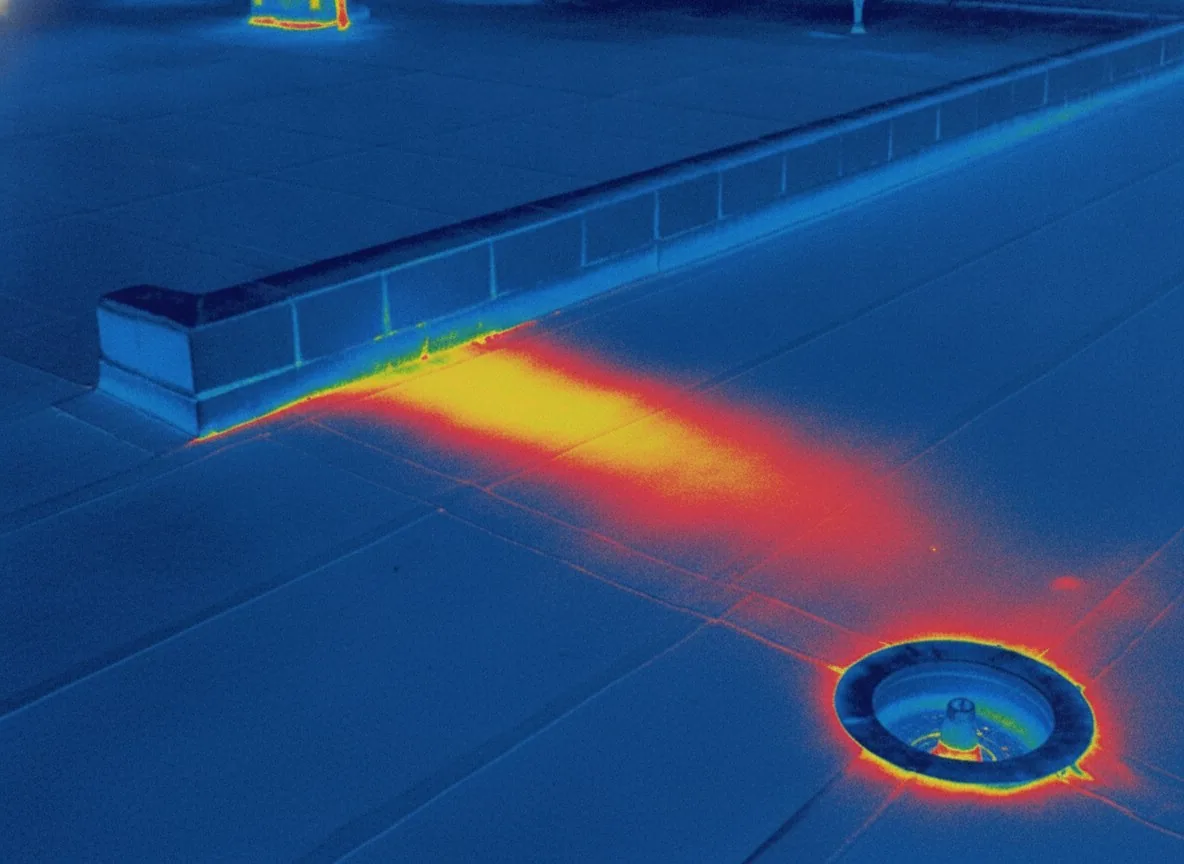
Infrared Moisture Survey
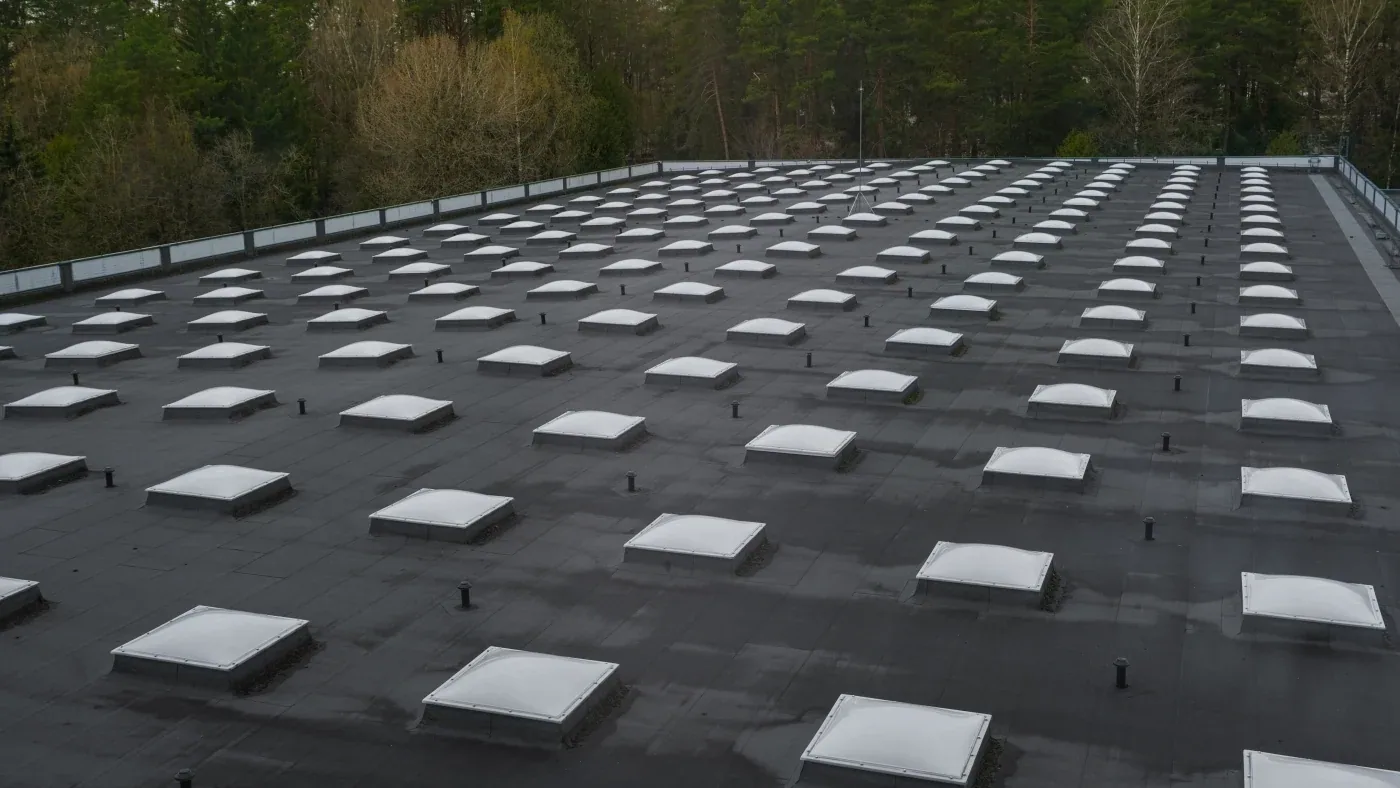
Roof Recover and Overlay
Place an intake call for your Oregon City roof
Give us the building address and the last known leak location. We will arrange the make-safe visit and follow it with a written scope sheet that shows the repair, the recover and the replacement options.
Questions About Oregon City
What should an Oregon City property manager have ready for the intake call?
The building address, the room with the water, the last time that spot was dry and the way onto the roof. If a tenant controls the suite below, give us their contact too. With those four items we can send a crew with the right temporary materials and avoid a second trip just to find a ladder.
Will a temporary dry-in change the cost of the permanent repair?
Usually it lowers it. Water kept out of the insulation means a smaller area to cut out and replace later. The scope sheet lists the dry-in as its own line, apart from the permanent fix.
Does a downtown location change how a roof is replaced?
Staging does. Tight lots, shared walls and neighbors below shape where the crane sits, where material is kept and how debris leaves the roof. We settle those points on the first walk.
How do you decide whether a recover is allowed on an older roof?
Moisture and code answer it together. If the survey shows dry insulation and a sound deck, and the current code editions permit another layer, a recover is on the table. A roof that already carries more than one layer, or one with wet insulation, moves toward tear-off.
Can you document an Oregon City roof for an insurer or a lender?
Yes. The photo set, leak log and condition notes are dated and organized by roof area, which is the format adjusters and lenders usually ask for. Our claim documentation support pulls those items into a single file.