
Roof Systems
Evaluate silicone roof coatings in Beaverton, OR for adhesion, membrane condition, drainage, wet areas and flashing before planning restoration.
Silicone Roof Coatings in Beaverton, OR
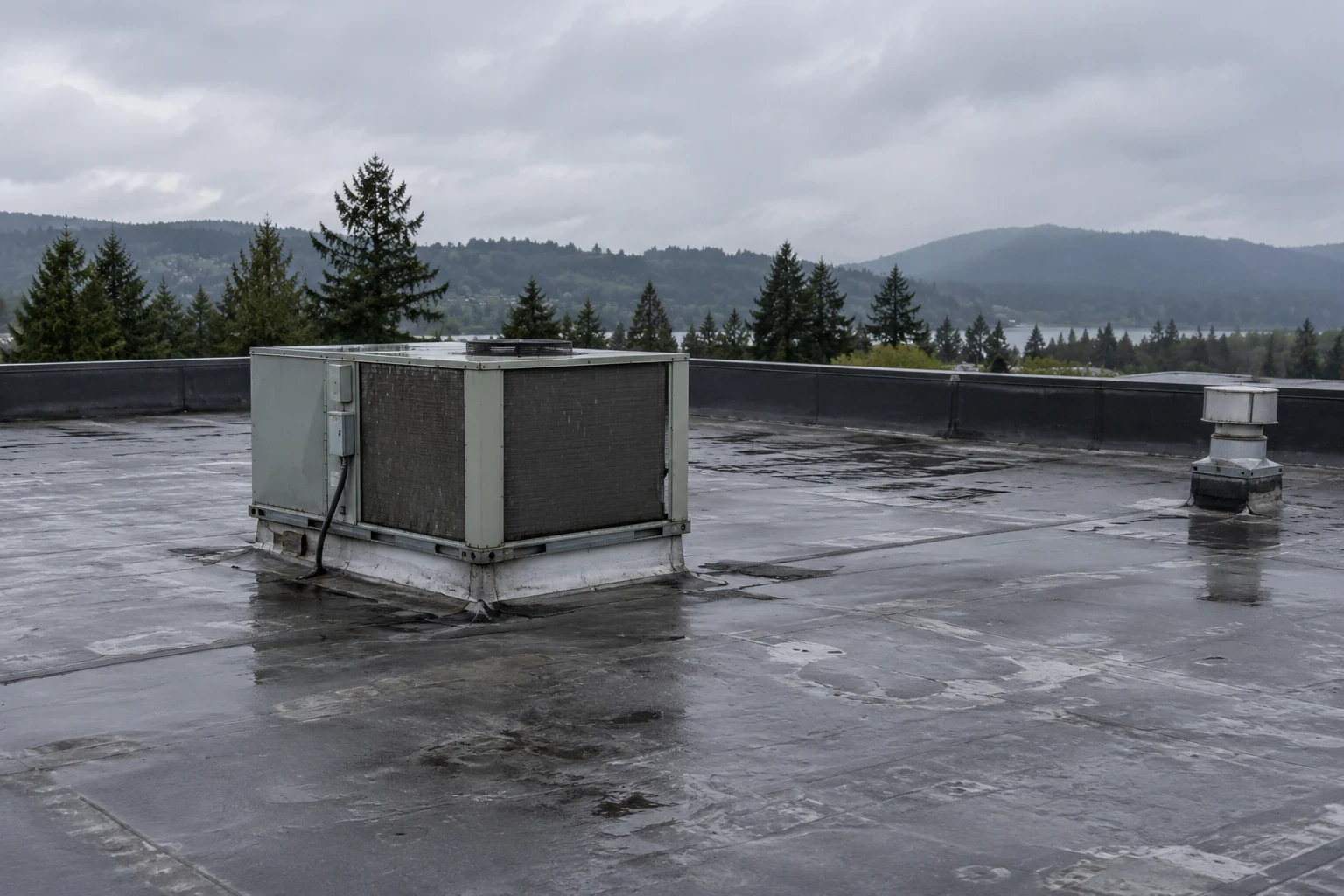
A coated roof is checked first at the drains and flashings once water shows inside a Beaverton, OR building. The crew confirms the room below and the leak location, makes the area safe, and photographs the silicone surface, penetrations and low points before opening a repair. Photos and leak log enter the building file, which shows whether a coating defect is the entry point or whether water is coming from a separate seam, curb or roof transition.
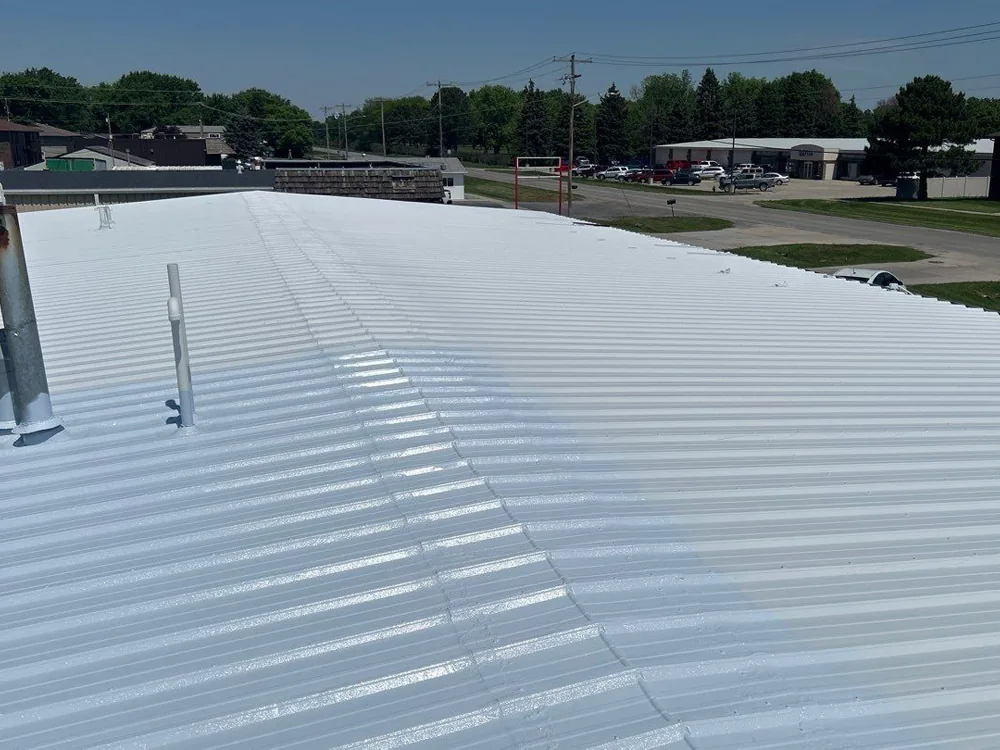
With rain on roughly 151 days a year, the surface, seams and drains on a coated roof need to work together. We inspect the underlying membrane and substrate before recommending another layer. A acrylic coating system has different application and water-exposure considerations, so the roof condition guides the comparison.
Check What the Coating Covers
Silicone coating can restore a compatible roof surface, but it does not replace the membrane or insulation below it. We check for ponding, open seams, wet material, loose coating, dirt, blisters and repairs that were never tied into the field. Areas with poor adhesion need preparation or removal before a new coat is considered. The report marks what can remain, what needs repair and where a test opening would answer a concealed-condition question.
Silicone is often chosen for sun-baked roofs, and the 116 degrees Portland reached on June 28, 2021 is a reason to measure film thickness and exposure on the building itself. The roof inspection records the surface and details, while a condition report keeps photographs and repair limits in the building file.
Prepare the Roof Before Coating
Surface preparation determines whether a new silicone layer can bond. We remove dirt, loose coating and failed sealant, repair seams and flashings, and confirm the substrate is suitable for the specified product. A coating applied over wet insulation or a moving curb can hide the defect without correcting it. The scope states which repairs come first, where primer is required and how the finished film will terminate at drains and walls.
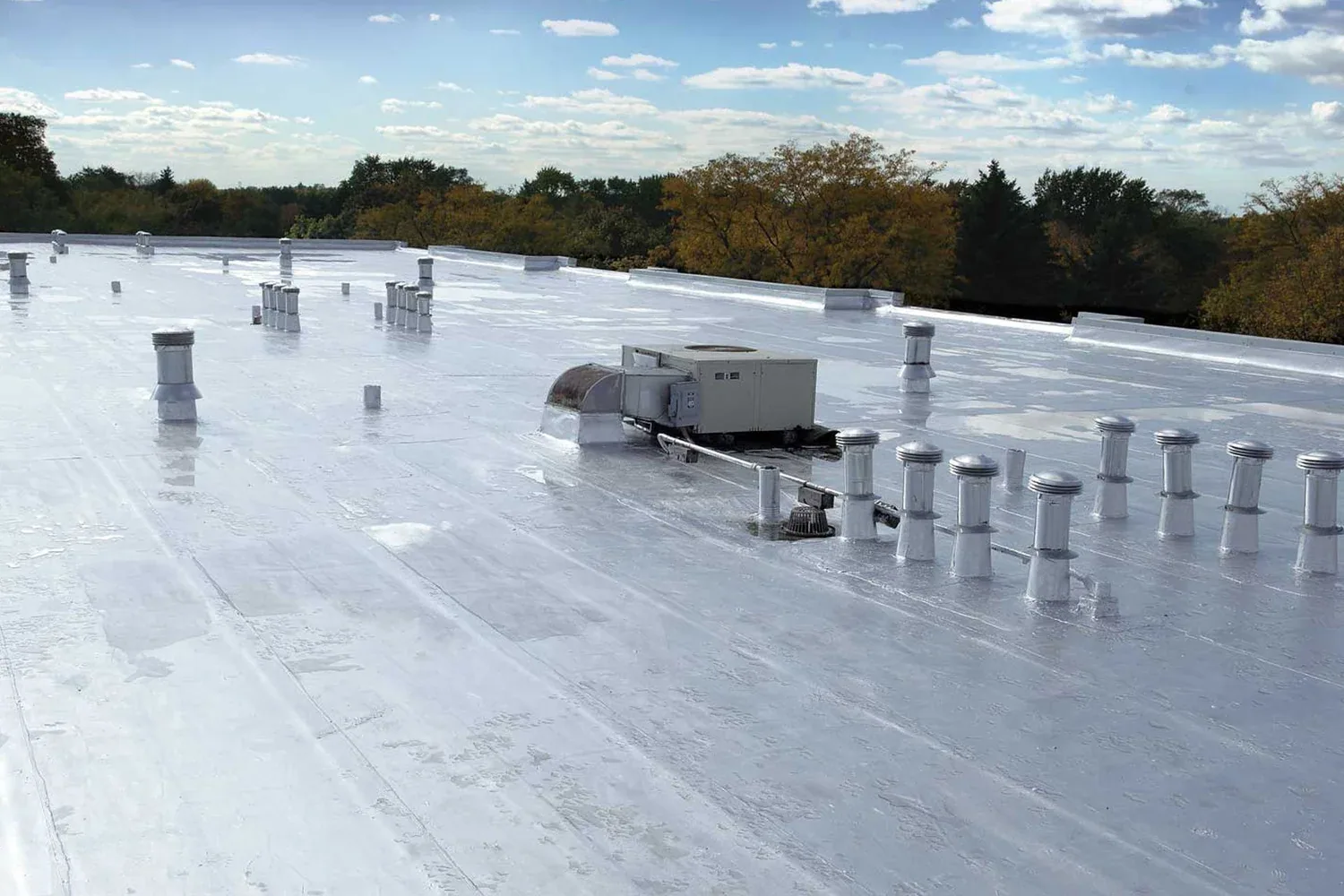
Silicone coating can tolerate water exposure differently from some other coating types, but it still needs functional drainage and sound details. We check the sump, overflow route and low areas before coating. If a drain is blocked or a transition is open, a drain repair or flashing correction belongs ahead of the finish. We keep those items separate in the restoration scope so the owner sees the roof work, not only the top layer.
Coating thickness and continuity must be checked at edges, penetrations and changes in plane, not only across the open field. We identify the specified coverage and any detail requiring reinforcement, then record the completed area. Where an earlier coating or patch is present, a small adhesion check may be needed before the full surface is prepared. The repair plan notes the test result and material transition before another layer is applied.
Control the Application Window
Application requires a clean surface and conditions that meet the product instructions. We confirm substrate moisture, temperature and forecast before coating, then protect equipment and walkways from overspray. The crew applies the specified material at the listed coverage and checks transitions, penetrations and terminations as the work advances. We record areas completed each day and keep the roof protected if a second coat or detail work remains.
Staging and roof access are property-specific on the Beaverton to Tigard stretch of OR 217 as anywhere else. We confirm the lift point, material placement and operating restrictions with the building contact. A curb and support review helps keep coating out of equipment service paths and identifies details that need a compatible flashing repair before the field is finished.
Set a Repair Boundary
A coating repair should extend to material that is clean, bonded and dry. We remove loose edges, prepare the surface and restore the specified film over the repair with enough overlap to tie into the existing coating. At a leak, the water path must be traced first; a top-side defect may not sit directly above the interior mark. We photograph the repair boundary and note whether insulation or deck remains untested.
Where the roof has repeated coating failures, wet insulation or membrane movement, the project may need a larger scope than another recoat. We compare localized repairs, recover and replacement using the same roof areas and identify each concealed condition. A repair option can handle an isolated detail, while a replacement option includes tear-off, insulation, deck and perimeter work when required.
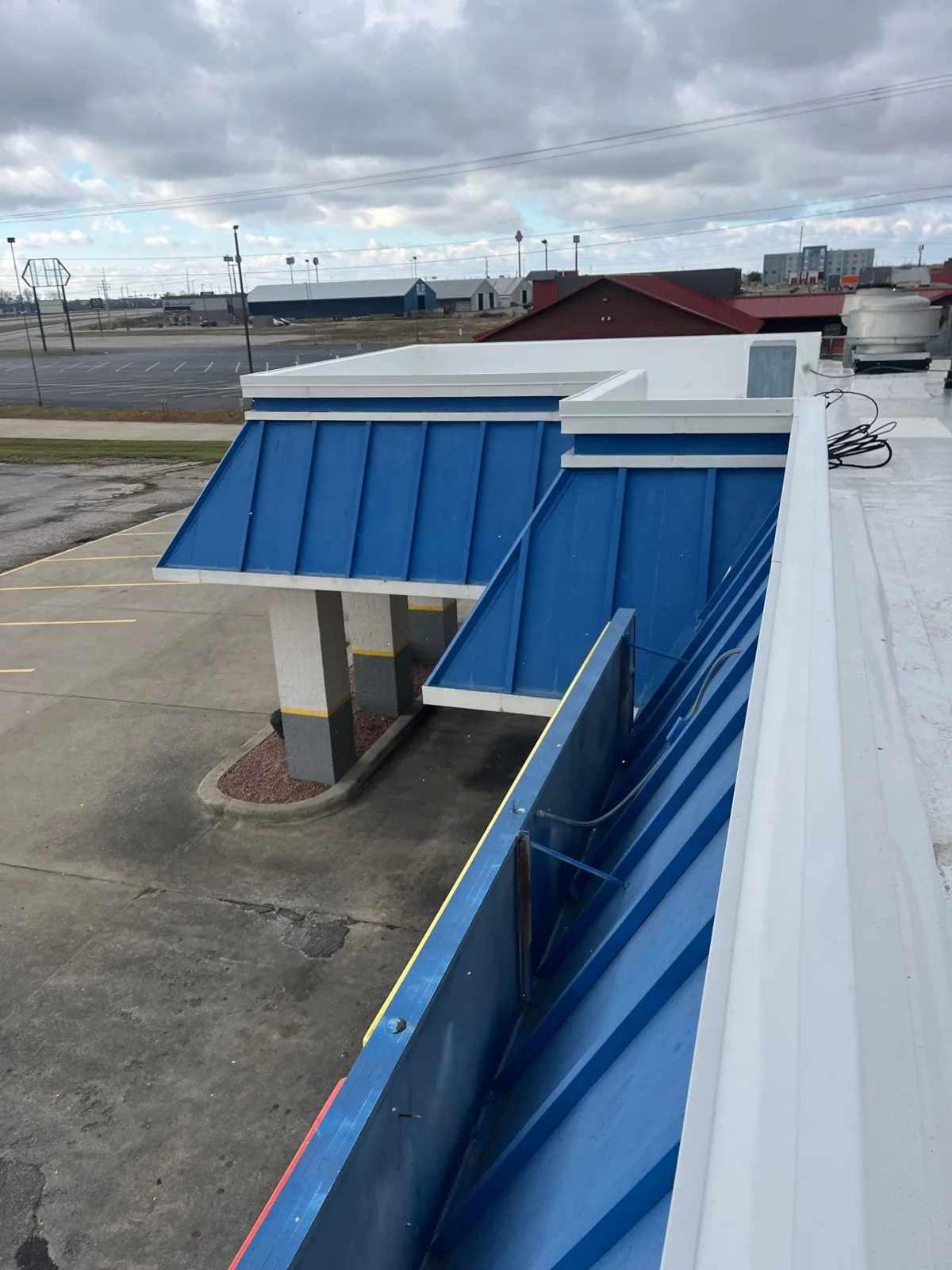
An older coated roof may have incompatible patches or sealants that need to be removed or isolated. We mark those spots before the field is recoated and check that each repair can bond to sound material. At a parapet or curb, the new film must close onto the prepared flashing without leaving an exposed edge. These details take separate preparation time and should appear as distinct line items in the scope. Seams and fasteners under the old film are checked by hand before it is covered, since a silicone layer will not hold a seam closed that has already lifted.
Keep the Coating Record
The closeout file should include surface preparation, repairs completed, coating material, coverage areas, photos, drain condition and maintenance items. We identify where coating ties into existing flashing and which areas were excluded. That record gives the next inspection a baseline for checking wear, adhesion and new openings without assuming the coating has corrected an underlying condition.
Cost follows roof cleaning, removal of loose material, seam repairs, primer, coating thickness, access and the amount of flashing work. We list those drivers separately from any wet insulation or deck repair. A foam roof review may be needed if the substrate is SPF, while a Beaverton roof visit ends with a written scope sheet for the restoration decision.
Later roof walks should compare the same drains, penetrations and repair edges recorded at closeout. We mark any area where debris or equipment service can damage the film and include that location in the maintenance notes, so a future leak call begins with the current roof record.
Related Roofing Work
Acrylic Roof Coatings
Commercial Roof Inspection

Commercial Roof Condition Reports
Commercial Roof Drains and Scuppers
Check the Coating and Substrate
Place an intake call with the building address and last known leak location. We will arrange a make-safe visit when needed and provide a written scope sheet for coating, substrate and drainage work.
Questions About Silicone Roof Coatings
Can silicone coating go over a wet roof?
The substrate must be evaluated before coating. We test or open areas where moisture is suspected and identify material that needs removal. Coating over wet insulation or an open seam can conceal the condition without correcting it, so those findings are handled first.
Will silicone stop ponding water?
A coating does not correct slope or a blocked drain. We inspect low areas, sumps and overflow routes, then list drainage work separately. The finish is applied only after the roof details and substrate are suitable for the system.
How do you decide between silicone and acrylic?
The comparison follows the existing substrate, water exposure, adhesion, surface condition and project specification. We inspect and identify the compatible system, then document preparation and repair needs. A coating name alone does not settle the restoration scope.
Can the crew coat around rooftop equipment?
We map curbs, pipes, drains and service paths before work. Equipment and intakes are protected, and the coating terminates at details compatible with the roof assembly. Any equipment move is coordinated with the responsible trade before application.
What should be recorded after a recoat?
Keep preparation notes, repaired areas, product and coverage information, drain and flashing photos, and any excluded condition in the building file. We provide that closeout record so later staff can track the coating and identify follow-up work.