Service Areas
Commercial roofing in Milwaukie, OR for food producers, industrial plants and healthcare buildings: make-safe visits, leak logs, inspections and scope sheets.
Commercial Roofing in Milwaukie, OR
Water reported inside a Milwaukie, OR building starts a short clock. The intake call asks four things: where the water is entering, what is under it, whether anyone is working there and whether the roof can be reached today. A crew arrives to make the area safe with a temporary seal, a cleared drain or a cover over what must stay dry. The roof is photographed before a seam is touched.
That photo set and the leak-log entry go into the building file the same day. A second visit follows with a written scope sheet. It sorts each item into repair, local replacement or capital line, and it states the point at which another patch costs more than the next phase of the roof.
What the city's buildings ask of a roof
Milwaukie had 21,119 residents in 2020. Its top employers include Oregon Tool with 810 workers, Providence Milwaukie Hospital with 642 and PCC Structurals with 431. The city also hosts food producers such as Dave's Killer Bread and Bob's Red Mill, plus Dark Horse Comics. That is a mix of industrial, healthcare, food and office use, and each asks something different of the roof above it.
We treat those names as context for the kinds of buildings we may be asked to walk, never as claims about a particular roof. A food plant, an industrial shop and a hospital share rain and age, but they do not share tolerance for a leak. The scope sheet is written to the use under the roof, not to the roof alone.
Age and use change the repair. An older roof may carry several layers and a mix of materials from past patches. A newer roof may carry rooftop equipment added after the original install. In both cases the first walk produces a map of what is there, which saves guesswork later and gives the owner a reliable base for the capital plan.
Food plants have rules
A leak over a food area can stop production. Water on the floor, drips near open product and condensation under the deck can each trigger a hold. Roof work above a processing room needs planning with the plant's quality staff. Dust, debris and adhesive odors are all concerns.
We ask what is under the roof section before we plan the repair. We agree on cover, on work hours and on cleanup. Hot work near exhaust intakes is out. On a food-related building, a leak repair includes a record of how the opening was sealed and how the area below was protected, which the plant can show to its own inspectors.
Condensation deserves its own look. A cold room or a processing area can sweat under the deck, and the drip looks like a leak. We check the vapor path before we cut anything: the dew point, the insulation and the vents. A true roof leak and a condensation drip are fixed in different ways, and the building file records which one we found.
Industrial roofs carry equipment
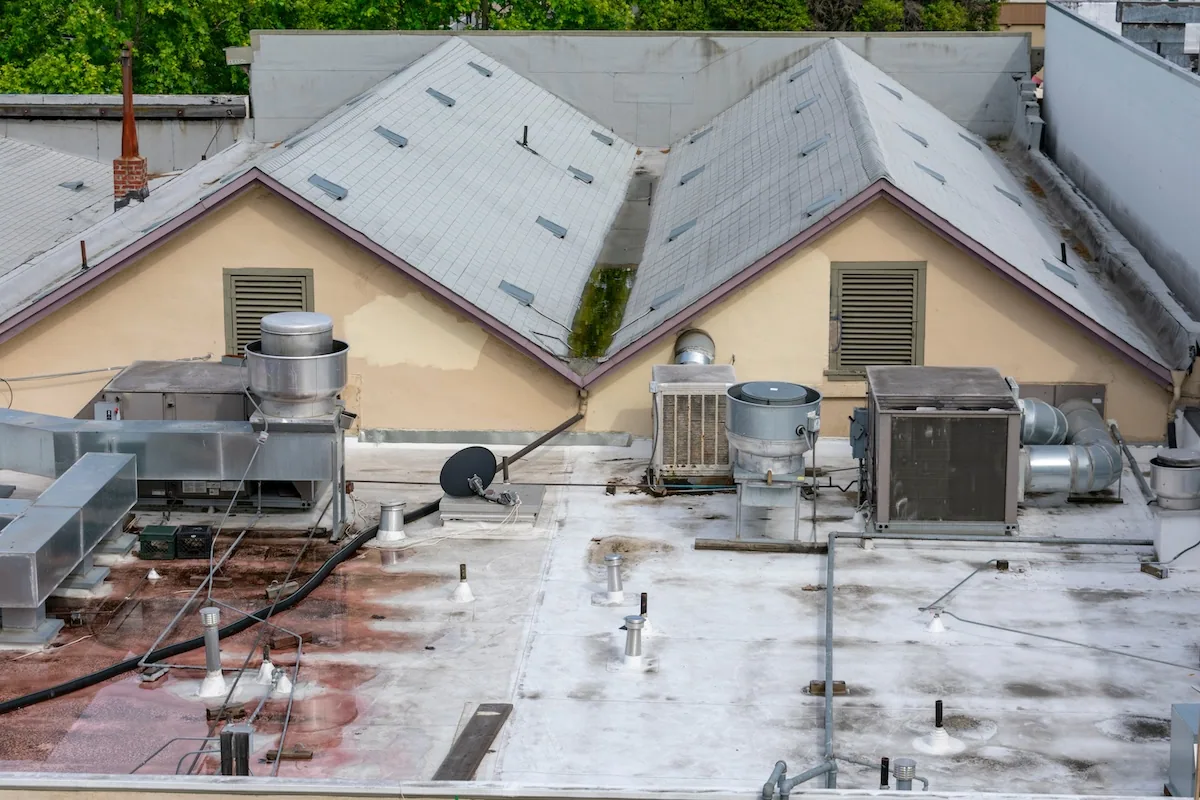
Industrial and manufacturing roofs hold fans, vents, makeup air units and pipe runs. Each penetration is a place for water to enter. Technicians walk the same paths every month and wear the membrane. Heat from exhaust ages the sheet around a vent.
On a manufacturing plant roof, we start with the penetrations and the walk paths. We log the condition of each curb, boot and flashing. We mark worn traffic areas for walkway pads. The repair scope lists the work by penetration, so the maintenance team can see what changed and what is next. Production shifts set the hours, and we stage work to leave lines running.
Records carry the work forward. Each visit adds a photo set, a note on what was repaired and a date. When a curb is rebuilt, the file shows it. When a vent is added by another trade, the file shows that too. A maintenance manager reading the file a year later sees the pattern of what leaks and why.
Healthcare needs a quiet plan
A hospital roof sits above people who cannot leave. Noise, dust, odor and equipment shutdowns all matter. Air intakes sit on the roof, and work near them needs care. Infection control rules apply above occupied floors.
For a hospital roof or a medical office, we agree on hours, work areas and contact people before a crew climbs. Facilities staff approve shutoffs and access. An emergency leak over a care area gets a dry-in first, with the interior protected, and the permanent plan follows. The photo set and the leak log are shared with the facility so its safety file stays complete.
Wet months set the pace
Portland International Airport sees about 36.9 inches of precipitation over roughly 157 days a year and about 32 freezing nights. Beaverton, the market city, gets rain on roughly 151 days a year, heaviest from November through January. That much rain keeps every drain and flashing under test, and a freezing night can turn a clogged sump into a block of ice.
Fall is the time to clear roof drains and scuppers and check flashing before the wet months begin. A ponding check after the first big storm shows whether water is leaving the roof or sitting on it. A clog is a repair item. A sagging deck is a capital item. The scope sheet says which one applies.
Cost follows the same pattern. Four things move a price: roof area and access, the number of penetrations, the condition of the insulation under the membrane and the schedule. A roof with many curbs costs more per square foot than an open field. Wet insulation adds cut-out and replacement. Tight schedules add crew time. The 2025 Oregon structural code became mandatory April 1, 2026, and ASHRAE 90.1-2022 has governed the energy side since July 1, 2025, so a reroof may carry insulation requirements that change the quote.
Plan for access and corridors
OR 224 and McLoughlin Boulevard serve Milwaukie, and MAX Orange Line service began in 2015. Metro names Powell Boulevard and McLoughlin Boulevard as major goods and people corridors. Those routes matter when a crane or a delivery truck needs to reach a site, since a lift on a busy street needs a planned window and traffic control.
We confirm the address, the lift location and the laydown area at the first visit. Owners with buildings in Oregon City or Clackamas as well can use one building file format across all sites, so a capital planner compares roofs on equal terms.
Related Roofing Work
Commercial Roof Leak Repair
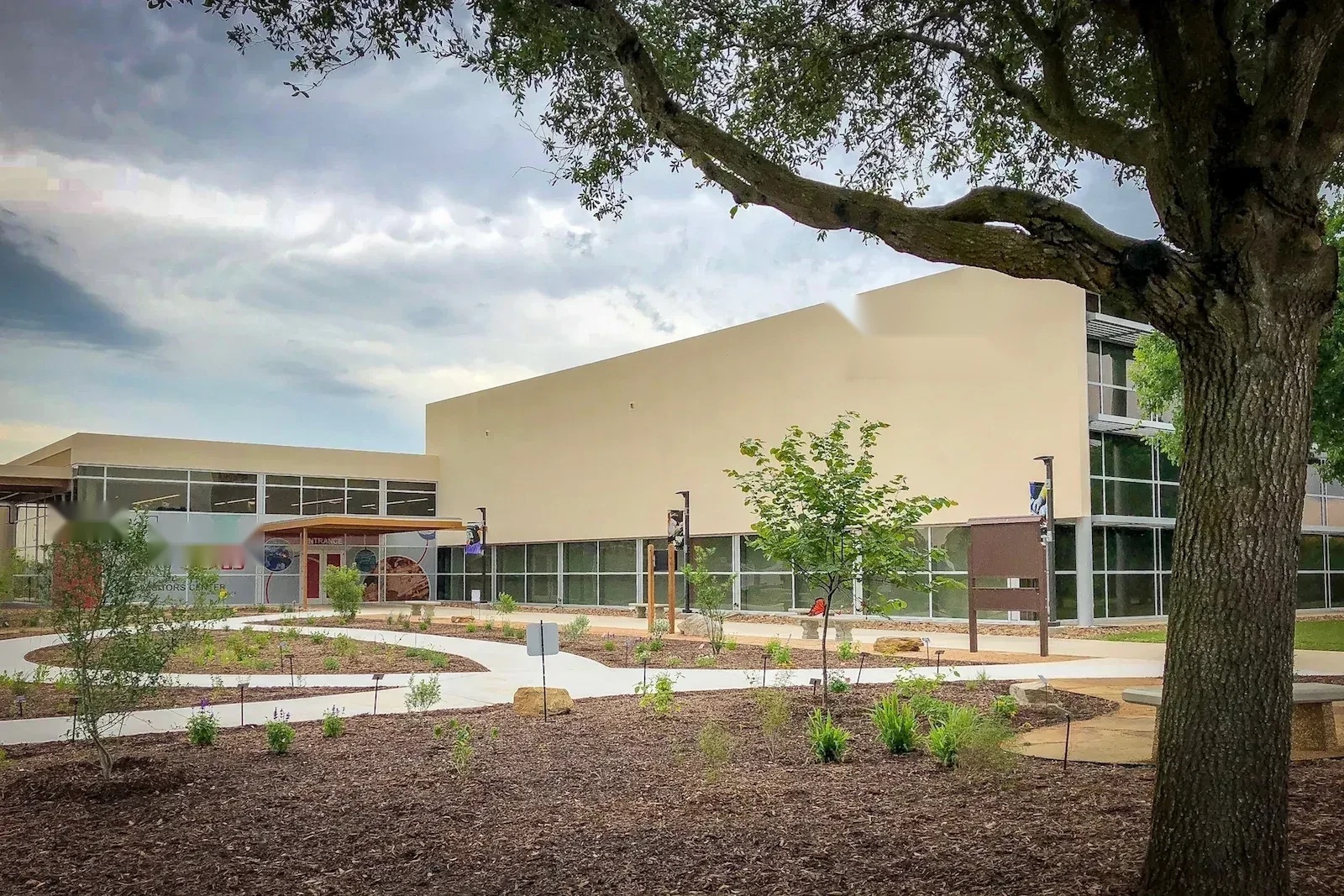
Manufacturing Plant Roofing
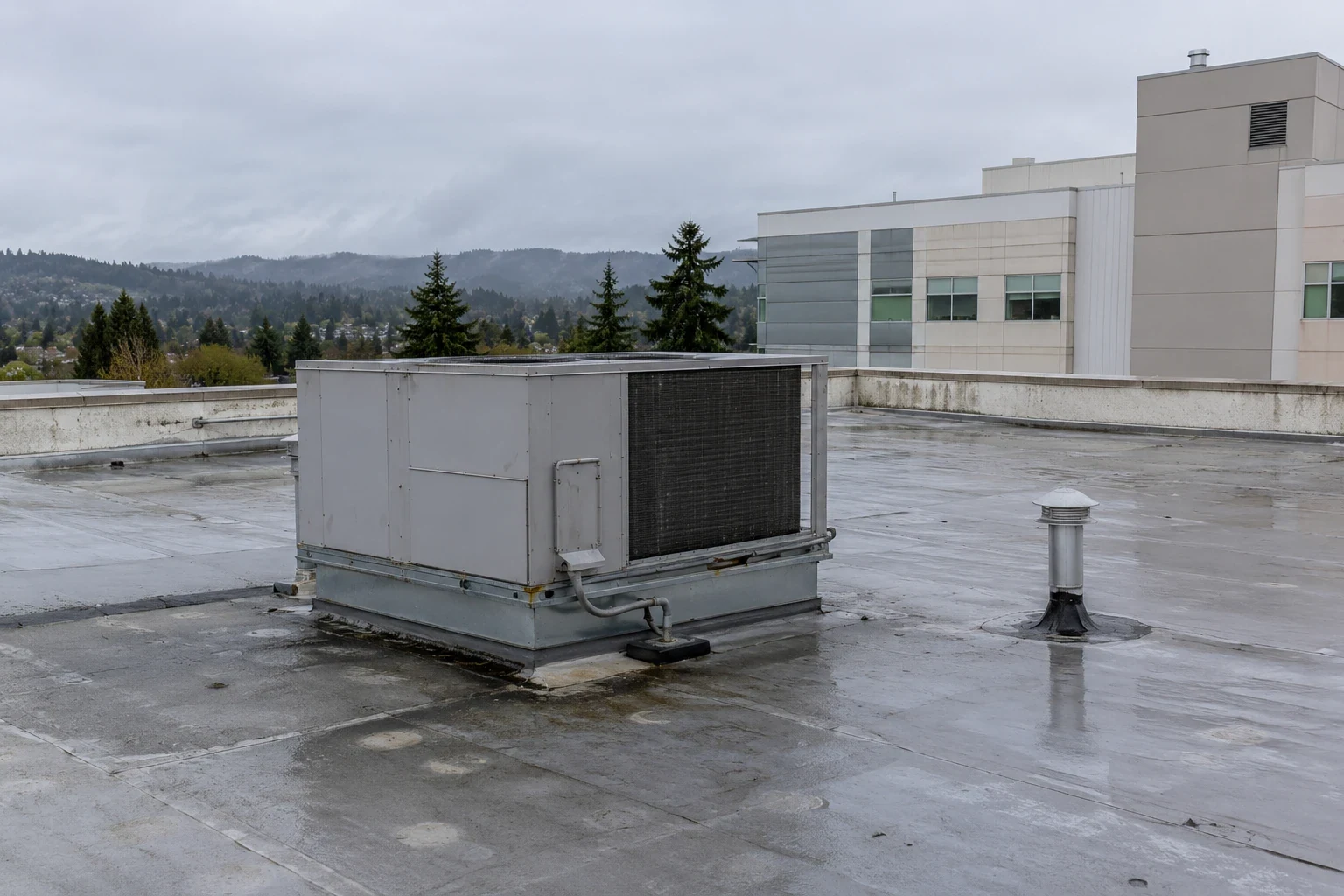
Hospital Roofing
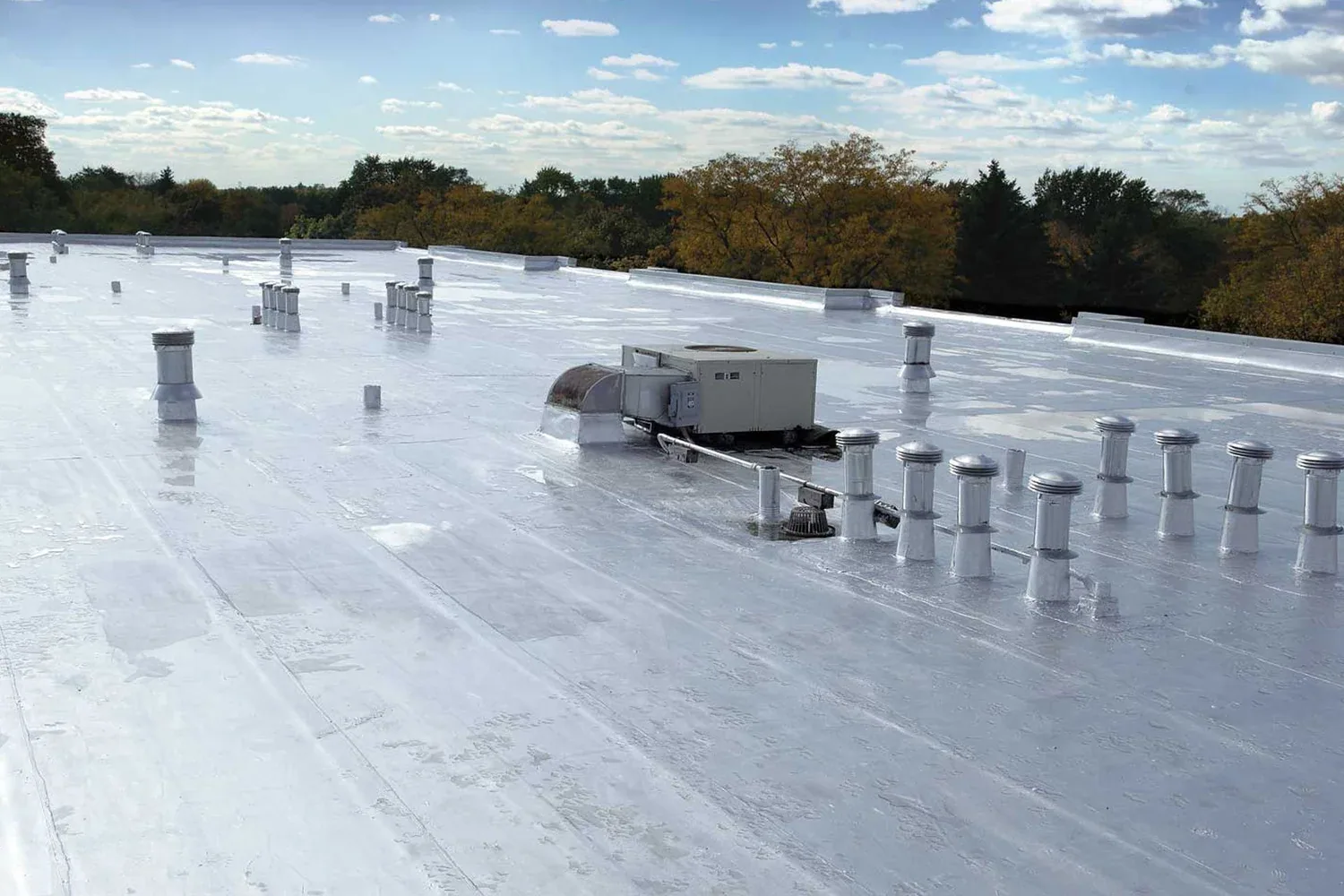
Commercial Roof Drains and Scuppers
Place an intake call for your Milwaukie building
Call with the building address and the last known leak location. We will send a crew for a make-safe visit and follow with a written scope sheet that marks the repair boundary and where replacement belongs on your capital line.
Questions About Milwaukie
What decides whether a food plant can stay open during a roof repair?
The product exposure below the repair area sets the plan. If the work is over a sealed or storage area, the plant can often run. Over open product, we need a shutdown or a protective enclosure agreed with the quality team.
How do you protect a hospital area during roof work?
We agree on hours, noise limits and dust control with the facilities team before work starts. Air intakes are covered or shut by the facility. Emergency repairs get a dry-in first and the interior protected while the permanent work is planned.
Can you work around production shifts?
Yes. We stage materials and crew time to match the plant schedule. Noisy tasks go in agreed hours. Penetration work near running equipment waits for a window the plant picks.
When should we replace instead of repair?
Look at the leak log and the moisture scan. Repeat calls, wet insulation across a wide area or seams that keep opening mean the threshold has been crossed. The scope sheet prices both paths so the capital line is clear.
What should I have ready for the intake call?
The address, an on-site contact, the room where water appears and what sits below it. Any past photographs or repair invoices help. We schedule the make-safe visit and tell you when the written scope sheet will arrive.