Service Areas
Commercial roofing in Sherwood, OR along the OR 99W corridor and downtown: emergency make-safe visits, roof inspections, repairs and written scope sheets.
Commercial Roofing in Sherwood, OR
A call from a Sherwood, OR property manager begins with three questions: where is the water, what sits under it, and who can open the roof hatch. Once we have those answers, a crew drives out, covers the affected area, clears whatever is blocking the nearest drain and photographs the roof in the state we found it. The photo set, the leak location and the date go into the building file before the crew leaves the site.
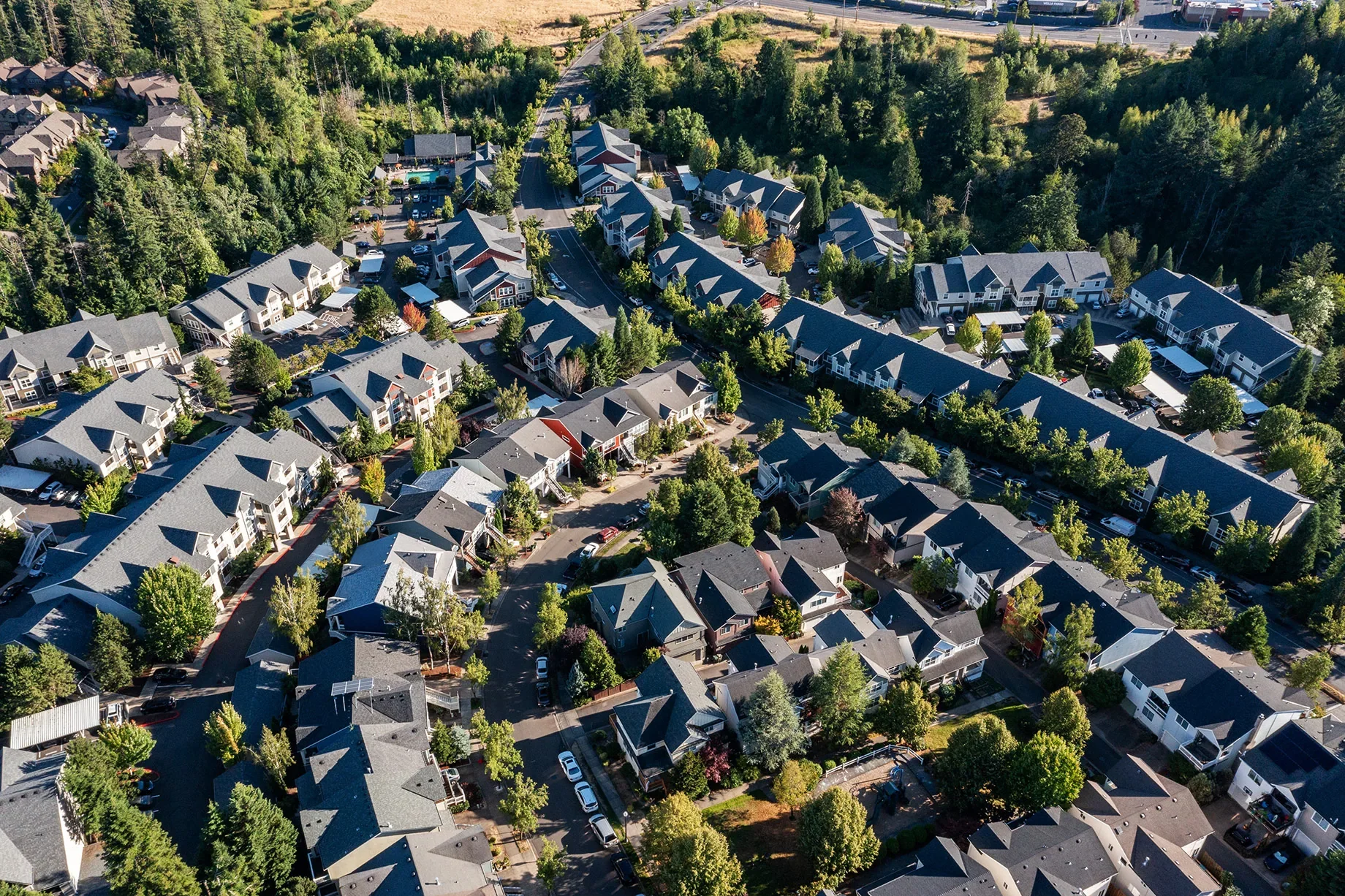
Sherwood had 20,450 residents in 2020 and sits in the southeast corner of Washington County. OR 99W runs through the city, and downtown is a commercial center on that corridor. Those two facts shape how a crew reaches a building.
Downtown and the Highway Strip
Wherever a downtown block puts buildings against each other, the roof detail at the shared wall becomes the first thing to check. Parapet walls, shared flashings and tight street access all affect a repair. We walk the roof with a plan of the block in hand and mark where one owner's roof ends and the next begins, because a leak at a party wall is a question of who repairs which side.
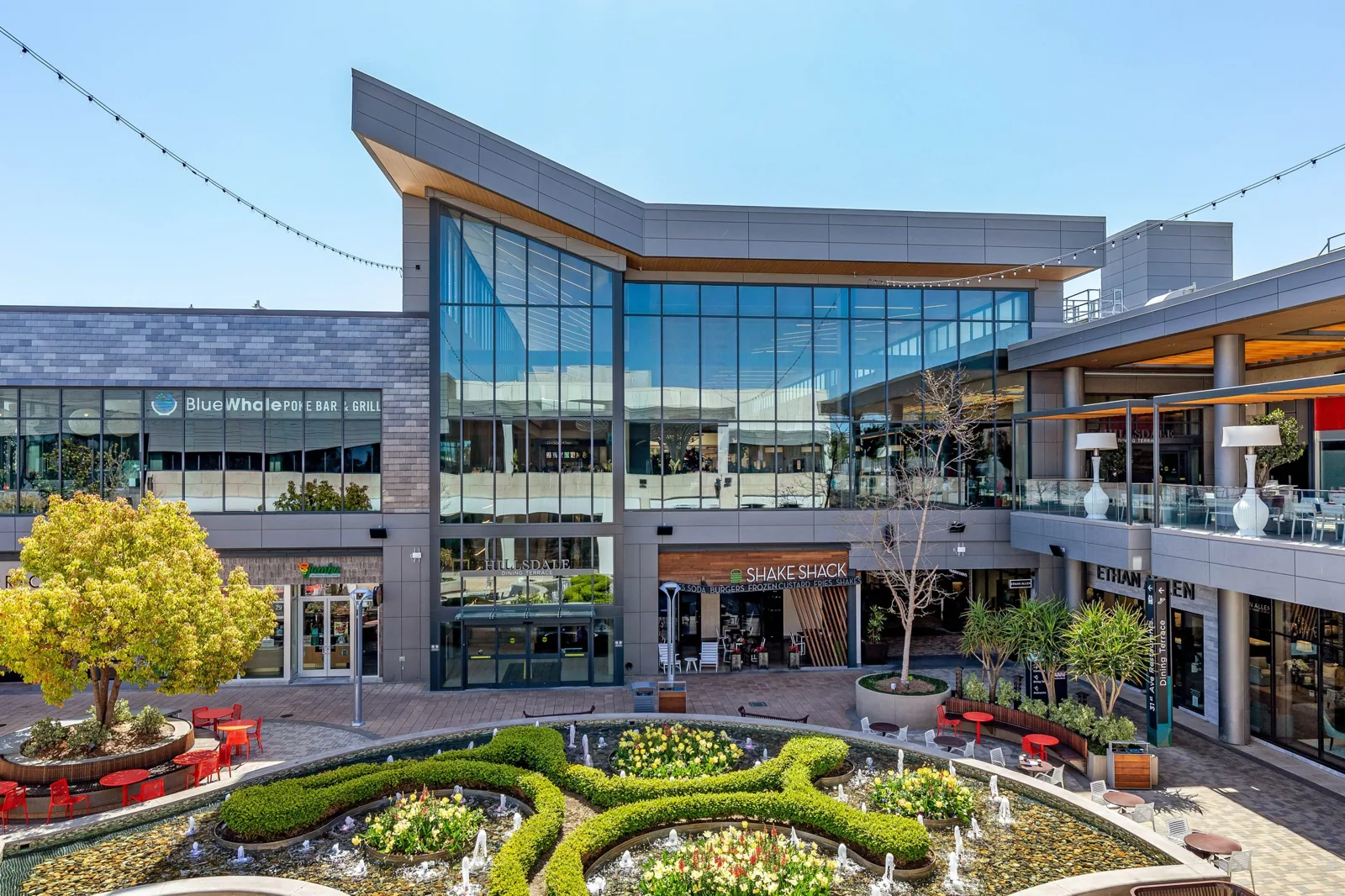
Along the OR 99W corridor the questions shift toward large roof areas, rooftop equipment and drainage that has to move more water. Our first walk records the membrane type, the seam condition, the number and state of penetrations, and the edge metal. A shopping center roofing report lists each of those in the order a manager can act on them.
Rooftop units deserve their own pass. Every curb, refrigerant line and condensate drain is a place where a membrane has been cut and resealed, and sealant ages faster than membrane does. We look at curb flashing height, fastener heads, loose conduit supports and the pitch pockets that have dried and shrunk. A leak that tracks to one unit often points to a pattern across the others, and the scope sheet says which curbs share the same wear.
Make-Safe Comes Before the Fix
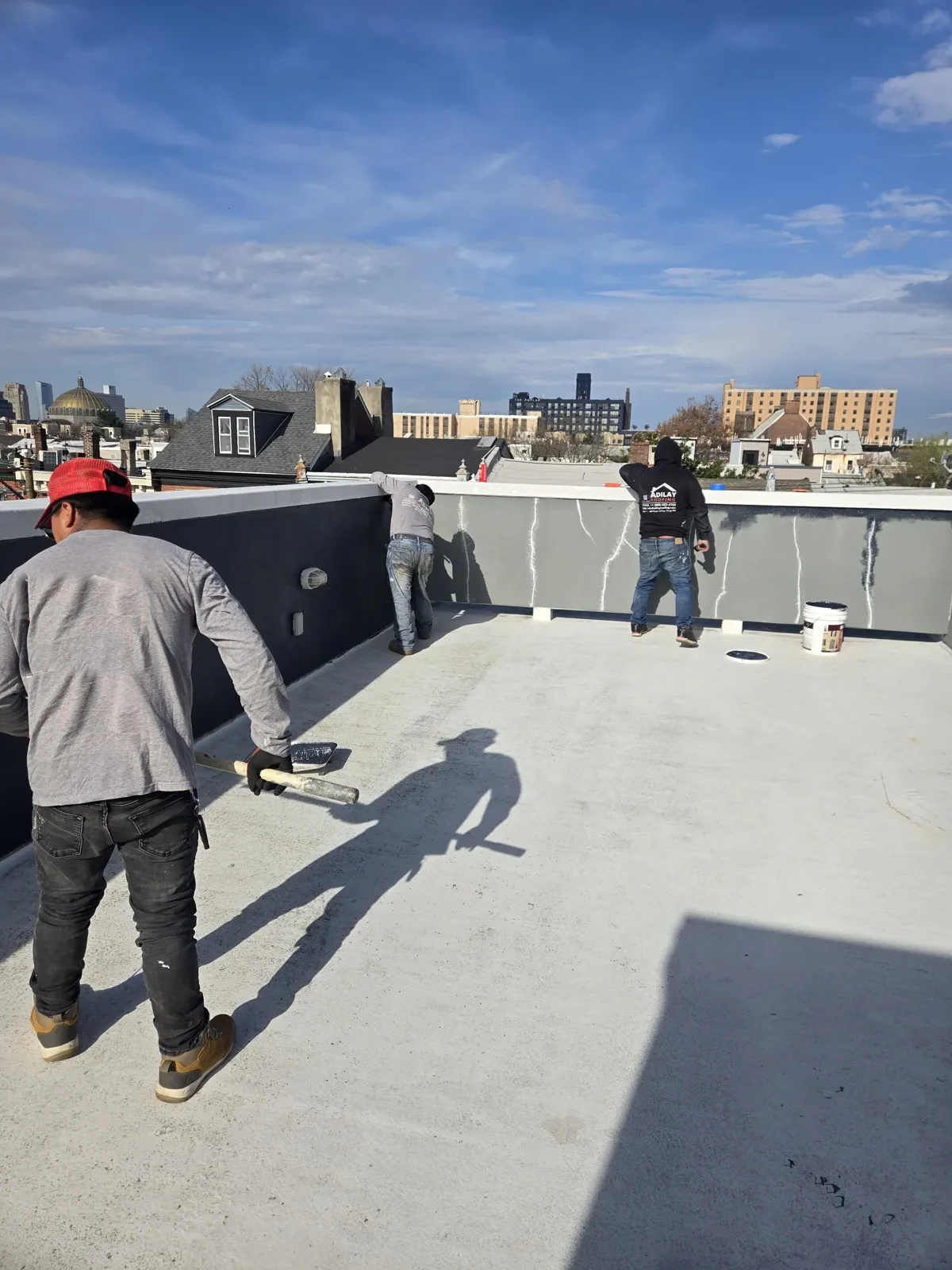
Wet weather leaves few clean days, so the first visit has a narrow job: stop the interior damage. We tarp, seal an open flashing, clear a clogged outlet or set a temporary patch over a failed seam, depending on what the roof allows. Each temporary measure carries a written note stating its coverage and the planned return visit. Permanent repair waits for a dry stretch, when adhesives cure and seams can be welded or bonded correctly. Cold and damp both slow cure times, so the return date depends on the forecast and on the material in use.
Beaverton, the market we measure from, averages about 39 inches of precipitation over 151 days a year, and the heaviest months run November through January. Sherwood's roofs sit in the same Tualatin Valley rain pattern. If you need the temporary work in place before a forecast front, our emergency roof repair response covers all hours and all days, holidays included.
When Fire Crews Have Been On the Roof
Tualatin Valley Fire and Rescue provides fire and emergency services in Sherwood. After a fire call, a roof can carry more damage than the fire itself: ventilation cuts, hose-stream impact, heat-distorted membrane, charred insulation and water that went into the deck. We do not repair anything until the building is released and the damage is photographed and mapped.
The photo set separates fire damage from older wear, which matters to an insurer and to the owner's own file. A roof insurance claim assistance package puts the cuts, scorch marks and wet areas on a single plan with measurements, so an adjuster can read the loss without a second site visit. Temporary dry-in goes on first, since an open roof turns one loss into two when the next rain arrives.
Where Repair Gives Way to Replacement
The threshold sits where continued repair costs more than renewal, and it is different for every roof. We tally the patches, probe suspect areas for wet insulation and weigh the remaining service life against the current budget. An infrared survey can show where moisture sits below a membrane that looks sound. Core samples confirm it, and each sample location is patched and logged so the test does not create a new leak.
Timing matters too. A repair made in November has to survive months of rain before anyone can inspect it in good light, while one made in a dry week can be checked in daylight within days. We record the conditions on the day of the work, including temperature and surface moisture, because those affect adhesion and seam quality and belong in the building file.
If a roof is dry and well attached but worn at the surface, a roof recover can add years without full tear-off, provided drainage and attachment allow it. If insulation is soaked or the deck has deteriorated, replacement belongs on the capital line, and the scope sheet presents both options with prices. Since the 2025 Oregon Structural Specialty Code became mandatory on April 1, 2026, a replacement scope also lists any insulation and attachment changes the code adds.
Access, Tenants and the Schedule
We ask for the roof access point, the tenant hours, the delivery windows and any areas where the crew should not stage. Downtown frontage may limit where a truck can stand; highway frontage may place the roof above a busy parking field. Both change how material goes up and when. The schedule that results names the crew's working hours and the noisy tasks, and tenants receive it before work begins. If a business has a critical period, such as a seasonal rush or an inventory count, tell us at intake and the loudest tear-off moves to another week.
Owners with space elsewhere in the valley, such as Tualatin or Wilsonville, can have the same intake record and scope layout across properties. Each building keeps its own file. A portfolio view then ranks roofs by condition, so the capital line follows the evidence and not the order the calls came in.
Related Roofing Work
Shopping Center Roofing
Emergency Roof Repair
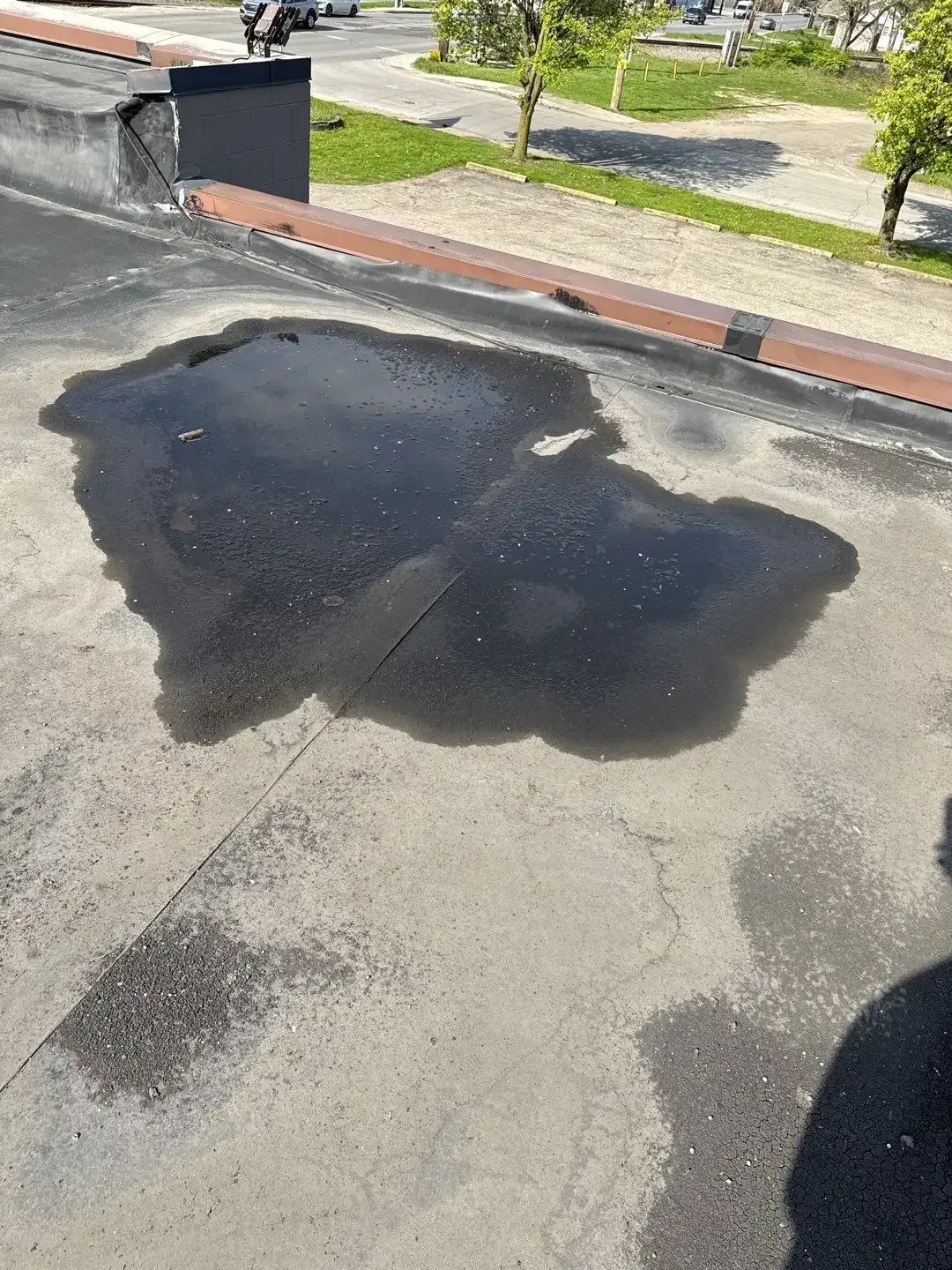
Roof Insurance Claim Assistance
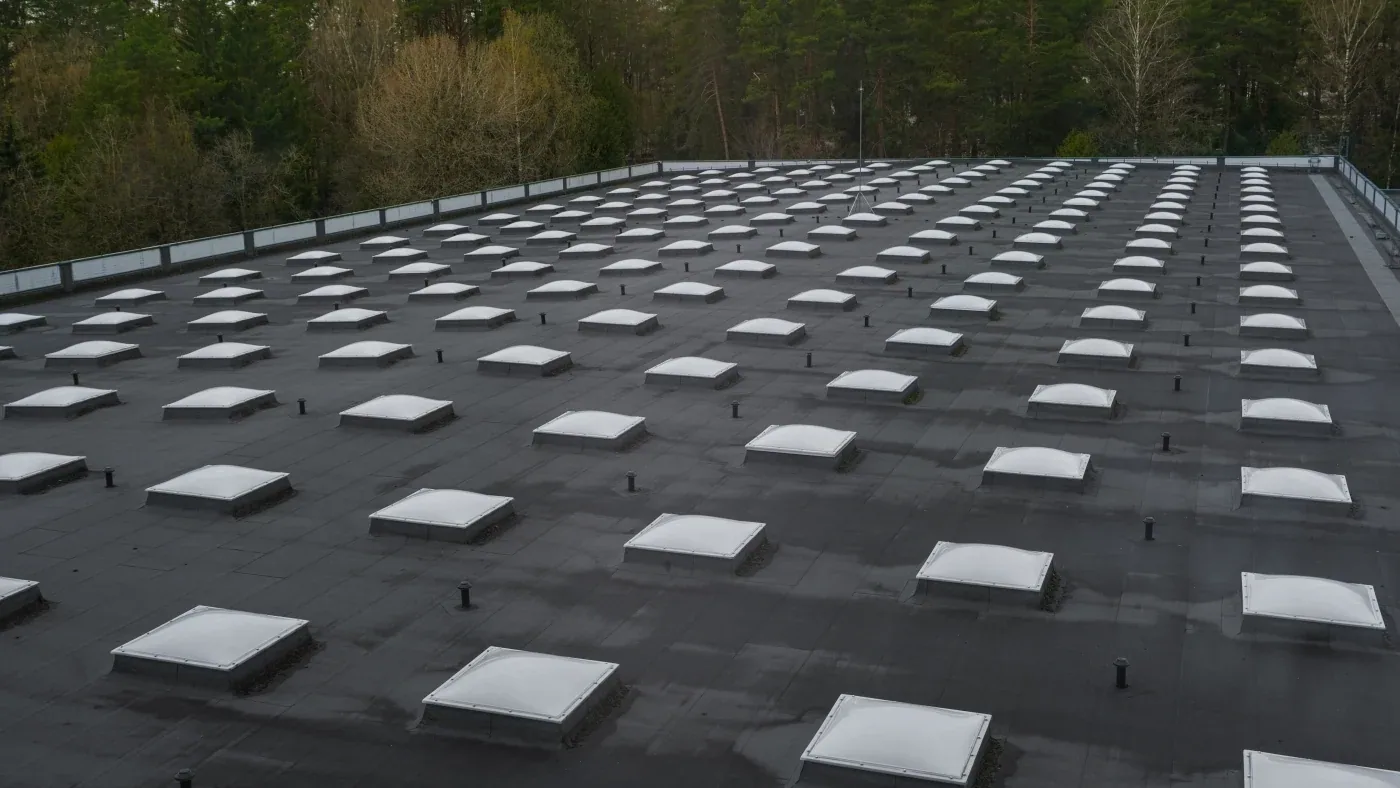
Roof Recover and Overlay
Place an intake call for your Sherwood building
Give us the building address and the last known leak location. We will schedule a make-safe visit and deliver a written scope sheet with repair and replacement prices side by side.
Questions About Sherwood
What decides whether a leak on OR 99W gets a patch or a full repair scope?
The condition of what surrounds the opening decides it. A clean, dry membrane with one failed detail takes a local repair. Soft insulation, brittle flashing or several leaks across the roof point to a larger scope. We show the evidence, price both routes and let the owner choose.
Who handles the roof after a fire response in Sherwood?
Once the building is released, we photograph and map the damage, dry in the opening and prepare the documentation your insurer needs. Fire damage and older wear are recorded separately. Permanent repair is scheduled after the claim path is clear and the deck has been checked.
Do shared walls in a downtown block complicate repairs?
They do. A flashing at a party wall may belong to one roof on one side and another roof on the other, so we mark the line, photograph both faces and write the repair so each owner sees their part. If the neighboring roof is the source, the report says that plainly.
How long does a temporary dry-in last?
Plan on weeks, not seasons. A tarp or temporary seal holds only until weather, wind or foot traffic loosens it, so the make-safe note carries a return date. We check it on the second visit and replace it if the permanent repair has to wait for dry conditions.
Which records should I keep after the work is done?
Keep the photo set, the scope sheet, the invoice and any material data we provide. Those go into your building file with the date and leak location. Future inspections compare against them, and a buyer or lender reviewing the building can see what was done and when.