Service Areas
Commercial roofing for the Wilsonville, OR employment area along I-5: industrial and distribution roof inspections, leak response, repairs and scope sheets.
Commercial Roofing in Wilsonville, OR
Water on a distribution floor in Wilsonville, OR stops pallets, and the intake call reflects that. We ask which dock door, which bay line and which racking is under the drip, then send a crew to cover the product zone and find the opening. Before anyone touches a seam, the roof gets photographed and the leak location goes into the building file with the date and the time of the first report.
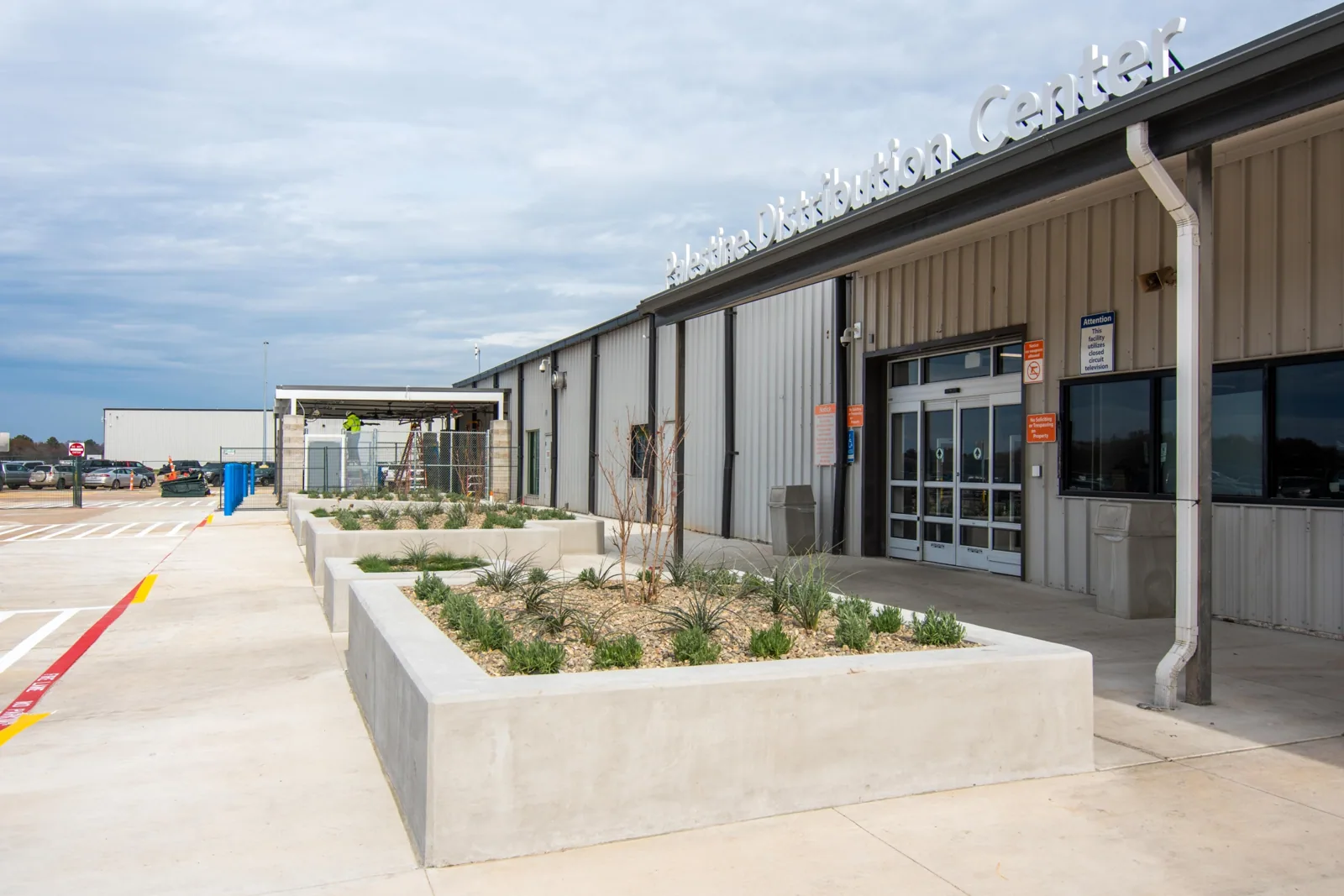
Industrial parks straddle I-5 here and hold manufacturing and distribution facilities, with Coca-Cola and Rite Aid distribution centers adjacent to the interstate. North of Boeckman Road, Xerox, Mentor Graphics and FLIR cluster along Parkway Avenue. Roofs in a working employment area carry a different set of questions than a retail block does.
Big Roofs, Narrow Margins
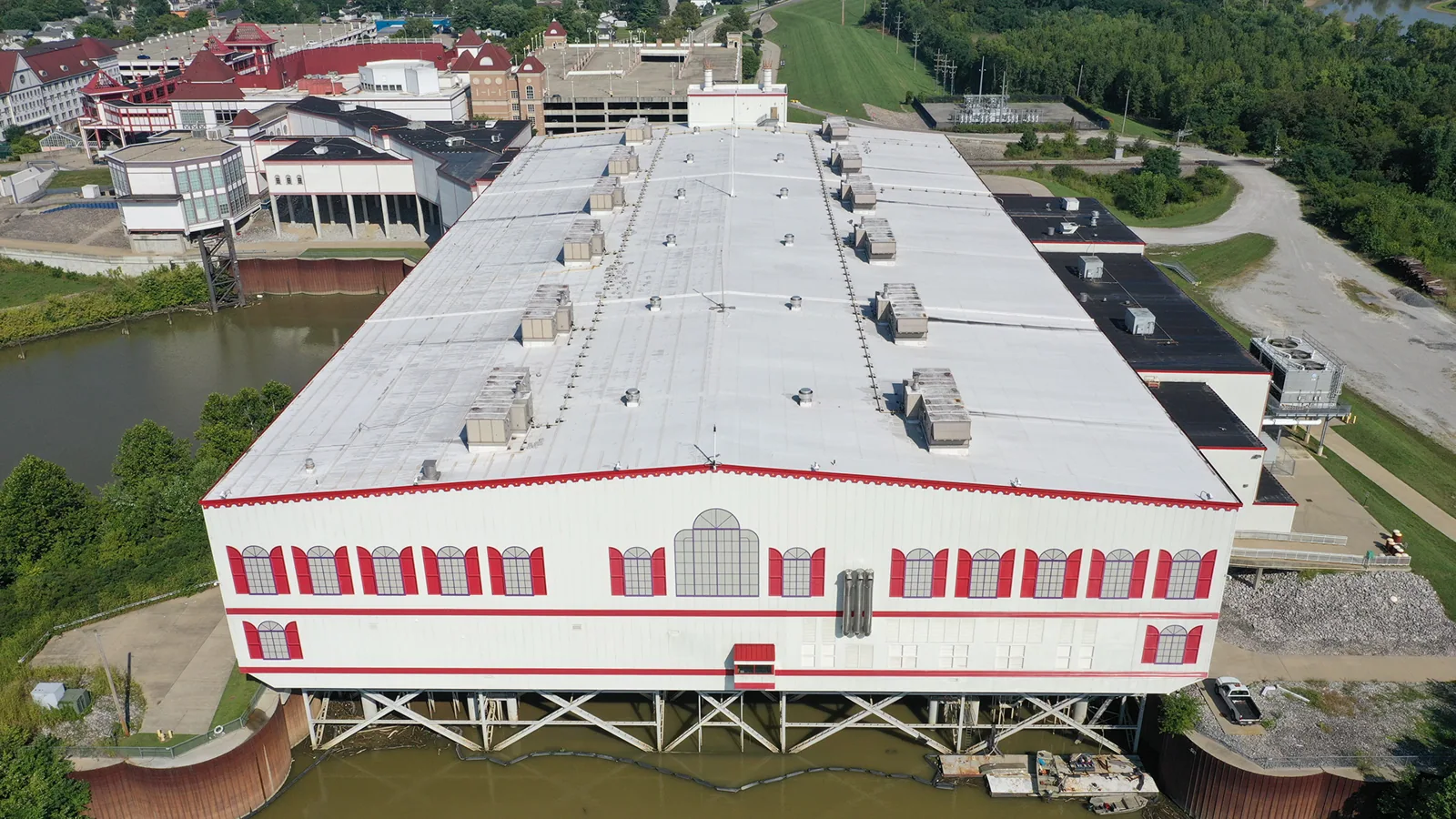
An industrial or distribution building usually presents a wide low-slope roof with long drain lines, many penetrations and a lot of rooftop equipment. Until we walk it, we do not know the membrane type, its age, how well the insulation is attached or whether the drains were ever cleaned. The first visit settles those points, area by area, with a roof plan and numbered photographs.
For a warehouse or plant the specifics we look at are seam condition across long runs, edge metal on tall walls, skylight curbs, dock canopy tie-ins and the sumps at interior drains. A distribution center roofing report ranks problem areas by risk to stored product, so the owner repairs the section over the most valuable inventory first. Ponding near a loading dock deserves a measured look before the next wet season, and a wet dock apron under a failed gutter or scupper is a safety problem as well as a roof one.
Skylights and smoke vents need their own line in the report. Their curbs, domes and gaskets age at a different rate from the membrane around them, and a cracked dome or a dried gasket will let water in while the field of the roof stays tight. We note each unit, its condition and the repair it needs, so the owner can weigh a curb repair against a larger project.
Protecting Operations During Work
A plant or distribution center may run on shifts that never fully stop, and the roof work plans around that. We ask for the shift schedule, forklift routes, fire lanes, hot-work rules and areas where product cannot be disturbed. Tear-off and torch work have different clearances than membrane welding, and we choose methods that fit what the operation allows. A crew that cannot reach a drain without crossing a truck court gets an escort and a time slot.
Some facilities hold temperature or cleanliness requirements that make dust and fumes a problem. For those, a covered work zone, a sealed vent plan or a cold-applied system may be the right choice. The scope sheet states the method, the containment and the hours so the operations manager can approve it. Any change to those terms goes back to that manager in writing before the crew acts on it. Our occupied building reroofing approach covers the same ground for tenants in other building types.
Rain, Freeze and the 2021 Heat
Wilsonville has recorded 116 degrees on June 28, 2021 and minus 15 on December 23, 1998, and its wettest stretch runs November through March. A membrane that sees both ends of that range moves as it heats and cools, and every move works on seams, fasteners and flashing terminations. Dark single-ply surfaces get especially hot on a day like June 28, and thermoplastic and bitumen layers soften under that load.
After a heat event we walk the roof for membrane shrinkage, blistering, softened sealant and displaced edge metal. Before the rainy months we check drains, scuppers and every place where water is meant to leave. A preventive roof maintenance visit in September or October is the cheapest way to find a split before it becomes a wet floor.
Retail Near Wilsonville Road
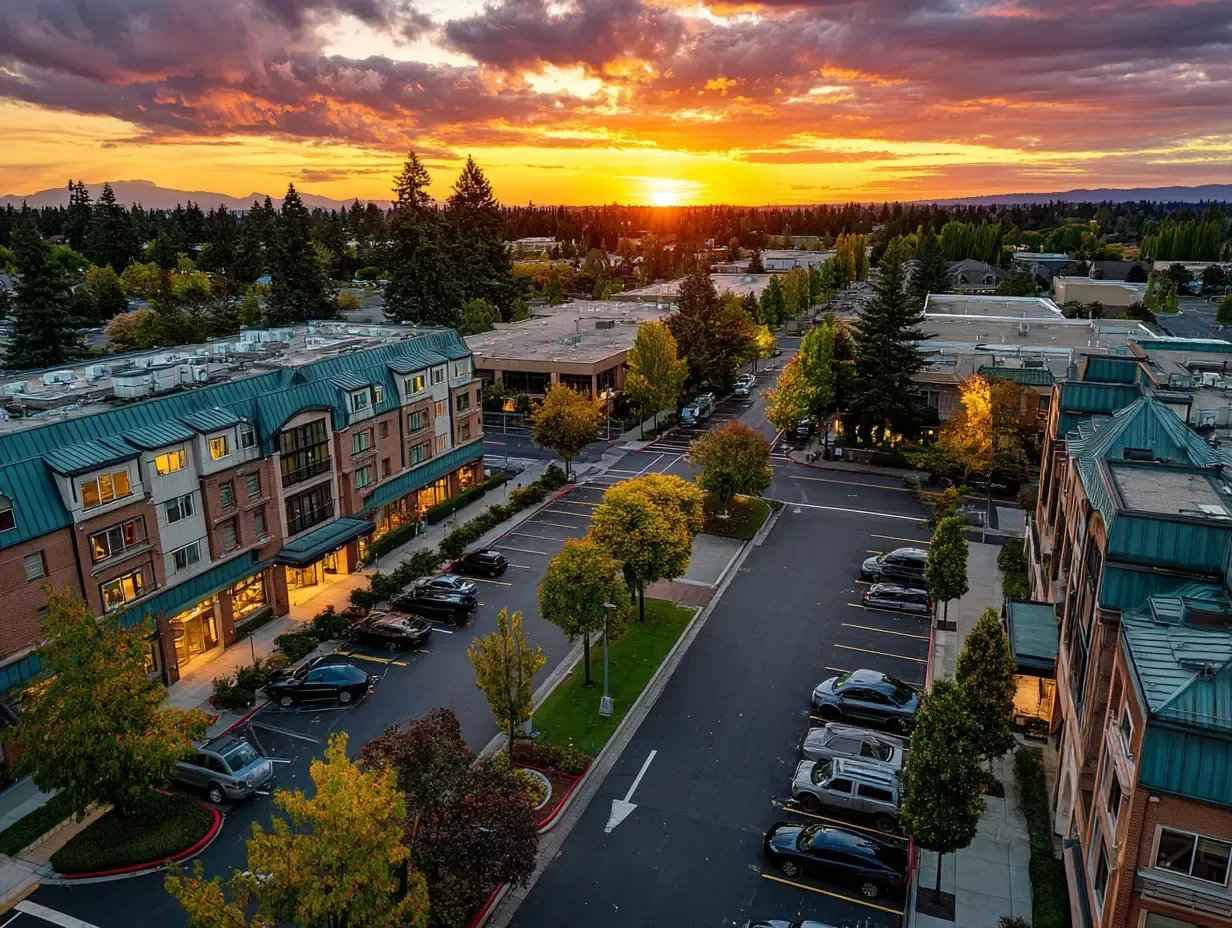
Retail concentrates along Wilsonville Road near the I-5 interchange, including Town Center Shopping Center and Old Town Square. A multi-tenant retail roof shares a problem with an industrial one: many penetrations, many occupants and a path to the nearest drain that someone has to follow. Our walk measures and photographs that path before the scope describes it, and flags every spot where one tenant's equipment sits on another's leak line.
For a retail owner in the Wilsonville Road area, the questions are tenant hours, customer entrances and how to keep a staging zone off parking. A roof with several occupants and a recurring leak benefits from a commercial roof inspection that produces one report and a bay-by-bay scope. The same discipline carries to owners with space in Tualatin or Sherwood.
What Sets the Price and the Start Date
Four things move a Wilsonville roof quote: the amount of wet insulation, the condition of the deck, the count of penetrations and the access to the roof. Large buildings amplify each one. A small percentage of wet board is a different budget than a large one, and the figure is unknown until test cuts or an infrared survey show it. Our scope sheet carries an allowance for concealed damage, stated plainly, and a unit price for the extra work.
Code affects scope. Since April 1, 2026 the 2025 Oregon structural code has been mandatory, with an energy chapter that follows ASHRAE 90.1-2022 as well. On a commercial roof replacement those rules can change insulation thickness and fastening, so the scope breaks them out. Lead time on materials and permit review set the start date more than the weather does.
Related Roofing Work
Distribution Center Roofing
Occupied Building Reroofing
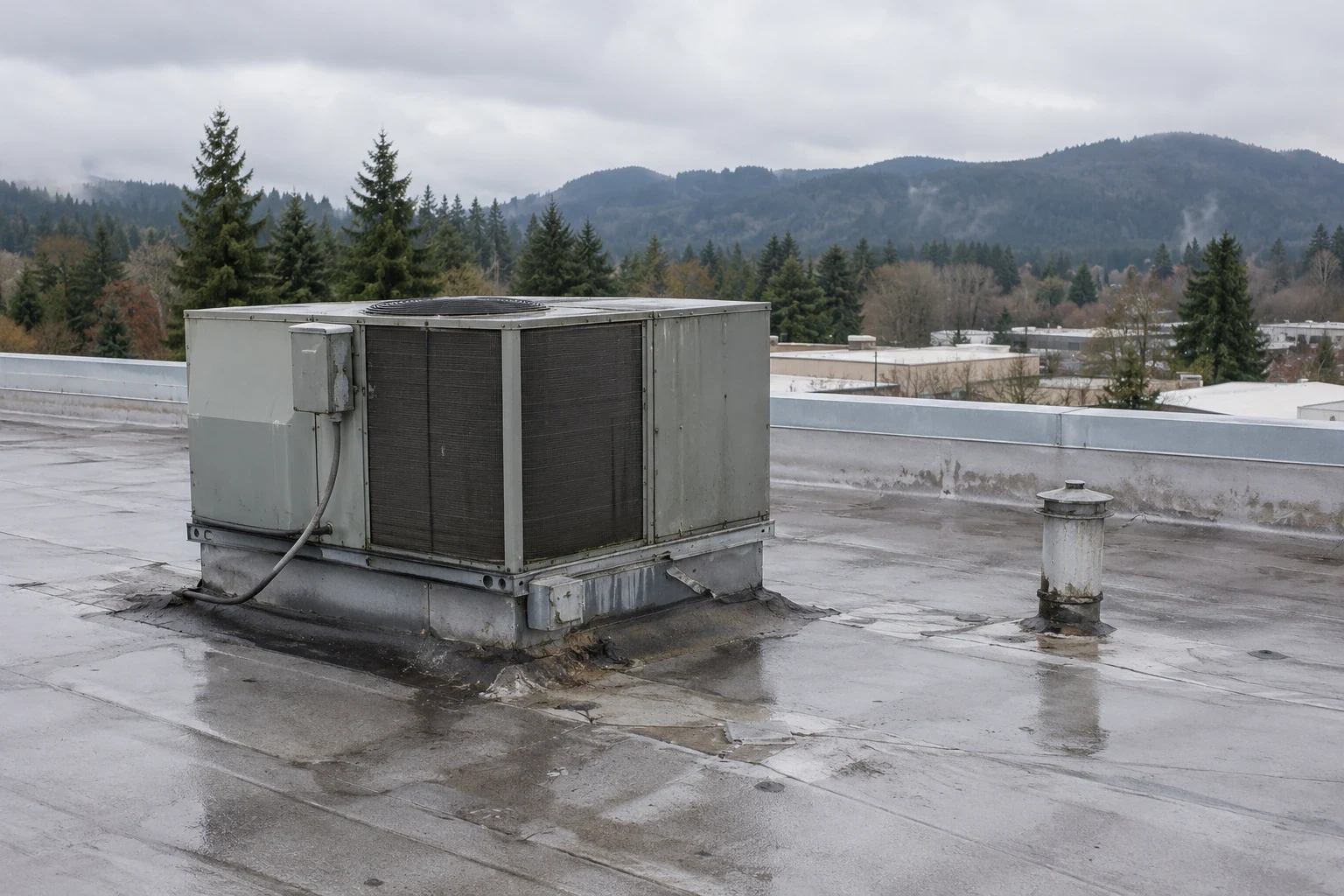
Preventive Roof Maintenance
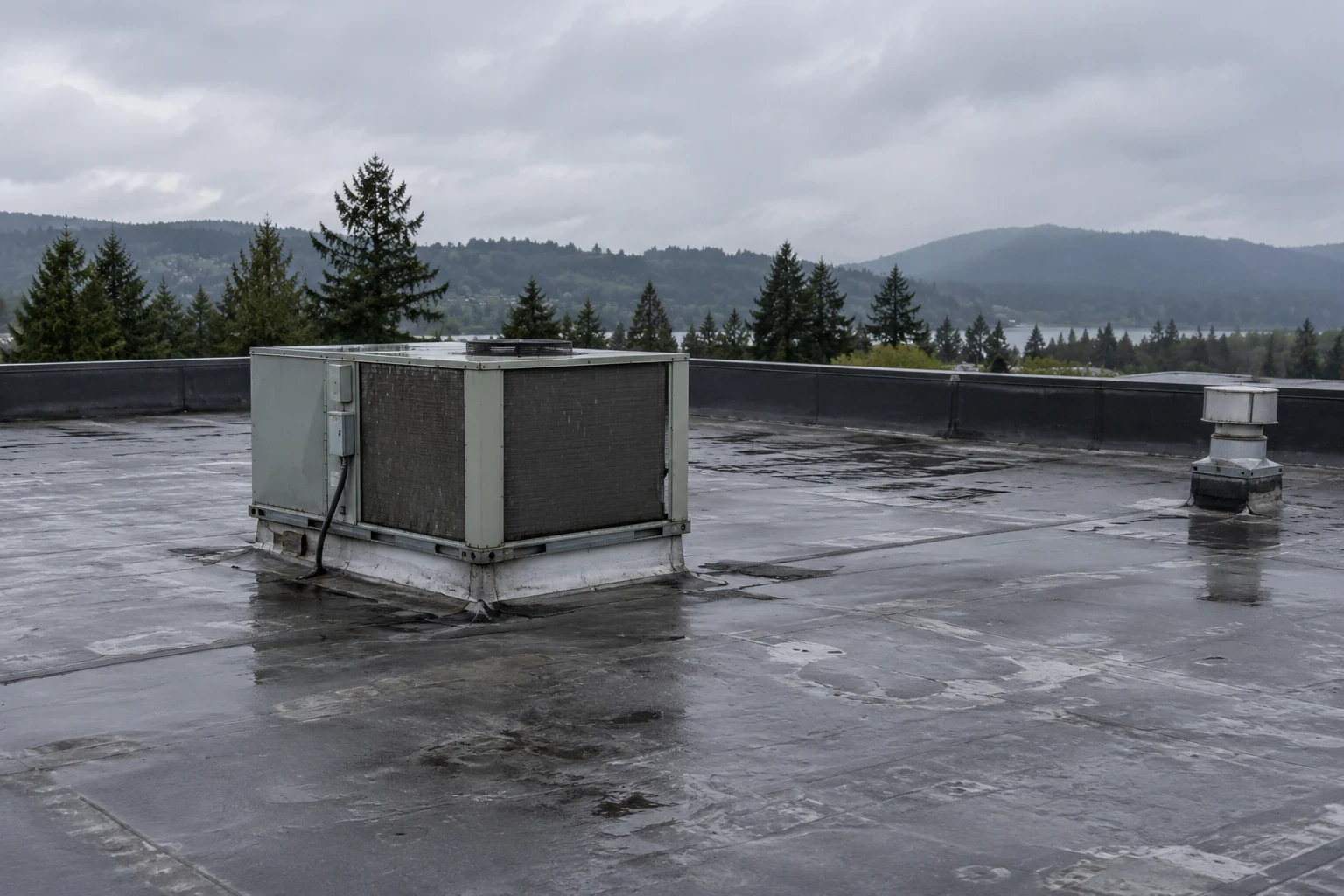
Commercial Roof Inspection
Place an intake call for your Wilsonville roof
Call with the building address, the dock or bay under the leak and a name for roof access. We will schedule a make-safe visit and send a written scope sheet.
Questions About Wilsonville
Which part of a warehouse roof do you check first after a leak near a dock door?
We start with the nearest drain and the wall flashing above the door, since water follows slope to low points and wall terminations tend to be the first to fail. Then we trace the seam lines outward. The photo set shows each detail and the leak log records which one carried water.
How does a roof crew coordinate with a plant that runs several shifts?
The shift schedule drives the plan. We ask for forklift lanes, fire access, hot-work permit rules and product zones, then place the crew, the lift and the staging area away from them. Noisy and hot tasks go to the lowest-risk hours, and the operations manager approves the schedule before work begins.
Can an infrared survey cover an entire large roof?
It can scan the whole surface and flag areas that hold heat differently, which usually means moisture. Flags still need test cuts to confirm. The survey shortens the list of places to open and lets the repair target wet sections instead of replacing a dry roof.
Does the 116 degree day in 2021 mean my membrane is damaged?
Not by itself, but it is a reason to walk the roof. We look for shrinkage at walls, softened seams, displaced edge metal and blistering. If none show, the roof goes back on its regular schedule. If some do, the repairs go into the scope with photographs.
What documents do I get when the work is finished?
You receive the dated photo set, the final scope sheet with what was done and where, and material information for the systems installed. That packet goes into your building file, so the next inspection and any lender or buyer review can compare against it.