
Service Areas
Commercial roofing in Tanasbourne and AmberGlen, Hillsboro, OR: retail, restaurant and office roof leak response, drain checks and planned repair scopes.
Commercial Roofing in Tanasbourne and AmberGlen, Hillsboro
Shoppers keep walking while a ceiling tile in a Tanasbourne storefront starts to stain, and that sets the order of the first hour. The intake call gets the unit, the room and the last known leak location. A crew goes up to make the area safe, and the roof gets photographed before anyone cuts a seam. The tenant below gets a bucket, a tarp over stock if needed, and a dated entry in the leak log.
Tanasbourne and AmberGlen sit on the eastern edge of Hillsboro, OR, and the work there is mostly retail, restaurant and office roofs. Those buildings have shared owners, separate tenants and trade traffic on the roof every month, so the second visit is where we sort whose item is whose and price the repair on a written scope sheet.
Retail roofs with many hands
Tanasbourne is a regional shopping area near 185th Avenue, home to the 368,000 square foot Streets of Tanasbourne, which opened in 2004. A district like this tends to mean many storefronts, shared roof sections and rooftop units that serve individual tenants. The roof type at any one address is settled on the roof itself, from the membrane, the laps and the drawings, before a repair is priced.
On a multi-tenant shopping center roof, a leak above one unit can start in a neighbor's section. Water travels along the deck, through insulation seams and over a parapet line before it shows up. We trace that path with moisture readings and photographs, then mark the entry point on the plan. Owners and property managers get one scope sheet that separates common-area work from tenant-caused damage.
Before any repair, we ask for the last roof report, the list of rooftop equipment and any tenant work orders that touched the roof. A mechanical contractor who added a unit last year is a likely source of a new leak path, and a note in the file saves a half day of searching. Once the entry point is known, the fix is priced as a patch, a local replacement of the damaged section or a line in the capital plan.
Exhausts, grease and curbs
Restaurants add rooftop exhaust fans, make-up air units and grease traps, and each one is a penetration that someone services regularly. A fan curb with failed counterflashing leaks every time a hard rain comes sideways. Grease on a membrane softens some sheets and attracts debris, so the area under an exhaust gets cleaned and checked.
A restaurant roof repair has to be scheduled around meal service as well as weather, and that suits an early-morning crew start. We check the curb flashing height, the sealant at the termination and the pad under the foot traffic of the service technician. The results go into the leak log so the next visit starts from a current picture of the curb.
Why the district keeps growing
Metro treats Tanasbourne and AmberGlen as the regional center for western Washington County. In practical terms, that means a district where new tenants, tenant improvements and rooftop equipment changes arrive on a rolling basis. Each change can add a curb, a conduit or a set of footings, and each is a chance for a roof detail to go in wrong.
We recommend the owner keep one building file for the whole roof and record every rooftop change in it. When a tenant adds a unit, the file shows the date, the trade, the penetration and the flashing method. A roof with a clean change log is easier to repair and easier to warranty. For owners of office buildings in the same district, the same file practice applies and keeps the paper trail short.
Cold weather contributes as well. Portland Airport averages roughly 32 nights a year at or below freezing, and freeze cycles open small gaps at curbs and terminations that rain then finds. After the first hard freeze of the season we recheck the curbs we repaired and any seams flagged at the last visit, and the result goes into the file with the date.
Rain, drains and a quiet dry-in
Rain falls in Beaverton, OR on roughly 151 days a year, and Tanasbourne roofs face the same pattern, which puts the drain sump at the center of most fall leak calls. A drain blocked by fall leaves produces a ponding patch that stays through the next storm and slowly stresses the membrane.
The first visit clears the drain, notes the depth of ponding and checks the roof edge for overflow signs. The permanent repair waits for the next dry window if the seam cannot be welded or bonded in rain. We use the time between visits to schedule roof drain and scupper work so the building heads into the next wet spell with clear outlets and a record of what was removed.
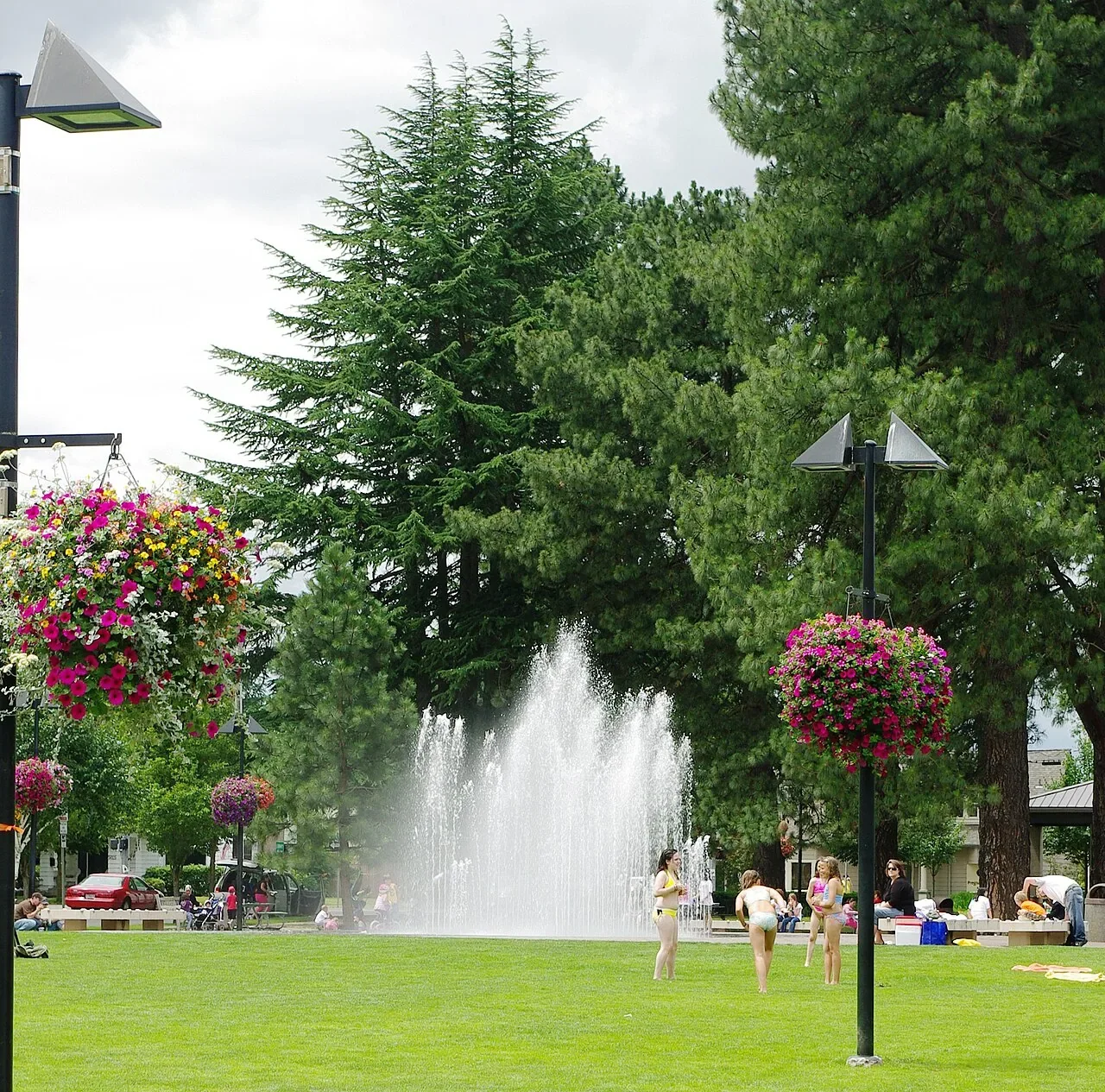
Work around the customers
US 26 runs through the northeast corner of Hillsboro near this area, and the traffic that keeps the retail district busy also decides when trucks can stage. Deliveries, loading and roof access all compete for the same lanes. The sensible schedule starts a roof crew early, closes off only the section being repaired and keeps materials off customer routes.
For larger work, an occupied building reroof is phased by section so the center keeps trading. Our scope sheet lists the phase order, the debris plan and the hours of noisy work, and tenants receive notice before their section begins. Neighboring districts such as Hillsboro as a whole, and Cedar Mill north of US 26, call for the same conversation about hours and access.
Related Roofing Work
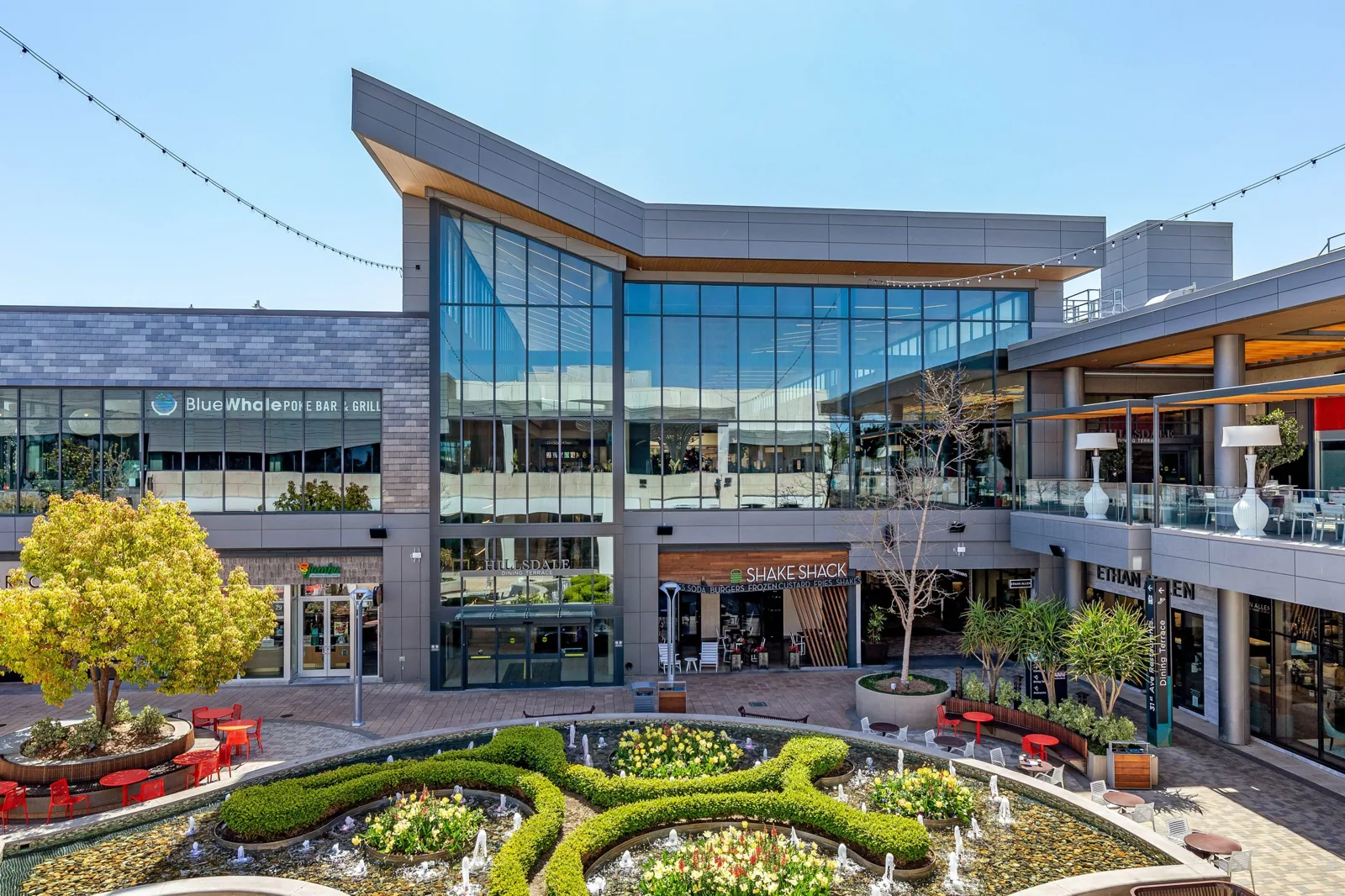
Shopping Center Roofing
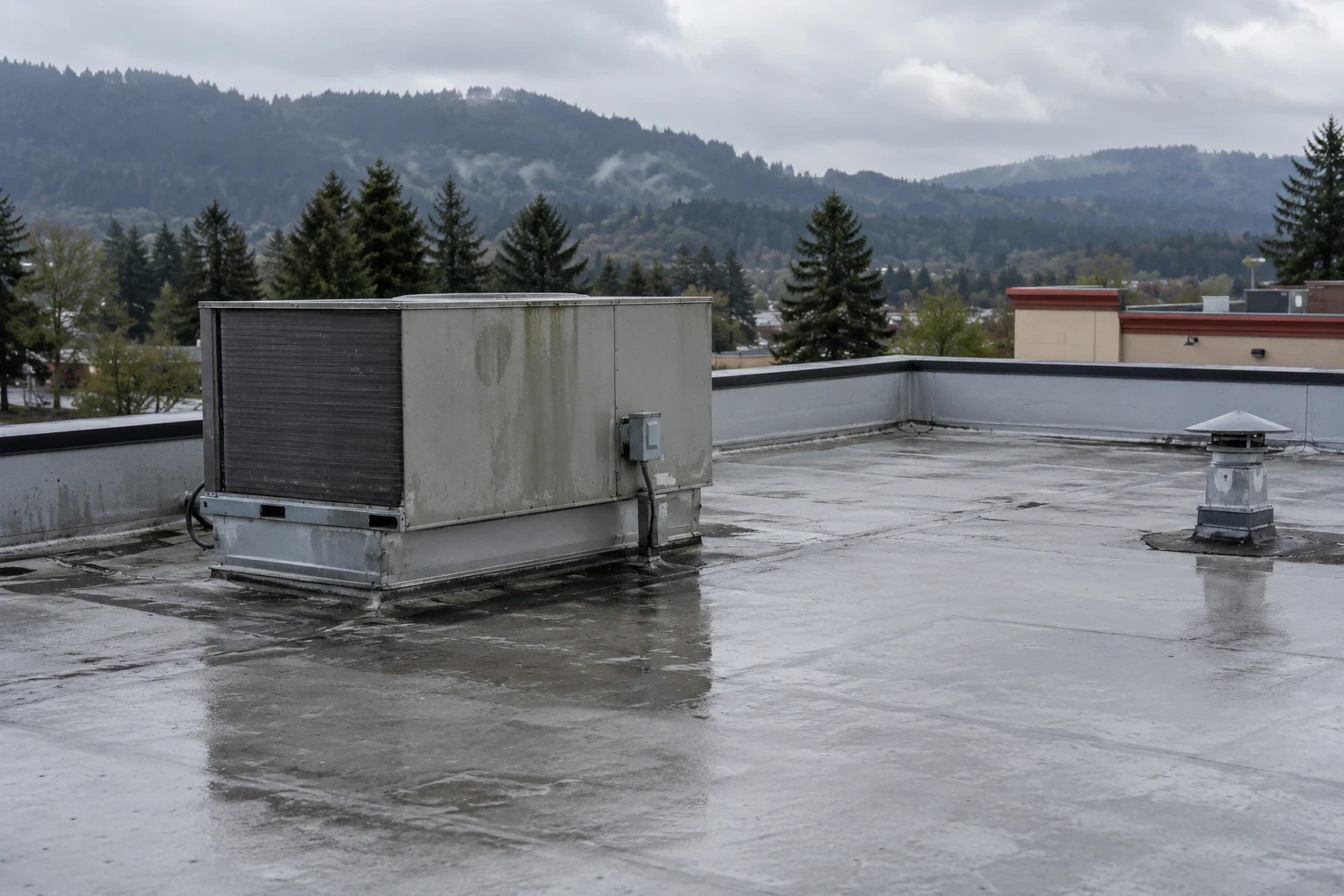
Restaurant Roofing
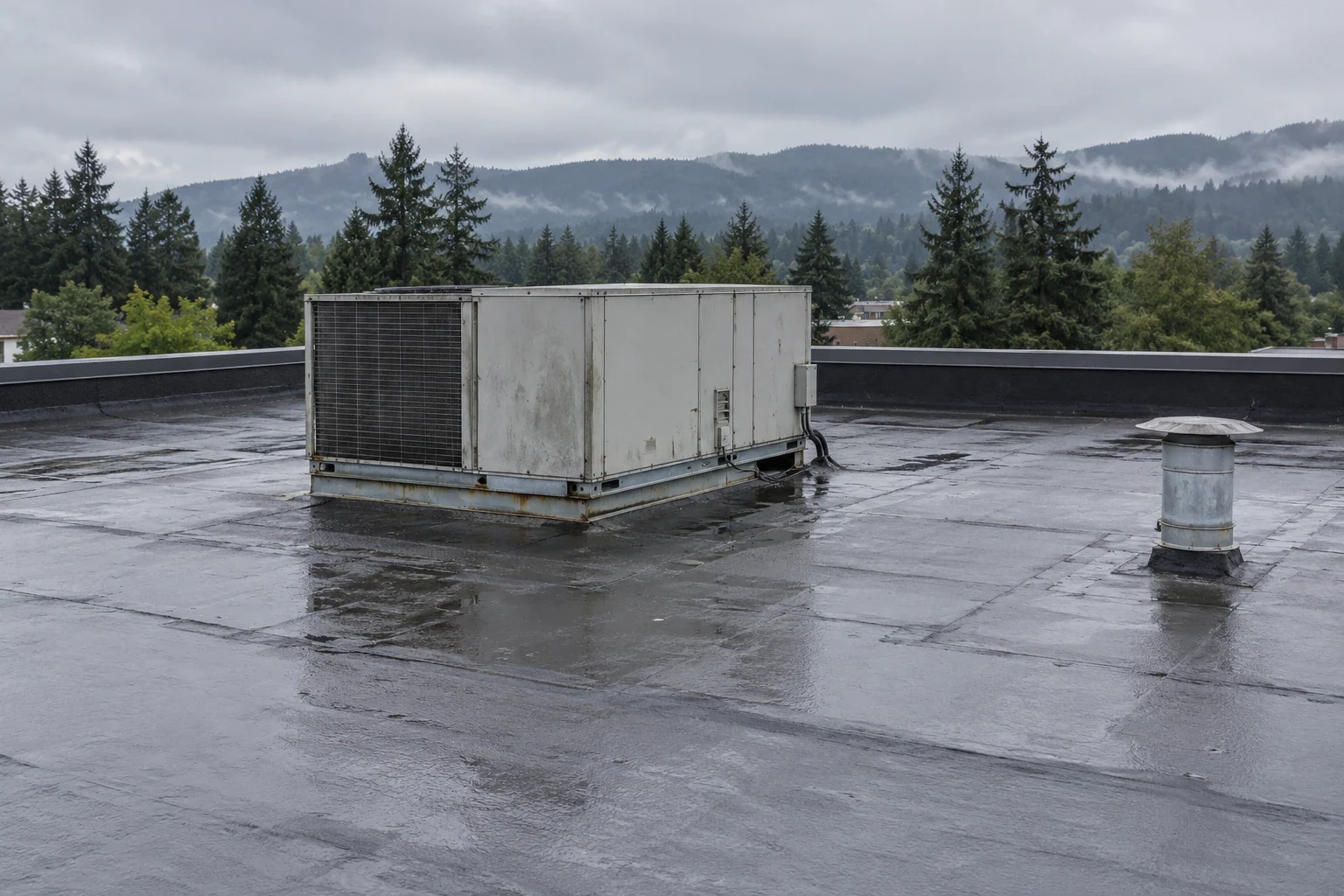
Office Building Roofing
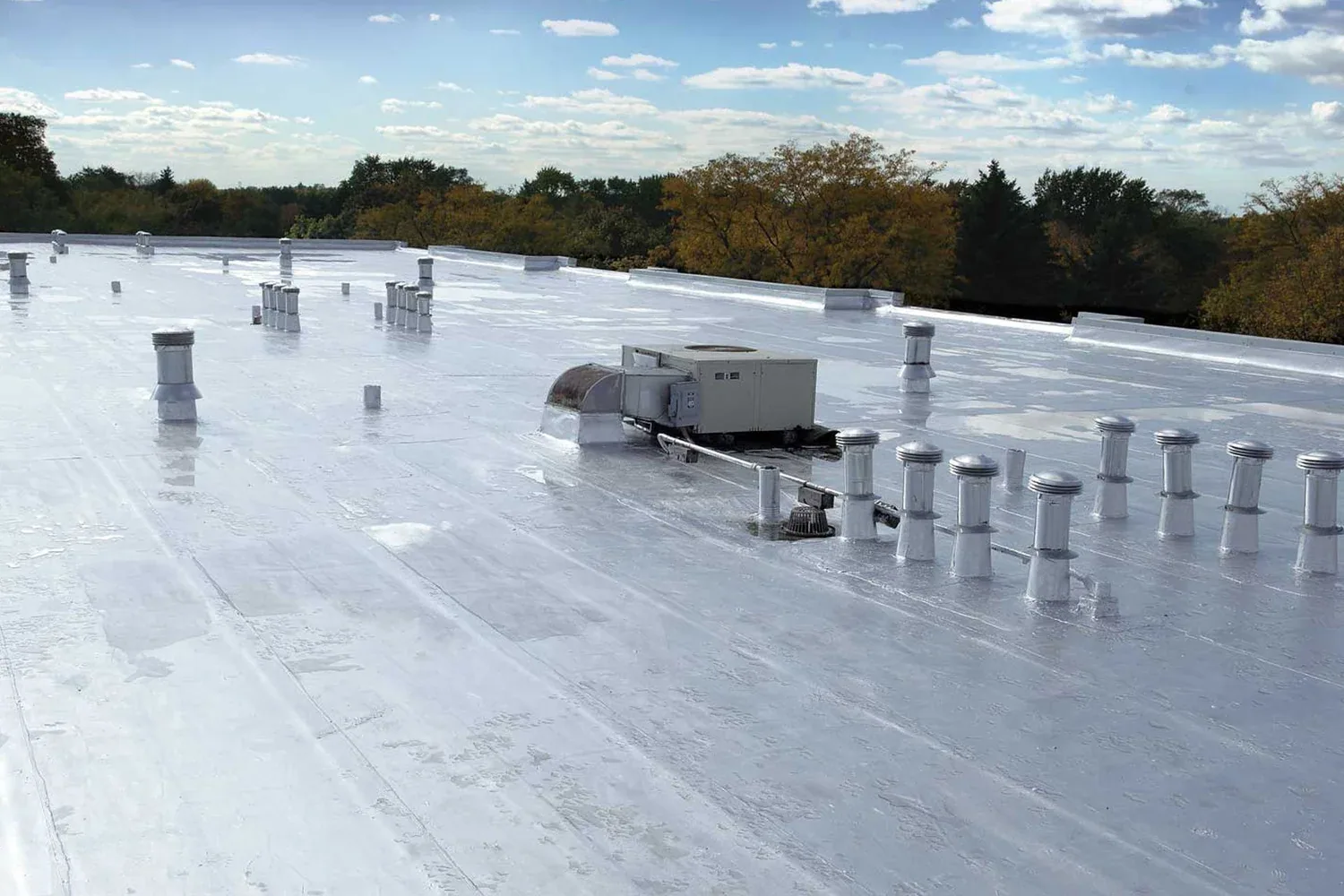
Commercial Roof Drains and Scuppers
Place an intake call for your Tanasbourne roof
Call with the building address, the tenant space affected and the last known leak location. We will send a crew for a make-safe visit and follow with a written scope sheet that separates common roof items from tenant equipment.
Questions About Tanasbourne and AmberGlen
Who pays for a leak that starts in a neighbor's roof section?
The lease and the cause decide that, and we record the cause so the right party can act. Our scope sheet shows where the water entered, which section it crossed and which items are common roof work versus tenant equipment. That gives the property manager a record to use with the owner and the tenants.
What does a rooftop exhaust fan have to do with a leak?
Every fan sits on a curb, and the curb flashing is a joint that moves with heat and vibration. When the counterflashing opens or the sealant cracks, rain runs down the curb wall into the space below. Fixing it means checking the flashing height, the sealant and the fastening at the top of the curb.
How do you schedule roof work at a busy shopping district?
We start early, work one section at a time and keep staging away from customer lanes. The phase plan names the section, the hours and the tenants affected, and it goes to management before the crew arrives. Noisy steps are grouped so tenants know when to expect them.
Should a new tenant's rooftop unit change my roof file?
Yes. Record the date, the unit, the curb or support type and the flashing method in the building file. If a later leak shows up near that unit, the record tells us what to inspect first. It also helps when a repair or reroof is scoped for the whole roof.
What is the first thing you do when a ceiling stains after rain?
We locate the stain on a plan, then go to the roof above it and trace the water path. The make-safe visit covers the entry point and clears any blocked drain. The photo set and the leak-log entry are what the owner receives after the visit.