
Roofing Manufacturers
Soprema bituminous and liquid-applied roofing in Beaverton, OR: how we read the layers, repair laps and flashings, and plan replacement after a wet season.
Soprema Roofing Systems in Beaverton, OR
Water reported under a Soprema roof gets the same first hour as any other Washington County leak: an intake call, a crew to make the area safe, and a photo set taken before a tool touches the surface. What changes is the reading. Soprema is best known for bituminous membranes, liquid-applied resins and the insulation that goes under them, so the roof may carry several layers from one maker, or one layer from this maker laid over another system entirely.
In Beaverton, OR, we sort that out on the roof. We lift nothing until the photographs are done, we log where each stain and each soft spot sits, and we mark the layers we can see. The scope sheet that follows names what is membrane, what is flashing and what is something added later by another trade.
Count the layers
A bituminous roof is built in plies or sheets, and the number of plies matters because it sets how much repair material the roof can take. Two-ply systems with a granulated cap sheet behave differently from a single self-adhered sheet over a cover board. We look at the exposed edges, the lap lines and any core sample to separate the cap from the base. A cap sheet that has lost its granules to years of rain exposes the asphalt beneath, and that is a wear sign more than a leak sign.
If the surface is sound and only a few laps have opened, a patch with compatible material is a reasonable answer. If the cap is blistered across the field, we mark the extent of the blisters, because the number of blisters decides whether we are repairing a roof or documenting its retirement. Those counts go into the assessment we leave for a modified bitumen roof, with the blister locations marked on a plan. The layer count and the blister map go into the building file together.
Laps and side seams
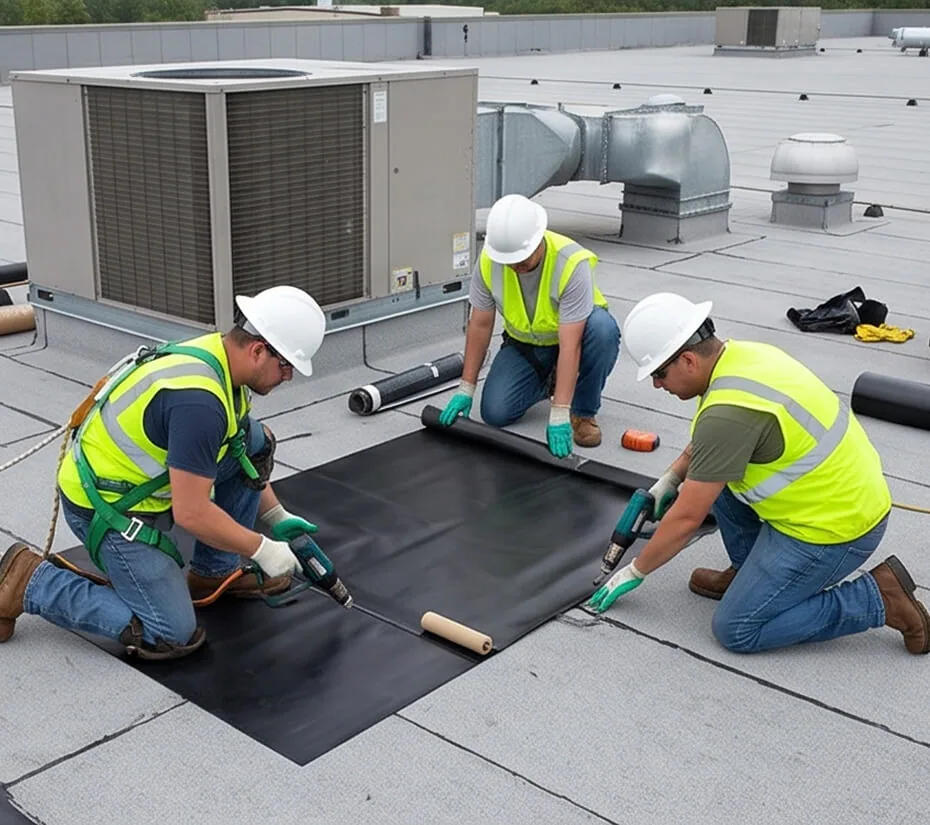
Modified bitumen laps are joined by heat or adhesive, and the joint is only as good as the clean, dry surfaces that met when it was made. A lap built during a damp Oregon spring may look finished and still carry a hidden channel along its edge. We check by running a probe along the bead, looking for a gap in the sealing edge, and by noting any place where the surface fell short of a continuous bleed-out.
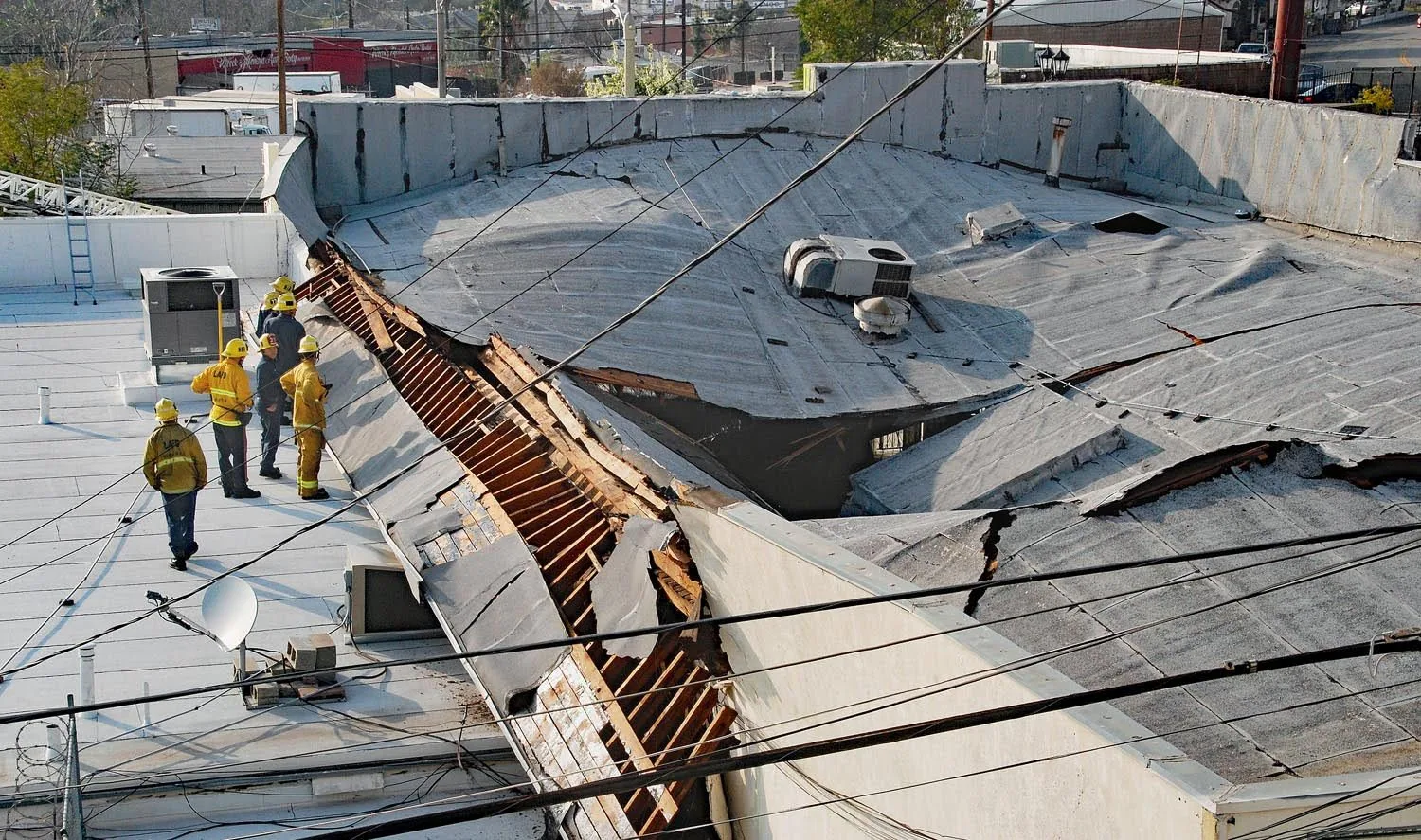
Where laps are fully bonded, leaks tend to come from the details around them. Flashing returns at walls, drains and curbs are the more likely entry point, and the flashing failure repair is often a new base flashing and a liquid-applied seal on the termination. We test the finished repair and log its location in the building file so the next visit starts from a known state.
Where a liquid resin earns its place
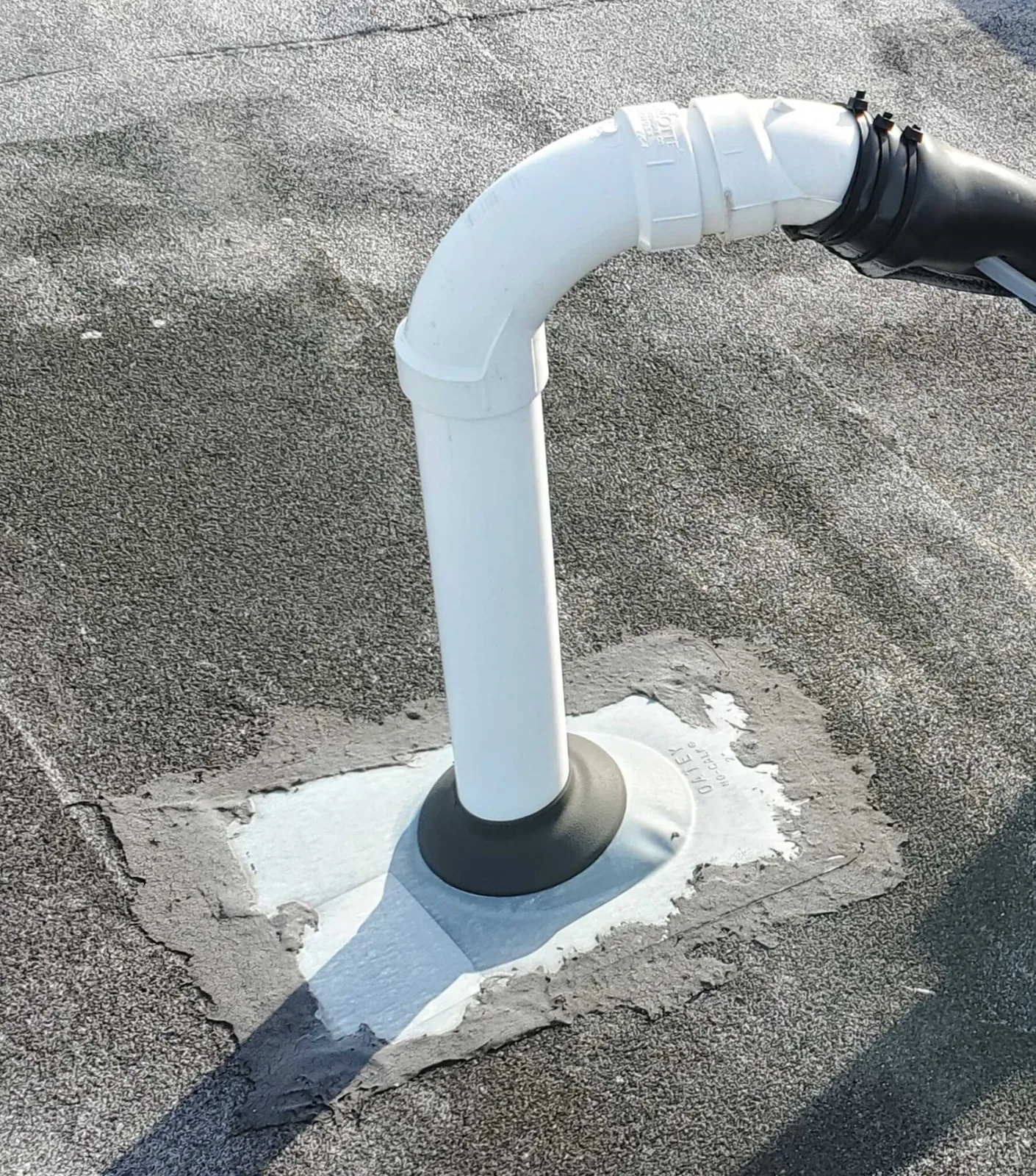
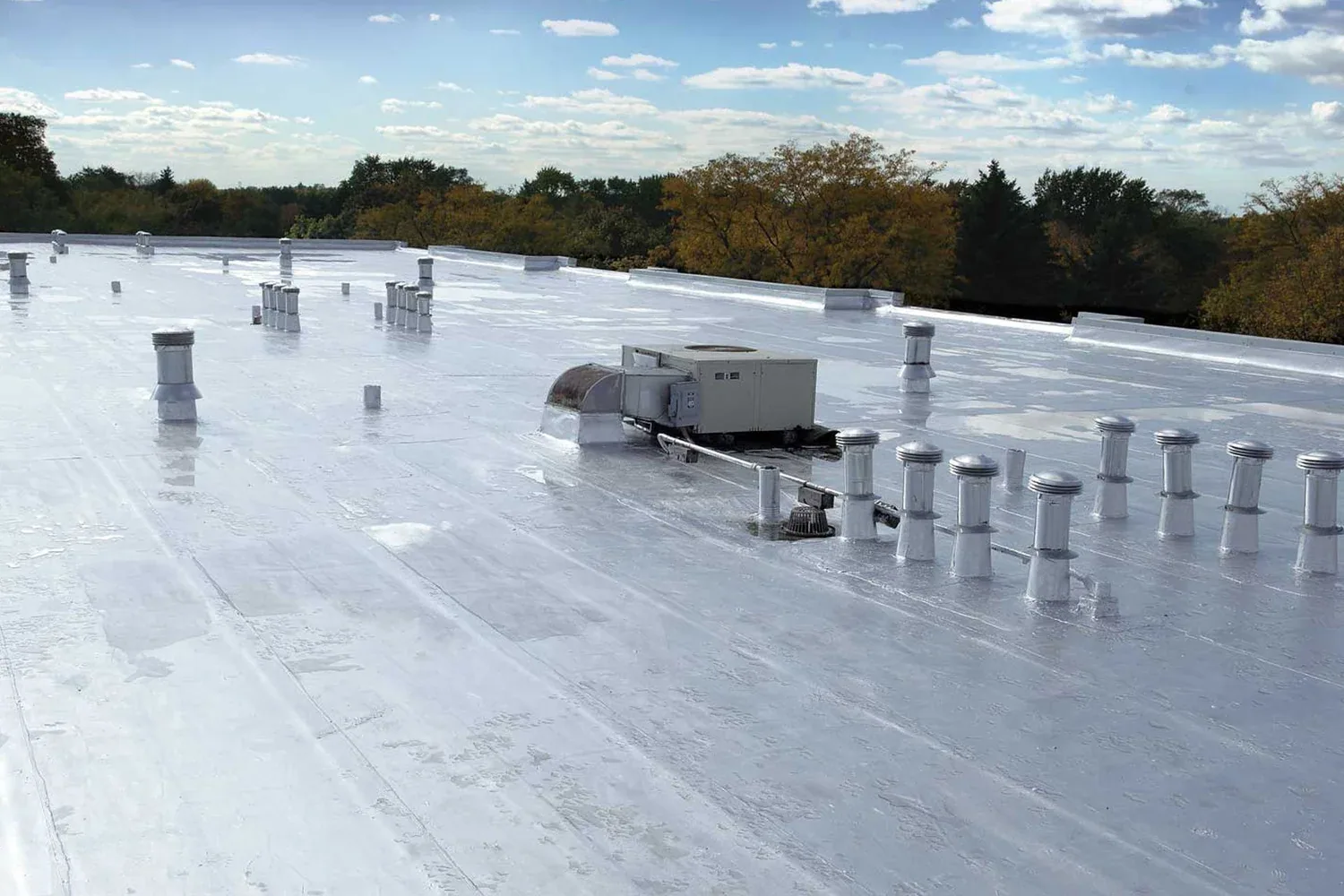
Liquid-applied flashing resin, including the Soprema Alsan family, is used where sheet material is hard to cut and fit: around a cluster of pipes, a crowded equipment platform, an irregular curb, the edge of a skylight. It cures into a continuous film that moves with the substrate. That makes it a strong candidate around skylight and penetration flashing where several small openings sit close together.
The limit is preparation. Resin needs a clean, dry and compatible surface, and one wet morning can cost a dry-in. We check the substrate, wait for a dry window if the forecast is unsettled, and photograph the finished film before it is covered. A resin repair that reaches into a sound field is also a signal to ask what is under it, so we read the layers on both sides of the repair line.
Wet winters, freeze cycles and heat
Rain reaches Beaverton on roughly 151 days a year and Portland Airport adds about 32 freezing nights. A bituminous roof here is wet for months and then asked to handle a swing from a recorded 115 degrees down to minus 8. Freeze and thaw open hairline gaps at laps and terminations, and the warm months stress asphalt-based surfaces that have no reflective finish.
Drains matter as much as the sheet. A roof that holds water at the drain sump swells and softens the membrane at the low point, and the sump area is where we look first. The roof drains and scuppers on the building should be clear before the first November storms, and we log any ponding we find so the next dry spell shows whether it persists.
Repair line, recover line, replace line
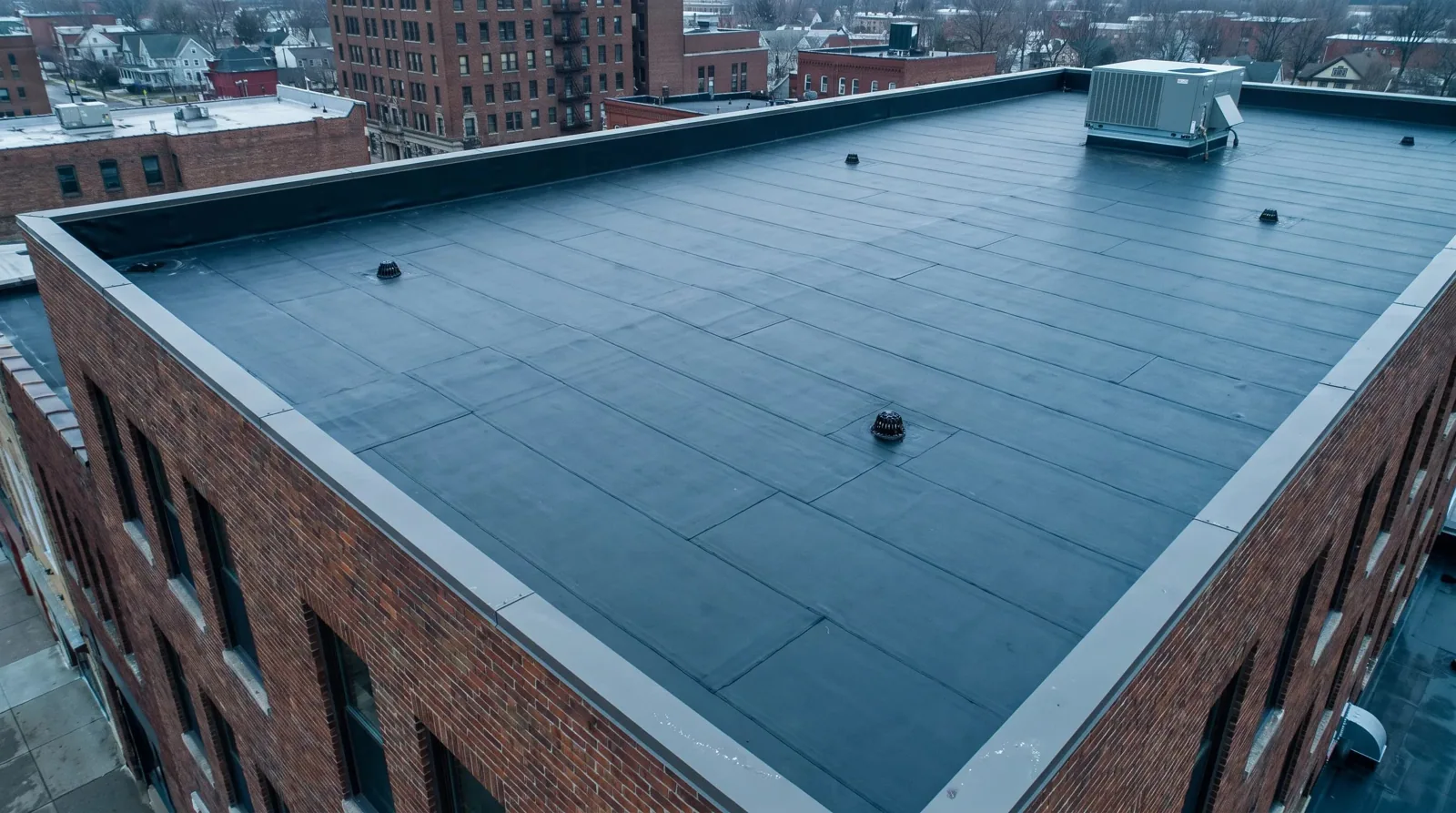
A Soprema roof that is wet in the insulation, blistered across the field and open at several laps belongs on the replacement side of the line. A roof with sound cap sheet, tight laps and isolated flashing failures belongs on the repair side. Between them sits the recover option, which depends on whether the existing layers are dry enough to hold a new membrane.
Moisture readings and a core sample settle it. In the Hillsboro Industrial District, where manufacturing employs about 24 percent of Hillsboro's workforce, a plant owner may weigh the cost of a work stoppage against the cost of an early reroof, and the scope sheet lays out each option next to the other so the decision can be made with the same facts. An owner who has also looked at a built-up roof or a single-ply alternative from Versico or GAF can compare them against the same photo set.
Related Roofing Work
Modified Bitumen Roofing
Flashing Failure Repair
Skylight and Penetration Flashing
Commercial Roof Drains and Scuppers
Place an intake call for a Soprema roof
Call with the building address, the last known leak location and any system paperwork you hold. We will send a crew for a make-safe visit and follow with a written scope sheet that names the layers, the repair boundary and the point where replacement belongs on your capital line.
Questions About Soprema Roofing Systems
How do you tell whether a bituminous roof can take another repair?
The surface and the layers beneath decide it. We check the cap sheet for granule loss and blistering, probe the laps and take a moisture reading under the repair area. Dry layers and a sound cap accept a patch. Wet layers send the repair back to the insulation, and the scope sheet shows that cost beside the patch cost.
Is a torch-applied repair possible on an occupied building?
Often a cold-applied or self-adhered repair is the better fit near occupied space, because open flame needs fire watch, permit coordination and clear access to the deck below. The building type controls it. A tenant with stored goods under the roof changes the answer, and we set the method before the crew arrives.
What does a liquid flashing resin repair cost compared with a new flashing?
The number of openings and the condition of the surface set the price. A resin repair over several small penetrations usually costs less than cutting and fitting sheet flashing around each one. A failing substrate changes that, because the resin needs a sound base, and the scope sheet will price the preparation as its own line.
Why does a bituminous roof leak more in winter?
Cold stiffens the membrane, so the laps and terminations move less freely, while rain finds every hairline gap. Roofs that held through a dry summer can show a leak after the first cold, wet weeks. We log the date, the weather and the room below, which helps separate a lap issue from a drain issue.
Which records do I need before the roof is replaced?
Keep the layer count from the core sample, the moisture map, the photo set and the leak log. Those show what the new roof must replace and where the wet insulation sits. If the building has a prior submittal for the system, add it to the same file.