Service Areas
Commercial roofing in Durham, OR for renter-occupied and mixed buildings near Upper Boones Ferry Road: leak response, inspections, repairs and scope sheets.
Commercial Roofing in Durham, OR
A tenant in Durham, OR calls a property manager about a brown ring on a ceiling tile, and within the hour that report becomes an intake call to us. We ask which unit, which wall, and whether water is still moving. A crew then protects the space below, tarps or seals the suspect opening, and photographs the roof before anything gets disturbed. The photo set and the leak log entry land in the building file the same day.
Durham is a small town of 0.41 square miles with Upper Boones Ferry Road running through it and I-5 about half a mile to the east. Tigard and Tualatin wrap around it. With so much of the housing rented, one roof problem puts a manager, an owner and several households waiting on one answer.
Reading a Tenant Report
Water reports from renters arrive in pieces: a drip in a closet, a stain by a light fixture, a smell after the last storm. We line those reports up on a floor plan and look for the shared line between them, because one failed detail can explain units that sit in a row. The roof walk starts at that line, not at the nearest hatch.
Water travels along decking, insulation and framing before it shows itself, so the stain marks where water arrived, not where it entered. We mark candidate details with numbered photographs: a pipe boot, a parapet joint, a seam near a drain, a flashing that has pulled loose from a wall. Each one gets a condition note in the leak log. The next dry window is when we open the ones that need it.
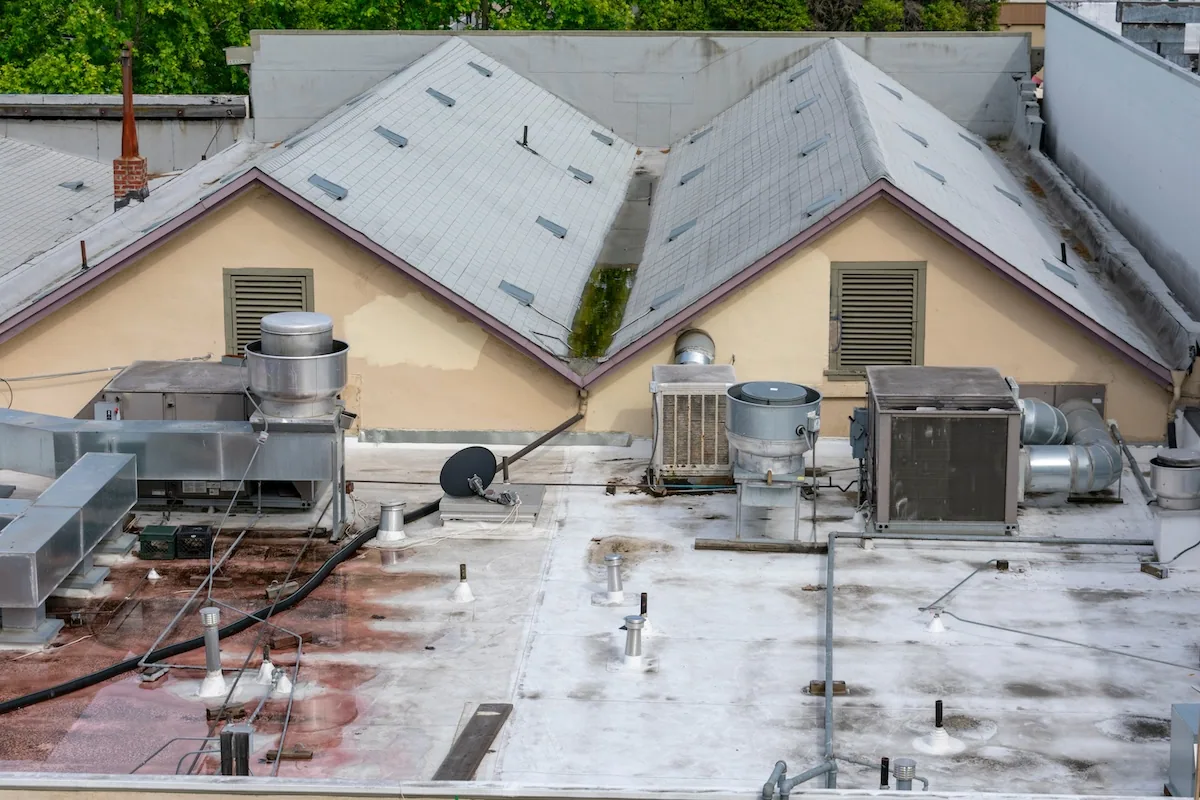
If the building uses a low-slope membrane, a commercial roof leak repair starts with cleaning and drying the area, then tying new material into sound membrane. If the report points to wet insulation that no one can see, we say so and propose a moisture check before spending money on a patch that sits over damp board.
Why Renter Occupancy Changes the Plan
With a high share of renter-occupied units in town, access is a scheduling problem as much as a roofing one. Tenants need notice, parking near a stair tower may be tight, and a crew carrying hot work or heavy rolls up a ladder needs a plan that does not put anyone under a swing zone. We ask for the on-site contact and the roof hatch location. The scope sheet carries that list beside the repair items.
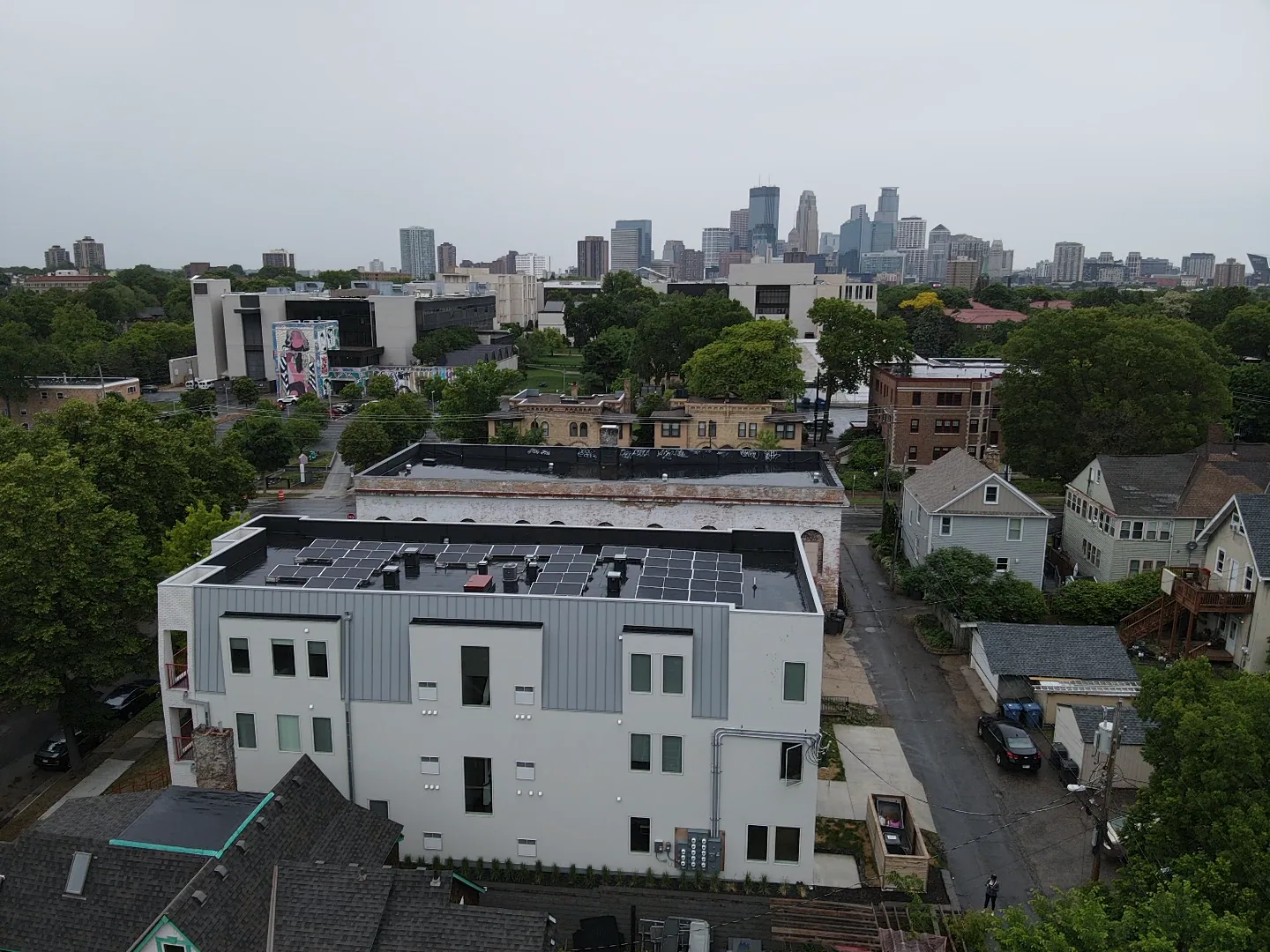
Owners who hold rental property think in capital lines. A repair that holds for two seasons and a replacement that carries a long service life are different budget events, and the asset manager needs numbers for both. We mark each finding as patch or fix, then show the threshold at which repeated patches cost more than recovering or replacing the field. The apartment roofing work we do follows that sequence: stop the water, record it, then choose.
Wet Season on a Small Footprint
Rain reaches Beaverton on roughly 151 days a year, and November through January run the wettest. Those are Beaverton's numbers, and drains, seams and wall flashings across the valley stay under test for months at a stretch. Drainage gets checked first on a Durham roof for that reason.
A drain check follows the water from the surface to the outlet. We lift the strainer, look at the sump, check the clamping ring and the membrane around it, then step off the low spots where water lingers after rain. Clearing leaves is maintenance. Correcting a depression that holds water for days is a scope item, priced separately.
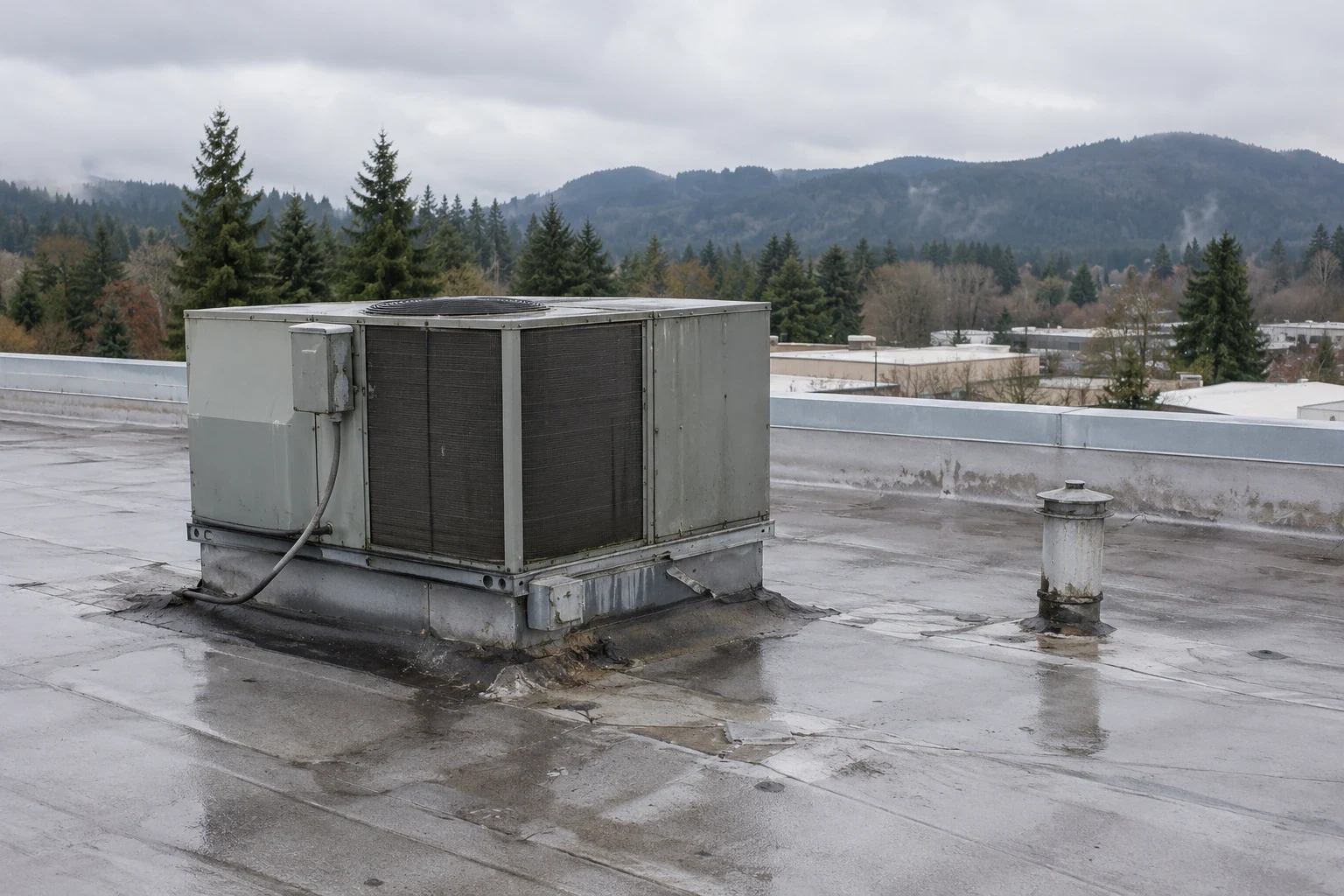
Sudden cold matters as well. Beaverton has logged a minus 8 degree low and a 115 degree high, and that swing opens small gaps at flashings that looked tight in July. A preventive roof maintenance visit in early October catches those gaps before the rain does.
The Commercial Edge Near Bridgeport
Durham sits next to Bridgeport Village, and the roads around it carry the shop, office and service traffic of Tigard and Tualatin. We do not assume what stands on a given lot or guess its roof. The first walk records the assembly, the age indicators we can see, the penetrations and the drainage, and the report describes only what is on that roof.
Where a property turns out to be a small retail strip, office or service building, the roof questions are the ones every low-slope commercial roof raises. Is the membrane thermoplastic, single-ply rubber, modified bitumen or built-up? Are the seams open? Are curbs and rooftop units flashed correctly? Equipment is where leaks hide, so the report includes a check of each rooftop equipment curb and support.
An owner with buildings in Tigard and Tualatin as well gets the same intake, photo set and scope sheet on each, so the records line up.

What Moves the Scope and the Price
Cost on a small building comes down to a short list of drivers. Roof access and staging come first: a narrow lot with no laydown area costs more to supply than an open one. Next is what lies under the membrane: wet insulation must come out, and the amount stays unknown until test openings are cut. Then come the number of penetrations, the condition of the edge metal and the height of walls that need new base flashing.
Code can change the price too. Under the 2025 structural code, mandatory since April 1, 2026, an energy chapter keyed to ASHRAE 90.1-2022 also applies. A replacement or a large recover can trigger insulation and attachment requirements, so the scope sheet lists those items separately from repair lines. An owner who has the numbers in front of them can decide.
When the roof is sound but worn, a coating may defer replacement. A roof coating restoration works only on a substrate that is dry and attached, so the moisture check comes before the coating quote.
Related Roofing Work
Commercial Roof Leak Repair
Apartment Building Roofing
Preventive Roof Maintenance
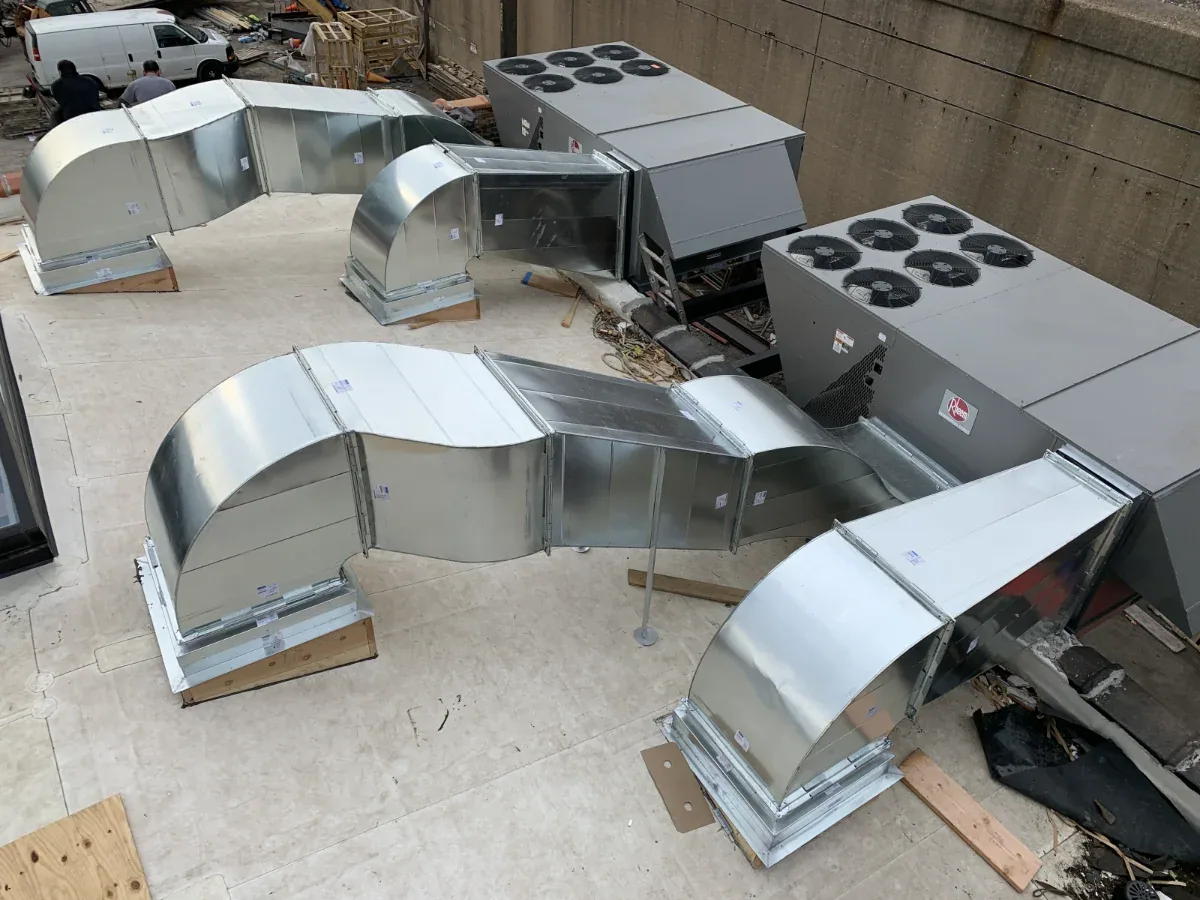
Rooftop Equipment Curbs and Supports
Place an intake call for your Durham building
Call with the building address and the last known leak location. We will schedule a make-safe visit, photograph the roof, and send a written scope sheet that separates repair items from replacement decisions.
Questions About Durham
Which details do you send ahead of the first Durham visit?
Send the building address, the unit or room where water appeared, the date it was first seen and a name for roof access. A photo of the stain with a time stamp helps more than a description. If a prior repair exists, mention where. We put these in the building file and compare them with what we find on the roof, so the scope sheet reflects the whole history of the leak.
Does a high share of rented units change how a roof is repaired?
It changes the schedule and the notice. Tenants need warning before noisy work, and managers need a clear day-by-day plan for access, parking and any areas that must stay clear. The roof repair itself follows the same steps, but the paperwork around it gets heavier. We write the access limits, staging area and tenant contact into the scope sheet.
How do you decide between patching and recovering a small roof?
Look at what is under the membrane and how many patches the roof already carries. Dry insulation, sound seams and a handful of isolated defects favor repair. Wet board, brittle flashings and repeat leaks in different places push the numbers toward a recover or replacement. The repair or replace threshold goes into the scope sheet with prices on each side.
What happens if I wait until the dry season to fix it?
A temporary seal can hold through wet weeks, but wet insulation keeps absorbing water and drywall below keeps soaking it up. Delay can turn a flashing repair into a board replacement. We dry-in first so the building stays protected, then schedule the permanent fix for the next dry window, and we tell you how long the temporary measure should be expected to last.
Can you work around I-5 traffic and tight lots near Upper Boones Ferry Road?
Delivery timing and truck placement get set with the property contact before anyone arrives. Material goes up by hoist or lift from the safest side, away from tenant entrances. A lot that cannot take a truck gets smaller loads, and the schedule says so.