Service Areas
Commercial roofing in Orenco Station, Hillsboro, OR: mixed-use and multifamily roof leak response, penetration checks, drainage records and repair scopes.
Commercial Roofing in Orenco Station, Hillsboro, OR
A resident reports a wet ceiling in a mixed-use building near the Orenco MAX station, and the manager forwards the message to the intake line. The first hour has a fixed order: confirm the unit and the room, ask what sits below the stain, send a crew to make the roof safe, and take a photo set of the roof surface before any repair. The unit gets a temporary measure the same day, and the leak log opens with a date and a location.
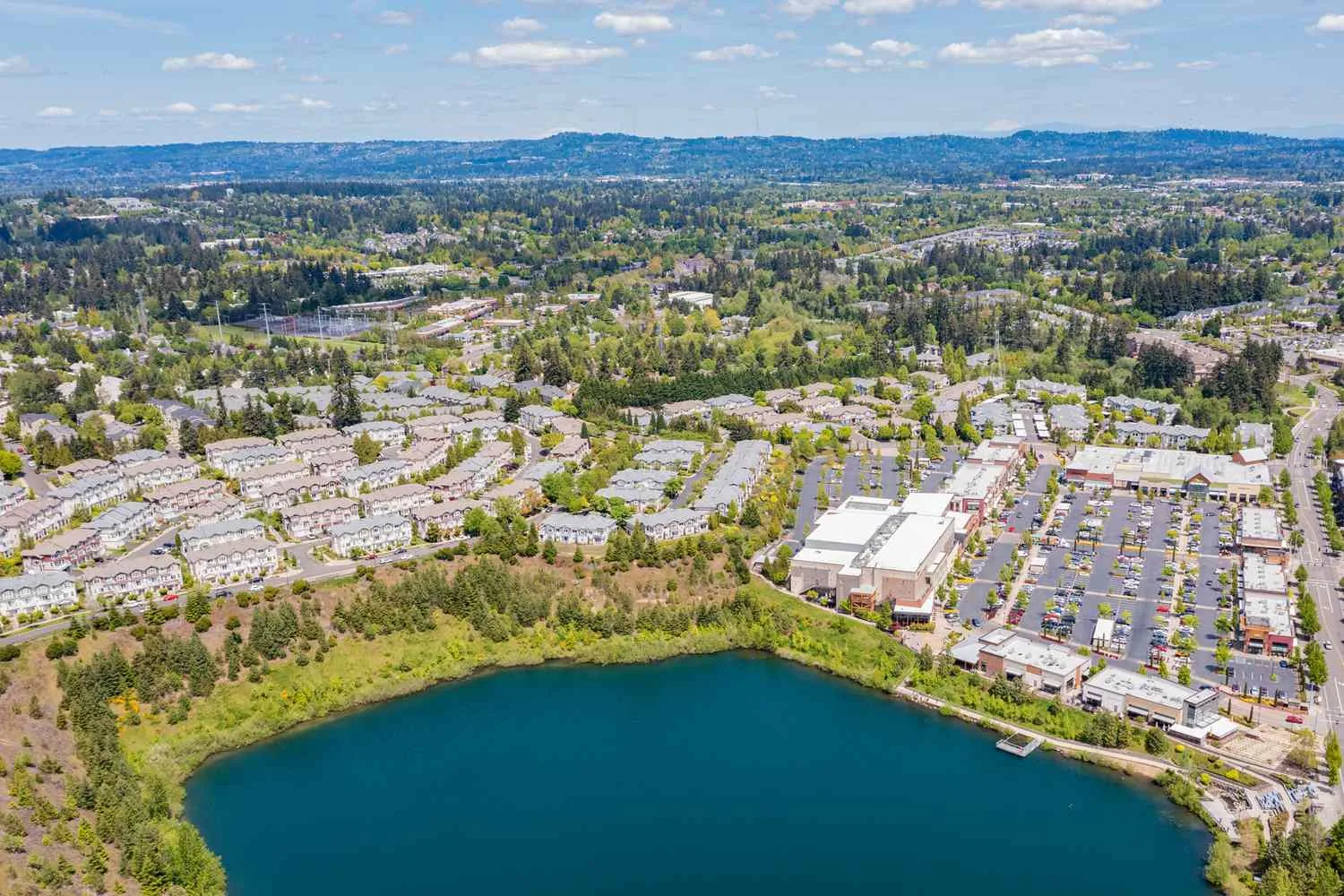
Orenco Station, a district of Hillsboro, OR, is a planned town center where apartments, offices and ground-floor shops share blocks. That mix changes who needs to know about a leak. The scope sheet we deliver names the roof section, the shared items and the occupant impact, so a manager can inform residents, tenants and the owner from one document.
A planned center, one roof at a time
Orenco Station is a planned 209-acre mixed-use town center near NE Century Boulevard and Cornell Road, with the Orenco MAX station at its core. Construction since 2014 has included buildings up to six stories near the station. Taller mixed-use buildings concentrate the roof work in a few places: a main roof, terraces or amenity decks, and rooftop equipment platforms.
We do not assume a roof type from the building's use. Mixed-use buildings can carry different membranes over different uses, and a roof over the shops may have no relationship to the roof over the housing above. Each roof is read on its own, with the membrane, the insulation and the drainage path recorded before a repair is priced. The result is a scope that names what sits at the top of each section.
Penetrations multiply with the floors
Residential and mixed-use buildings have a lot of things that come through the roof: bath and kitchen exhausts, plumbing vents, makeup air, antennas and the occasional solar array. Each one is a place where a flashing meets a membrane. Multiply that across a multi-story building with many units and the opening count adds up quickly, even though each opening is small.
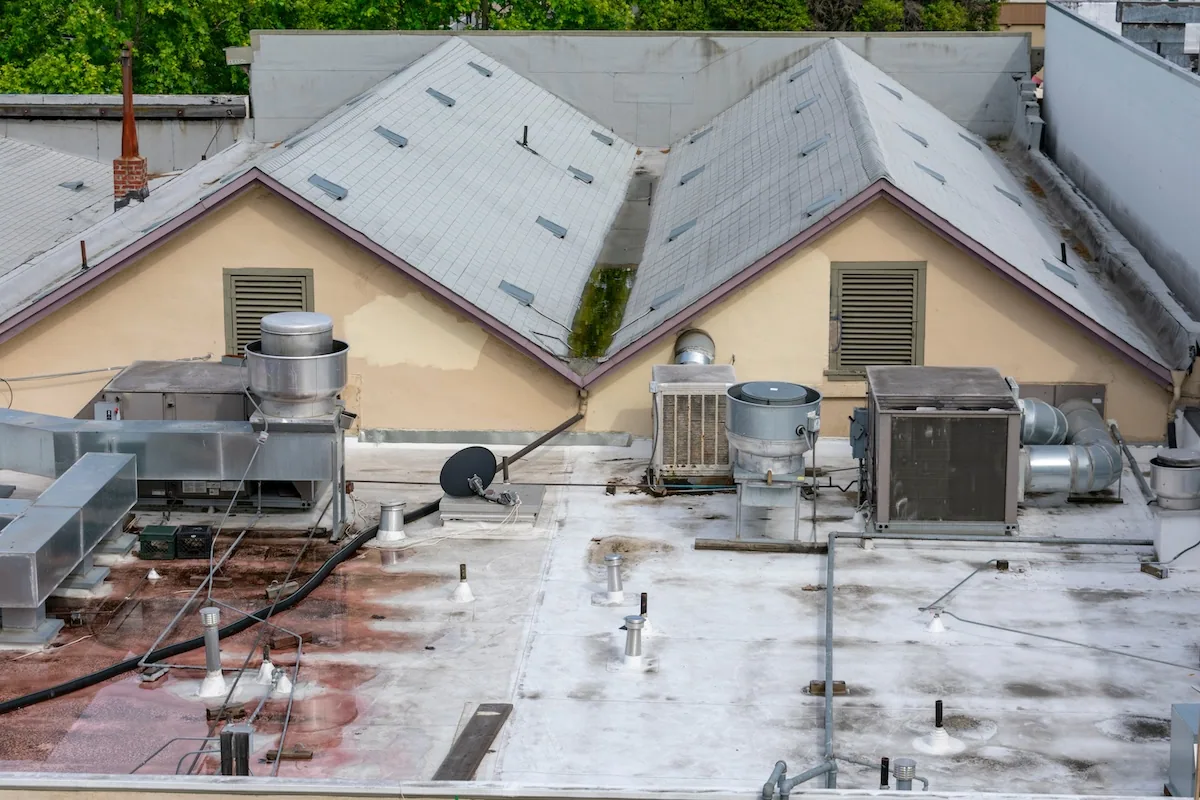
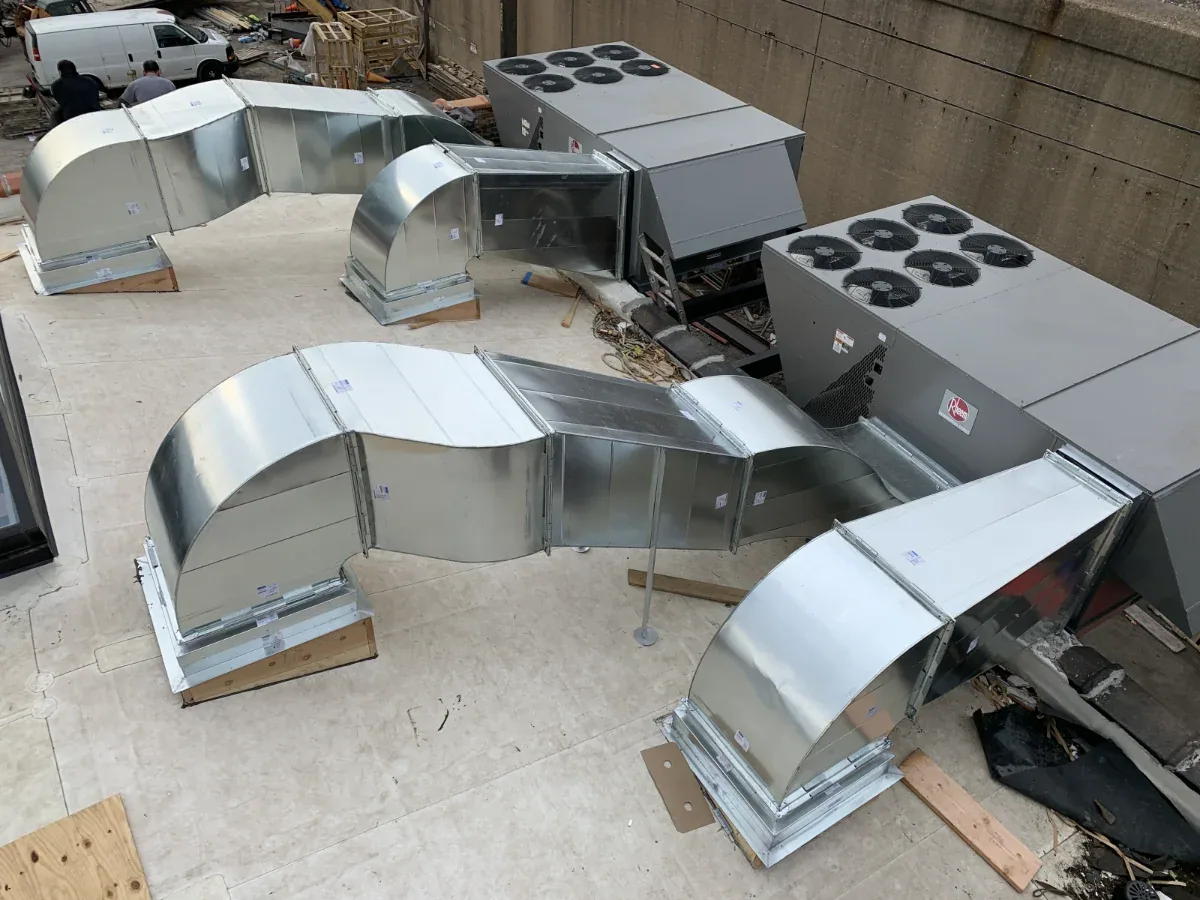
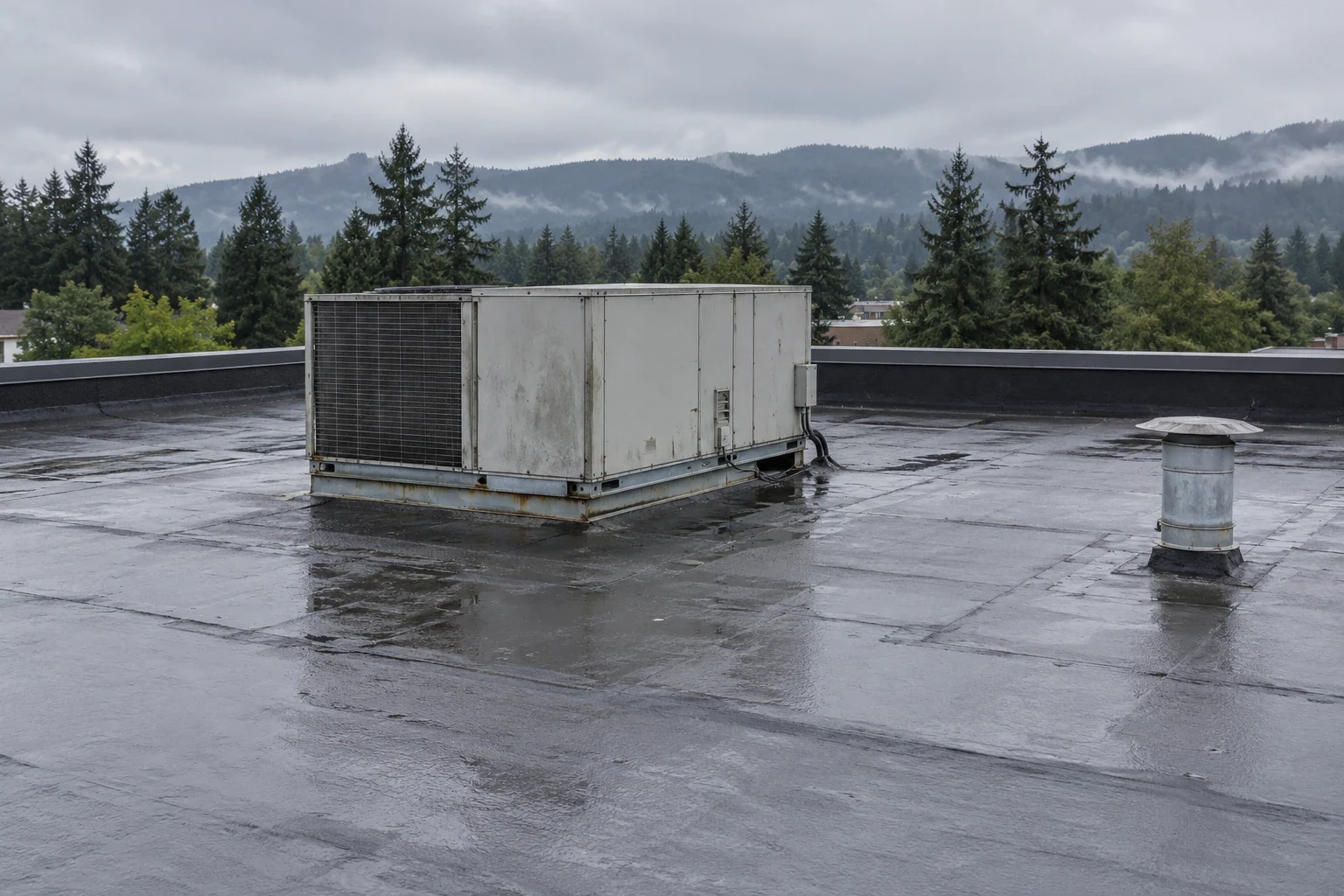
We work through the roof in a grid, checking each flashing, boot and collar for cracking, lifted edges or missing sealant. A commercial roof leak repair often resolves with a small number of replaced boots and a re-sealed termination, and the scope sheet counts each one with a photo. Equipment on shared platforms gets a look at its supports too, since curbs and supports carry the weight and the vibration of the units.
Sealant is the part that fails first. Sunlight and thermal movement crack it long before a membrane gives out, and a bead that looked fine at the last visit can open after one hot afternoon. On June 28, 2021 Portland reached an all-time 116 degrees, and rooftop equipment ran hot that day across the metro. We note which terminations were resealed and when, so the next check goes to the oldest ones first.
Roofs beside high-tech employment
Orenco Station sits in the middle of Hillsboro's high-tech employment area, and the offices and flex buildings around it share the same weather and the same maintenance calendar as the housing. A property manager who handles a mixed portfolio gets the most value from a consistent record: the same checklist, the same photo angles, the same leak-log format for an apartment roof and an office roof.
That is the reason for the roof condition reports we leave in each building file. When the owner of an office building roof compares it to a nearby apartment roof, the readings line up. Moisture, drain performance, flashing condition and repair history sit side by side, and the capital line follows from the comparison.
Access follows the same logic. A transit-oriented center has limited staging room, so deliveries of material and the removal of debris are planned with the property manager ahead of the first crew day. The make-safe visit needs little room, but a larger repair needs a lift or hoist path, a protected walkway and a clear time window. The scope sheet states each of those points before the work starts.
Rain, freeze and the drain list
Beaverton, OR sees rain on about 151 days each year, with Portland Airport tallying about 32 freezing nights. Orenco Station's flat roofs go through the same sequence: a long wet stretch from November to January, then the occasional freeze that opens small gaps. Drains on a mixed-use building often serve both main roofs and terraces, and a blocked terrace drain can push water under a door threshold before it reaches the main roof.
We list every drain and scupper on the roof and test each one after a storm. The list goes into the file, with notes on which ones clog first. A planned visit in October, before the first big storm, finds the problems that November would find for you. Roof edge details, such as copings and gutters, get checked on the same visit because they carry the overflow when a drain backs up.
Plan for solar and tenant changes
New buildings near a transit station often add rooftop equipment over time: a tenant fit-out, a new exhaust, a battery or solar array. Each addition touches the roof, and the order of work matters. A solar-ready roof is prepared with attachment points, a sound membrane under the array footprint and clear drain paths, so a later install does not require rework.
We recommend the owner schedule any roof repair before the equipment goes in, then record the new work after. The file shows the sequence. When a leak appears around the new equipment, the record tells us whether the cause was the original flashing or a later change. Owners with buildings in Hillsboro and Tanasbourne and AmberGlen can keep the same file format across all sites.
Related Roofing Work
Commercial Roof Leak Repair
Rooftop Equipment Curbs and Supports

Commercial Roof Condition Reports
Office Building Roofing
Place an intake call for your Orenco Station building
Call with the building address, the unit or tenant space affected and the last known leak location. We will send a crew for a make-safe visit and follow with a written scope sheet that separates shared roof items from tenant equipment.
Questions About Orenco Station
A resident reports a stain but the roof looks fine. What next?
Water often travels along a deck or wall cavity before it shows up. We mark the stain location on a plan, go to the roof above it, and look at penetrations, parapet joints and drains within reach of the line. Moisture readings narrow the search. The photo set shows what we checked and what we found.
How many roof openings should I expect on a six-story mixed-use building?
The count varies with the use and the mechanical design, and the only reliable number comes from walking the roof. We count and photograph each opening during the first condition visit, and the scope sheet lists boots, vents, curbs and drains so you can see what is there.
Do you work on terraces and amenity decks?
Yes, as part of the roof scope. Terraces carry foot traffic, planters, furniture and drains, and each one affects the membrane. We check the drain, the threshold flashing and the wear layer. A pavers-over-membrane setup needs lifting for inspection, so we plan that step around resident use.
What changes when an owner plans to add solar later?
The roof needs a sound membrane, clear drainage and attachment points where the array will sit. Any repair should come before the install, and the record should show where the supports went. We note the array footprint on the building file so later leak checks start at the right place.
Can one report cover an apartment roof and an office roof?
We use the same format for each building, so the reports can sit side by side. Each building still gets its own readings and photo set. A portfolio owner sees condition, repair history and capital timing for each roof in one comparable layout.